

Before and After Thermal Surveys of a Retrofit
An improvement programme on an existing building is usually justified before it starts and assumed after it finishes. Insulation is added to a loft or a wall, windows are replaced, gaps are sealed, and the invoices, certificates and product data sheets go into the file. What rarely goes into the file is anything showing how the building envelope behaved before the work and how it behaves afterwards, observed rather than calculated.
A pair of thermal surveys can supply part of that record. The first captures the envelope as it stands, with its irregularities located and dated. The second, taken once the work is complete and the season allows, looks at the same faces again. Where a pattern that was there has gone, or has changed shape, that is visible evidence that something in the fabric now behaves differently.
The catch is that two thermal surveys are not automatically comparable. A thermal image is strongly shaped by the conditions and settings under which it is taken, and a second survey captured on a different kind of night, from a different position or with different camera settings can suggest an improvement that did not happen, or hide one that did. This post is about what makes a before and after pair honest, and about the limits of what the pair can claim.
Blog Content TL;DR...
A pair of thermal surveys, one before an improvement programme and one after, can show whether a building envelope behaves differently, provided the two are genuinely comparable.
- The baseline can only be captured before the work starts, and it is useful in its own right for locating areas warranting further investigation.
- Conditions, heating, viewing position, camera settings and the image colour scale all shape a thermogram, so each is recorded on the first survey and matched on the second.
- From the air, a flight plan built for the baseline can be saved and flown again.
- The method is qualitative. A pair shows a change in pattern, not a U-value, a heat loss figure or an energy saving.
- Where the work has not behaved as intended, the baseline shows whether an irregularity was there before the work began.
Evidence that something changed, taken in a way that makes the change believable.
Why the First Survey Has to Come First
The baseline record
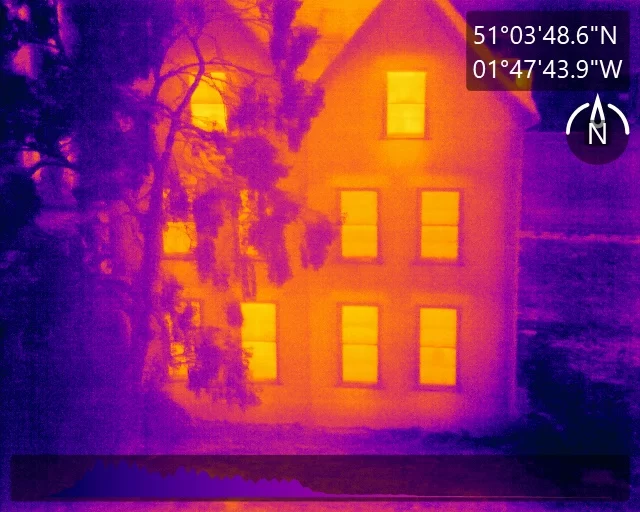
A Record That Can Only Be Taken Once
The baseline survey has one property that nothing afterwards can replace: it is the only chance to see the envelope before the work changed it. Once insulation is fitted, render applied or windows replaced, the earlier condition is gone, and no later survey can reconstruct it. Without a before record, the finished building can only be compared against a drawing, an energy model or somebody’s recollection, and none of those was observed under stated conditions.
That makes the baseline worth commissioning on its own merits, not only as the first half of a pair. It locates the areas warranting further investigation, which helps whoever is specifying the work decide where attention is needed, and it fixes a dated record of how each face of the building behaved.
Designing the Baseline to Be Repeated
A survey intended to be repeated is planned differently from a one-off. Every elevation is given an establishing frame taken square on, far enough back to include the roof line and the ground line, followed by overlapping frames along the face and dedicated frames at the junctions. Each thermal frame has a matching visual photograph, and the positions, the conditions on the night and the camera settings are written down against the file names in an elevation register.
From the air the same discipline applies, at a steady height and standoff, with the camera square to the face rather than looking down on it. A flight plan built for the baseline can be saved and flown again, which is one of the practical advantages of the aerial method when the second survey falls a season or more later.
before and after thermal survey of a retrofit, repeat thermal imaging survey of a building, baseline thermal survey before improvement workbefore and after thermal survey of a retrofit, repeat thermal imaging survey of a building, baseline thermal survey before improvement work
What Has to Match Between the Two Surveys
The Night Itself
A building envelope only shows its thermal pattern when there is a steady temperature difference between inside and outside, held long enough for the structure to settle, with no sun warming the faces being surveyed. How strongly the pattern shows depends on the size of that difference, on the wind, on whether the surfaces are dry and on what the sky is doing. A second survey taken on a milder or windier night will usually show weaker contrast across the whole building, and weaker contrast can look like improvement when nothing has changed. So the second visit is booked for conditions as close to the first as the season allows, and the conditions on both nights are recorded so that anyone reading the comparison can judge it for themselves.
The Building’s Own State
The inside matters as much as the outside. The heating needs to run in a comparable way for a comparable period before each survey, with the building closed up. A property heated harder on the second night will tend to look worse, and one heated less will tend to look better, whatever was done to the fabric.
Position, Settings and Scale
A surface temperature reading depends on the viewing angle, the distance, the emissivity entered for each material and the reflected apparent temperature, which accounts for radiation from the surroundings bouncing off the surface into the camera. These are captured on the first survey and held consistent on the second, so that a change in reading reflects a change in the building rather than a change in the method. The colour scale on the finished images is matched too, because two thermograms displayed across different temperature ranges can look entirely different while recording much the same surface.
When the Surface Itself Has Changed
One complication belongs to retrofit specifically. Where the work has changed the outer surface, for example new render or cladding over old brick, the emissivity may be different and the new layer may respond to the night sky and to wind differently from the masonry it covers. The comparison is then made with that change stated, never ignored.
What a Before and After Pair Can Honestly Claim
Pattern, Not Performance
Building envelope thermography is a qualitative method. A comparable pair of surveys can show that a pattern present before the work is absent or reduced afterwards, that a pattern has moved, or that new irregularities have appeared, including at junctions where new work meets old. That is useful evidence, located and dated, and it is the kind of evidence a client usually wants once a programme is finished.
What the pair cannot do is turn that change into a number. It does not measure a U-value before or after, it does not quantify a reduction in heat loss, and it does not support an energy or carbon saving figure. A report that offers those from a pair of thermal images is claiming more than the method can carry.
Where the Pair Earns Its Keep
For an owner, a landlord or a facilities team running an improvement programme, the pair turns an assumption into an observation. Where the work has behaved as intended, the record shows it. Where it has not, the second survey marks the areas warranting further investigation by a suitably qualified contractor, with the baseline alongside to show whether an irregularity was already present before the work began or has appeared since.
Governing Standards and Competence
- Thermographic inspection, analysis and reporting are conducted by Steve Fisher, ITC Level III Certified Master Thermographer (Infrared Training Centre; Certification #205722059), practising in accordance with the frameworks of ISO 18436-7:2014, ASNT SNT-TC-1A and ANSI/ASNT CP-105, and BINDT CMGEN Appendix B (UK training governance). Inspection methodology is aligned with IEC 62446-3:2017 (solar PV) and BS EN ISO 6781-1:2023 (building envelopes) as applicable.
- Building envelope thermography is a qualitative method. It identifies surface thermal irregularities consistent with heat loss, missing or displaced insulation, moisture or air leakage. It does not measure U-values, and it does not confirm the cause behind a surface without corroborating investigation.
- A before and after comparison is valid only to the extent that the recorded conditions, building state, viewing positions and camera settings of the two surveys are comparable. Each survey is valid for the conditions recorded at the time of inspection.
- No energy, carbon or cost saving is derived from a thermal comparison. Findings are recorded as areas warranting further investigation by a suitably qualified contractor, and no view is given on compliance with the Building Regulations or with a specification.
Before and After Building Thermal Surveys
Drone Media Imaging carries out building envelope thermal surveys from the air and from the ground, as a baseline before improvement work and as a matched repeat afterwards. We work across Sussex, Hampshire, Kent and Surrey, and travel throughout the UK, Ireland and Europe, with findings recorded as areas warranting further investigation by a suitably qualified contractor.
related posts
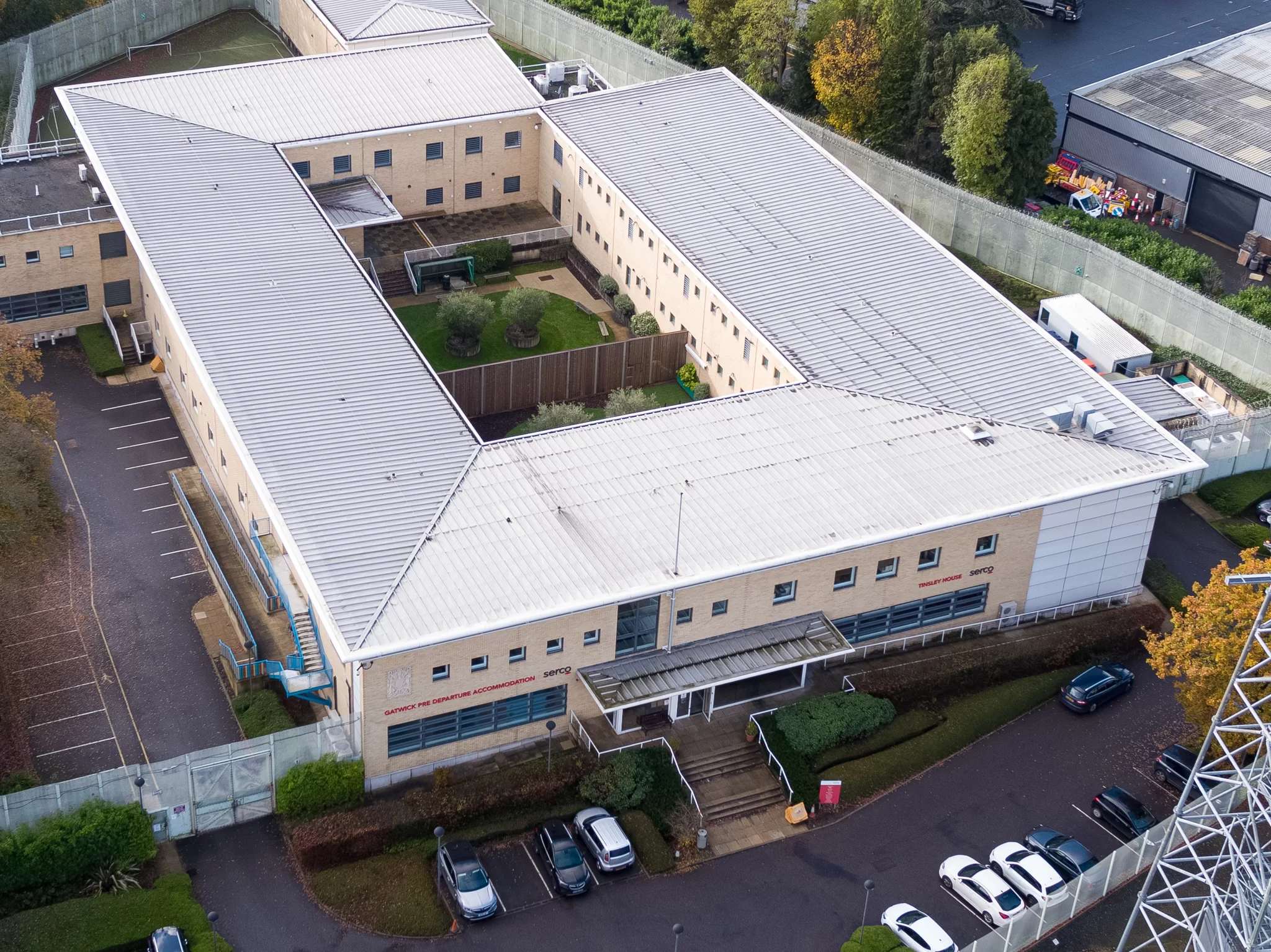
A building survey and a thermal survey both carry the word survey, and they answer different questions. One is a qualified professional's judgement on the condition of a structure. The other records where the envelope loses heat, admits air or holds moisture, under conditions written down at the time. Drone Media Imaging provides the second, and holds no surveying qualification. This is how the two work together, what each needs from the other, and why the boundary is what makes the evidence usable.
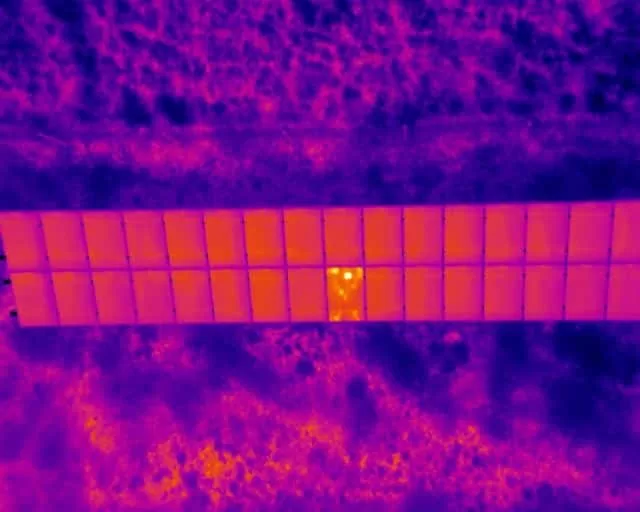
A thermal image of a photovoltaic array records surface temperature, and surface temperature is a symptom rather than a diagnosis. This post sets out how the signatures are actually read on an operating array: what a single hot cell suggests, why a uniformly warm third of a module points somewhere entirely different, how potential-induced degradation gives itself away by geometry, and why severity under IEC 62446-3:2017 is framed with caution rather than asserted from one temperature figure.
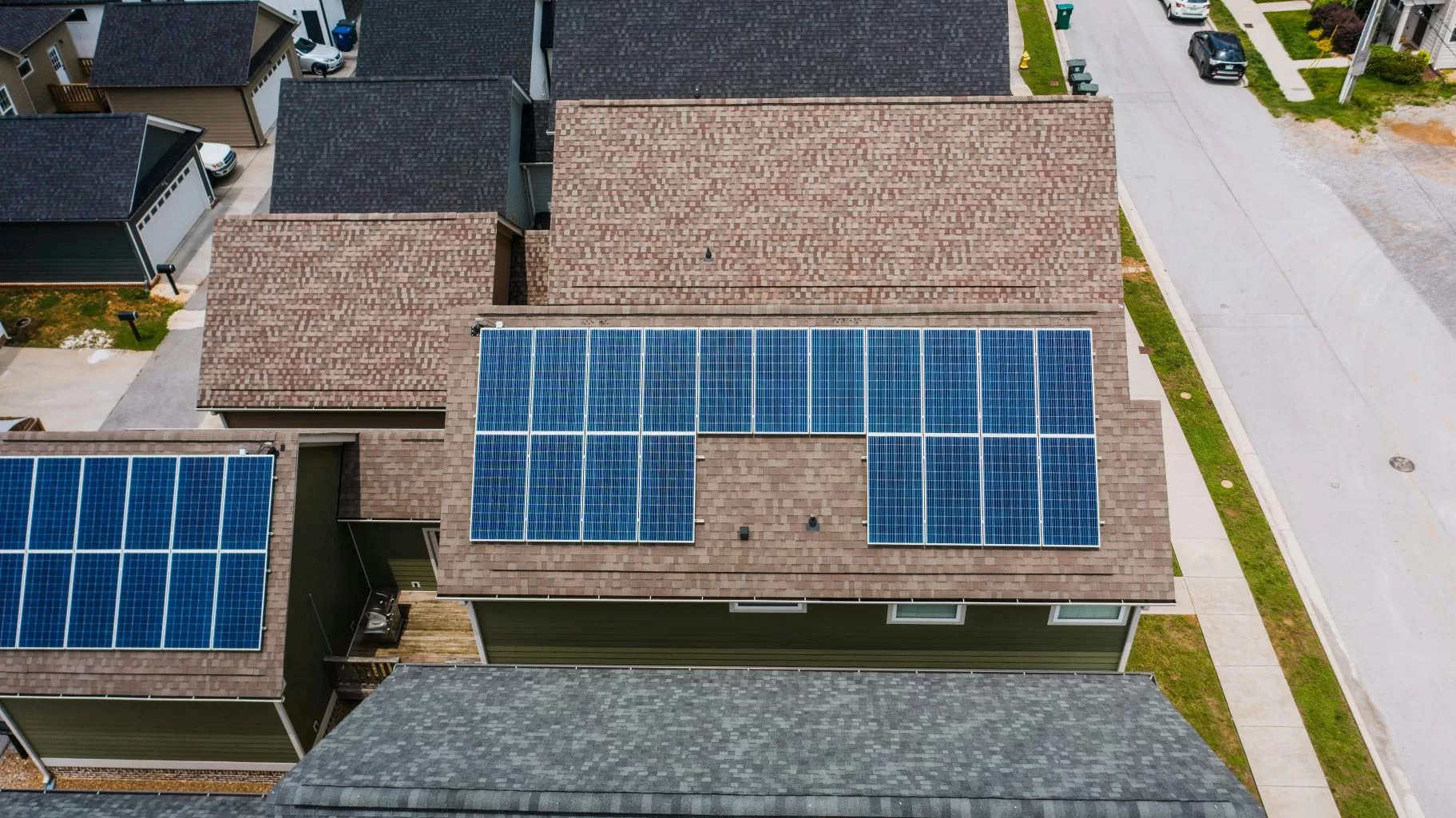
A domestic solar array has no moving parts, makes no noise and sits out of sight, so nothing about a developing fault announces itself. The generation figure an owner can see is one number for the whole system, and a genuine loss can sit inside the ordinary variation of British weather. Drone Media Imaging looks at what those figures do and do not tell you, and why periodic thermographic survey examines the array itself rather than its aggregate output.