Solar PV Surveys: IEC 62446-3 Drone Thermal Inspection and String Testing
Certified Thermal Surveys for Commercial Rooftop Arrays and Solar Farms
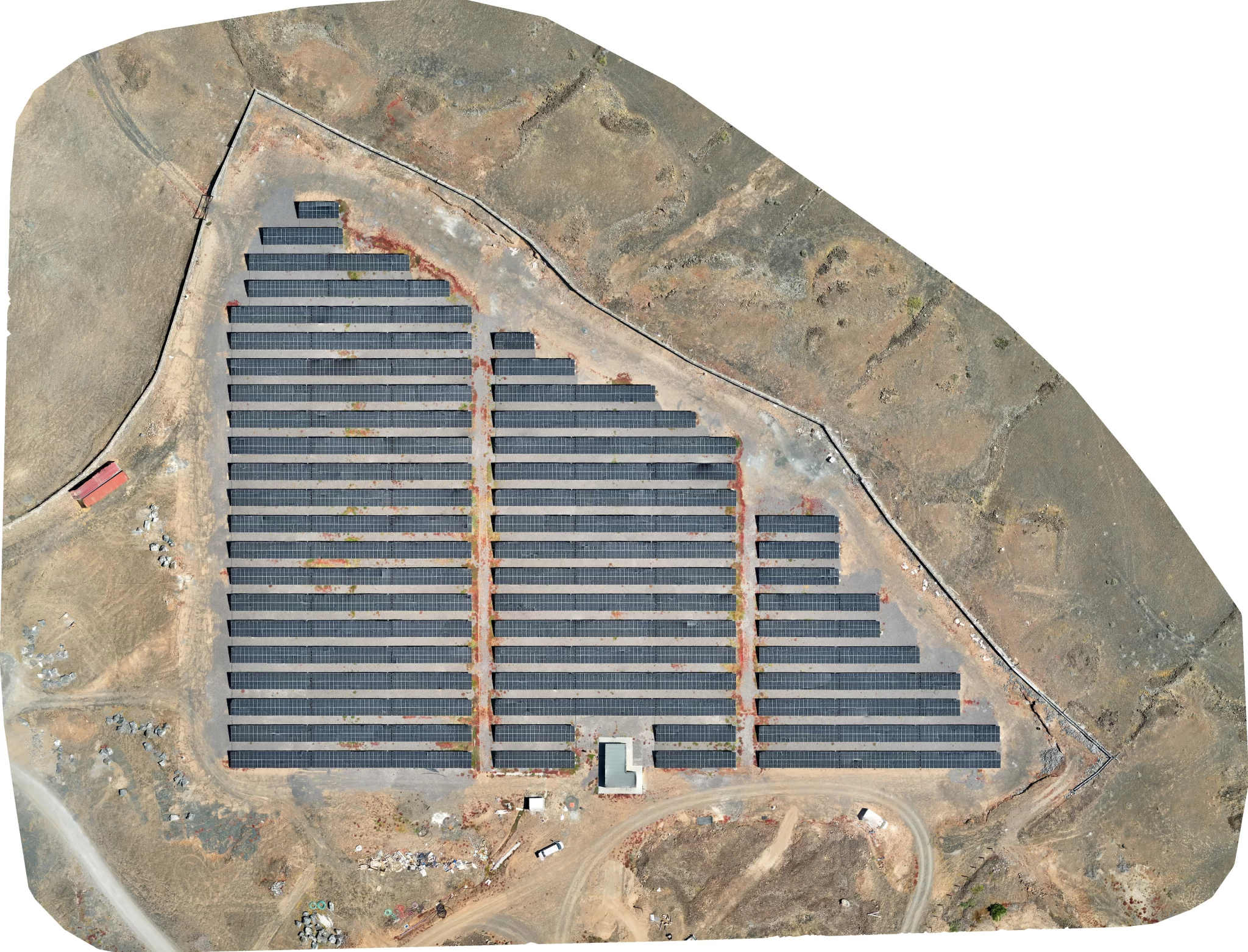
Drone Media Imaging carries out certified solar PV thermographic surveys across commercial rooftop arrays, ground-mount solar farms and utility-scale sites, with more than five hundred solar missions flown over the past five years. Every survey is flown in line with IEC 62446-3:2017 and analysed by our ITC Level III Certified Master Thermographer, with optional string-level electrical testing to IEC 62446-1. You receive a defensible report that identifies faults, classifies them by severity and tells your maintenance provider what to deal with first.
Certified Thermal Surveys for Commercial Rooftop Arrays and Solar Farms
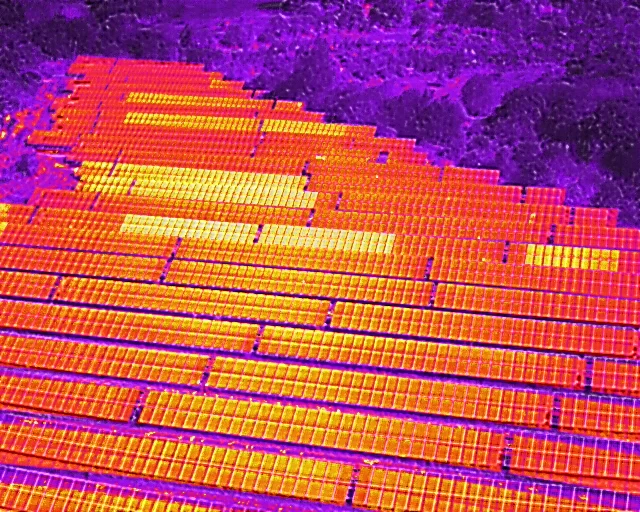
A solar PV thermographic survey finds the faults that are quietly costing you yield, and it does it without anyone walking the array. Flown from the air, an entire commercial rooftop or a multi-megawatt field is captured in a single visit, under the operating conditions that make those faults visible in the first place.
The difference between a useful survey and an expensive set of pictures is not the drone. It is whether conditions on the day met the standard, and whether the person reading the data is qualified to say what it means. IEC 62446-3 is explicit that training on the camera, provided by its manufacturer, is not sufficient for this work.
Drone Media Imaging flies the capture and carries out the analysis at ITC Level III, so the conclusions in your report are ones you can put in front of an insurer, a warranty provider or a board.
What a Certified Solar PV Survey Actually Involves
Survey, analysis and reporting, in that order
Every survey begins before the aircraft leaves the ground. IEC 62446-3 sets the conditions under which thermal data means anything at all: sufficient irradiance, low enough wind, and cloud stable enough that module temperatures are not moving while you photograph them. Fly outside those conditions and the imagery can look entirely convincing while proving nothing.
Drone Media Imaging assesses those conditions against a calibrated forecast model before mobilising, so a survey is flown when it can produce a defensible result rather than when the diary happens to be free. Environmental readings are logged on site at the start and end of the flight and carried into the report, so the conditions the data was captured under are part of the evidence rather than an assumption.
Capture is flown to a controlled ground sample distance, with the flight path set perpendicular to the array and the radiometric parameters, emissivity and reflected apparent temperature corrected for the day. Radiometric thermal and high-resolution RGB imagery are collected together, so every anomaly can be checked against what the module physically looks like rather than inferred from heat alone.
Analysis then runs module by module and string by string. Each anomaly is compared with a healthy reference module inside the same thermogram, classified for severity against the standard’s own categories, and located precisely enough for someone to walk straight to it. Findings are presented as areas warranting further investigation by a suitably qualified contractor, with the order of priority made explicit.
At a glance
What a certified solar PV survey from Drone Media Imaging covers, and what you get back.
- More than five hundred solar missions flown over the past five years, across rooftop, ground-mount and utility-scale sites.
- Aerial thermographic survey of commercial rooftop arrays, ground-mount solar farms and utility-scale sites, flown in line with IEC 62446-3:2017.
- Analysis by an ITC Level III Certified Master Thermographer, not by the pilot who flew the capture.
- Conditions are assessed against a calibrated irradiance model before we mobilise, so the survey is flown when it can produce a valid result.
- Optional string-level electrical testing to IEC 62446-1, carried out at ground level. No inverter diagnostics and no on-roof electrical work.
- Every anomaly is compared against a healthy reference module in the same thermogram, classified by severity and located precisely.
- Findings are reported as areas warranting further investigation by a suitably qualified contractor, with the priorities named.
- Radiometric thermal and high-resolution RGB imagery are delivered alongside the report.
The aircraft collects the data. The thermographer decides what it means.
Solar Surveys by Installation Type
Why the Analyst Matters More Than the Aircraft
Capture is a flying task. Interpretation is not.
Flying a drone over an array is a capture task, and a competent pilot can be trained to do it well. Deciding what the resulting thermal data means, and being able to defend that conclusion when it is challenged, is a different discipline entirely. IEC 62446-3 makes the point in its own words: a simplified inspection cannot produce authoritative conclusions regarding module quality, and training on the infrared camera provided by its manufacturer is not sufficient.
This is where most of the UK market sits. CAA certification proves an operator can fly legally and safely. It says nothing whatever about whether they can read a thermogram, and several providers state plainly in their own terms that interpreting the results is the client’s responsibility. If your report has to survive a warranty claim or an insurer’s question, that is the wrong place for the analysis to stop.
Drone Media Imaging carries the analysis itself. Surveys are interpreted by our ITC Level III Certified Master Thermographer, practising in accordance with the frameworks of ISO 18436-7:2014, ASNT SNT-TC-1A and ANSI/ASNT CP-105, with methodology aligned to IEC 62446-3:2017.
There is a second reason to look at who is holding the camera. Where the purpose of an inspection is fire prevention, IEC 62446-3 states that testing personnel should be independent of the owner or operator. An O&M contractor inspecting the installation it maintains is not independent, however good its intentions. We have no stake in what the survey finds, which is precisely what makes the finding worth something.
How Often Should a Solar Array Be Inspected?
There is no single legal interval, and any provider telling you inspection is mandatory annually is overstating the position. What exists is a set of recommendations, and they matter more than a rule would, because they are the documents your insurer’s risk surveyor is working from.
IEC 62446-3 recommends a thermographic inspection every four years, and explicitly defers to whatever the owner, the insurer or national codes require instead. In UK practice those other requirements usually tighten it. MIS 3002 points to a full maintenance visit every two years. RC62, the joint code of practice issued by the UK insurance industry itself, recommends thermographic examination as part of the risk regime for photovoltaic installations, and Zurich’s own risk guidance says the same.
The mechanism is worth understanding, because it rarely arrives as a demand. An insurer instructs a risk surveyor, the surveyor records whether inspection arrangements exist, and where they do not, a risk improvement can be raised. Most operators discover the expectation at renewal rather than at policy inception, which is the least convenient moment to start looking for a thermographer.
Behind all of it sits the reason the interest exists at all. When the IEC studied photovoltaic fires in 2021, 72% of those examined were traced to installation or product defects rather than to anything the owner had done. Those are precisely the faults a thermal survey is capable of finding before they become an event, and precisely the faults that are invisible from ground level on a working roof.
Our practical guidance is straightforward. Survey at commissioning to establish a baseline and validate the installation, then at whatever interval your insurer or O&M regime sets, and again after any event that could have damaged modules. If nobody has set an interval for you, four years is the floor rather than the target.
Combined Solar PV Thermographic and Electrical String Testing Inspection
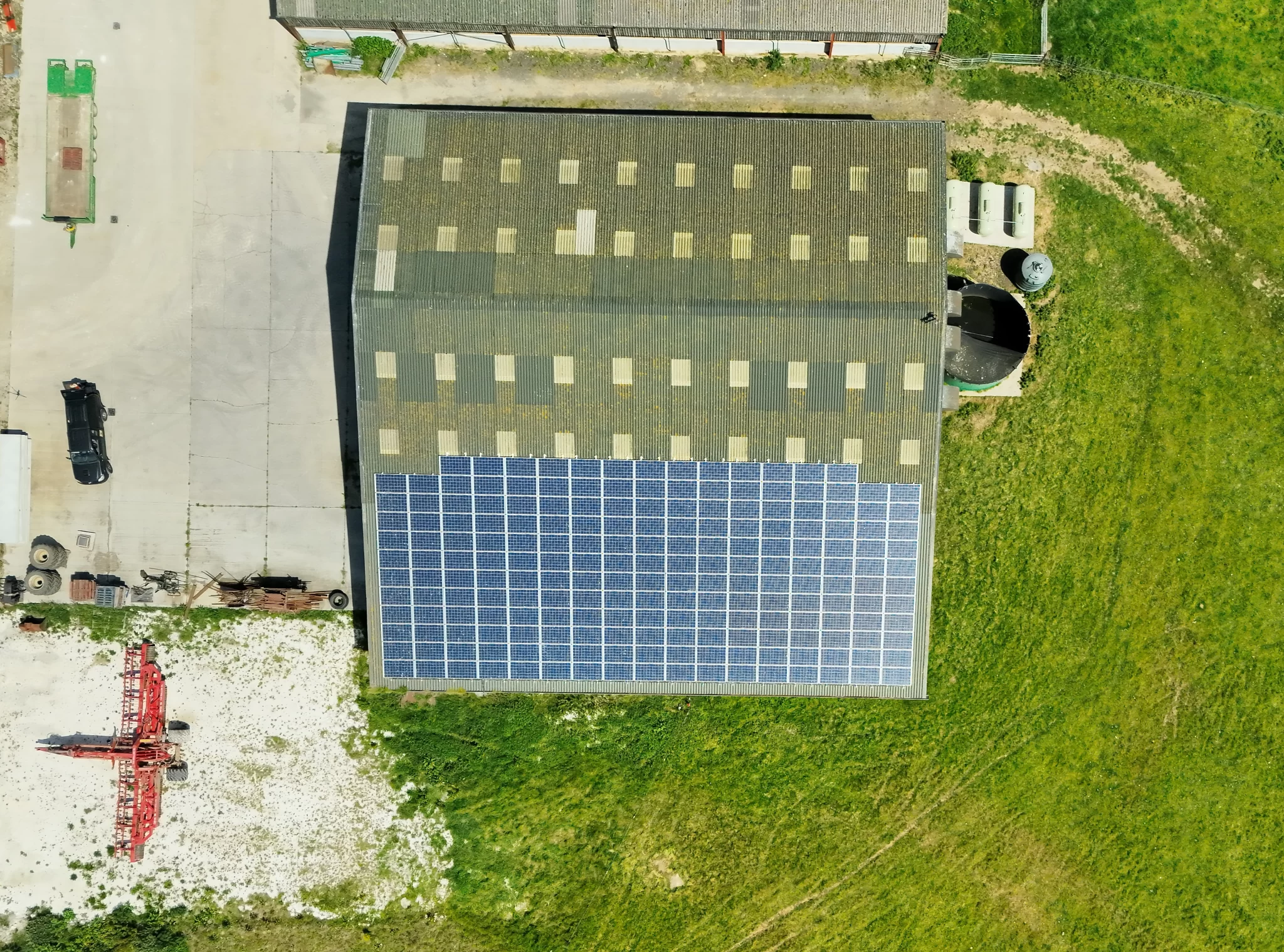
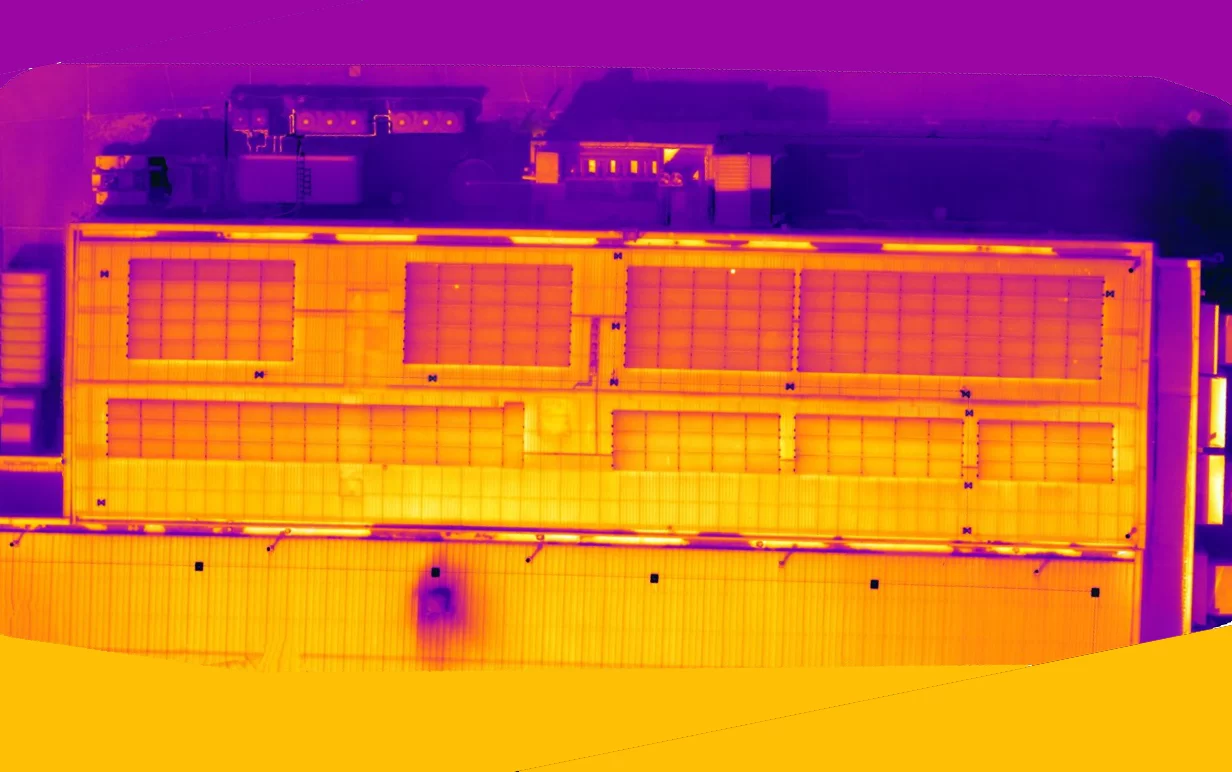
Two rooftop arrays at a Hampshire golf club, surveyed to IEC 62446-3:2017 with string-level testing to IEC 62446-1. Our Level 3 Master Thermographer captured every module under stable, high-irradiance conditions, validating each thermal signature against a clean reference module in the same thermogram, then combined the thermal findings with electrical results in one report.
- IEC TS 62446-3:2017 is the technical specification for outdoor infrared thermography of photovoltaic modules and plants, and it governs the conditions, method and reporting of every solar thermal survey we carry out.
- IEC 62446-1:2016+A1:2018 covers electrical testing, documentation and commissioning verification for grid-connected PV systems, and governs our optional string-level testing.
- ISO 18436-7:2014 sets the international framework for thermographic condition monitoring personnel, and our analysis practice is aligned to it, alongside ASNT SNT-TC-1A and ANSI/ASNT CP-105.
- Survey conducted by Steve Fisher, ITC Level III Certified Master Thermographer (Infrared Training Centre; Certification #205722059), holding iRed Academy Thermal Imaging Category 2 and Drone Thermography Category 1.
- Flown under CAA Operational Authorisation, with GVC and A2 CofC, and fully insured for commercial operations across the UK, Ireland and Europe.
Get Your Solar Array Surveyed Properly
Tell us the site, the approximate array size and what the survey needs to prove, and we will scope it properly and come back with a fixed price. Scope and location determine cost on this work, which is why we quote rather than publish a rate card. Quotations and consultations are free. We work across Sussex, Hampshire, Kent and Surrey, and travel throughout the UK, Ireland and Europe.