Solar Panel Fire Risk: Survey, Analysis and Evidence
You Have Read the Reports. Now What?
Fire risk in a solar installation is almost always electrical, and almost always announces itself as heat long before anything else happens. Drone Media Imaging surveys commercial rooftop arrays and ground-mount solar farms for exactly that, in line with IEC 62446-3:2017, and reports it as a dated, independent record you can put in front of a director, an insurer or anyone else who asks what you did about it.

You Have Read the Reports. Now What?
Solar fires are being reported and discussed more than they used to be, and if you are responsible for an array on a building you look after, you have almost certainly seen some of it. The reports rarely tell you what to do next, which is the part that actually matters to you.
There are really two questions behind the worry, and they are not the same question. The first is practical: is there anything wrong with our array right now, and how would anyone know? The second is personal, and it is usually the one keeping people up: if something did happen, could you show that you took it seriously and acted on it?
A survey answers both. Drone Media Imaging inspects the array in line with IEC 62446-3:2017, looking for the overheating that precedes an electrical fault, and reports it independently, with the analysis carried out by an ITC Level III Certified Master Thermographer. What you are left with is a clear picture of the array’s condition and a dated record, in somebody else’s name, that you did something about it.
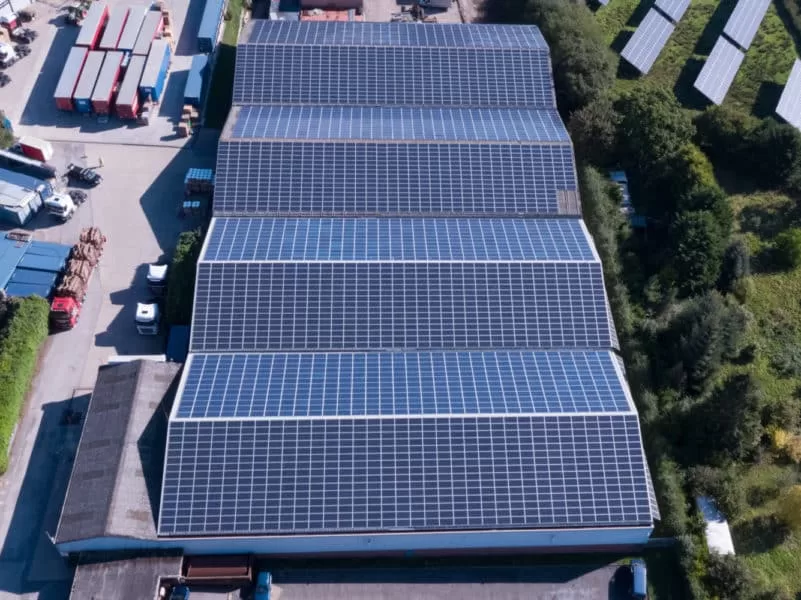
Where the Risk Actually Sits
Almost always at a connection, almost never in the glass
The phrase “solar panel fire” is misleading, and it is worth putting right before anything else, because it points attention at the wrong part of the installation. A photovoltaic module is glass, laminate and silicon. It is not, in itself, a fuel source, and it is rarely where the trouble begins.
What an array actually is, from a fire point of view, is a large collection of electrical connections sitting outdoors on a roof, carrying direct current, in weather, for twenty-five years. Every junction, every plug and socket, every terminal is a place where the connection can degrade. Direct current is less forgiving than the alternating current in the rest of the building, because it does not pass through zero a hundred times a second, so an arc that starts has nothing helping it to stop.
A degrading connection does not fail cleanly. Resistance rises gradually as the contact worsens or moisture works in, and rising resistance means the connection turns some of the passing current into heat instead of sending it on. That heat accumulates over months, sometimes years, and it is doing so on a roof nobody visits, above a building full of people who have no reason to think about it.
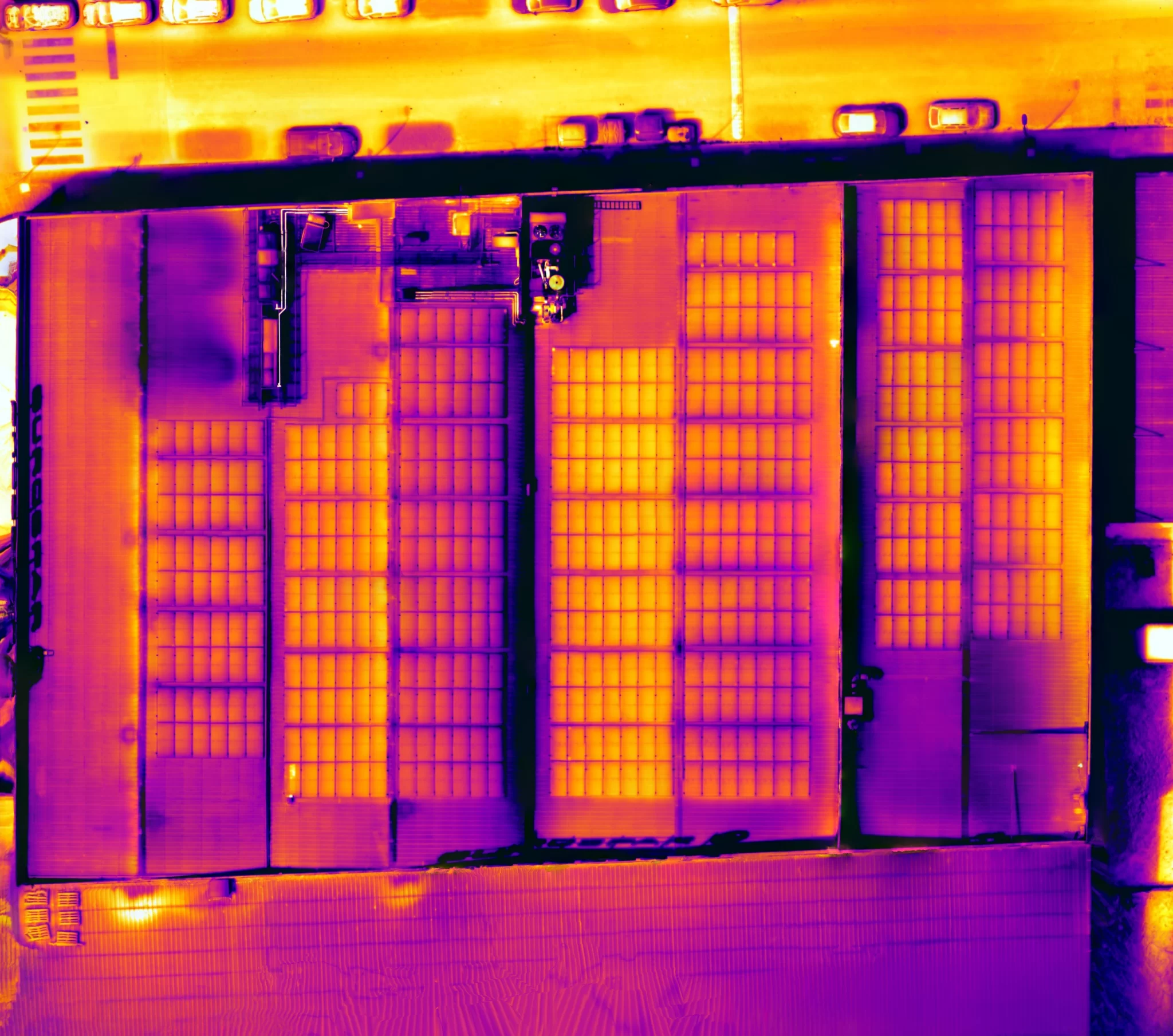
Which is the useful part of all this. A fault that announces itself as heat, well before it becomes anything worse, is exactly what a thermal survey exists to find. The array is generating and therefore warm all over, but an overheating connection is warmer than everything around it in a way that is unmistakable in a thermal image and invisible in every other way.
At a glance
What a responsible owner or manager can actually do about solar fire risk, and what a survey from Drone Media Imaging gives you.
- Fire risk in a solar installation is overwhelmingly electrical, and it starts where current meets a poor connection rather than in the panel glass.
- A failing connection heats up long before it fails, which is precisely what a thermal survey is built to see.
- Surveyed in line with IEC TS 62446-3:2017, the technical specification for outdoor infrared thermography of photovoltaic plants.
- Flown from the air, so nobody walks the roof and no scaffolding or access equipment is needed.
- Optional string-level electrical testing to IEC 62446-1 for the faults that generate no heat at all.
- Analysis by an ITC Level III Certified Master Thermographer, not by the pilot who flew the capture.
- You receive a dated, independent report, which is both a condition assessment and a record that you acted.
Nobody can promise you an array will never fail. You can be the person who looked, found out, and has it in writing.
Related Solar Survey Services

Being Able to Show That You Acted
The report is the record, and whose name is on it matters
There is a second reason people commission this survey, and it has nothing to do with thermography. If a solar installation on your building ever did cause a problem, the first question asked would not be whether you could have prevented it. It would be what you knew, and what you did about it.
That question is much easier to answer with a document than with a recollection. A survey report carries a date, a named surveyor, a stated method and a set of findings, and it demonstrates that the array was examined by someone competent at a point in time. It converts “we were aware of the general concern” into “we had it inspected, and here is what was found and what we did next”, which is a completely different position to be in.
The value of that record depends on who wrote it, which is the part worth thinking about before appointing anyone. IEC 62446-3 makes the point itself: where the purpose of an inspection is fire prevention, it states that testing personnel should be independent of the owner or operator. A report from the contractor who maintains the installation carries less weight for exactly the reason you would expect, however good their work, because they are assessing their own.
Drone Media Imaging has no stake in the answer. We survey, analyse and report, and we do not carry out remedial work, so there is nothing we gain from finding a problem or from missing one. The analysis is carried out at ITC Level III, practising in accordance with the frameworks of ISO 18436-7:2014, ASNT SNT-TC-1A and ANSI/ASNT CP-105. That is the combination that makes the document worth having: somebody qualified, with nothing to gain, who put their name to it on a date.
Combined Solar PV Thermographic and Electrical String Testing Inspection
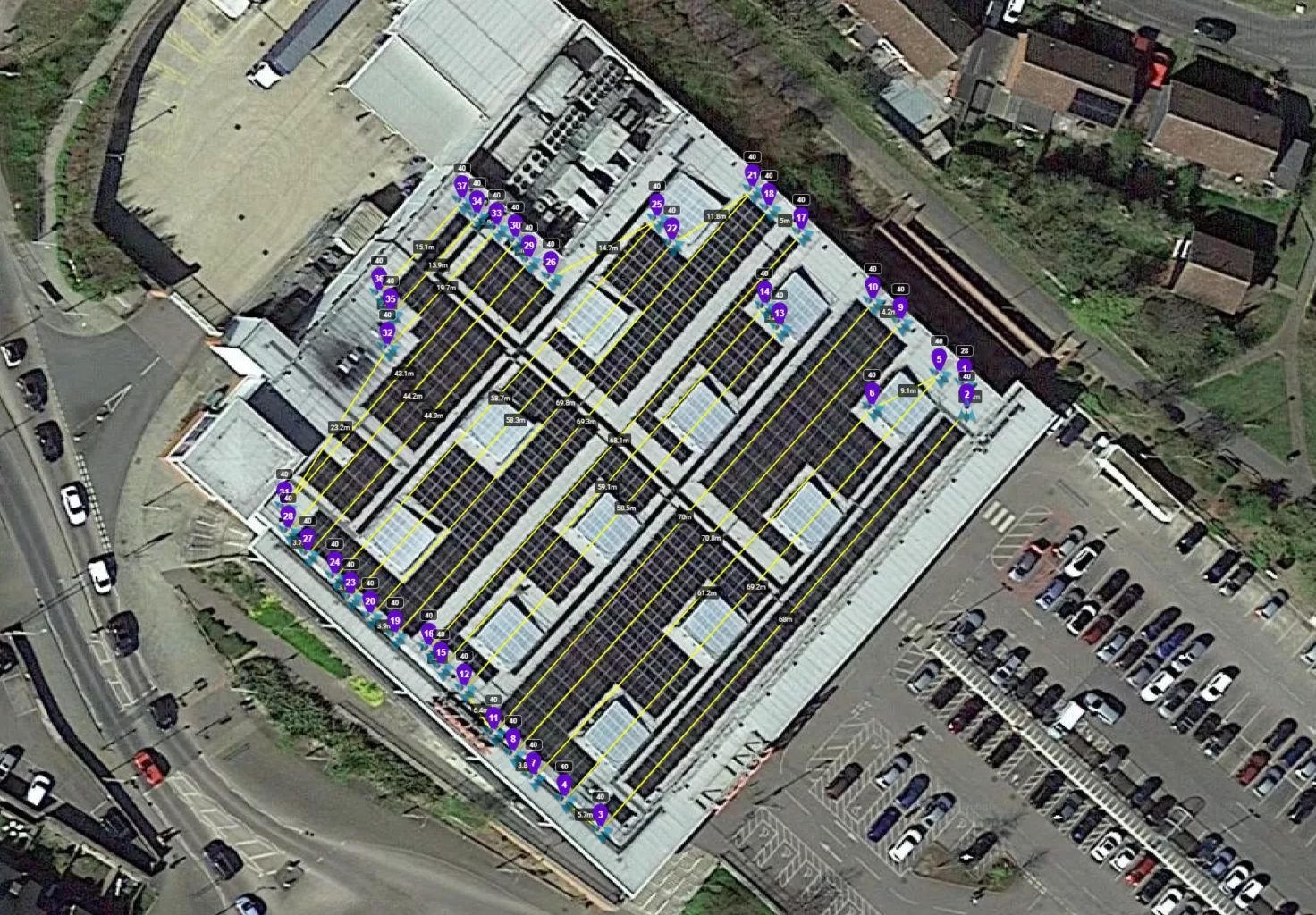
Two rooftop arrays at a Hampshire golf club, surveyed to IEC 62446-3:2017 with string-level testing to IEC 62446-1. Every module was captured under stable, high-irradiance conditions and each thermal signature validated against a clean reference module in the same thermogram, giving the client an independent, dated record of the condition of both arrays.
What the Survey Covers, and How Often
The survey covers the array itself and the wiring that runs between the modules, which is where the heat-producing faults sit. Every module is imaged thermally and photographed conventionally, so an anomaly can be checked against what the panel physically looks like rather than guessed at from heat alone. Anything found is classified for severity against the standard’s own categories and located precisely enough that a contractor can walk to it.
Where a fuller picture is wanted, string-level electrical testing to IEC 62446-1 can be carried out in the same visit, from ground level. That matters here because some genuinely serious faults produce no heat at all, and a thermal survey on its own will not see them. The two together leave far less unaccounted for than either alone.
Inverters, switchgear and battery storage are a separate discipline with separate specialists, and we say so plainly rather than implying a survey covers more than it does. Our scope is the array and its direct current wiring, surveyed thoroughly, which is where the reported causes of solar fires overwhelmingly sit.
On frequency, there is no single interval that suits every site, and anyone telling you otherwise is guessing at your circumstances. The sensible pattern is a survey at commissioning to establish what “normal” looks like for your array, then at whatever interval your insurer or maintenance regime settles on, and again after anything that could have disturbed the installation, whether that is severe weather, roof works or an intervention by another trade.
What you receive is a structured report written to be forwarded. It is meant to be read by your maintenance contractor, who needs to know what to attend to and in what order, and by your insurer or your board, who need to see that the work was done competently. It does not come with a repair quotation, deliberately, because the whole value of an independent survey rests on the surveyor having nothing to sell you afterwards.
Electricity moving through a good connection does almost nothing you would notice. Push it through a poor one and the connection gets hot, and the reason is worth understanding because it is the mechanism behind nearly every electrical fire, in a solar array or anywhere else.
Resistance is simply how much a material or a joint obstructs the current passing through it. A clean, tight, dry connection between two conductors has very little. Corrode it, loosen it, let water in, or let years of heating and cooling work the contact surfaces apart, and the resistance climbs. The current still gets through, but it now has to force its way, and the energy spent forcing it does not disappear. It comes out as heat, at the joint.
The unhelpful part is that this feeds on itself. Heat accelerates corrosion and further loosens the contact, which raises resistance again, which produces more heat. The process is slow, quiet and entirely invisible from the ground, and the installation goes on generating throughout, so nothing in the monitoring data necessarily looks wrong.
That is also why thermal imaging is the right instrument rather than merely a convenient one. The defining symptom of the fault, from its earliest stage to its last, is localised heat, so an instrument that sees heat sees the fault directly rather than inferring it. A connection running many degrees above its neighbours is telling you what it is doing, months or years before it does anything dramatic.
- IEC TS 62446-3:2017 is the technical specification for outdoor infrared thermography of photovoltaic modules and plants, and it governs the conditions, method, competence and reporting of every survey described here. Its Annex B states that where the purpose of an inspection is fire prevention, testing personnel should be independent of the owner or operator.
- IEC 62446-1:2016+A1:2018 covers electrical testing, documentation and commissioning verification for grid-connected PV systems, and governs our optional string-level testing.
- RC62 is the joint code of practice issued by the UK insurance industry for solar photovoltaic installations, and is commonly the document a risk surveyor works from.
- ISO 18436-7:2014 sets the international framework for thermographic condition monitoring personnel, and our analysis practice is aligned to it, alongside ASNT SNT-TC-1A and ANSI/ASNT CP-105.
- Survey conducted by Steve Fisher, ITC Level III Certified Master Thermographer (Infrared Training Centre; Certification #205722059), holding iRed Academy Thermal Imaging Category 2 and Drone Thermography Category 1.
- Flown under CAA Operational Authorisation, with GVC and A2 CofC, and fully insured for commercial operations across the UK, Ireland and Europe.
Have the Array Looked At
Tell us the site, roughly how large the array is, and whether the survey needs to satisfy anyone in particular, whether that is a board, an insurer or your own peace of mind. We will scope it and come back with a fixed price. Site time is usually an hour or two, within the four-hour window when conditions allow a valid survey, so disruption on the day is minimal. Scope and location determine cost on this work, which is why we quote rather than publish a rate card. Quotations and consultations are free. We work across Sussex, Hampshire, Kent and Surrey, and travel throughout the UK, Ireland and Europe.