The Survey Window
A solar thermographic survey is not a job that can be done on whichever day the diary happens to be free. The measurement depends on the array generating, and the array only generates properly when the sun is delivering enough energy to it, so the conditions are not a question of comfort. They are the difference between data that means something and data that means nothing at all.
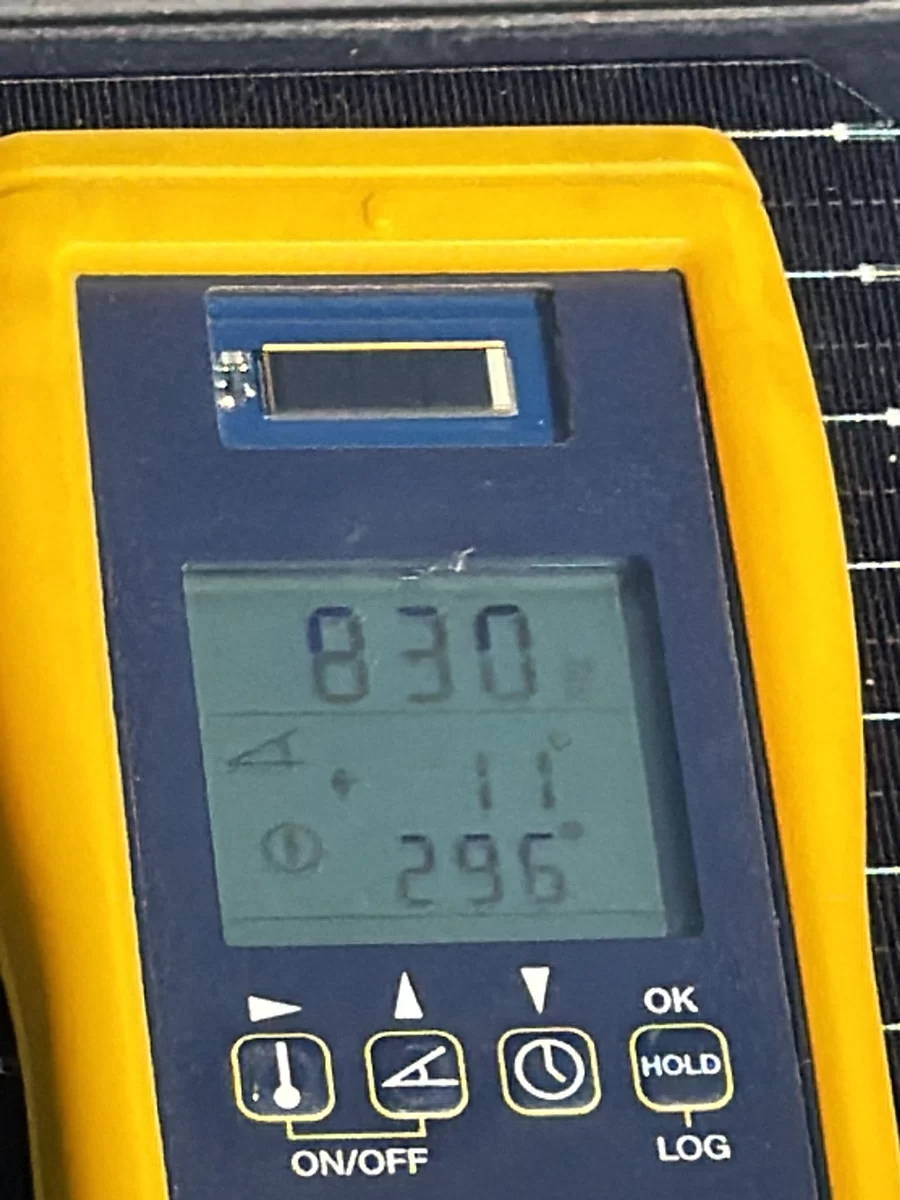
IEC TS 62446-3:2017 sets the line at 600 W/m² measured in the plane of the array, and that single figure decides more about the value of a survey than any equipment choice does. Below it, a failing module and a healthy one begin to look alike, because the temperature difference that identifies the fault is produced by the current the module is carrying. Add an unstable sky, a brisk wind or an array that is not running under load, and the very differences a survey exists to find quietly disappear.
What follows sets out the conditions a compliant survey is flown in, why each one matters physically, and what happens to the report when a survey goes ahead outside them. It is the reasoning behind why we will sometimes say that Thursday is a better day than Tuesday, and why a survey postponed is almost always cheaper than a survey repeated.
Blog Content TL;DR...
Solar thermographic surveys are governed by conditions rather than by the calendar. This is what decides whether a survey can be flown at all.
- IEC TS 62446-3:2017 sets a minimum of 600 W/m² measured in the plane of the array, not on the flat.
- Below that threshold, faulty and healthy modules start to look alike, because the heat signature is produced by the current being generated.
- Stability matters as much as strength. The sky has to hold long enough for the thermal pattern to establish and for the flight to be completed.
- Sun elevation, wind, wet surfaces and a curtailed array will each close a survey window on their own.
- A survey flown outside the window tends to return a false all-clear, which is worse for the asset owner than no survey at all.
The right day is the one the array is generating properly on, not the one the diary is free on.
Why 600 W/m² Is the Line
The physics behind the threshold
The fault only shows while the module is working
A thermographic survey does not measure faults. It measures temperature, and it infers faults from the pattern of temperature differences across an array. Those differences exist only while the modules are generating, because the heat that marks a failing cell, a bypassed substring or a poor connection is produced by the current the module is carrying. An array sitting in weak light is an array at rest, and an array at rest looks much the same whether it is healthy or not.
Where the 600 W/m² figure comes from
IEC TS 62446-3:2017 sets the minimum at 600 W/m² measured in the plane of the array rather than on the flat, which matters a great deal on a pitched roof where the two readings can differ considerably. It is a threshold, not a target. Above it, thermal signatures separate reliably from ordinary background variation and can be categorised with confidence. Below it they compress towards the noise, and a survey stops being evidence and becomes an impression.
The array has to be under load as well
Irradiance on its own is not enough. The array must also be operating normally, with inverters running and no curtailment, because a string that is switched off carries no current and therefore shows no fault. It is one of the more common reasons a site that looked ideal on the forecast returns nothing useful, and it is a question settled before the visit rather than discovered on the roof.
when a solar thermographic survey can be flown, solar PV survey irradiance and weather conditions, planning a compliant solar inspection windowwhen a solar thermographic survey can be flown, solar PV survey irradiance and weather conditions, planning a compliant solar inspection window
Stable Sky and a Closing Clock
Stability matters as much as strength
Touching 600 W/m² for a moment is not a survey window. The modules need time at that level for the thermal pattern to establish itself, and the level has to hold while the aircraft flies the array. Our own field observation across repeated solar jobs is that anomaly presentation begins to move at roughly five to seven minutes of changing irradiance, so a brief cumulus pass in front of the sun does not stop a flight, whereas a sky that is genuinely breaking up does.
A usable day is measured in hours, not minutes
For planning purposes we treat a usable day as one carrying an unbroken run of at least two compliant hours, with around thirty minutes of stable conditions representing a single flight opportunity inside that run. A small rooftop array can be captured in a few minutes and is far more forgiving. A multi-zone ground-mount site needs several such opportunities in sequence, which is why the same forecast can be a comfortable yes for one site and a clear no for another.
Geometry closes the window at both ends
The sun also has to be high enough. Glass is strongly reflective at shallow angles, and the camera has to see the modules without catching the mirrored sun or a bright sky in the frame, so there is a geometric band either side of solar noon outside which a compliant capture is simply not available, whatever the forecast promises. That band narrows through the autumn and closes further in winter, which is the real reason survey capacity in the UK is seasonal rather than year round.
Wind, rain and the surface itself
Wind cools the modules and flattens the very differences being measured, as well as moving the aircraft. Wet panels, dew and drying spray all distort surface temperature and mask what sits beneath. We proceed in light wind, record a caution in moderate wind, and postpone above it.
What a Survey Outside the Window Actually Costs
The failure is quiet, which is the problem
A survey flown in poor conditions does not announce itself. The imagery still looks like imagery, the report still fills its pages, and the array is still described panel by panel. What has actually happened is that the weaker anomalies never presented at all, so the survey returns a cleaner result than the site deserves, and everybody involved is reassured by it.
A false all-clear is worse than no survey
That is the outcome worth avoiding. An asset owner who has been told the array is sound will not look at it again for another year, and the developing faults a survey exists to catch early carry on developing in the meantime. A postponed survey costs a day in the diary. A survey that quietly missed half of what was there can cost a year.
What we do instead
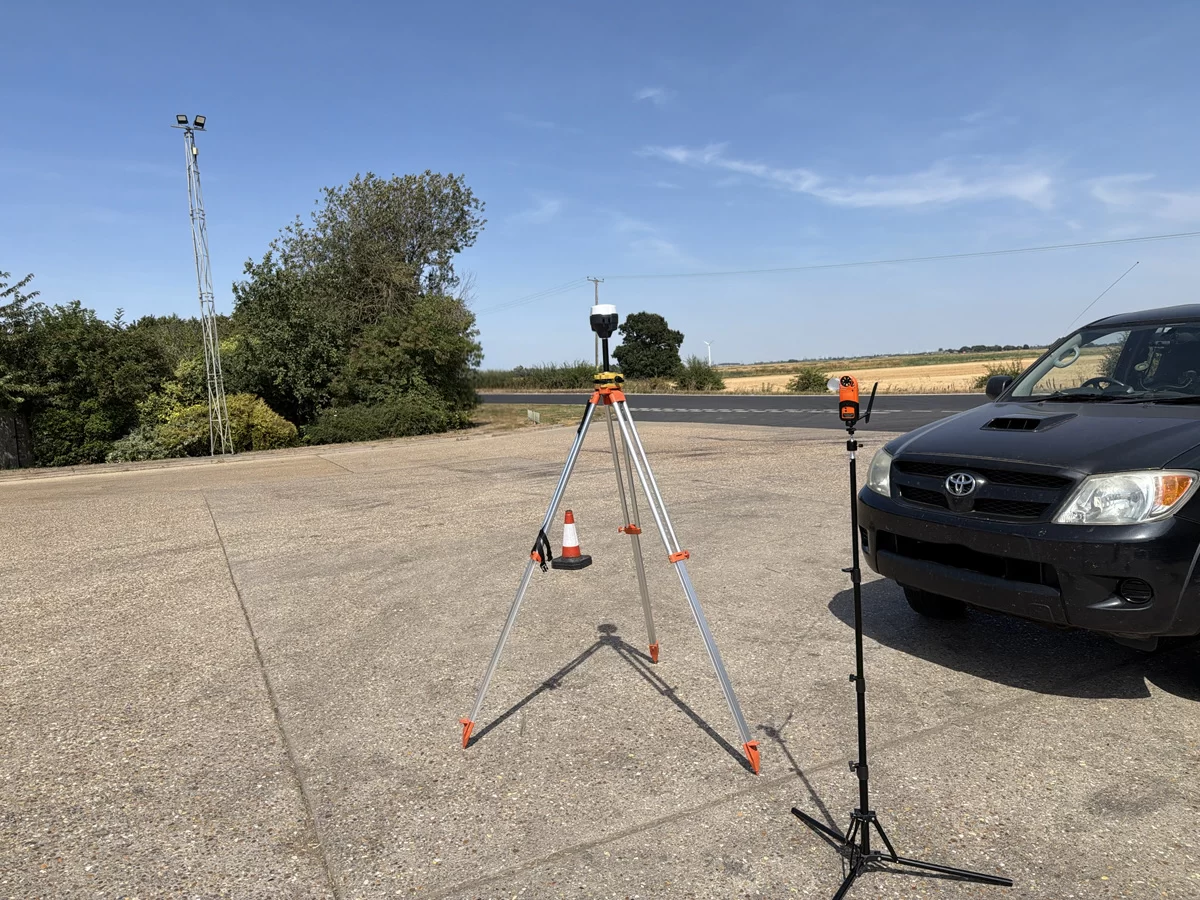
Conditions are assessed before a date is committed and re-checked shortly before travel, and readings are taken in the plane of the array on site rather than assumed from a forecast. Where conditions fall short during capture, the affected passes are repeated or the work is rescheduled, and any deviation is recorded in the report so the reader can weigh the findings properly. Where a return visit is genuinely needed, we would far rather say so than hand over a document that cannot support the conclusion printed on it.
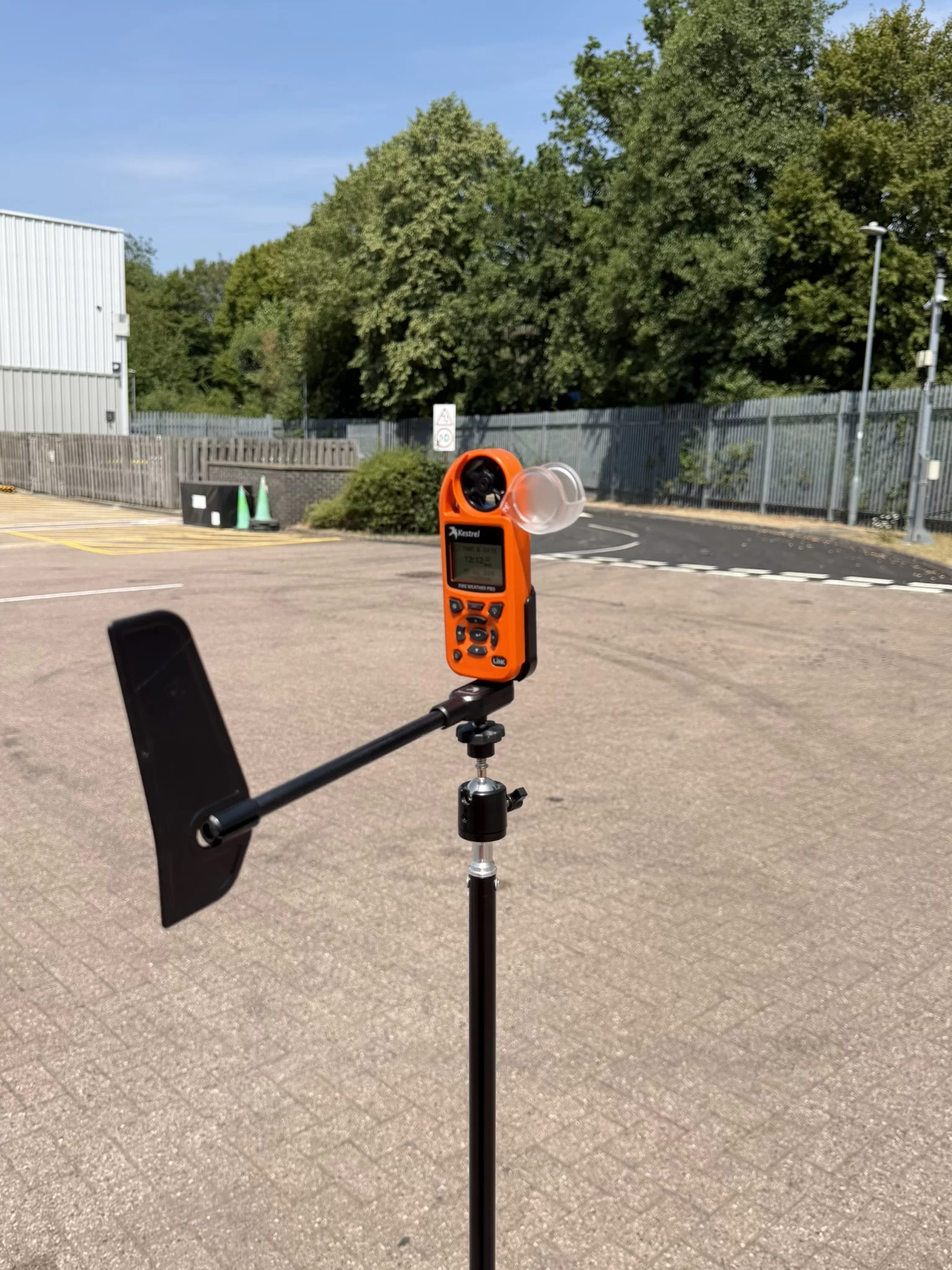
The conditions assessed on site before and during capture, measured rather than assumed:
- Irradiance. 600 W/m² or more and stable to proceed. Passing cloud is worked between the gaps and noted pass by pass. Below 600 W/m², capture is postponed.
- Sky. Clear or thin high cloud to proceed. Broken cloud is timed. Overcast, rain or fog stops the work.
- Wind. Below 5 m/s to proceed, 5 to 8 m/s recorded as a caution, above roughly 8 m/s postponed.
- Array state. Operating under normal load with inverters running. A switched off or curtailed array is not surveyed.
- Surfaces. Dry. Dew or spray is allowed to dry off before capture begins.
- Sun position. High enough to deliver the plane irradiance above, and placed so specular reflection can be kept out of frame.
Irradiance is recorded at the start and end of every pass, and any pass that falls below the threshold is repeated.
Governing Standards
- IEC TS 62446-3:2017, outdoor infrared thermography of photovoltaic modules and plants, which sets the irradiance, weather, camera and geometry requirements and the inspection classes.
- IEC 62446-1:2016, for the plant documentation and the string-level electrical testing a thermal survey is read alongside.
- Surveys conducted by Steve Fisher, ITC Level III Certified Master Thermographer (Infrared Training Centre; Certification #205722059), practising in accordance with the frameworks of ISO 18436-7:2014, ASNT SNT-TC-1A and ANSI/ASNT CP-105, and BINDT CMGEN Appendix B as UK training governance.
- Findings are reported as areas warranting further investigation by a suitably qualified contractor. Drone Media Imaging provides survey, analysis and reporting only.
Planning a Solar PV Inspection?
We survey commercial rooftop and ground-mount arrays across Sussex, Hampshire, Kent and Surrey, travelling throughout the UK, Ireland and Europe. Tell us about the array and the site, and we will tell you honestly when it can be flown and what the report will be able to say.
related posts
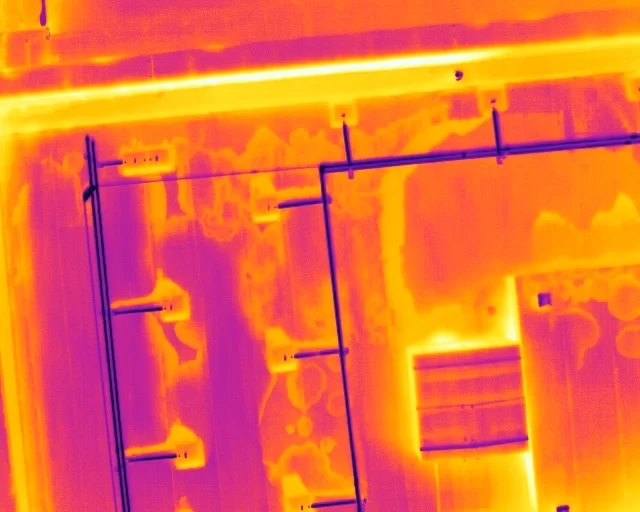
A flat roof is a layered build-up, and only the membrane is designed to keep water out. Once water gets past it, the insulation holds it, and wet insulation gives up its heat far more slowly than dry insulation does. That difference in cooling rate is what a thermal survey records. Because water tracks sideways once it is inside the build-up, the leak, the wet area and the stain below are rarely in the same place.
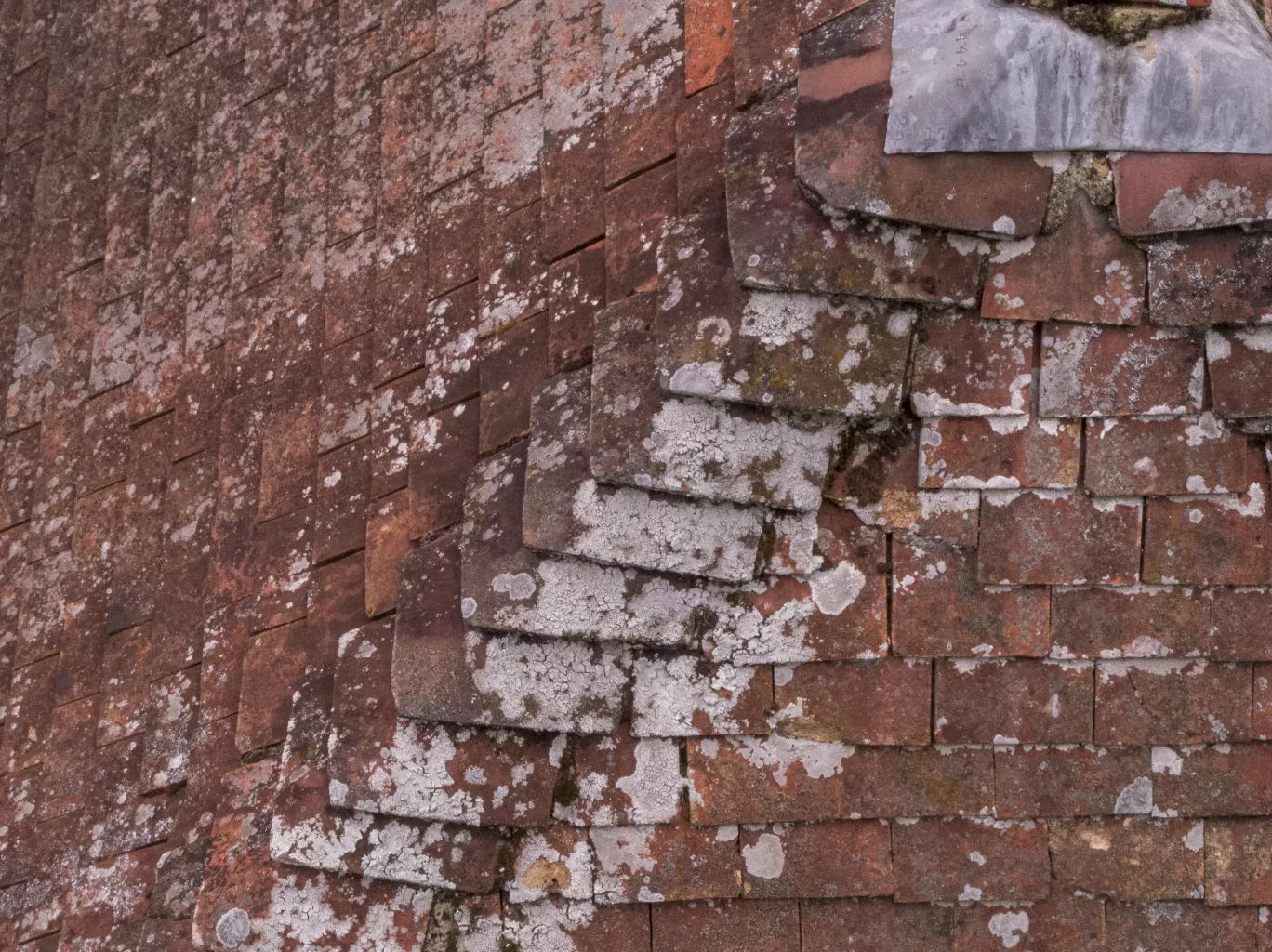
A storm goes through and the roof is suddenly the one part of the building nobody can safely climb. This is a practical look at what to do in the first few days: how soon a roof can realistically be photographed from the air once the weather allows, what makes those images worth having later rather than merely reassuring now, and where a visual inspection stops. Written for building owners, landlords and managing agents across the South East.

Conducting an IEC inspection at Trethosa, Cornwall's solar farm for Natural Generation Ltd.Drone Media Imaging examined the solar panels in line with IEC 62446-3:2017 to ensure compliance with safety standards, ensuring optimal performance and longevity of the solar farm.