Third-Party Thermographic Report Writing
You Captured the Data. Who Signs the Report?
Plenty of capable people can capture good thermal data and cannot certify what it means, because the standards tie interpretation to the certification level of the person who signs it. Drone Media Imaging takes your captured data and turns it into a compliant, certified report, analysed by an ITC Level III Certified Master Thermographer and delivered under your own name where you want it.

You Captured the Data. Who Signs the Report?
You flew the site, the data is good, and now you are looking at a folder of radiometric thermograms wondering who is allowed to draw conclusions from them. It is a common position, and it is not a reflection on the quality of your fieldwork.
The standards governing thermographic inspection separate the person who collects the data from the person who interprets it, and they attach the interpretation to a certification level. A Level 1 thermographer is qualified to capture. Analysing that data, classifying anomalies and putting a name to the conclusions sits at Level 2 or above. That is why a report can be technically correct and still not be worth much to your client if the wrong person signed it.
The useful part is that certification belongs to the individual, not to the firm. So data you captured can be analysed and certified by a Level 3 thermographer and still be issued under your own name and branding, with your client relationship untouched. That is what this service does.
Why Capture and Interpretation Are Separated
Two different jobs, and the standards treat them differently
Thermographic certification runs in levels, and the levels describe what a person is qualified to conclude rather than what equipment they are allowed to hold. That distinction is the whole basis of this service.
Level 1 covers collection. Operating the camera competently, working to a procedure, getting the conditions right and bringing back data that is fit to be analysed. It is skilled work and a great deal of what determines whether a survey is worth anything is decided at this stage, because no amount of later analysis rescues data captured in the wrong conditions.
Level 2 covers interpretation. Reading what the data means, comparing anomalies against sound references, classifying severity and setting out what should happen next. Level 3 adds the ability to establish inspection procedures, oversee the work of others and take responsibility for the technical content of a report. Client-facing reports that carry weight, particularly where an insurer or a warranty provider will read them, generally need to have been analysed at Level 2 or above.
So a firm can be entirely competent in the field and still be unable to issue the document its client actually needs. The gap is not one of skill, it is one of certification, and it is closed by having the right person analyse and sign rather than by anyone acquiring new equipment.
At a glance
What third-party report writing is, who it is for, and what you get back.
- For thermographers who capture but cannot certify. Level 1 thermographers, drone operators and inspection firms whose fieldwork is sound but whose certification does not extend to interpretation.
- Certification attaches to the person, not the company. That is what makes this work: the report is certified by the thermographer who analysed it, whoever issues it.
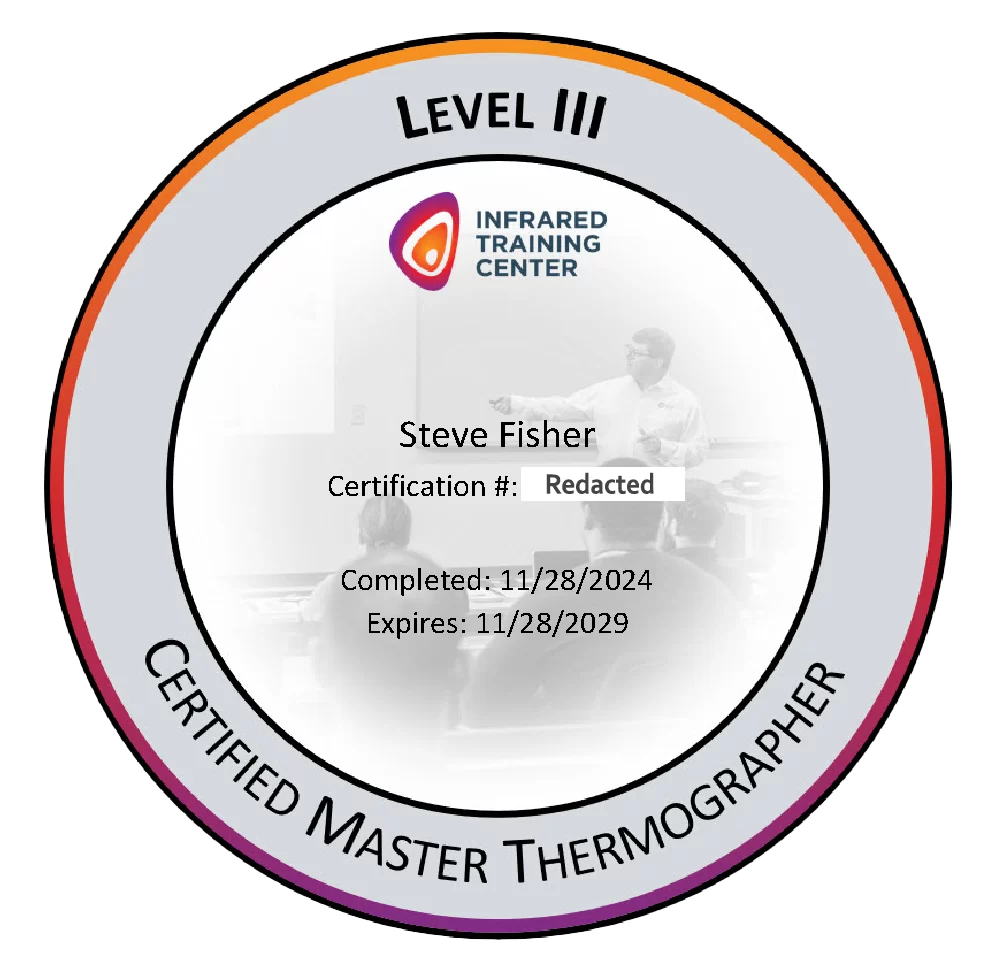
- Analysis by an ITC Level III Certified Master Thermographer, with the certification page naming who carried it out.
- Delivered under your own brand where you want it. Your name on the report, your client, your relationship.
- You keep the client. There is no approach to your customer and no attempt to take the fieldwork.
- A data collection procedure is supplied before you fly, written for your application, so what you capture is fit to certify rather than found wanting afterwards.
- Solar work follows IEC TS 62446-3:2017. Building envelopes, electrical and other applications each have their own governing standard.
You did the flying. Somebody has to be able to sign for what it means.
Related Solar Survey Services
How It Works, Start to Finish
It starts before you fly, not when the data lands
The sequence begins earlier than most people expect. Before you go to site you are sent a data collection procedure written for your particular application, setting out the conditions the survey has to be flown in, what has to be recorded alongside the imagery and how the capture needs to be carried out. Most data that cannot be certified fails here rather than at the analysis, which is why the procedure comes first rather than the requirements being discovered afterwards.
You then submit the radiometric thermograms together with the environmental readings, your site notes and whatever context matters. Nothing exotic is required, but it does need to be complete, and the procedure tells you exactly what complete looks like.
The analysis follows. Every anomaly is examined against a sound reference in the same imagery, classified for severity against the governing standard’s own categories, located precisely enough that somebody can walk to it, and set out with the reasoning visible rather than asserted. Where the data will not support a conclusion, the report says so, because a caveat quietly buried is worth less to you than a straight answer.
The finished report comes back to you to issue. Where you want it under your own name and branding, it is, with the certification page naming the thermographer who carried out the analysis, because that is where the certification sits and it cannot honestly sit anywhere else. Your client relationship is yours throughout, and nobody contacts your customer.
Solar PV Level 3 Report Writing for SKYNOX Drones, IEC 62446-3 from Lanzarote
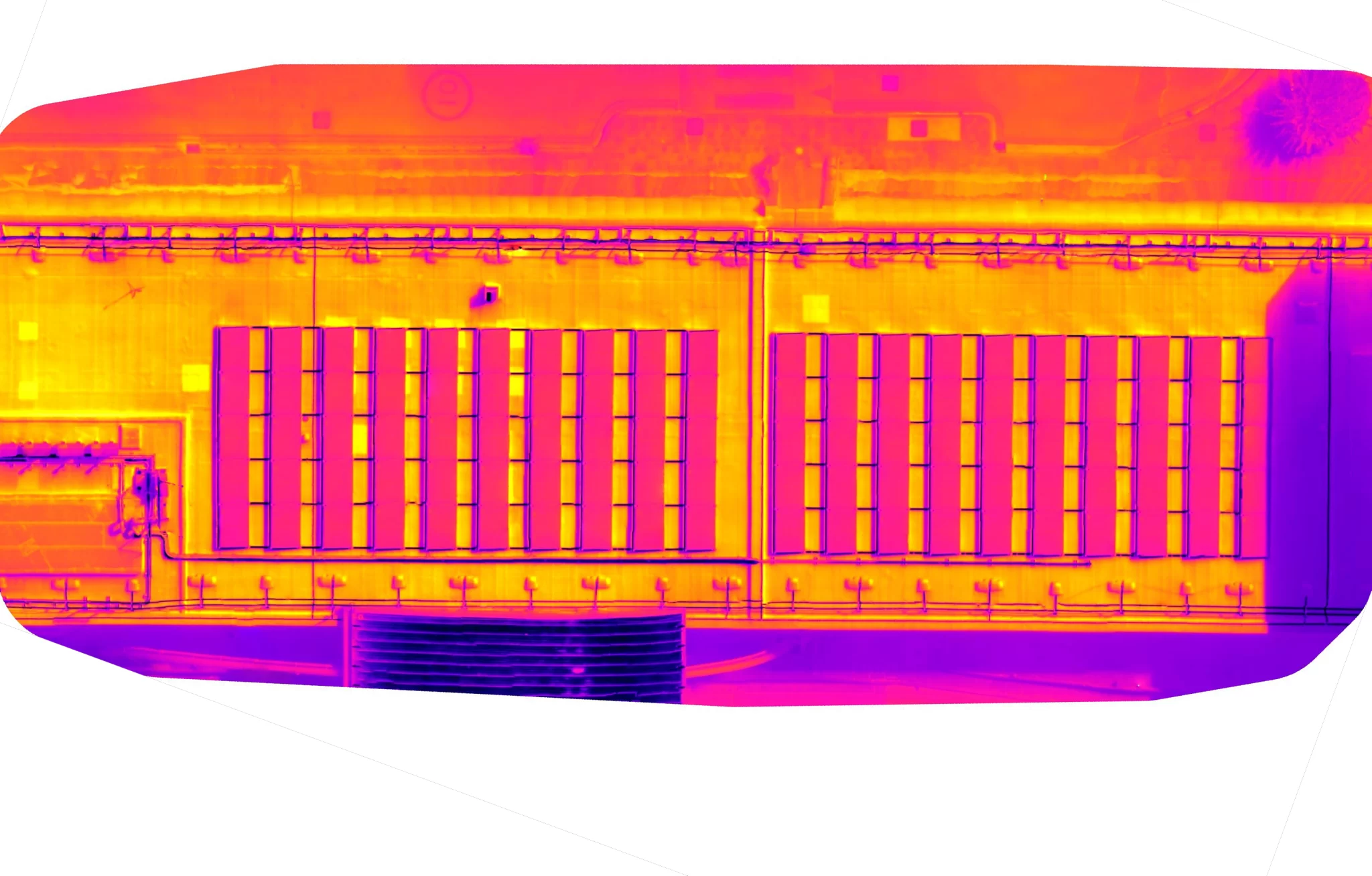
An aerial survey specialist in Lanzarote captured the radiometric data for their supermarket client and needed the Level 3 analysis and the certified report to go with it. The data never left the island. Four array sections were classified to IEC 62446-3:2017, identifying a High severity bypass diode fault and widespread string-level anomalies, with one array confirmed as a clean all-clear. Delivered entirely remotely.
What Makes Data Certifiable
The single most useful thing to understand before commissioning this is that a report can only be certified if the underlying capture supports it, and that is decided on site rather than at a desk. No analysis, at any level, recovers data collected outside the conditions the standard sets.
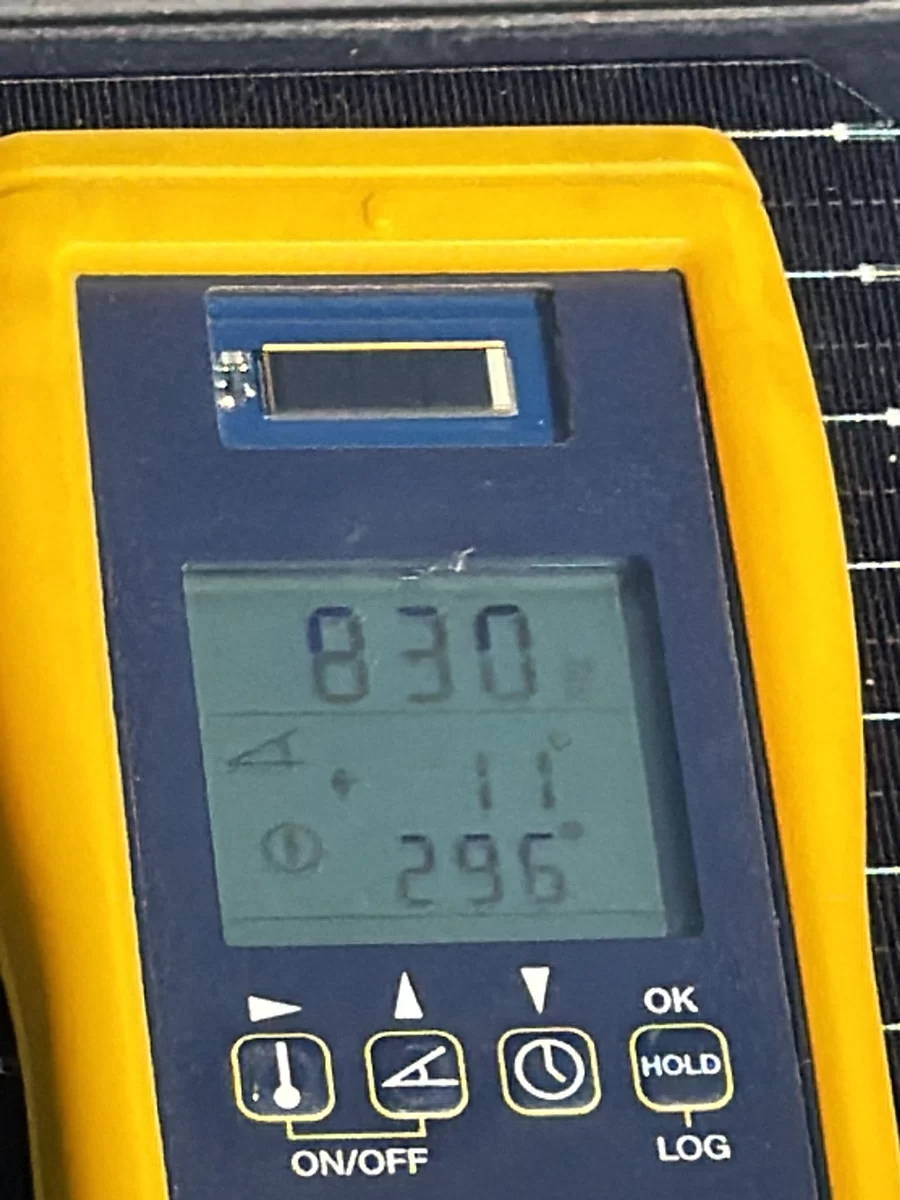
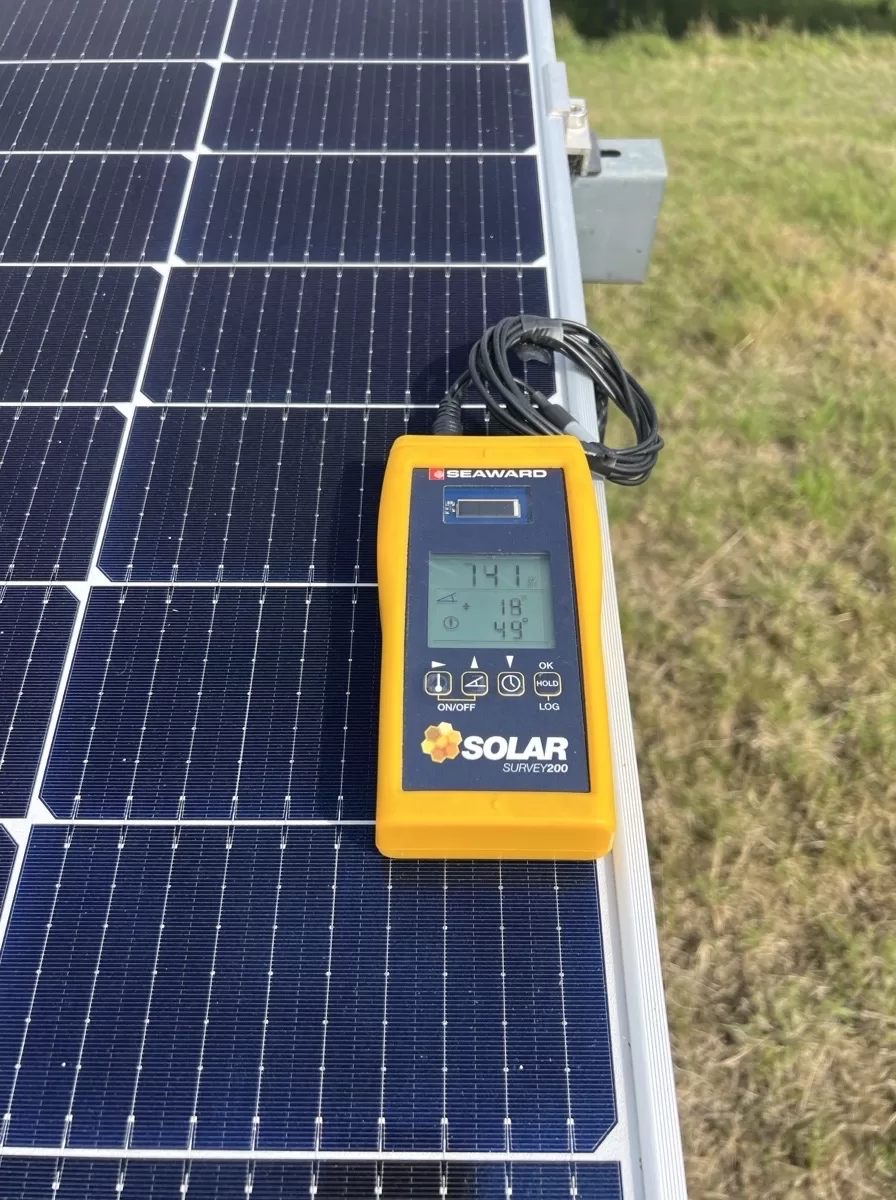
For solar work under IEC TS 62446-3:2017 that means the array has to have been generating and thermally stable, with irradiance, wind and cloud inside acceptable limits, and the environmental conditions recorded rather than remembered. It means the imagery has to resolve the modules properly and be captured square enough to the surface that readings are not distorted. And it means the camera has to have been set for the surface it was looking at and for what was being reflected off it on the day.
None of that is difficult once you know it is required, which is exactly why the procedure is issued before the flight rather than the requirements being discovered afterwards. Where data falls short, you are told what is missing and why, rather than being handed a report with the weaknesses quietly written into the caveats.
Beyond solar, the same principle applies across building envelopes, electrical installations and other thermographic applications, each with its own conditions and its own governing standard. If you are unsure whether what you already hold can be certified, ask before assuming either way.
- IEC TS 62446-3:2017 is the technical specification for outdoor infrared thermography of photovoltaic modules and plants, and it governs the conditions, method, competence and reporting of solar work certified through this service.
- ISO 18436-7:2014 sets the international framework for thermographic condition monitoring personnel and defines what the certification levels mean. Our analysis practice is aligned to it, alongside ASNT SNT-TC-1A and ANSI/ASNT CP-105.
- EN 13187:1999 applies where the subject is a building envelope rather than a photovoltaic installation.
- Analysis and certification by Steve Fisher, ITC Level III Certified Master Thermographer (Infrared Training Centre; Certification #205722059), holding iRed Academy Thermal Imaging Category 2 and Drone Thermography Category 1.
- Drone Media Imaging is a trading name of VisualChaos Studios Ltd, fully insured for commercial operations across the UK, Ireland and Europe.
Send Us What You Have
Tell us the application, roughly how much data there is and what the report has to satisfy, whether that is a client, an insurer or a warranty provider. If you have not flown yet, say so and the data collection procedure comes to you first, which is by far the better order to do this in. If you have already captured and are not sure whether it can be certified, ask rather than assume either way, and we will tell you straight. Scope determines cost on this work, which is why we quote rather than publish a rate card. Quotations and consultations are free, and if the survey itself would suit you better than the reporting alone, we do that too.