Solar PV Thermographic Inspection of the Humber Bridge Offices Rooftop Array
Why a Commercial Solar Array Needs a Thermal Baseline
A solar PV thermographic inspection was carried out on the 100 module rooftop array at the Humber Bridge Offices in East Yorkshire, an installation approaching two and a half years of service with no thermal record of its condition. The survey was flown by drone under IEC 62446-3:2017 as a simplified qualitative thermographic assessment, capturing every module in the installed population at a detail altitude of 20 metres. Conditions were favourable throughout, with in-plane irradiance above 800 W/m2 under an unbroken clear sky, light wind, and the array confirmed generating on load. Each module was assessed against a healthy reference module within the same thermogram rather than against an absolute temperature, and no measurement anywhere in the dataset reached the standard’s anomaly reference threshold. The inspection was certified all clear by our Level 3 Master Thermographer. Rather than closing as an absence of findings, the result was issued as the array’s first baseline thermal reference, giving the asset owner a defined point of comparison for every inspection that follows.
Project Overview
Subject
Solar PV thermographic inspection, Rooftop solar array inspection, Solar inspection East Yorkshire, Commercial solar asset owners, IEC 62446-3
Skills Used
IEC 62446-3 Solar Thermographic Inspection, Qualitative Thermal Analysis, Level 3 Report Writing
Portfolio Tags
Solar PV Inspection, Rooftop Solar Array, Thermographic Survey, East Yorkshire, IEC 62446-3, Commercial Solar, Drone Media Imaging, What Is A Baseline Thermal Survey
What Does A Clear Solar Thermographic Inspection Prove, Solar PV Thermal Survey East Yorkshire, IEC 62446-3 Rooftop Inspection For Commercial SitesWhat Does A Clear Solar Thermographic Inspection Prove, Solar PV Thermal Survey East Yorkshire, IEC 62446-3 Rooftop Inspection For Commercial Sites
Solar PV Thermographic Inspection of the Humber Bridge Offices Rooftop Array
~ A clear result, and the baseline this array never had ~
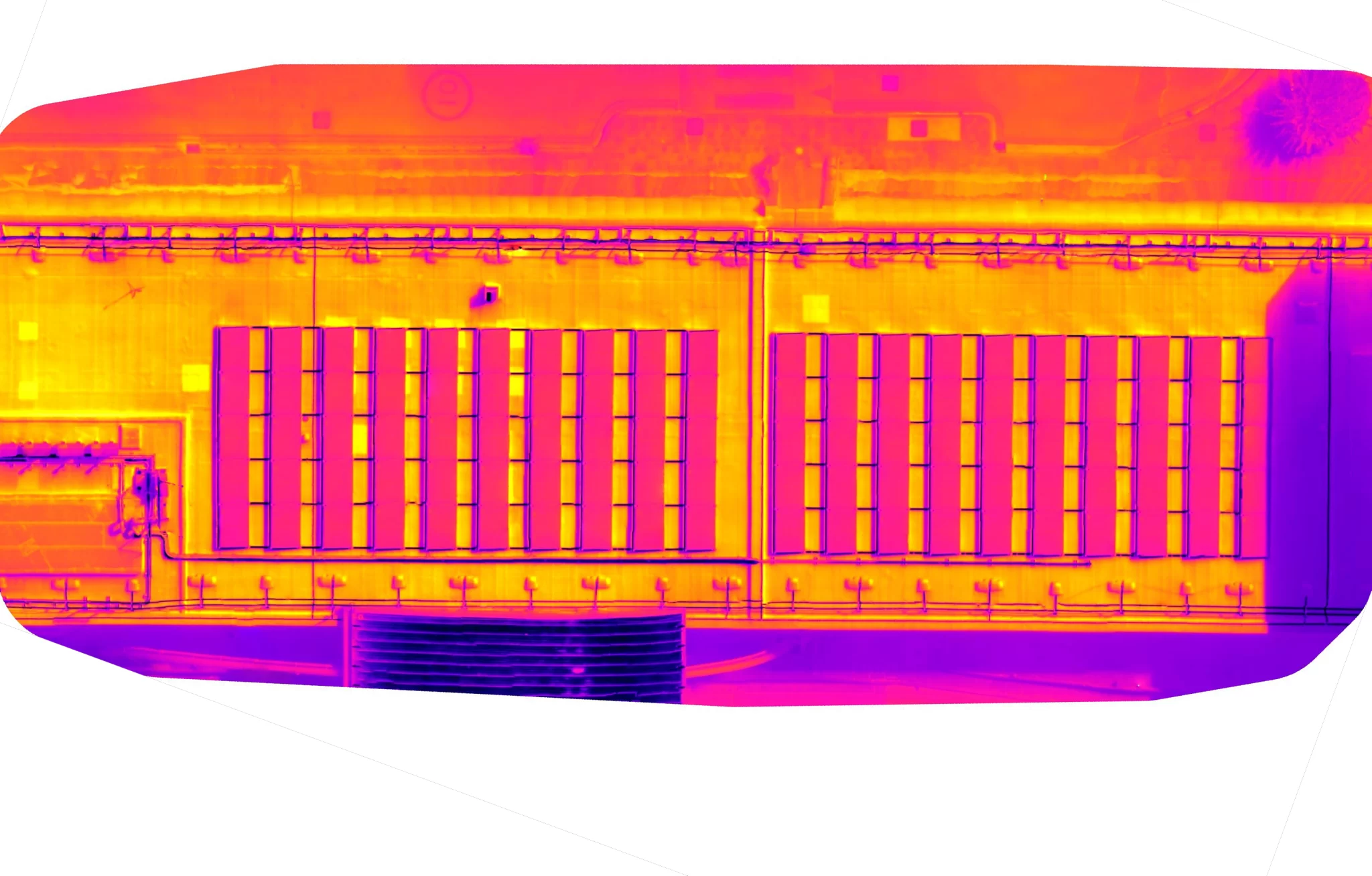
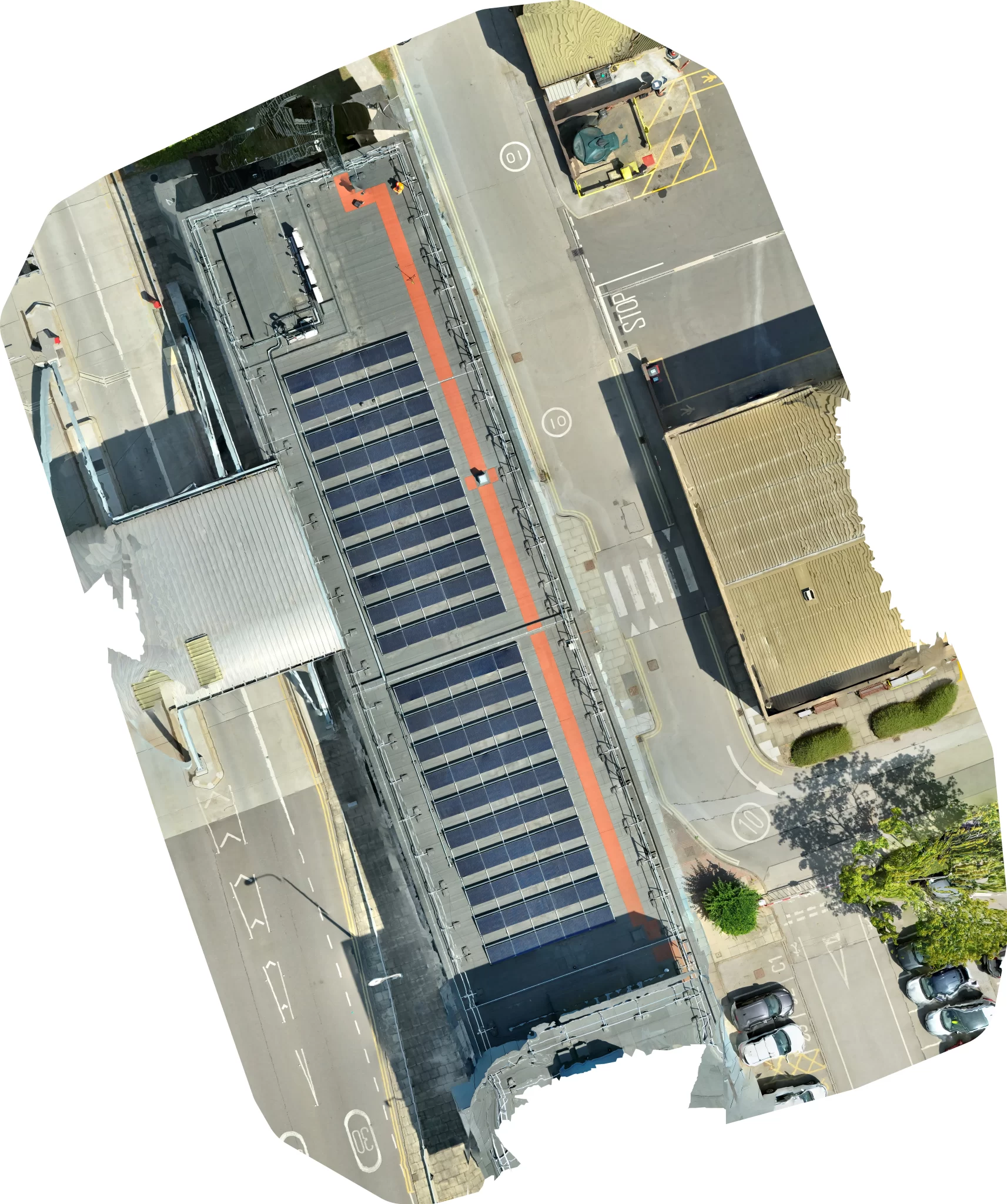
Most commercial arrays have no record of what healthy looks like
Why a Commercial Solar Array Needs a Thermal Baseline
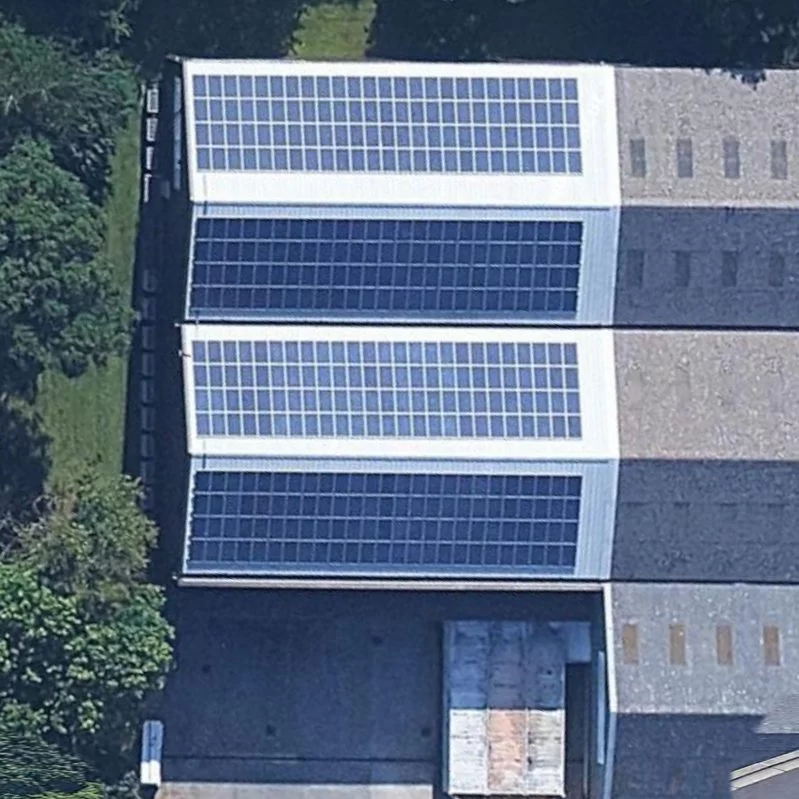
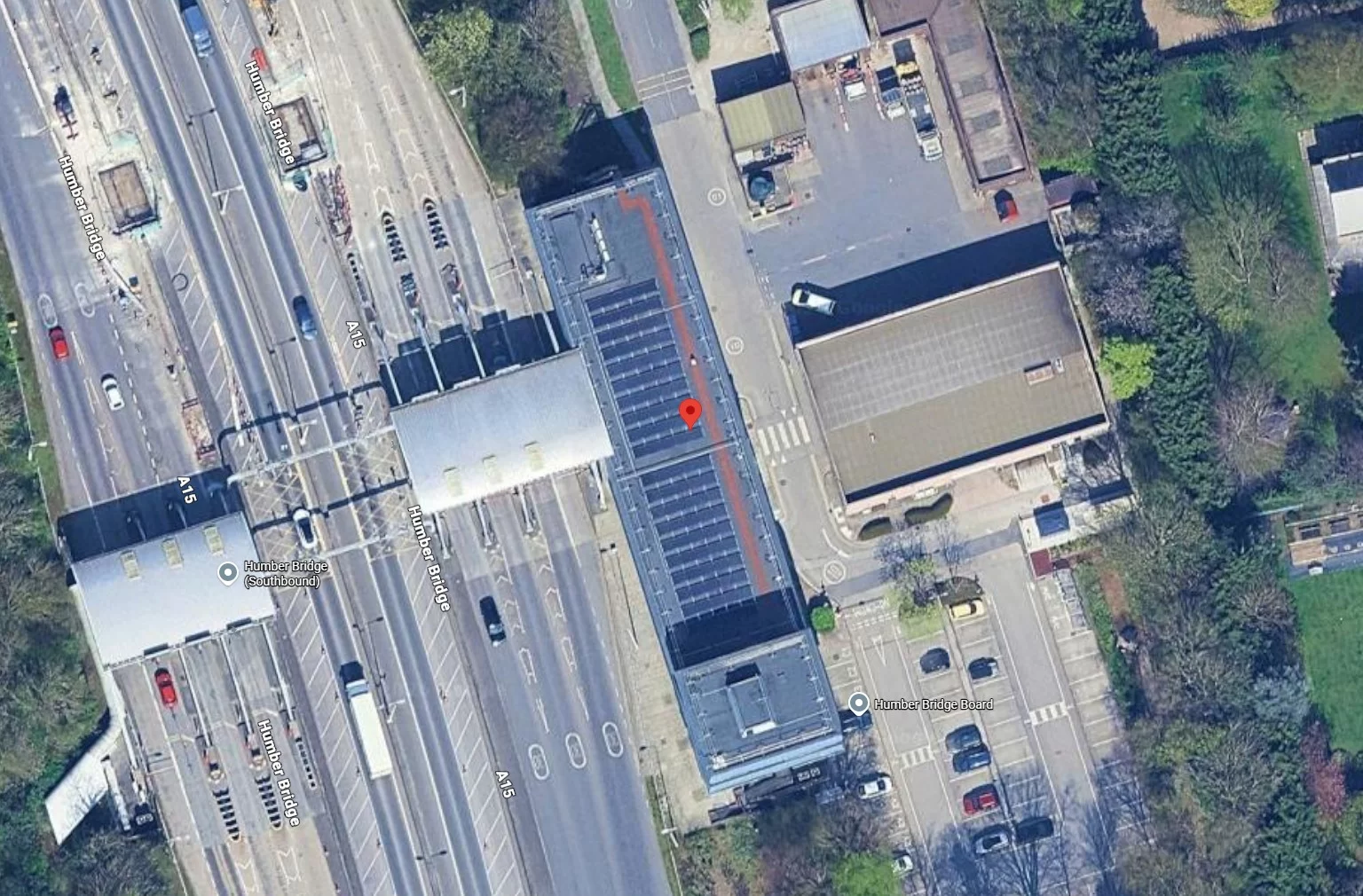
The rooftop array at the Humber Bridge Offices comprises 100 modules across a single roof elevation, commissioned at the start of 2024 and generating steadily since. It is a typical commercial rooftop installation in that respect, sized to offset the building’s own consumption, sitting quietly on a flat-pitched roof, and drawing attention only when something appears in the monitoring figures. No previous thermographic record of the array was available to this survey.
That absence is the ordinary condition of most commercial solar in the United Kingdom, and it creates a specific problem. Thermography identifies faults by comparison, and the most useful comparison of all is against the same array at an earlier point in its life. Without an earlier record, a warm module found in year eight is simply a warm module: there is no way to say whether it has been warm since commissioning or whether it developed last winter. The distinction matters, because one is a manufacturing characteristic to monitor and the other is a fault progressing.
A solar PV thermographic inspection delivered by Drone Media Imaging addresses the immediate question of current condition, and where the result is clear it answers the longer question at the same time. This inspection was commissioned as a condition assessment of the array as it stands. It closed as something more durable, a certified record of the installation performing as it should, against which everything that follows can be measured.
Governing Standards
- IEC 62446-3:2017 The international standard for thermographic inspection of photovoltaic modules and plants, which sets the operating and environmental conditions a survey must meet and the qualitative basis on which thermal behaviour is assessed.
- ISO 18436-7 The framework against which thermographic condition monitoring competence is aligned, covering the training and assessment expected of personnel carrying out and interpreting infrared surveys.
How was the solar thermographic inspection carried out?
How Was the IEC 62446-3 Solar Inspection Carried Out?
IEC 62446-3:2017 does not permit a solar thermal survey to be flown whenever it suits the diary. A fault only radiates heat when the array is working hard, so the standard sets a minimum irradiance of 600 W/m2, limits wind speed because moving air cools modules and washes out the very differences the survey exists to find, and requires the array to be in thermal steady state rather than passing in and out of cloud shadow.
This survey was flown in the late morning under an unbroken clear sky, with in-plane irradiance recorded between 812 and 830 W/m2 and wind averaging well below the limit. Environmental conditions were logged continuously using IEC-compliant instruments, and the array was confirmed generating on load for the full duration. The complete module population was captured in a single aerial session at 20 metres above the module surface, giving sufficient resolution to assess behaviour at individual cell level.
Analysis followed the EL1 baseline method. Rather than judging modules against an absolute temperature, which shifts with weather, time of day and instrument, each thermogram carries its own reference region placed over a healthy module in the same image. Every other measurement in that thermogram is then read as a differential above that local reference, and anything reaching the standard’s anomaly threshold is classified. This is what makes a solar thermographic inspection defensible: the test applied is specific, repeatable, and stated.
- Included: full-population aerial thermographic capture, EL1 baseline analysis at cell, module, sub-string and string scale, environmental compliance logging, and certified Level 3 reporting.
- Not included: electrical testing, intrusive investigation, and any remedial or corrective work.
- Findings identify areas warranting further investigation by a suitably qualified contractor, and are read alongside inverter monitoring data and other available performance information.
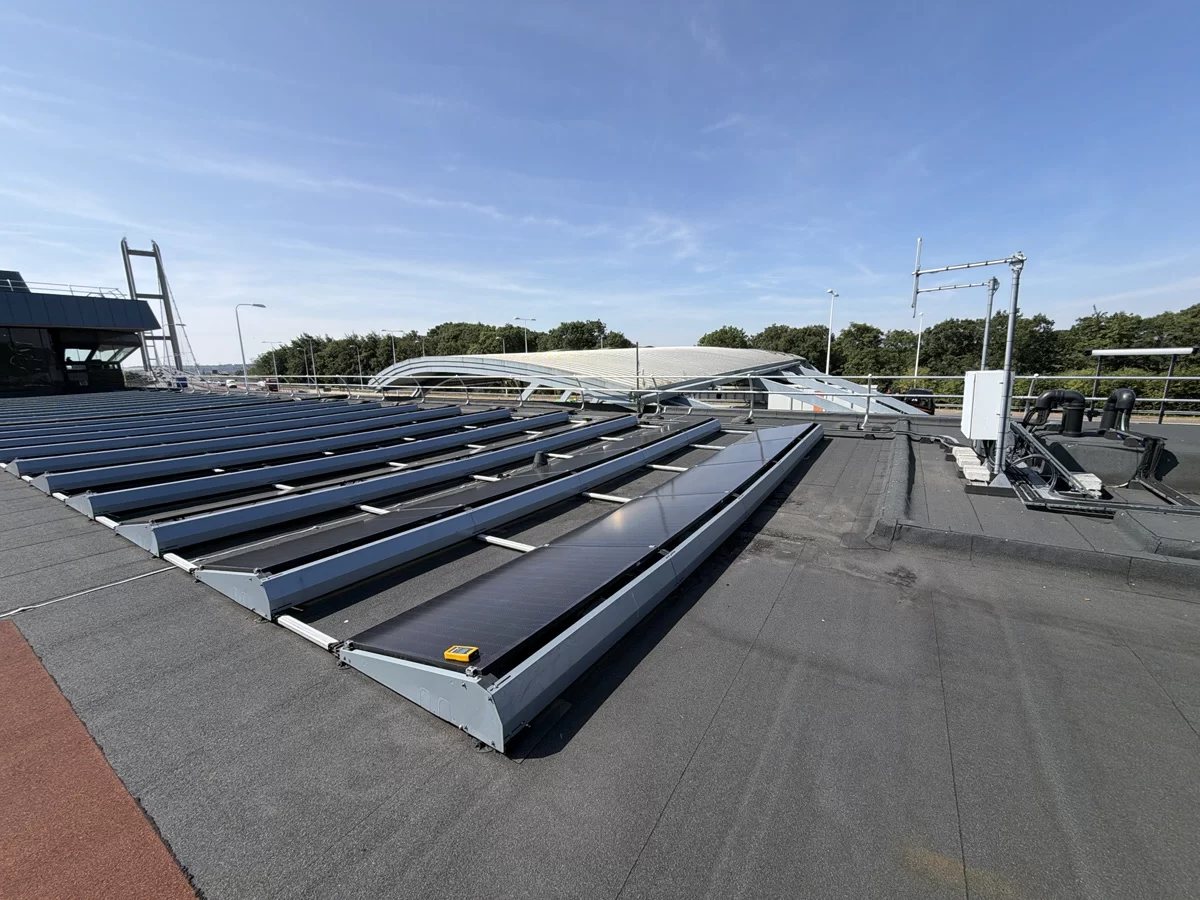
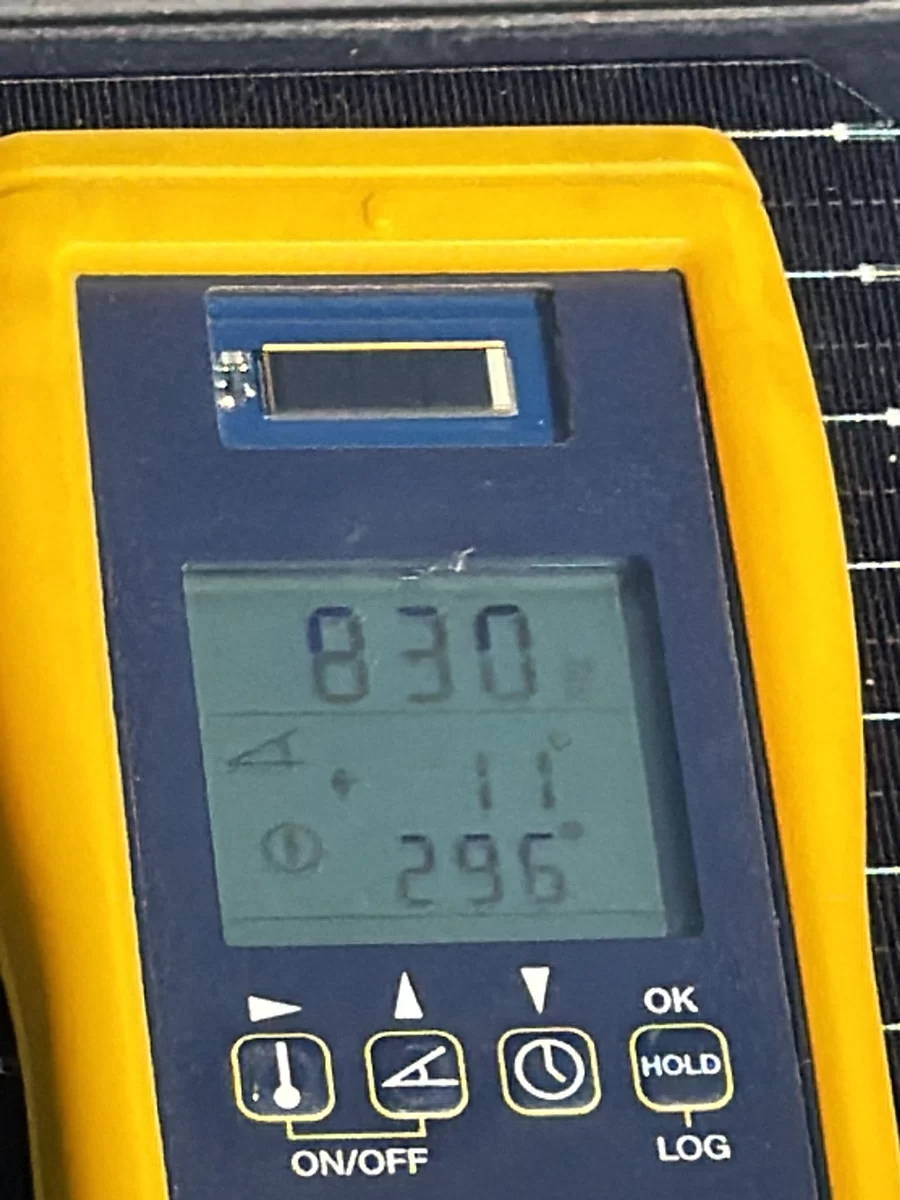
What did the solar thermographic inspection find?
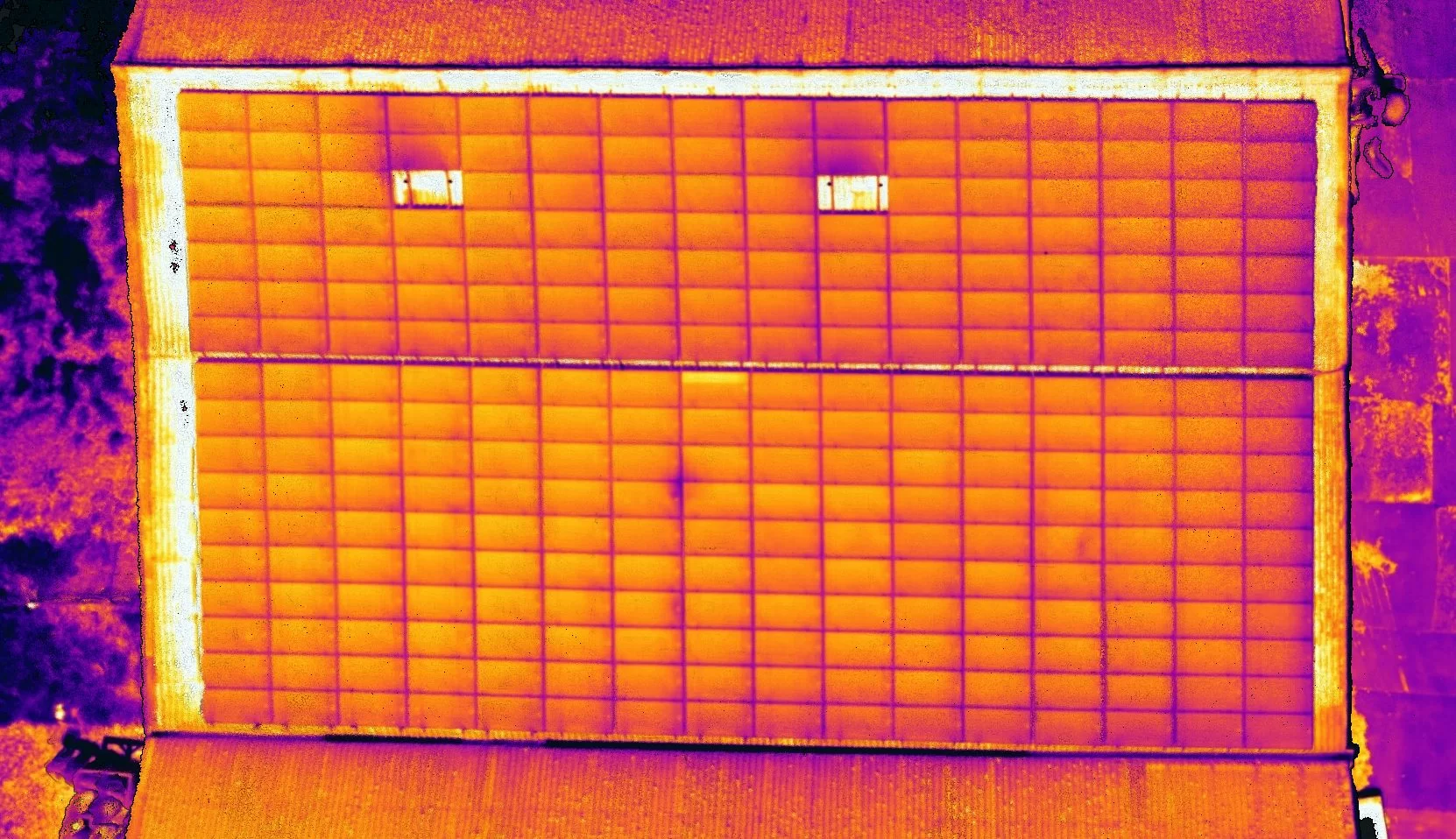
No measurement anywhere in the dataset reached the anomaly reference threshold. All 100 modules presented in thermal equilibrium with one another across the roof elevation, with no discrete feature departing from the surrounding array at cell, module or sub-string scale. The array was assessed against the full fault taxonomy the standard and our own diagnostic framework cover, including cell hotspots, bypass diode activation, potential induced degradation, soiling and shading, junction box behaviour, and interconnect degradation. Every category returned nil.
The thermal evidence also confirmed the array’s operating state independently of the site record. Healthy modules were running approximately 22°C above ambient air temperature, which is the relationship expected of a module population working under electrical load at the recorded irradiance. An array standing open-circuit behaves differently, because none of the absorbed energy is leaving as electricity and a greater proportion is dissipated as heat instead. The observed differential is therefore consistent with a system genuinely generating, which matters, because a thermal survey of an unloaded array is worthless regardless of how clean the images look.
One qualification was recorded. The electrical architecture of the installation could not be established during the survey, so it is not known whether power electronics are fitted at module level. Where such devices are present they suppress string-scale thermal behaviour by design, and its absence then carries little diagnostic weight. The result is accordingly reported as a confirmation of module and cell condition rather than of the string circuits.
What was the outcome for the asset owner?
The inspection was certified all clear by our Level 3 Master Thermographer. That is a positive certified outcome rather than an empty report: a photovoltaic installation operating correctly under appropriate irradiance and load is expected to present thermally uniform, and confirming that uniformity under conditions capable of revealing a fault is a meaningful finding. Conditions on the day were as favourable as the method allows, which is precisely what gives the result its weight.
The deliverable went beyond the declaration. The report carries a baseline comparison reference recording the figures a future inspection needs in order to judge whether its own conditions are comparable, alongside a single annexed thermogram showing what the array looks like in known-good condition. Together they give the asset owner, or any thermographer they appoint in future, both the numerical and the visual reference points that make a later comparison defensible.
- Retain the report and its baseline reference with the installation’s operation and maintenance records.
- Compare future surveys by thermal pattern and by differential above each survey’s own baseline, not by absolute temperature.
- Confirm the electrical architecture at the next opportunity, which a single photograph usually settles, to remove the string-scale qualification.
- Reconcile the recorded system capacity against the module count established by survey.
An array in its third year returning a uniform thermal profile across its whole module population is a good position for an asset owner to be in, and a better one to be able to prove. The value of this inspection will grow rather than fade, because every survey that follows now has something to be measured against.
Does your solar array have a certified baseline?
Drone Media Imaging carries out IEC 62446-3:2017 solar PV thermographic inspections for commercial asset owners, with all analysis and reporting completed by a Level 3 Master Thermographer. We work across Sussex, Hampshire, Kent and Surrey, and travel throughout the United Kingdom, Ireland and Europe. Whether your array has never been surveyed or you are due a repeat inspection, get in touch to discuss what a certified thermal record would give you. Drone Media Imaging is a trading name of VisualChaos Studios Ltd.