

Airspace Begins at the Ground, Not Above the Roof
Every drone flight takes place in airspace, and airspace begins at the ground. It does not start at some height above the roof or the tree line, and owning the land underneath it confers no right to what sits above. That single fact explains why an operator who is asked to photograph a warehouse, map a field or survey a solar array will ask for the address before saying anything useful about a date.
Most commercial drone work happens low, within 120 metres of the surface, in the part of the sky that most other aircraft keep out of. That does not put it outside the rules. The same map that governs an airliner on approach or a helicopter crossing the county governs the drone, and it is layered with zones that are permanent, zones that appear for a weekend, and hazards that never appear on any ordinary map at all.
The purpose of this piece is to explain what those zones are in plain terms, how they decide whether and when a site can be flown, and what a client should expect to hear back once the operator has done the checking. None of it is the client’s job to work out. It is worth understanding because the airspace answer is frequently the thing that fixes the booking date, not the diary.
Blog Content TL;DR...
What airspace means for a drone flight over your site, and how it decides the booking.
- Airspace begins at the ground, so every drone flight takes place inside it, and owning the land does not change that.
- Controlled airspace is managed by an air traffic service; a drone working low often sits beneath it but is never exempt from it.
- Prohibited, restricted and danger areas are permanent and published, and each carries its own entry conditions.
- Temporary restrictions for events and emergencies can appear anywhere at short notice, so the check is repeated before every flight.
- Expect to be told plainly which airspace your site sits in and what that means for the date.
The airspace answer, not the diary, is usually what fixes the date.
What Airspace Means When the Aircraft Is a Drone
Controlled or uncontrolled, the drone is inside it either way
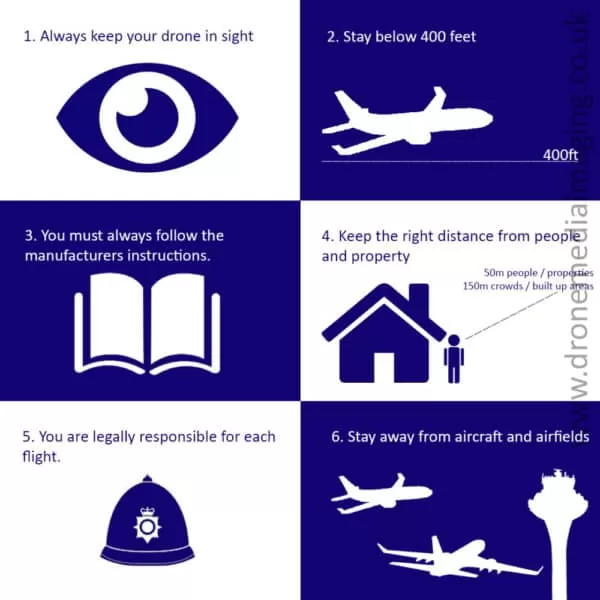
The sky over the UK is divided into classes, and the division that matters most to a drone flight is the one between controlled and uncontrolled airspace. Controlled airspace is where an air traffic service manages what flies, chiefly the control zones around the larger airports and the routes that join them. Uncontrolled airspace, the larger share of the map, is where aircraft keep their own separation under the rules of the air, with no controller directing them.
Below it is not the same as outside it
Much controlled airspace has a floor well above the ground, and a drone working within 120 metres of the surface sits under it. Around an airport the control zone reaches down to the ground, so a drone lifting off inside it is in controlled airspace from the first metre of climb. Whether that needs a permission from the controlling unit, a notification, or simply awareness of what is overhead depends on the zone and on the operator’s own authorisation, and it is established at planning from the published aeronautical information, never assumed.
Neither the Open category nor the Specific category exempts a flight from the airspace around it. The operational authorisation Drone Media Imaging holds permits work anywhere in the UK, expressly subject to whatever airspace restriction applies on the day. Uncontrolled airspace is not empty either: gliders, microlights, helicopters and light aircraft use it freely and low, so the check does not stop at the class of airspace and goes on to what is actually published for that patch of sky. A site near a protected aerodrome adds a further layer, the Flight Restriction Zone, which is covered in its own article on flying near an airport.
how airspace affects a drone flight, can a drone fly in controlled airspace, checking NOTAMs before a drone flighthow airspace affects a drone flight, can a drone fly in controlled airspace, checking NOTAMs before a drone flight
The Zones and Hazards That Sit on the Chart
Beyond the class of airspace, the aeronautical chart carries three kinds of entry that can stop a flight or change its date, and each is checked for every job.
Permanent restrictions
Prohibited, restricted and danger areas are published in the UK Aeronautical Information Publication and stay on the chart until they are withdrawn. Prisons, military bases and ranges, nuclear sites and royal palaces sit inside them, and the rules vary by area: some bar entry outright, some allow it only with a permission obtained in advance, and a danger area may be active only at published times. A site that shares a boundary with one is not necessarily unflyable, but it is never flown on assumption.
Hazards that are not restrictions
The chart also marks things that do not forbid flight but can affect it. A high intensity radio transmission area, marked around a powerful transmitter, can disturb the link between the pilot and the aircraft, and overhead lines, masts and wind turbines are read for the same reason. Low flying military aircraft use routes across rural areas and are the subject of a separate article.
Temporary restrictions
Restrictions of flying are put in place for organised events, air displays, major sporting fixtures and emergencies, sometimes months ahead and sometimes at a few hours’ notice, and they are published by notice to aviation. Some apply only to unmanned aircraft, others to everything that flies. Because they can fall anywhere, including over a site that was clear when the job was quoted, they are checked at planning and again in the 24 hours before flight, and a live one over the site postpones the work rather than being worked around.
How a Site Is Checked, and What You Will Hear Back
Before the quote, and again before the flight
The airspace check starts at the enquiry, not on the morning. From the address, the operator establishes the class of airspace over the site, any aerodrome zone it falls within, any permanent restriction it touches, the sensitive sites nearby, and the hazards that could affect the aircraft or its radio link. That desk study decides whether the job can be done lawfully and safely at all, what permissions it needs and how long they take, and therefore what a realistic date looks like.
The check is then repeated before the flight. Notices are reviewed in the 24 hours before departure, every one returned for the area is given a recorded decision including those judged not relevant, and the picture is confirmed again on arrival. Airspace changes, and a site that was clear a fortnight ago can carry a temporary restriction on the day.
What you should expect to hear
You should hear the answer in plain terms: your site sits in this kind of airspace, this restriction or zone applies, and this is what it means for the booking. The site is clear and can be flown on any suitable day. A permission is needed, it takes time and it may come with conditions, so the date follows the permission. A restriction applies for a period, so the work moves outside it. Or, rarely, the site cannot be flown as asked and the brief needs changing.
None of this is yours to work out, and a date that has not been checked against the sky above it is not a date worth having.

- Airspace: the air above any outdoor space, starting at the ground, regardless of who owns the land beneath it.
- Controlled airspace: airspace in which an air traffic service manages the aircraft within it, such as the control zone around a larger airport.
- Uncontrolled airspace: airspace where aircraft keep their own separation under the rules of the air, with no controller directing them.
- Prohibited, restricted and danger areas: the three types of permanent airspace restriction, published in the UK Aeronautical Information Publication, with entry conditions that vary by area.
- Flight Restriction Zone: the protected airspace around an aerodrome, entered only with the aerodrome’s permission.
- High intensity radio transmission area: a charted area around a powerful transmitter where the radio link to an aircraft may be disturbed.
- Temporary restriction of flying: a time-limited restriction put in place for an event, an emergency or a security operation.
- NOTAM: a notice to aviation, the official means by which temporary hazards and restrictions are published.
- Operational authorisation: the CAA permission under which Specific category commercial drone work is flown, always subject to the airspace on the day.
Governing Rules and Practice
- Operations are conducted by VisualChaos Studios Ltd, trading as Drone Media Imaging, under a CAA Operational Authorisation in the Specific category, which permits work throughout the UK expressly subject to any airspace restriction in force on the day.
- Airspace classification, permanent restrictions and permissions are determined at planning from the UK Aeronautical Information Publication, CAP 722 and the Air Navigation Order 2016 as amended, never from an informal source.
- Temporary restrictions and notices to aviation are reviewed at planning and again in the 24 hours before flight, and every notice returned for the area is given a recorded decision.
- Flight within a Flight Restriction Zone or other restricted airspace takes place only with the appropriate permission, obtained and recorded for each job.
- Landowner permission for the take-off and landing site is obtained separately and is never a substitute for an airspace permission.
Tell Us Where the Site Is and We Will Check the Airspace
Send us the site address and what the aerial work has to achieve, and we will tell you which airspace it sits in, whether any restriction or permission applies, and what that means for a realistic date. Coverage across Sussex, Hampshire, Kent and Surrey, travelling throughout the UK, Ireland and Europe.
related posts
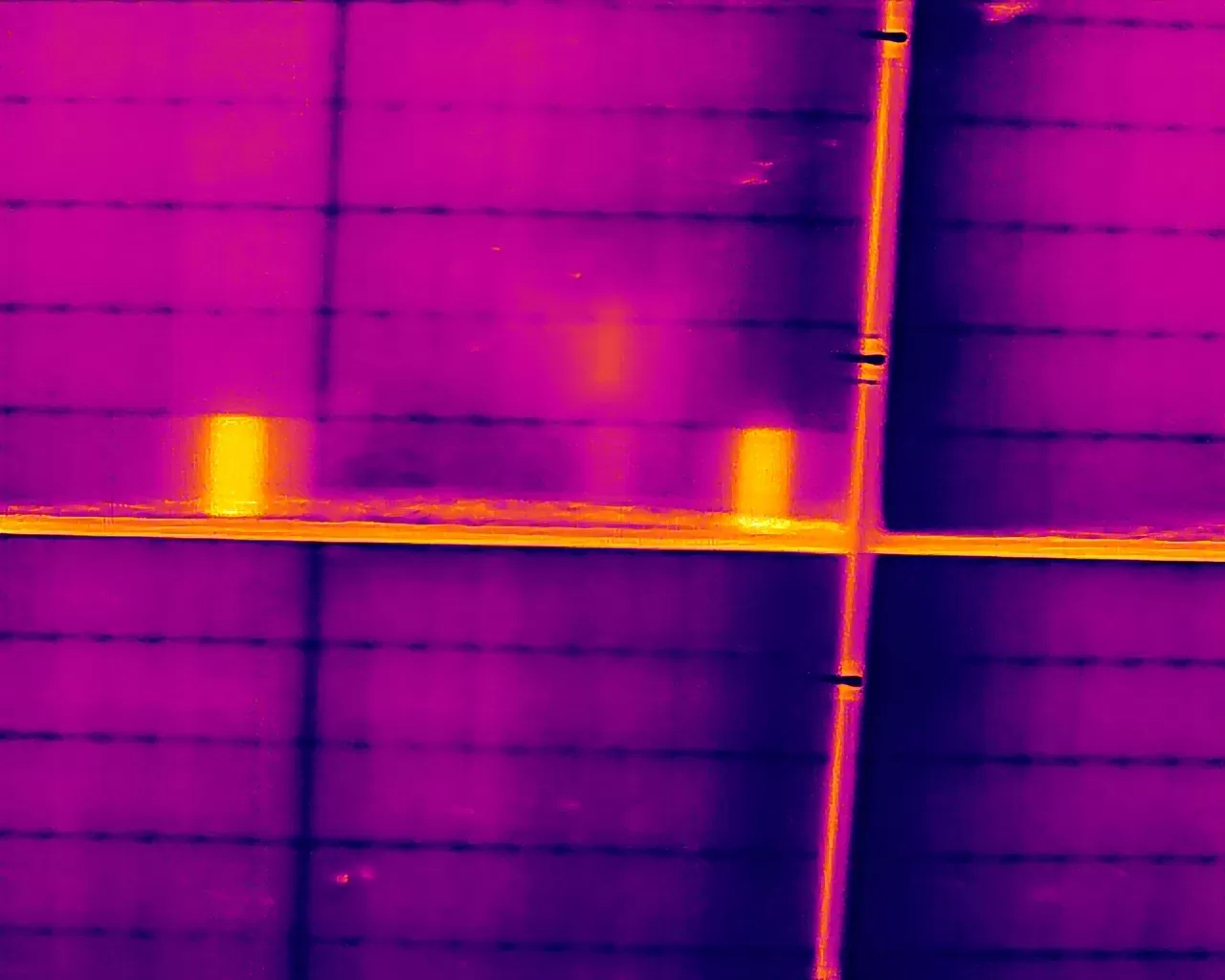
Almost every solar thermographic report leads with hot spots, but a hot spot is a symptom rather than a diagnosis. The same temperature rise can come from a bypass diode, a microcrack, potential induced degradation or a disconnected string, and one common reading is not a fault at all. This piece explains what the temperature figure does and does not tell you, and the symmetry rule that separates electrical faults from cell damage on a commercial rooftop or ground-mount array.
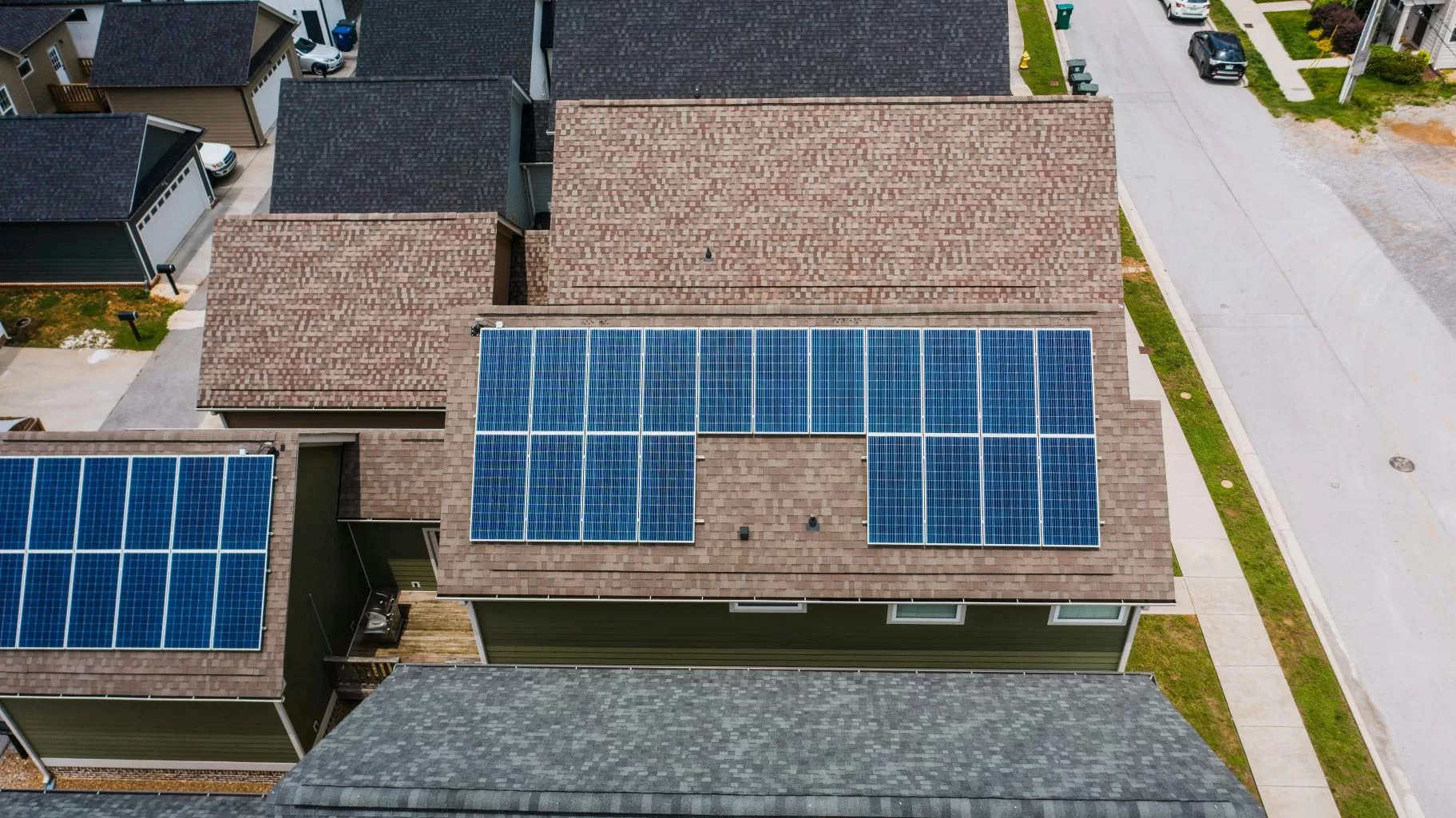
A domestic solar array has no moving parts, makes no noise and sits out of sight, so nothing about a developing fault announces itself. The generation figure an owner can see is one number for the whole system, and a genuine loss can sit inside the ordinary variation of British weather. Drone Media Imaging looks at what those figures do and do not tell you, and why periodic thermographic survey examines the array itself rather than its aggregate output.

The air a survey drone works in is shared. Air ambulances, police helicopters, light aircraft, infrastructure inspection flights and military low flying training all have legitimate business below 120m, and none of them knows a drone is there unless somebody says so. This piece explains how a commercial operator builds the low level picture before a flight, what the United Kingdom Low Flying System is, how notification works and what it does not buy, and the small decisions on site that keep a survey and a passing aircraft apart.