What Each Document Is Called Now, and What to Look At
Most people commissioning drone work for the first time have been told to check that the operator is legal, and few are told what that means on paper. The UK rules were rewritten at the end of 2020 and adjusted again from January 2026, so a checklist that was accurate a few years ago now names permissions that no longer exist, and the two documents most often asked for are also the two most often confused with each other.
This piece is written for the person who has to sign off the booking, a facilities manager, a site manager, a procurement lead or a managing agent, and it stays with the paperwork itself. What each document is called now, who issues it, what it proves, and what to look at on it. Where an older name still circulates, that is said too, because an operator producing a permission the regulator retired years ago is telling you something useful.
None of it needs aviation knowledge. Every document described here carries a holder’s name, a reference number and a date, and checking those three things against each other takes minutes rather than hours. Drone Media Imaging makes its own set available on request, and any competent operator will expect the question and will usually answer it before it is asked.
Blog Content TL;DR...
What to ask a drone operator for before you book, and what each document actually proves.
- Three families of paperwork: registration (Operator ID and Flyer ID), authorisation and competence (Operational Authorisation, GVC, A2 CofC), and insurance meeting Regulation (EC) 785/2004.
- The PfCO no longer exists. The CAA retired it at the end of 2020; the current document is an Operational Authorisation with a holder, a number and dates.
- GBR-OP is the business, GBR-RP is the pilot. Competency cards carry the pilot’s Flyer ID, never the Operator ID.
- An A2 CofC is not an Operational Authorisation. For work close to buildings the authorisation is the document that matters.
- Ask for the job’s own paperwork too: a site-specific risk assessment, a method statement where your site needs one, and confirmation of any aerodrome or landowner permission.
Every document has a name, a number and a date, and checking the three against each other takes minutes.
The Three Families of Document, and What Each One Proves
Registration, authorisation and insurance are separate things, issued by different people
Everything a client is entitled to see falls into three families, and most confusion comes from treating them as one. Registration says who is responsible. Authorisation and competence say what the operator and the pilot may do. Insurance says who pays if something goes wrong. Each is issued separately, each expires on its own cycle, and none stands in for another.
Registration: the Operator ID and the Flyer ID
The Operator ID is held by the business or person legally responsible for the aircraft, renews annually and must be displayed on every aircraft flown. Its reference begins GBR-OP. The Flyer ID belongs to the individual pilot, evidences the Civil Aviation Authority’s basic competency test, lasts five years and begins GBR-RP. From January 2026 both are required for any camera-carrying drone of 100 grams or more, which in practice covers every aircraft used for commercial imaging.
Authorisation and competence
Commercial work near people or buildings almost always needs an Operational Authorisation, issued by the CAA to the operating business under the Specific category, in Drone Media Imaging’s case on the PDRA-01 route. It names the holder, carries an authorisation number and runs for a fixed term. The pilot flying under it must hold a General VLOS Certificate, or the newer RPC-L1 the CAA now names alongside it. The A2 Certificate of Competency is different: an Open category qualification for flying closer to people with lighter aircraft.
Insurance: cover meeting Regulation (EC) 785/2004
Commercial drone flying must be insured for third-party liability under Regulation (EC) 785/2004 as retained in UK law, and the Operational Authorisation makes that cover an explicit condition. The certificate should say so in terms, name the insured business, and be in force on the day of the flight.
what paperwork should a drone operator have, how to check a drone operator is legal in the UK, operational authorisation versus PfCO explainedwhat paperwork should a drone operator have, how to check a drone operator is legal in the UK, operational authorisation versus PfCO explained
What to Look at on Each Document, and the Pairs That Get Confused
Being handed a stack of PDFs is not the same as having checked them. Four pairs of documents look alike to anyone outside aviation, and each pair has one detail that tells them apart.
The four pairs
An Operator ID against a Flyer ID. The prefix settles it: GBR-OP is the business, GBR-RP is the pilot. A competency card carries the pilot’s Flyer ID, never the Operator ID, and a document quoting one as the other has been filled in wrongly.
An Operational Authorisation against a PfCO. The Permission for Commercial Operations was the document everyone asked for until the CAA retired it at the end of 2020. Anything still headed PfCO is expired by definition. The current document is headed Operational Authorisation, names the holder and its Operator ID, and gives a start and an end date.
A GVC against an A2 CofC. Both are competency certificates for the individual pilot, both last five years, and they permit different things. The GVC is what an Operational Authorisation requires of its pilots. The A2 CofC on its own does not authorise Specific category work, so an A2 CofC offered as the whole answer for work close to a building is the wrong document.
An insurance schedule against a quotation or a broker’s letter. Only a certificate or schedule showing the policy in force, the insured business, commercial use and cover meeting Regulation (EC) 785/2004 counts.
Three details on every document
Whatever the document, check the same three things. The name on it matches the business or person you are booking. The reference number is present and formatted as described above. The dates bracket the day of the flight, since an authorisation that expires the week before is no authorisation at all.
The Paperwork That Belongs to Your Job, Not to the Operator
The documents above are the operator’s standing paperwork, held whether or not you book them. A second, smaller set exists only because of your job, and it is where a serious operator separates from a merely legal one.
The risk assessment and method statement
An Operational Authorisation on the PDRA-01 route is built on a pre-defined risk assessment, but that assessment is generic to the category, not to your site. The operator’s operations manual, which the CAA requires them to hold, sets out how a site-specific risk assessment is carried out before every flight, covering the ground, the people, the airspace and the weather. A method statement describing how the flight will be run is the document a construction site or a managed facility will usually want alongside it, and you are entitled to ask for both before the day rather than on it.
Read them for specifics. A risk assessment that names your building, your access points and the hazards of your site was written for you. One that could be attached to any job was not.
Permissions the operator obtains, and what they show you
Where the site sits inside an aerodrome’s Flight Restriction Zone, or the take-off point is on land the client does not own, the operator needs a permission from the aerodrome or the landowner, obtained before the flight. Who carries that responsibility is a subject in its own right; here, expect to be told which permissions apply and to see confirmation they were granted.
Keep copies. A folder holding the Operational Authorisation, the insurance schedule, the pilot’s competency certificate and the job’s risk assessment, all dated to bracket the flight, is the due diligence, and it takes minutes to assemble.

UK drone operations sit in one of three categories, and the paperwork a client can expect follows from which one applies. The Open category covers low-risk flying that needs no authorisation: aircraft under 25 kg, within the pilot’s line of sight, below 120 m, and kept well away from people unless the aircraft and the pilot’s certificate permit otherwise. An operator working in the Open category can show an Operator ID, a Flyer ID, insurance and possibly an A2 Certificate of Competency, because no authorisation is issued for it.
The Specific category covers everything beyond those limits, which includes most commercial work near buildings, since the Open category’s A3 subcategory requires 150 m separation from residential, commercial, industrial and recreational areas. Specific category work runs under an Operational Authorisation issued to the operating business, with the pilot holding a General VLOS Certificate. Where a job is Specific category work, the Operational Authorisation is the document, and a set of Open category paperwork does not cover the flight. Drone Media Imaging operates in the Specific category under a PDRA-01 authorisation.
Governing Standards and Scope
- Document names and requirements in this article are taken from the UK regulatory framework: assimilated Regulation (EU) 2019/947, the Air Navigation Order 2016 as amended, CAP 722 and the Drone and Model Aircraft Code (CAP 2320, March 2026 edition), and Regulation (EC) 785/2004 as retained.
- Drone Media Imaging operates in the Specific category under a PDRA-01 Operational Authorisation held by VisualChaos Studios Ltd, trading as Drone Media Imaging, with a General VLOS Certificate and an A2 Certificate of Competency, and carries third-party insurance meeting Regulation (EC) 785/2004. Copies are available on request.
- This article describes documents and what they evidence. It is general information for people commissioning drone work and is not legal advice; requirements change, and the CAA’s published guidance is the authority at the date of any booking.
- No insurer, cover level or price is named, because those are matters between an operator and its insurer and vary by policy.
Ask Us for the Set Before You Book
If you are commissioning aerial imaging, survey or inspection work and want the paperwork before you commit, ask. Drone Media Imaging will send its Operational Authorisation, insurance schedule and pilot competency certificates without being chased, and a site-specific risk assessment for your job once the scope is agreed.
Sussex, Hampshire, Kent and Surrey are home ground, travelling throughout the UK, Ireland and Europe where the work warrants it.
related posts

Aerial imagery enters an insurance file by three routes: a loss adjuster who cannot safely reach a roof, a broker placing or renewing cover on a large building, and a policyholder who wants an independent dated record before a repair covers the evidence. This piece sets out what each uses the images for, and the five things that make a set of photographs acceptable to a sceptical reader: dated, placed, systematic, unaltered, and accompanied by a plain account of what was observed.
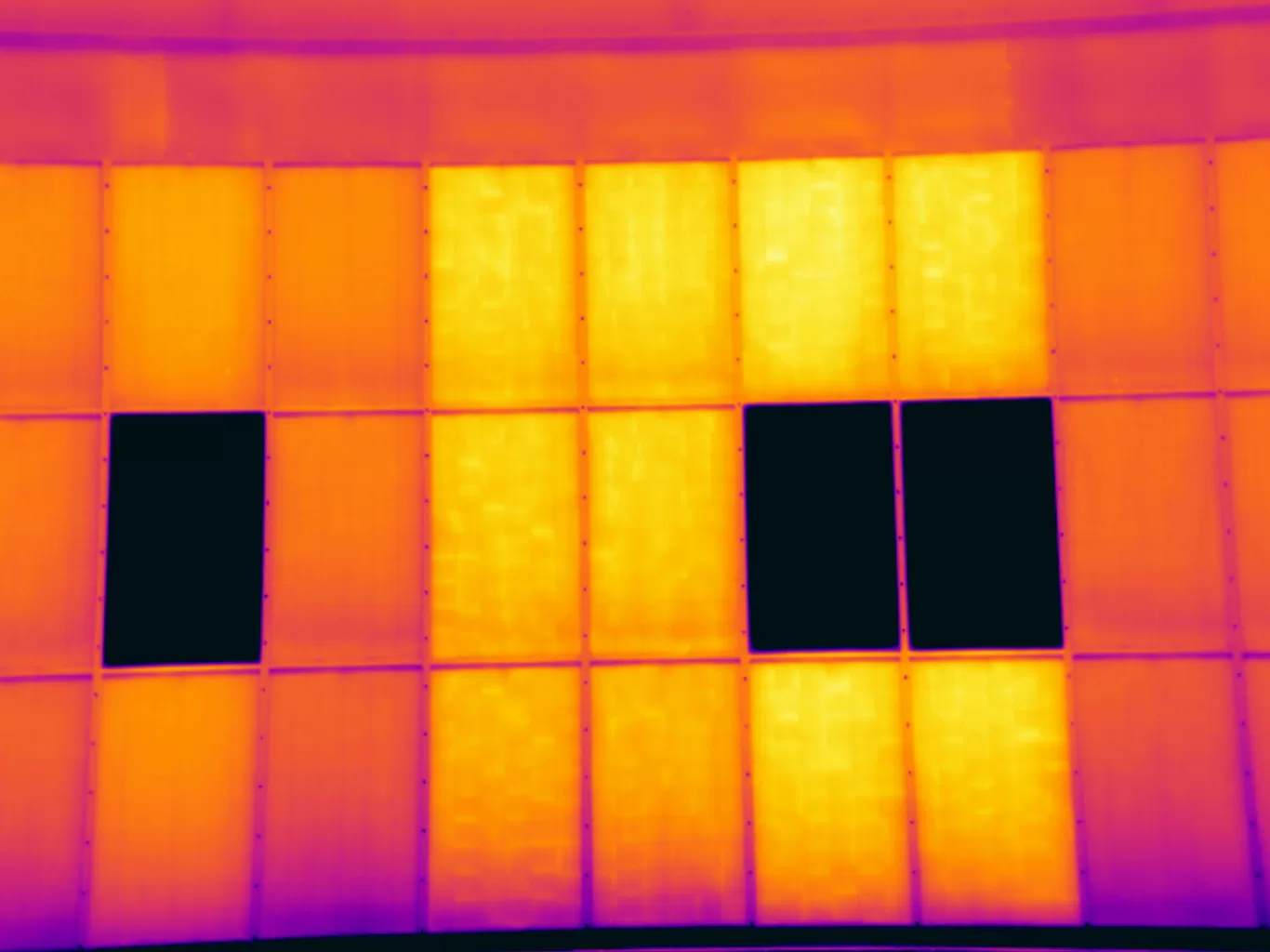
Solar panels have become an increasingly popular choice for homeowners looking to reduce their carbon footprint and save on energy costs. However, it is crucial to ensure that the installation of solar panels on house roofs is done correctly and safely. Regular inspections of domestic solar panel installations are essential to maintain their efficiency and longevity. In this article, we will explore the importance of domestic solar panel inspections, the key aspects that should be assessed during an inspection, and the benefits of conducting regular inspections.
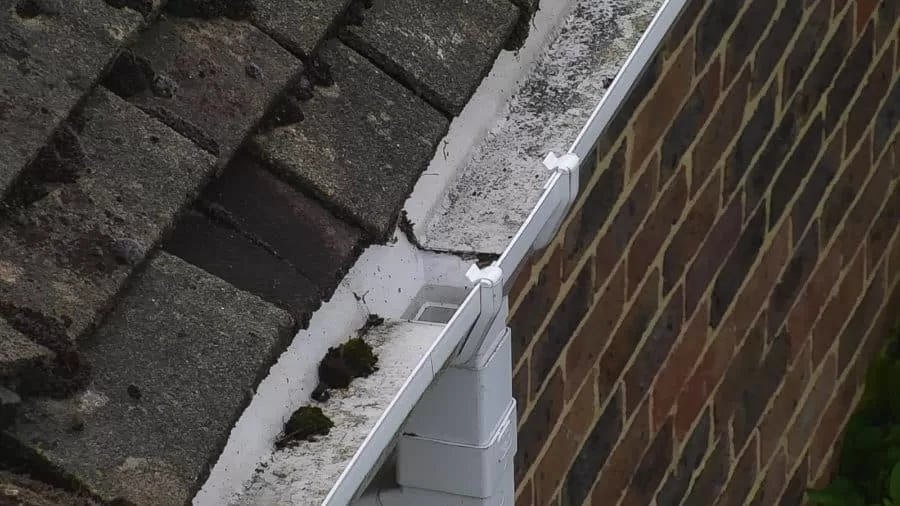
A roof moves rainwater along a designed path, from slope to valley to gutter to outlet. Autumn is when that path is loaded for the first time in months, and when anything silted, sagging or split begins to show. Almost none of it is visible from ground level. This is what an aerial inspection records about roof drainage, why standing water is such a useful signal, and how observations are marked on the imagery so a contractor can quote from them.