What a Solar Panel Inspection Actually Includes
Ask three companies for a solar panel inspection and you can receive three different pieces of work, all correctly described by that word. One arrives with a camera and gives you photographs of the array. One arrives with a test instrument and gives you measured values for each string. One arrives with a thermal imager and gives you a temperature map of every module under load. All three are inspections. None of them tells you what the other two would have told you.
That is not a failure of the industry, it is how the standards are written. IEC 62446-1:2016 defines verification at clause 3.16 as comprising inspection, testing and reporting, and it keeps inspection and testing in separate clauses because they answer separate questions. Its definition of testing carries a note that settles the whole argument: testing ascertains values by means of appropriate measuring instruments, said values not being detectable by inspection.
So the word on your quotation decides what you find out. A buyer who asks for an inspection because the array is underperforming, and receives a set of aerial photographs, has bought something real and learned nothing about the cause. This article sets out what each of the three techniques actually comprises, which question each one answers, and how they relate to each other.
Blog Content TL;DR...
Inspection is a container word. Three different techniques sit inside it, and the one you name on the enquiry decides what you learn.
- IEC 62446-1:2016 separates inspection from testing, and defines testing as ascertaining values that are not detectable by inspection.
- An aerial visual inspection records condition at the glass and the fixings, and says nothing about a module that looks sound.
- String-level electrical testing produces measured values against the design, but resolves only to the string.
- A thermographic survey reads the array under load and locates the fault to the cell or module, without producing an electrical value.
- IEC TS 62446-3:2017 recognises two levels of thermographic work, and states that the simplified level cannot support authoritative conclusions on module quality.
Ask for the technique that answers your question, not for an inspection.
Why One Word Covers Three Different Jobs
The standards separate inspection from testing. The market rarely does.
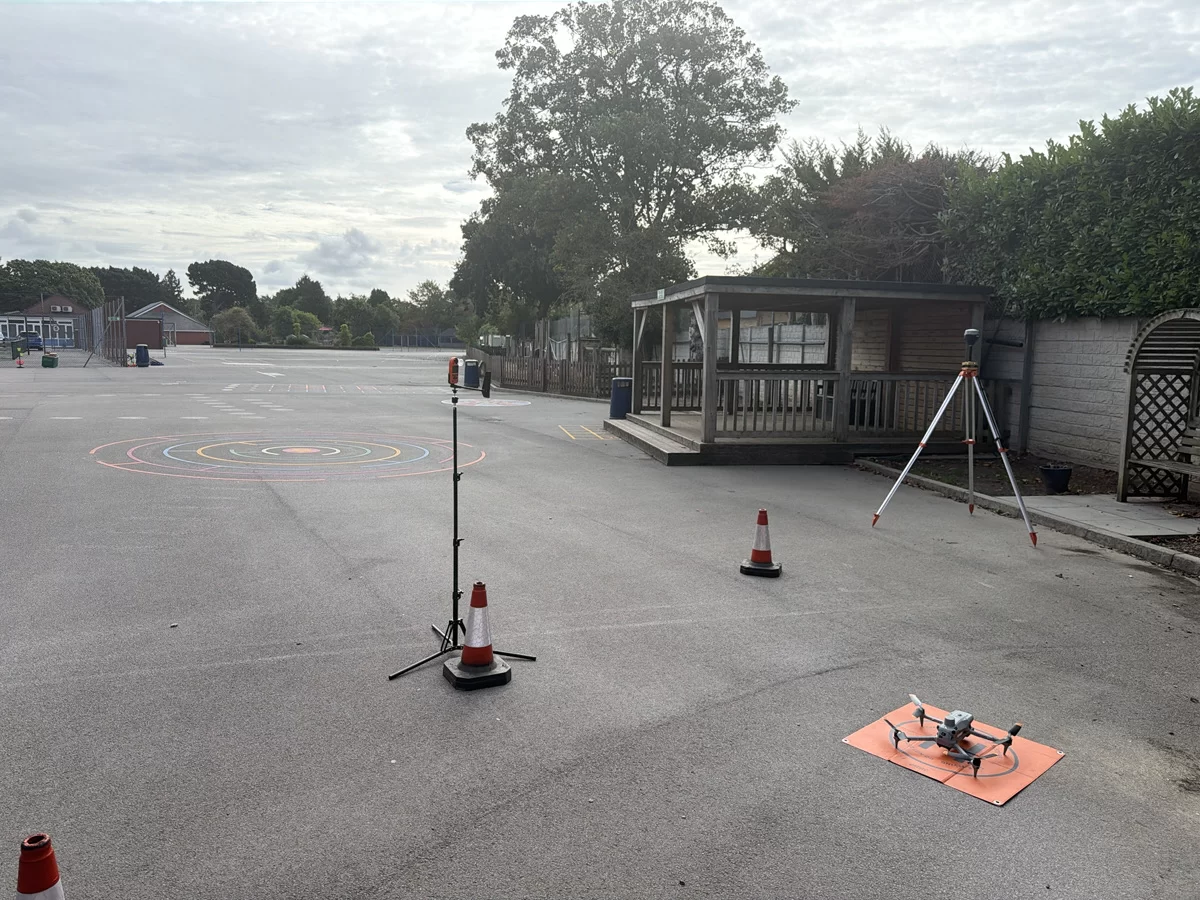
A photovoltaic array fails in three different ways, and the three techniques exist because of that. Glass damage, lichen growth, bird fouling and displaced fixings announce themselves to an eye. A string wired or performing outside its design shows itself only as a measured value. A degraded joint or a bypassed group of cells does neither, and reveals itself only as heat while the array is working.
IEC 62446-1:2016 makes the separation formally. Clause 5.2 sets out inspection, an examination of the installation to establish that equipment has been correctly selected and properly erected. Clause 5.3 sets out testing, and clauses 6 and 7 give the procedures themselves, from continuity of protective earthing through string open circuit voltage, string current and insulation resistance to I-V curve measurement and infrared camera inspection in the category 2 regime. Inspection looks. Testing measures. The standard puts them in different clauses because they produce different kinds of evidence.
Even thermography is two different services
IEC TS 62446-3:2017 goes further and divides thermographic work in its own scope clause. A simplified thermographic inspection verifies that modules and balance of system components are functioning, with reduced requirements on the qualification of the person carrying it out. A detailed thermographic inspection and analysis handles signatures that differ from the published examples, and is the level intended for periodic inspection and for tracing the cause of an underperforming system. The scope clause is blunt about the difference: authoritative conclusions regarding module quality are not possible with the simplified inspection.
Two suppliers can therefore both offer a thermographic survey, both be telling the truth, and be selling work that is not comparable. The protection is not to distrust either, it is to state in the enquiry which level of work is wanted and what the findings are for.
What a solar panel inspection actually includes | The difference between a visual inspection and a thermographic survey | Which solar PV inspection answers which questionWhat a solar panel inspection actually includes | The difference between a visual inspection and a thermographic survey | Which solar PV inspection answers which question
What Each Technique Can Reach, and Where It Stops
The visual record, and its honest limit
An aerial visual inspection produces high-resolution imagery of the array surface, its fixings and its surroundings. It finds soiling, cracked or delaminated glass, displaced modules, debris, and vegetation that has grown into a new shading position since installation. IEC TS 62446-3:2017 treats this as part of the work rather than an alternative to it, requiring a visual inspection within its own inspection procedure at clause 5.2. What it gives you is a dated record of what is there. What it cannot give you is any statement about a module that looks perfectly sound, and most of the faults that cost output are invisible at the glass. It is a record of condition, not a structural assessment of the roof or the mounting system.
String-level electrical testing
Electrical testing produces numbers, and numbers are what a design can be held against. The category 1 procedures at clause 6 of IEC 62446-1:2016 cover continuity of protective earthing, polarity, string open circuit voltage, string current and array insulation resistance, with I-V curve measurement available in the category 2 regime at clause 7.2. A string reading outside its design figures is a finding that can be acted on. The electrical scope at Drone Media Imaging is string-level testing only, and inverter diagnostics, switchboard wiring and any on-roof electrical work sit with a suitably qualified electrical contractor. The limit of the technique is resolution: a string that measures low tells you the string is low, not which module in it is responsible.
The thermographic survey
Thermography answers the question the other two leave open, because it reads the array while it is working. A cell that has stopped contributing dissipates as heat the energy it should have delivered as current, which is why the technique finds what neither an eye nor a string reading can locate. IEC TS 62446-3:2017 classifies what is found through its classes of abnormalities at clause 7.3.2 and the normative matrix at Annex C, and sets the content of the inspection report at clause 8. What it produces is a location, not a measured value, and it is no substitute for one.
Wording the Enquiry So It Returns the Right Answer
The three techniques are not competitors, they are a sequence. The thermographic survey finds and locates the effect, string-level electrical testing quantifies it against the design, and the visual record explains the cause where the cause is a physical one. Run the wrong one first and the work is not wasted, but the question stays open.
The practical form of this is short. Say what prompted the enquiry, because a fire safety concern, a warranty claim and an unexplained shortfall each pull towards a different technique. Say what the findings are for, since a report written to support a claim against an installer needs measured values, and a report written to direct a maintenance visit needs locations. Say who will act on it, because findings from any of the three are areas warranting further investigation by a suitably qualified contractor, and somebody has to be able to use them.
Drone Media Imaging carries out survey, analysis and reporting across all three, as a thermographic survey aligned with IEC TS 62446-3:2017, string-level electrical testing to the relevant procedures of IEC 62446-1:2016, and the aerial visual record that accompanies both. Ask for the one that answers your question, or ask for the combination, but ask in those words rather than for an inspection.
Standards Referenced in This Article
- IEC 62446-1:2016, Photovoltaic (PV) systems, Requirements for testing, documentation and maintenance, Part 1: Grid connected systems. Clause 3.16 verification, clause 3.15 testing, clause 5.2 inspection, clause 5.3 testing, clause 6 category 1 test procedures, clause 7 category 2 test procedures.
- IEC TS 62446-3:2017, Part 3: Photovoltaic modules and plants, Outdoor infrared thermography. Clause 1 scope and the two levels of thermographic inspection, clause 5.2 visual inspection, clause 7.3.2 classes of abnormalities, Annex C matrix for thermal abnormalities of PV modules, clause 8 inspection report.
- Thermographic practice conducted in accordance with the frameworks of ISO 18436-7:2014, ASNT SNT-TC-1A and ANSI/ASNT CP-105, and BINDT CMGEN Appendix B as UK training governance.
- Findings are reported as areas warranting further investigation by a suitably qualified contractor. No remedial or corrective work is offered or implied.
Tell Us the Question, Not Just the Job
Tell us what prompted the enquiry and what the findings are for, and we will tell you which of the three techniques answers it, or whether you need more than one. Survey, analysis and reporting for solar photovoltaic arrays across Sussex, Hampshire, Kent and Surrey, travelling throughout the UK, Ireland and Europe.
related posts
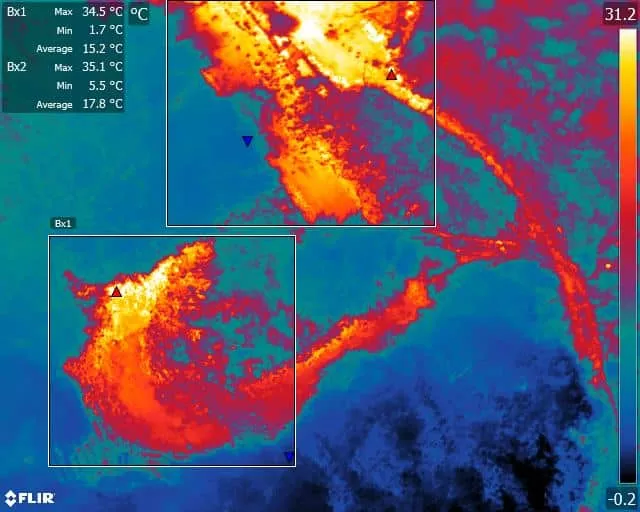
The use of drones equipped with thermal imaging cameras has revolutionized fire safety measures in solid waste landfill sites. These drones can detect temperature variations and hotspots, allowing operators to identify areas at risk of combustion and take proactive measures to prevent fires. Additionally, thermal imaging technology can detect thermal emissions and chemical and physical parameters, providing valuable data for monitoring and managing landfill sites. This technology has already shown promising results, reducing the number of fire incidents in landfill sites and minimizing environmental impact and health risks. As the technology continues to advance, drone environmental thermal imaging is expected to become an indispensable tool in solid waste landfill site management.

Drone Media Imaging invests in new cuttin-edge photobrapmmetry survey and inspection equipment with the new DJI M300RTK and P1 Suvery Grade Camera
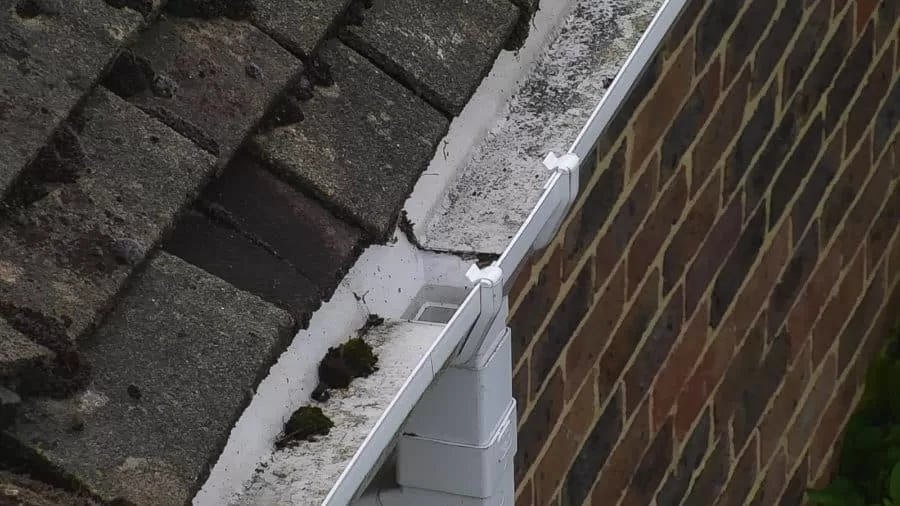
A roof moves rainwater along a designed path, from slope to valley to gutter to outlet. Autumn is when that path is loaded for the first time in months, and when anything silted, sagging or split begins to show. Almost none of it is visible from ground level. This is what an aerial inspection records about roof drainage, why standing water is such a useful signal, and how observations are marked on the imagery so a contractor can quote from them.