Hiring a Drone Operator in the UK
If you are commissioning aerial photography, a roof inspection or a solar survey, you are buying more than the pictures. You are buying the legal basis on which the flight was made, and if that basis is not sound, the problem becomes yours as much as the operator’s. Most clients never ask, partly because the rules changed completely a few years ago and the old shorthand everybody half remembers no longer describes anything real.
The good news is that the current framework is genuinely easy to check. A professional operator holds a small number of specific, named, verifiable documents, and every one of them can be produced in a couple of minutes. The documents are the same whoever you hire, which makes comparing two quotes on this basis straightforward rather than technical. You do not need to understand aviation law to ask for them, and you do not need to take anybody’s word for what they mean.
This piece sets out what those documents are, what each one actually permits, and what a properly run job should generate in paperwork before anybody takes off. It is written for the person signing the order rather than the person flying, so the emphasis is on what to ask for and why it matters, not on the regulations themselves. None of it requires a technical conversation.
Blog Content TL;DR...
What a client should check before commissioning any drone work in the UK.
- UK drone regulation changed completely in 2020, so weight thresholds and congested-area distances from the old Air Navigation Order no longer describe anything current.
- Operations are now classed as Open, Specific or Certified by risk, not by whether the work is commercial. Most useful inspection work sits in the Specific category.
- There is no drone licence. There is an Operational Authorisation permitting defined operations within defined limits, and a valid one can still be exceeded by the wrong job.
- Ask for four things: the Operator ID, the remote pilot’s GVC, the Operational Authorisation itself with its expiry date, and aviation-specific insurance.
- An authorisation covers a class of operation, never your particular site. The site assessment, airspace check and flight records are what make a job defensible.
Ask to see the documents rather than a claim that they exist, and check the job you have described actually fits inside them.
The Framework Changed, and the Old Language Went With It
Why the rules you half remember no longer apply
What Replaced the Old Rules
Until 2020 the UK regulated drones through the Air Navigation Order, and the language of that era still circulates: weight thresholds of seven kilogrammes, distances from congested areas, permissions for commercial work. All of it has gone. The current framework is Assimilated Regulation (EU) 2019/947, and it does not ask whether a flight is commercial. It asks how risky the flight is.
Three Categories, and Only One Matters to Most Clients
Operations fall into three categories. The Open category covers lower-risk flying and needs no authorisation, but it constrains how close the aircraft may come to people and built-up areas. The Specific category covers operations that exceed those limits and requires an Operational Authorisation issued by the Civil Aviation Authority. The Certified category applies to the highest-risk operations and is not relevant to inspection or survey work.
Almost any useful commercial inspection sits in the Specific category, because useful inspection work happens close to buildings, plant and the people who use them. If an operator is quoting for work over a commercial roof or a solar array on an occupied site, the question is not whether they own a good aircraft. It is whether they hold an Operational Authorisation that covers the operation, and whether the job as scoped actually fits inside it.
There Is No Such Thing as a Drone Licence
This is the single most common misunderstanding. People assume there is a licence that makes drone work legal, in the way a driving licence makes driving legal. There is not. There is an authorisation that permits a defined set of operations within defined limits, and it is perfectly possible to hold a valid authorisation and still be flying a particular job outside it. The document matters, and so does the match between the document and the work.
What to ask a drone operator before you hire one, How to check a drone operator is properly authorised, What paperwork a professional drone job should produceWhat to ask a drone operator before you hire one, How to check a drone operator is properly authorised, What paperwork a professional drone job should produce
The Four Things Worth Asking For
Operator ID and Remote Pilot Competence
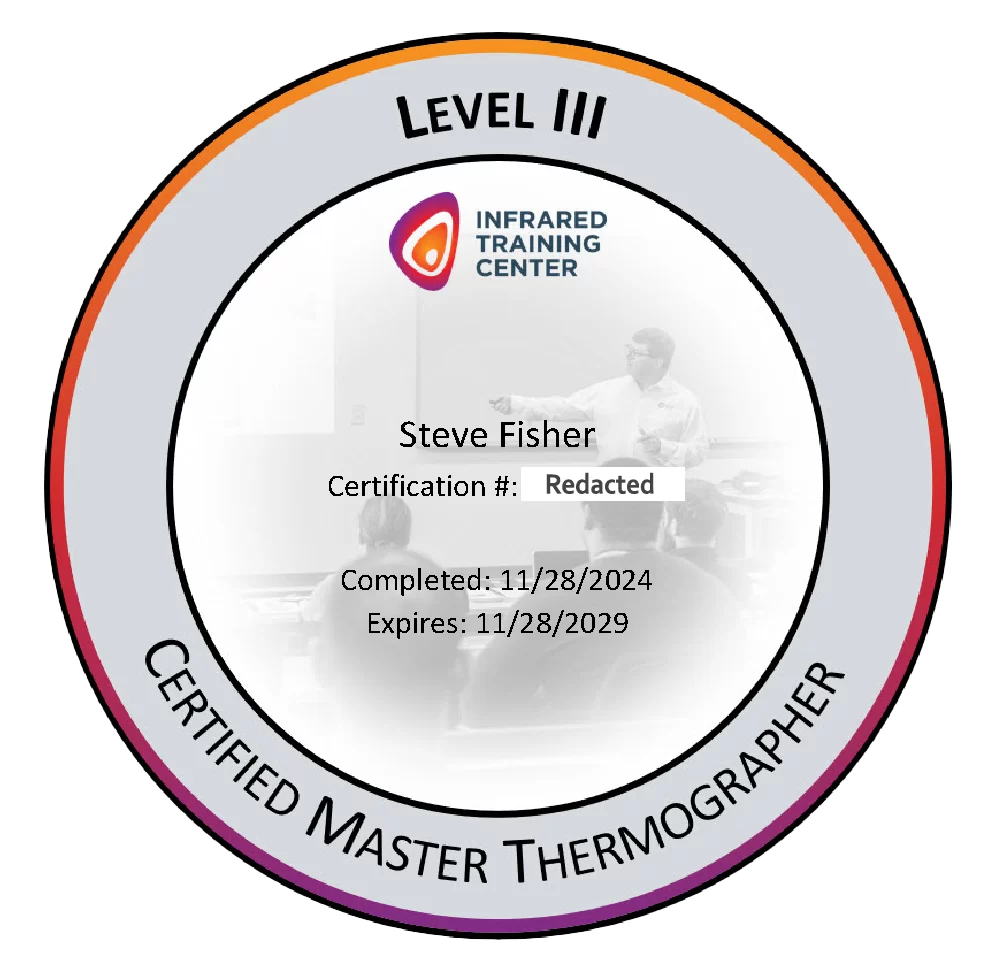
Two separate things, often confused. The operator is the organisation responsible for the aircraft and must be registered with the Civil Aviation Authority, which issues an Operator ID that has to be displayed on the aircraft itself. The remote pilot is the person flying, and for authorised operations must hold the General VLOS Certificate, usually shortened to GVC. Ask for both. An Operator ID with no competent pilot behind it means nothing.
The Operational Authorisation Itself
Ask to see the document, not a statement that one exists. It is a short PDF issued by the Civil Aviation Authority, it carries an authorisation number and an expiry date, and it states in plain terms what is permitted: the maximum aircraft weight, the separation that must be kept from people who are not part of the operation, the maximum height and the maximum distance from the pilot. Read the expiry date. Then read the separation distances and ask yourself whether the job you have described can actually be flown within them.
Insurance That Meets the Right Standard
Ordinary public liability cover is not sufficient. Authorised operations require insurance meeting Assimilated Regulation (EU) 785/2004, which is aviation-specific, and a certificate will say so explicitly. This is the easiest of the four to check and the one most often wrong.
The Operations Manual
An authorisation is granted against an operations manual, the document setting out how that operator works: crew roles, checks, emergency procedures and how a site is assessed. No operator will hand over the whole thing, but asking whether one exists and when it was last revised tells you quickly whether you are dealing with a managed operation or an enthusiast with good equipment. Authorised operators must also keep records of every flight.
What a Properly Run Job Leaves Behind
The Site-Specific Paperwork
An authorisation permits a class of operation. It does not pre-approve your particular site, and the gap between the two is where the real work sits. Before a professional flight there should be a site assessment covering the airspace over that location, the ground risk beneath the flight path, who else will be present and how they will be kept at the required separation, and the conditions under which the flight will be abandoned. Where the site sits inside a flight restriction zone around an aerodrome, separate permission is needed and takes time to obtain.
On the Day
Expect a briefing, expect the pilot to want to know who else is on site, and expect the flight to be called off if conditions fall outside the operator’s limits. An operator who will fly anything in any weather is telling you something about how the rest of the job will be run. The same applies to the airspace check. It is not a formality, and an operator who cannot tell you what class of airspace your site sits under has not done it.
Where the Report Stops
Finally, be clear about what you are commissioning. Aerial inspection produces imagery and observations, and where thermal work is involved, analysis of what those images indicate. It identifies areas warranting further investigation by a suitably qualified contractor. It is not a building survey, a structural assessment or a condition grading, and any operator offering those things from a drone alone is overselling. The value is in seeing what cannot otherwise be reached, and in the discipline of the survey, analysis and reporting behind it. That discipline is what you are actually paying for.
UK unmanned aircraft operations are governed by Assimilated Regulation (EU) 2019/947, which replaced the Air Navigation Order provisions that applied until 2020. Operations are divided into Open, Specific and Certified categories by risk rather than by whether the flight is commercial. An Operational Authorisation is issued by the Civil Aviation Authority under Article 5 of that regulation and places an operation in the Specific category.
Drone Media Imaging operates under a CAA Operational Authorisation held against the pre-defined risk assessment PDRA-01, covering unmanned aircraft below 25 kg by day or night, flown within visual line of sight. The remote pilot holds the CAA General VLOS Certificate and the A2 Certificate of Competency. Insurance is held to Assimilated Regulation (EU) 785/2004. Flight records are maintained for every flight made under the authorisation and are available to the regulator on request. The authorisation sets the operating limits the work is planned against, including the maximum height above the surface, the maximum distance from the remote pilot, and the separation to be maintained from people who are not part of the operation.
Governing Framework
- Assimilated Regulation (EU) 2019/947, the regulation governing unmanned aircraft operations in the UK
- Assimilated Regulation (EU) 2018/1139, Annex IX, and its implementing rules
- Assimilated Regulation (EU) 785/2004, insurance requirements for aircraft operators
- Assimilated Regulation (EU) 376/2014, occurrence reporting
- CAA Operational Authorisation held against PDRA-01 by VisualChaos Studios Ltd, trading as Drone Media Imaging
Ask Us for the Documents
We are happy to send our Operational Authorisation, Operator ID, remote pilot certification and insurance certificate with any quotation, before you commit to anything. Drone Media Imaging covers Sussex, Hampshire, Kent and Surrey, travelling throughout the UK, Ireland and Europe. Tell us about the site and the access problem, and we will tell you plainly whether it can be flown within our permissions.
related posts
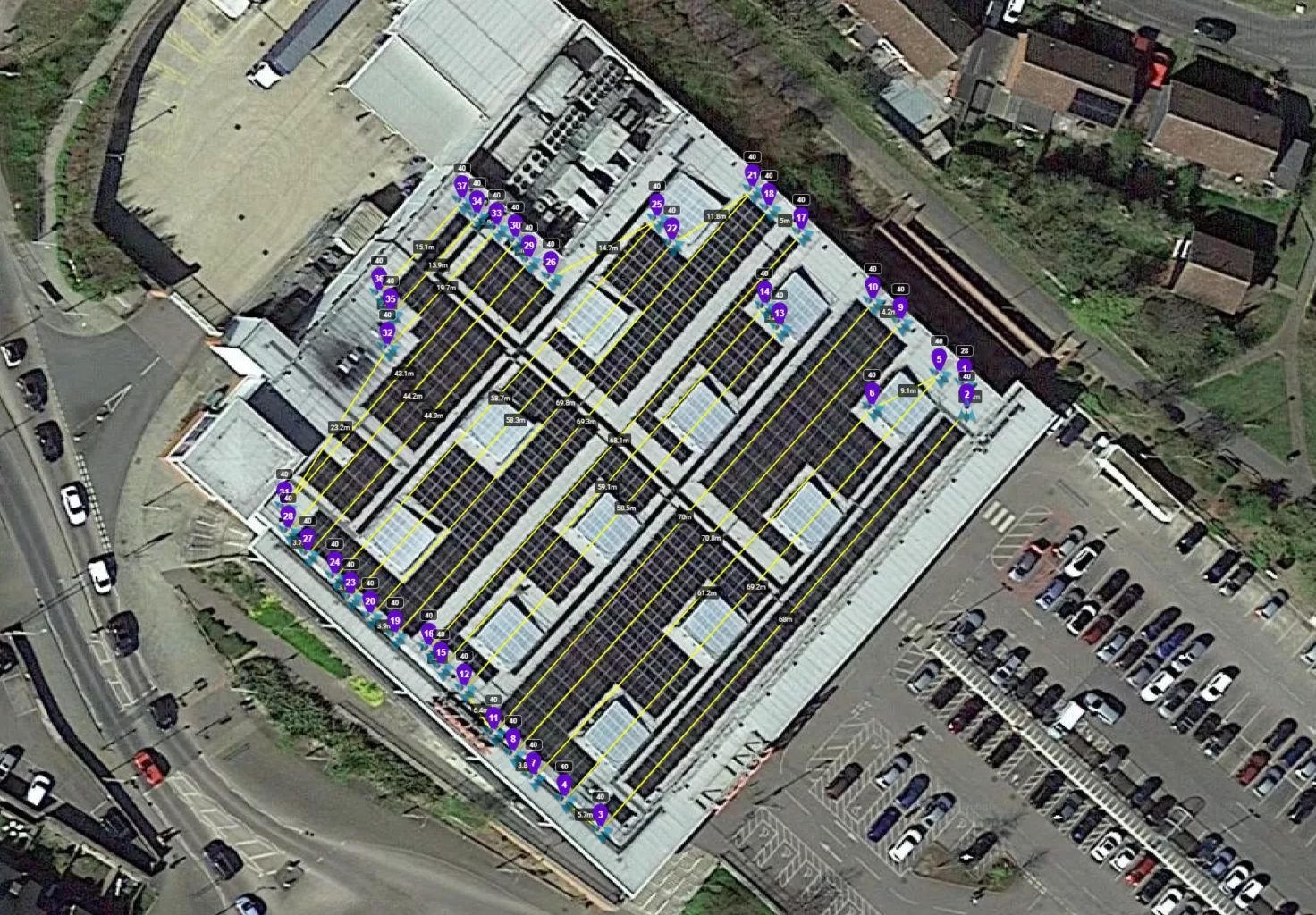
In an unusually sunny September, we completed 20 solar panel inspections across the UK, including 17 at Tesco stores. Typically, inspections occur in summer due to optimal solar irradiation. This year’s record-breaking sunshine allowed us to extend operations safely into autumn.

Conducting an IEC inspection at Trethosa, Cornwall's solar farm for Natural Generation Ltd.Drone Media Imaging examined the solar panels in line with IEC 62446-3:2017 to ensure compliance with safety standards, ensuring optimal performance and longevity of the solar farm.