
Drone Roof Inspection Cost: What Actually Drives the Price of a Quote
It is the first question almost everybody asks, and it is a fair one. What does a drone roof inspection cost?
The honest answer is that it depends on what you need to see, and that is not an evasion. A roof inspection is not a product with a fixed specification. It is a set of images of your building, and the price follows the size of that job. Two enquiries arriving on the same morning might be a single garage roof after a storm and a school with four blocks around a courtyard, and any one number that covers both is either far too high for the first or unworkable for the second.
You will find published prices on plenty of websites. Read them closely and they are usually a starting figure attached to a narrow set of assumptions about your building, your location and what you are handed at the end. If your job does not match those assumptions, and most jobs do not, the figure moves as soon as somebody looks at it properly.
We would rather set out what actually moves the price, so you can see roughly where your own job sits before you speak to anyone, and so the quote that comes back is a real one you can hold us to. That is what the rest of this piece does.
Blog Content TL;DR...
Why nobody who knows the work will quote you a roof inspection price before asking about the roof.
- Scope drives price. A drone roof inspection is not a fixed product, it is imagery of your building, and the price follows how much of it you need.
- Four things move a quote: what you need to see, how complex the roof is, whether you want stills, video or annotated imagery, and how far away the site is.
- There is no correct number of photographs. If you ask how many you get, the answer is how many do you want.
- A published from price is a set of assumptions about somebody else’s building, and it moves once your job is looked at properly.
- This is a visual inspection, not a building survey, and findings are reported as areas warranting further investigation by a suitably qualified contractor.
Tell us the building, the reason and the deliverable you want, and the answer comes back as a fixed price rather than a range.
What Actually Moves the Price
Four things decide the size of the job, and you already know the answers to most of them
What you need to see
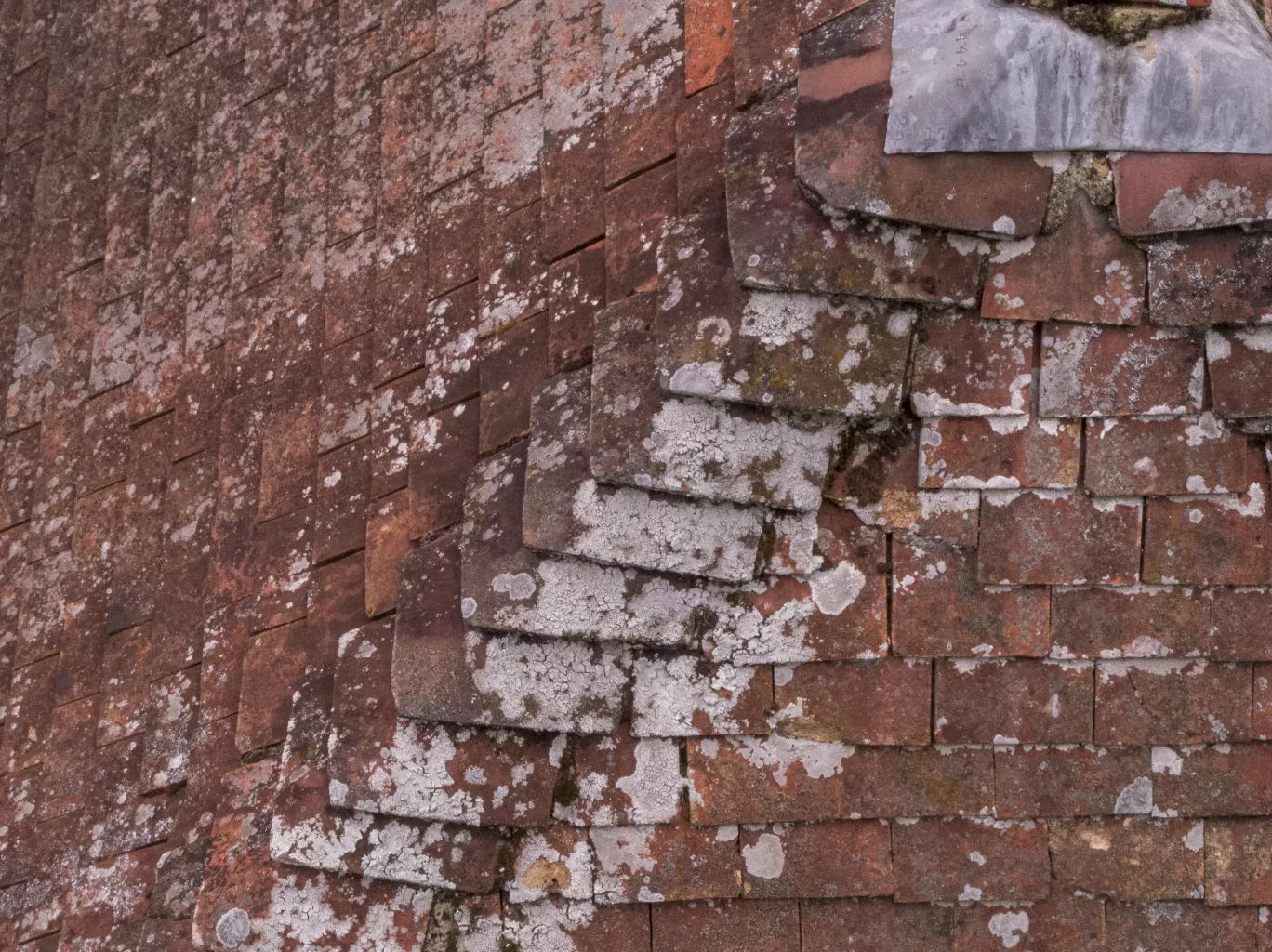
An inspection prompted by a specific problem, a leak above one corner of a building, a slipped tile, storm damage to a ridge, is a focused piece of work. A general condition record of an entire roof, elevation by elevation, is a larger one. Both are worth doing, and they are not the same job. The difference shows up in time on site and in time afterwards.
How much of it there is
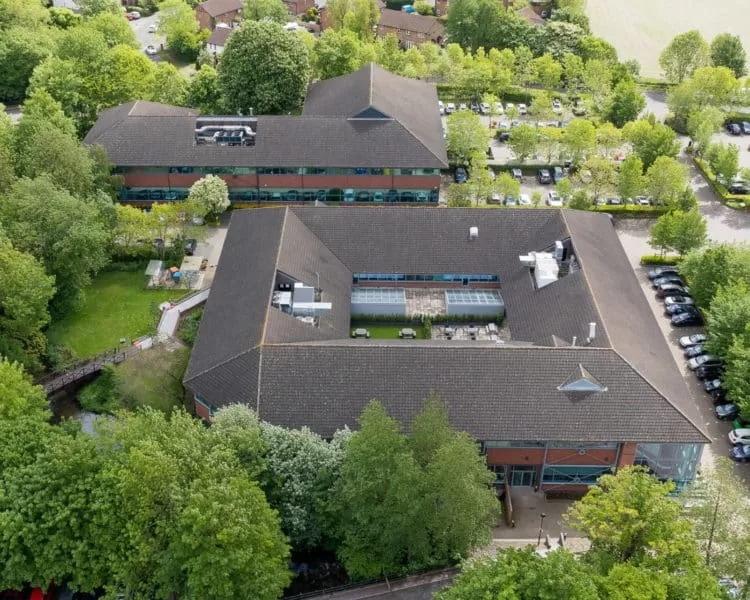
Roof area matters less than most people expect, and complexity matters more. A large, simple, single pitch industrial roof can be covered quickly. A period building with valleys, dormers, chimneys, parapets and several roof levels takes considerably longer to image properly, because each of those features has to be seen from more than one position.
What form the imagery takes
The deliverable is your scope. Stills, video, or both. Straight imagery, or imagery annotated to mark where each observation sits on the building. If you ask how many photographs you get, the answer is how many do you want, because the count is set by what you need to look at rather than by a package somebody has decided on in advance.
Where the building is
Sussex, Hampshire, Kent and Surrey are the home patch, and we travel throughout the United Kingdom, Ireland and Europe. Travel and time on the road belong in any honest quote, and a site an hour away is a different proposition from one four hours away. Several buildings on one site share that journey, which is why a multi-building job rarely costs the sum of its parts.
what drives the cost of a drone roof inspection, drone roof inspection quote explained, roof inspection scope and pricewhat drives the cost of a drone roof inspection, drone roof inspection quote explained, roof inspection scope and price
Getting a Real Number, Quickly
The enquiry conversation is the quote
Everything above is answerable in a couple of minutes on the phone, or in a few lines on an enquiry form. Tell us the building and roughly where it is, what has prompted the inspection, how much of the roof needs covering, and whether you want stills, video or both. That is enough to come back with a fixed price rather than a range, and the fixed price is the one you pay.
What we would rather not do is quote a number for a job neither of us has described yet, and then revise it upwards once the building turns out to have four roof levels and a courtyard nobody mentioned. That serves nobody well, and it is the reason there is no price list on this website. The conversation costs you nothing and it takes minutes.
What you get, and what it is not
You get imagery of your roof at a resolution that lets you see what is actually there, delivered in the form you asked for, with observations marked up where that has been agreed in the scope. For most people that is the point of the exercise: something they can put in front of a roofer, an insurer or a board.
It is a visual inspection and a visual record. It is not a building survey, a structural assessment or a condition grading, and we do not offer one. Where something looks wrong, it is reported as an area warranting further investigation by a suitably qualified contractor, which is exactly what a roofer or a surveyor needs in order to act on it. Being clear about that boundary is part of the service rather than a limitation buried in the small print.
Purpose. A targeted look at a known defect, or a full condition record of the whole roof. This sets the time on site more than anything else does.
Complexity. Roof levels, valleys, dormers, chimneys, parapets and plant. Each feature needs imaging from more than one position, so a complicated small roof can take longer than a simple large one.
Deliverable. Stills, video, or both. Plain imagery, or imagery annotated to mark where each observation sits. Annotation is desk time after the flight and is quoted as such.
Number of buildings. Several structures on one site share the travel and the set up, which usually makes the second and third building proportionally cheaper than the first.
Location. Travel time is real cost. Sussex, Hampshire, Kent and Surrey are local, and work further afield is quoted with the journey included rather than added later.
Timing. Aerial imagery needs workable weather. A flexible date is easier to price than a fixed one that may need a second visit.
Scope and Limitations
- This is a visual inspection carried out from the air, producing photographic and video imagery of the roof and elevations. It is a record of what can be seen.
- It is not a building survey, a structural assessment or a condition grading, and no surveying qualification is held or claimed.
- Findings are reported as observations, described as areas warranting further investigation by a suitably qualified contractor. No remedial or corrective work is offered or implied.
- The scope is agreed before the flight. What is covered, what form the imagery takes and what is annotated are settled at quotation stage, so the deliverable matches what was asked for.
Tell Us About the Roof
Send us the building, roughly where it is, what has prompted the inspection and whether you want stills, video or both. We will come back with a fixed price for that scope, not a range.
It takes a couple of minutes and it costs nothing. If a drone is the wrong answer for your building, we will tell you that too.
related posts
Pinpointing energy loss in buildings involves identifying hidden insulation defects, thermal bridges, and air leaks. A Level 3 Thermographer employs advanced thermal imaging to ensure precise diagnostics and compliance with energy standards, providing property owners with detailed reports for informed energy efficiency improvements and cost savings.

Conducting an IEC inspection at Trethosa, Cornwall's solar farm for Natural Generation Ltd.Drone Media Imaging examined the solar panels in line with IEC 62446-3:2017 to ensure compliance with safety standards, ensuring optimal performance and longevity of the solar farm.

Aerial imagery enters an insurance file by three routes: a loss adjuster who cannot safely reach a roof, a broker placing or renewing cover on a large building, and a policyholder who wants an independent dated record before a repair covers the evidence. This piece sets out what each uses the images for, and the five things that make a set of photographs acceptable to a sceptical reader: dated, placed, systematic, unaltered, and accompanied by a plain account of what was observed.