
Blog Content TL;DR...
Trethosa Solar Farm Inspection Inline With IEC 62446-3


Infrared Thermal Imaging
Natural Generation Ltd – Trethosa Solar Farm
Natural Generation Ltd, a leading renewable energy company, recently hired Drone Media Imaging to conduct an IEC inspection at Trethosa Solar Farm in Cornwall.
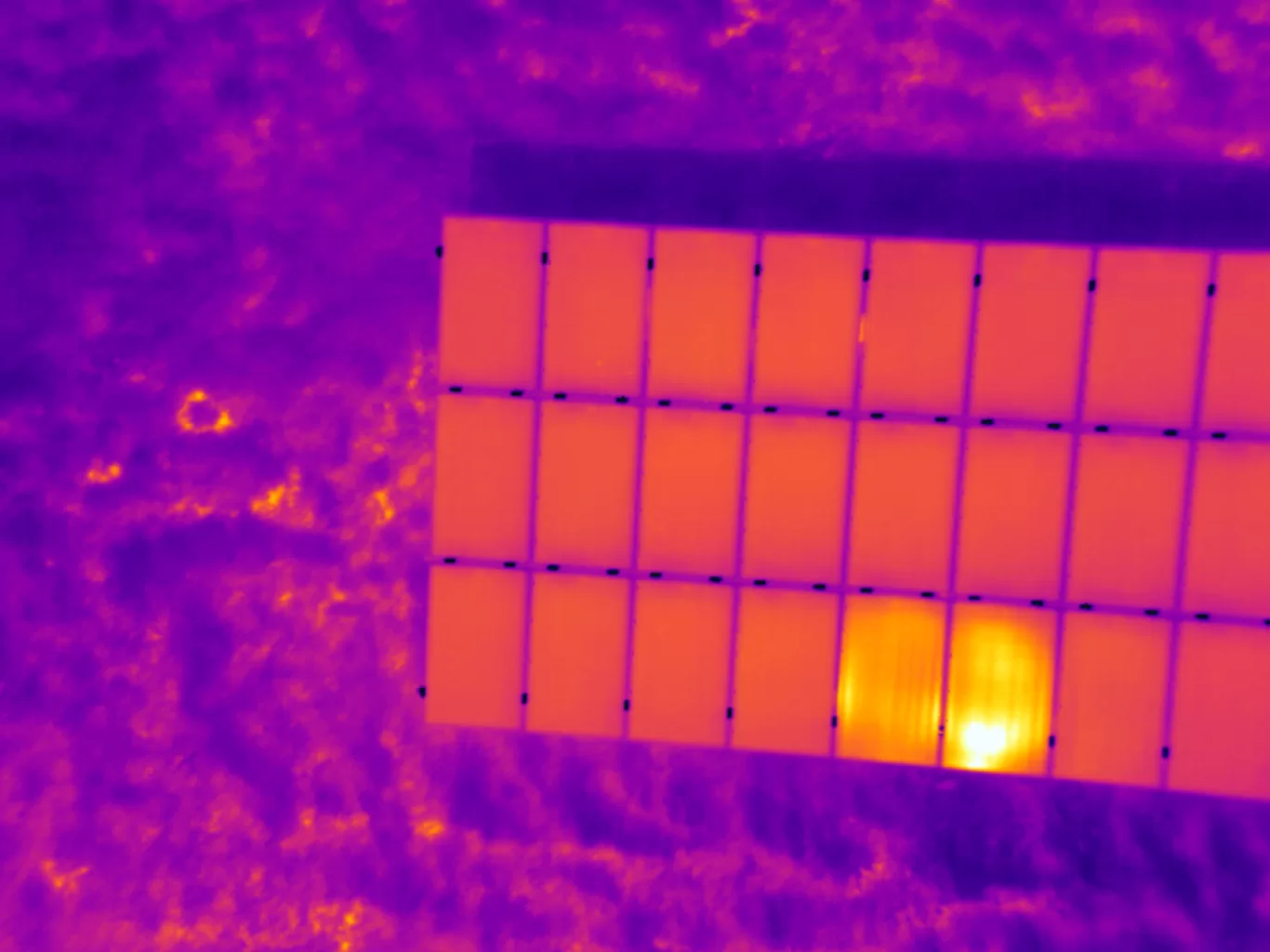
The inspection process involved the flight of thermal drones to collect calibrated thermal imaging data which shows the faults and naomalies that may exist.
Conducting an IEC Inspection at Trethosa Solar Farm in Cornwall
Solar energy has emerged as a promising alternative to traditional sources of electricity, offering a clean and sustainable solution to meet the world’s growing energy demands. As the solar industry continues to expand, it becomes crucial to ensure the safety and efficiency of solar farms.
To that end Drone Media Imaging was hired to conduct an IEC-IEC 62446-3 (International Electrotechnical Commission) inspection at Trethosa Solar Farm in Cornwall, managed by Natural Generation Ltd.
Understanding the Importance of IEC Inspections for Solar Farms
IEC inspections play a vital role in ensuring the safe and reliable operation of solar farms. These inspections are conducted to assess compliance with international standards and regulations, identify potential risks, and recommend necessary improvements. Solar farms are complex systems that involve various components, including solar panels, inverters, transformers, and electrical connections.
Regular Thermal IEC inspections help identify any module and string issues or faults that may compromise the performance and safety of the solar farm.
IEC inspections contribute to the overall efficiency and performance of solar farms. By assessing the condition of solar panels and other components, these inspections help identify any inefficiencies or malfunctions that may affect the energy output. By addressing these issues early, solar farm operators can optimise the performance of their facilities and maximise energy generation.
Conducting regular IEC inspections at solar farms, such as Trethosa Solar Farm in Cornwall, is crucial for ensuring safety, efficiency, and optimal performance. These inspections help identify potential risks, recommend necessary improvements, and contribute to the overall success of the solar energy industry. By adhering to international standards and regulations, solar farm operators can maximize energy generation while maintaining a safe working environment.
IEC Solar Inspection Services
We are certified thermographers, experienced in solar panel inspection to IEC standards. We can complete both the structured and compliant data capture through to the formal inspection report.
As approved drone pilots we work throughout the UK to provide both aerial and ground based thermography services. Fully insured and certified by the CAA with enhanced permissions for day and night time flights
related posts

A site owner's question is usually whether a drone is allowed. The regulations answer a different one: how far the aircraft must stay from people who are not part of the operation. That distance is not fixed. It moves with the authorisation the operator holds, the mass and class of the aircraft flown, and how the people on site are briefed. This is what actually decides whether a working site can be flown, and the small part the client plays in it.
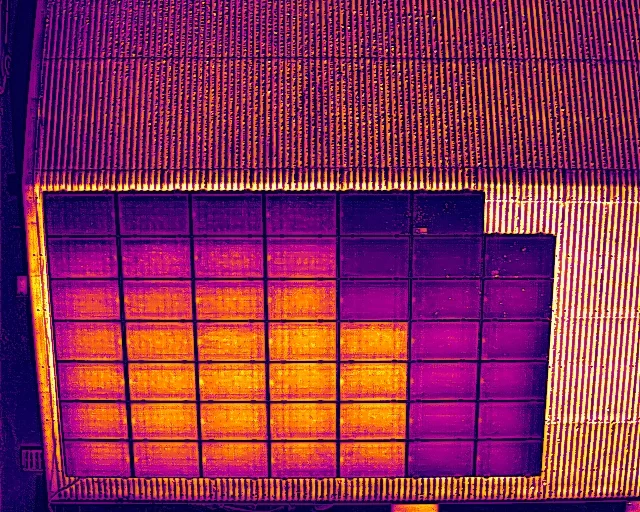
A drone or a ladder? The two are not the same solar inspection done two ways, and they produce different evidence. A visual check finds visible damage. A handheld thermal camera sees heat but, from a ladder, looks across the array at an angle where glass reflects the sky. A drone records every module from above under one set of conditions. This post sets out what each can see, why angle and timing change the reading, and where each belongs.
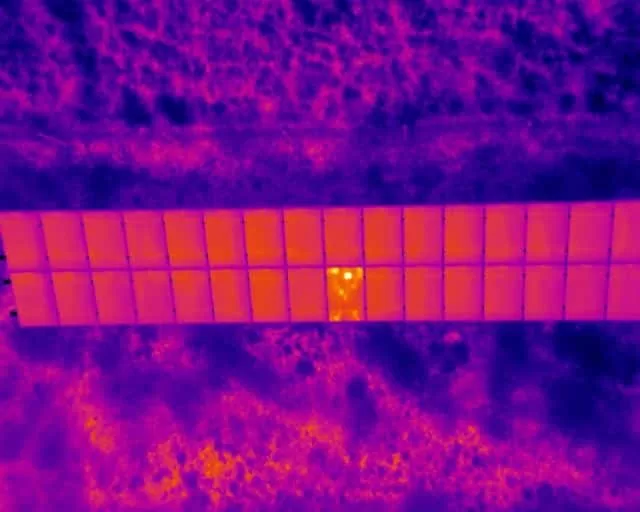
A thermal image of a photovoltaic array records surface temperature, and surface temperature is a symptom rather than a diagnosis. This post sets out how the signatures are actually read on an operating array: what a single hot cell suggests, why a uniformly warm third of a module points somewhere entirely different, how potential-induced degradation gives itself away by geometry, and why severity under IEC 62446-3:2017 is framed with caution rather than asserted from one temperature figure.