Solar PV Thermographic Inspection and String Testing at a Food Processing Plant
IEC 62446-3 Rooftop Solar Thermography for an Industrial Site in the East of England
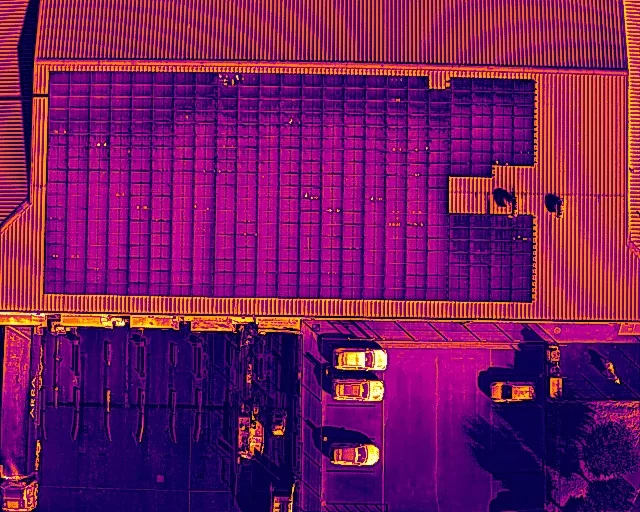
Drone Media Imaging carried out a solar PV thermographic inspection and electrical string test on the rooftop array of a food processing plant in the East of England, commissioned by the electrical contractor responsible for the site. The array, around 400 modules on two string inverters, was captured by drone in a single flight under clear skies, and all 24 strings were tested at the inverters the same day. The thermal survey was conducted as a detailed inspection to IEC 62446-3:2017 and the electrical testing to IEC 62446-1:2016+A1:2018. Twelve findings were classified across ten thermograms, ranging from Low to High severity with no Safety finding. The dominant presentation was paired, symmetrical elevated cell anomalies, consistent with an electrical condition within the cells, such as cracking or interconnect degradation. Two module sub-strings showed uniform elevation consistent with bypass diodes in conduction, and one module carried a straight linear feature consistent with a fracture in the front glass. Every string met its insulation resistance and earth continuity thresholds. The certified report gives the contractor a clear, prioritised basis for investigation and a reference for the next inspection.
Project Overview
Subject
solar PV thermographic inspection, rooftop solar array, food processing plant, East of England, IEC 62446-3
Skills Used
IEC 62446-3 Solar Thermographic Inspection, IEC 62446-1 String Testing, Level 3 Report Writing
Portfolio Tags
Solar PV Inspection, Rooftop Solar, Drone Thermography, East of England, IEC 62446-3, Electrical Contractors, Drone Media Imaging, How Is a Rooftop Solar Array Inspected?
Rooftop Solar Thermal Inspection, IEC 62446-1 String Testing, Drone Solar Panel SurveyRooftop Solar Thermal Inspection, IEC 62446-1 String Testing, Drone Solar Panel Survey
Solar PV Thermographic Inspection and String Testing at a Food Processing Plant
~ Thermal and electrical evidence, read together and certified at Level 3. ~
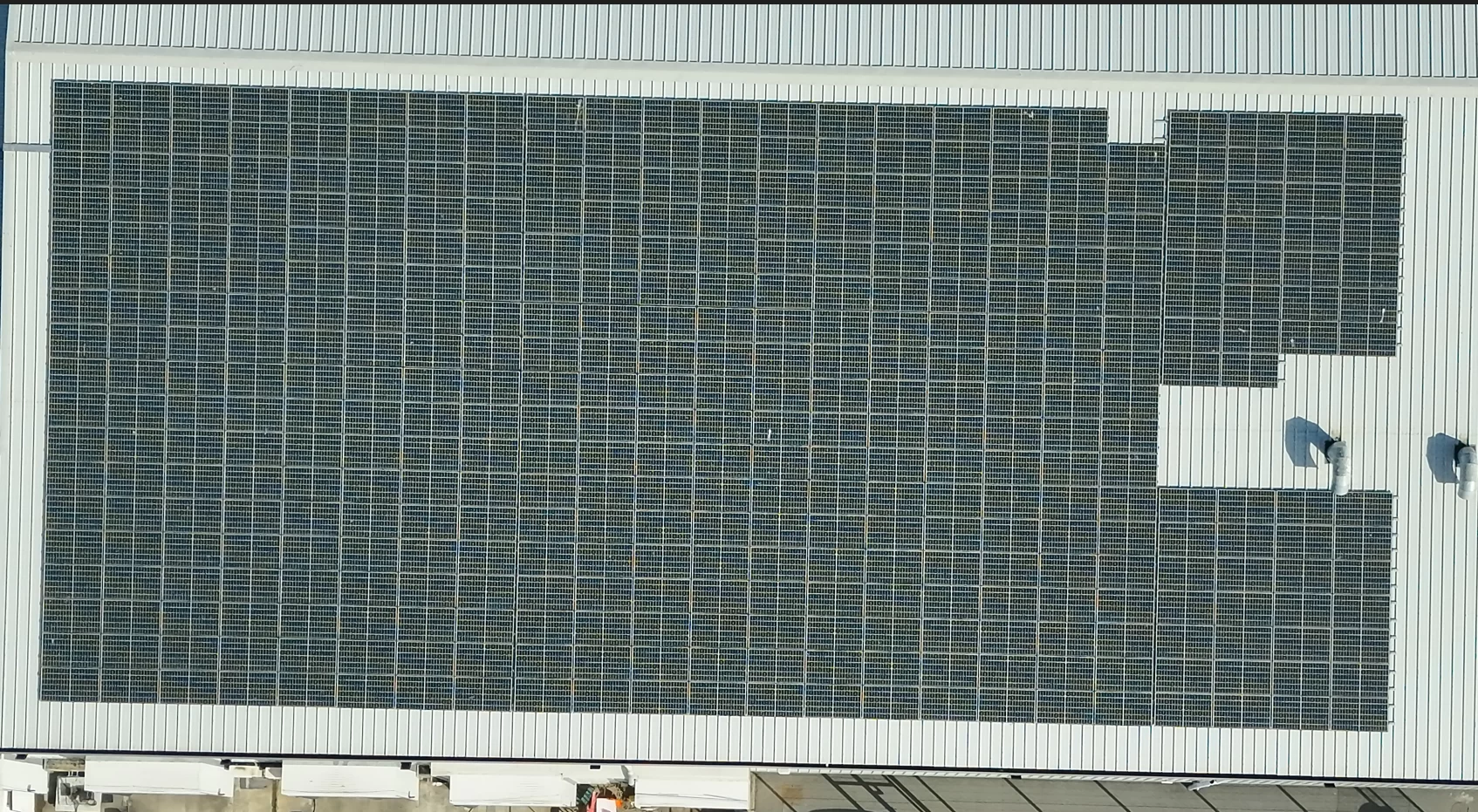
Level 3 thermal and electrical evidence for a working industrial array
IEC 62446-3 Rooftop Solar Thermography for an Industrial Site in the East of England
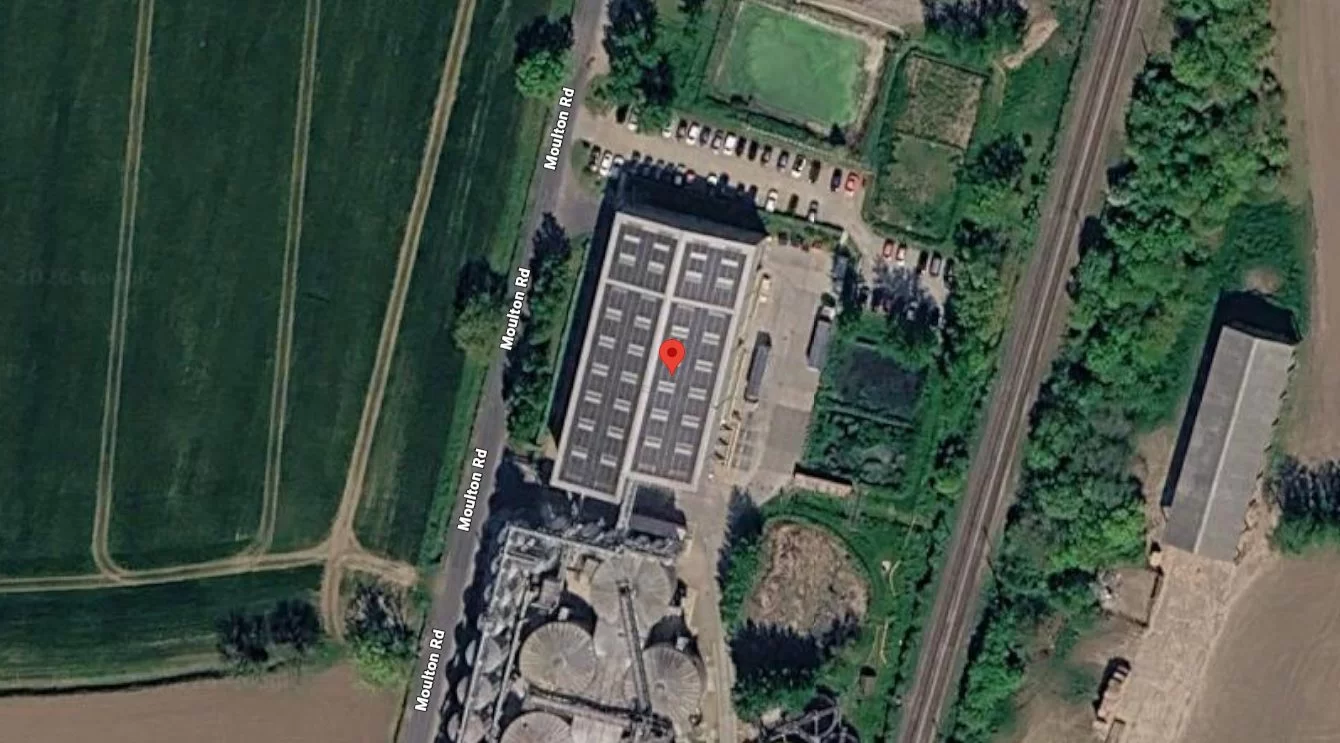
The site is a food processing plant in the East of England, where a rooftop solar PV array of around 400 modules feeds two string inverters serving the building. The inspection was commissioned by the electrical contractor responsible for the installation, who needed an independent, certified record of the array’s condition that could be shared with the site’s owner and used to plan any follow-up work. Food processing sites run continuous electrical loads, so a solar array that quietly loses output, or carries a developing fault, matters to both running costs and site risk. A certified record also gives the owner something an informal walk-round cannot: findings that are classified, located and repeatable at the next inspection.
A combined inspection was chosen because each discipline sees what the other cannot. Thermography shows where heat is being generated across the array, at the scale of individual cells, sub-strings and modules, while string testing measures the electrical health of each circuit directly. Read together, the two datasets separate faults that cost output from conditions that are simply worth watching, and they show whether a thermal pattern has any electrical consequence at string level.
Drone Media Imaging is a trading name of VisualChaos Studios Ltd, and every thermographic report we issue is analysed and certified by our Level 3 Master Thermographer. The survey followed IEC 62446-3:2017 for the thermal inspection and IEC 62446-1:2016+A1:2018 for the electrical testing, with every departure from either standard declared in the report rather than left for the reader to find.
Governing Standards
- IEC 62446-3:2017 sets the method for outdoor infrared thermography of photovoltaic modules and plants; this inspection was carried out as a detailed inspection under Clause 5.1(b), subject to the deviations declared in the report.
- IEC 62446-1:2016+A1:2018 sets the tests and documentation for grid-connected PV systems, and governed the string-level electrical testing.
- ISO 18436-7 is the thermographic condition monitoring framework our Level 3 Master Thermographer is trained in alignment with.
How was the solar PV inspection carried out?
Combined Thermal and Electrical String Testing on a Commercial Rooftop Array
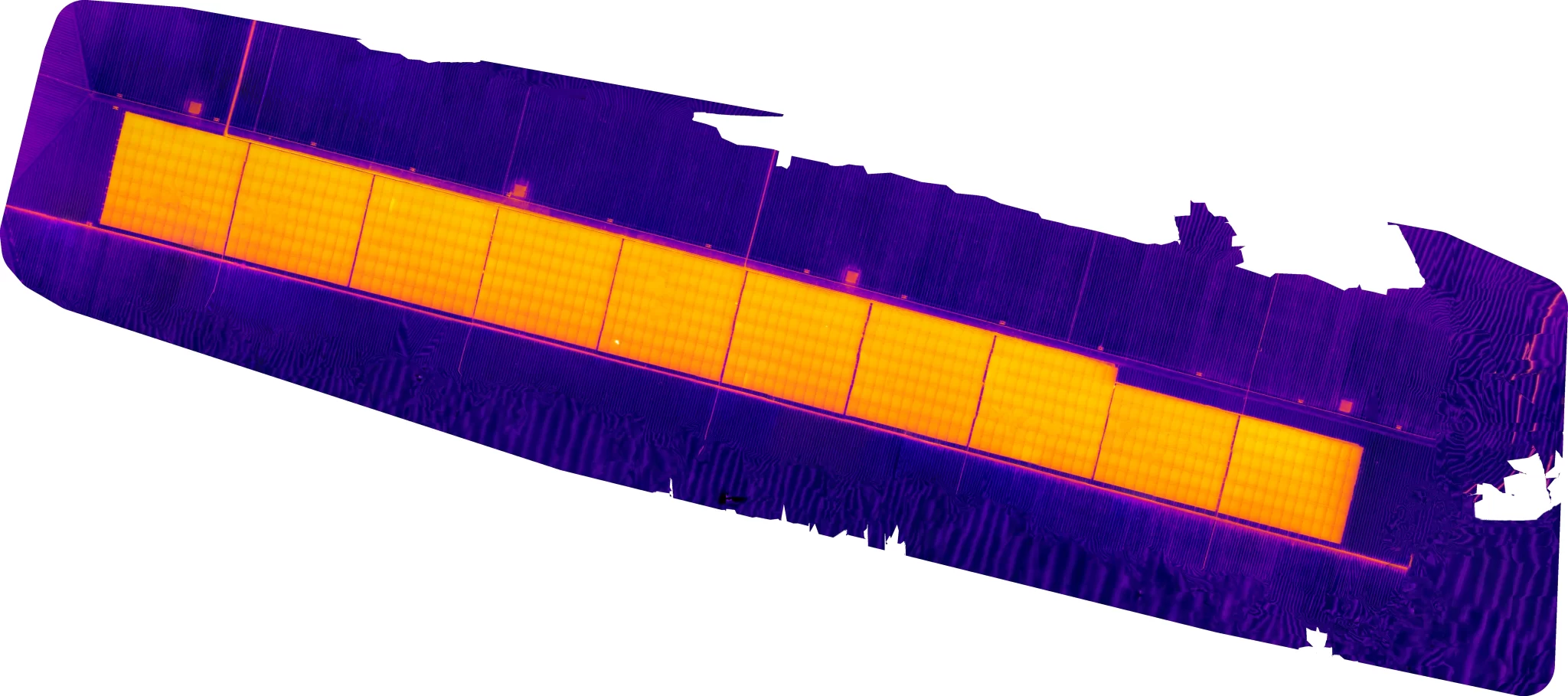
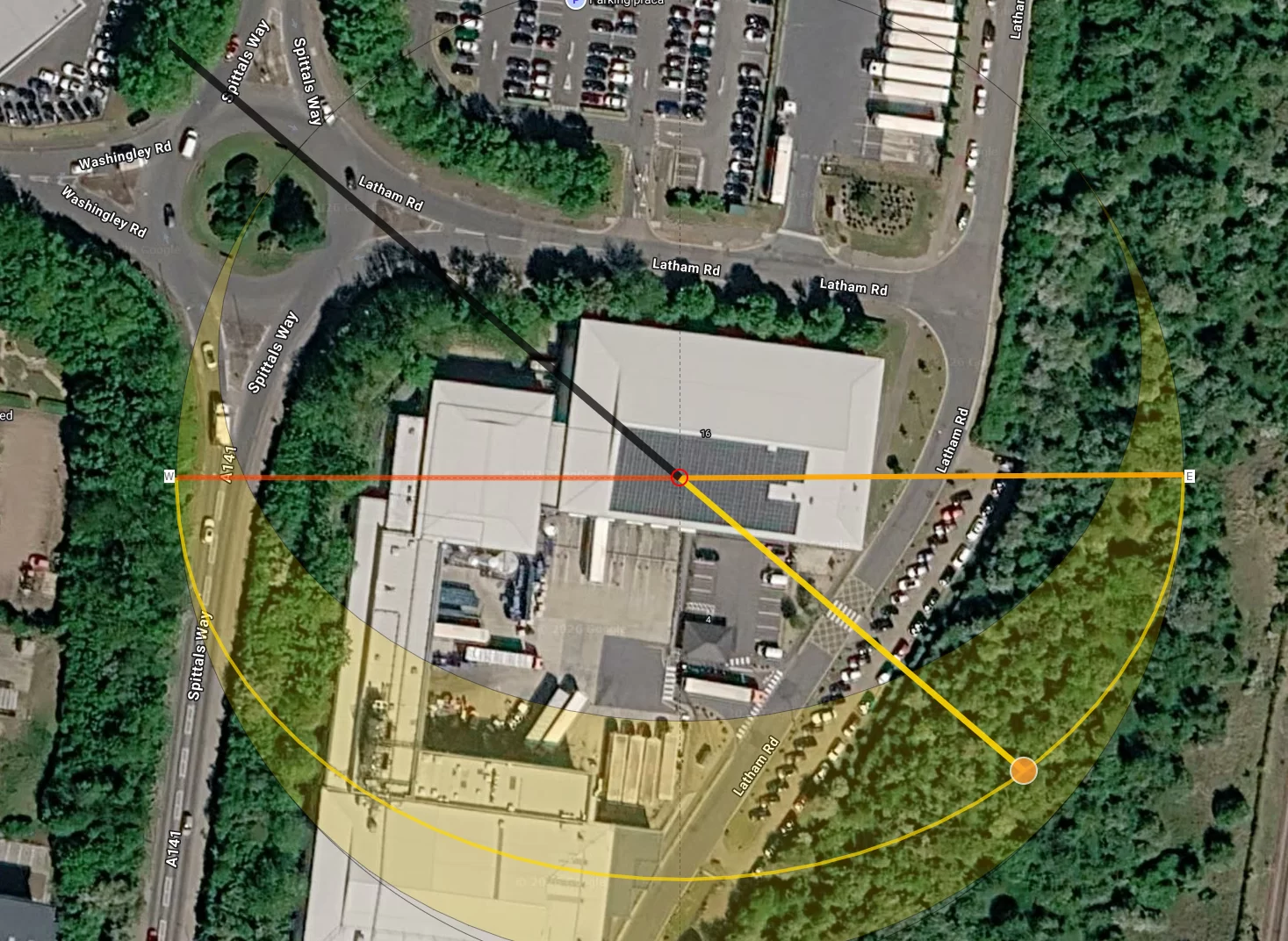
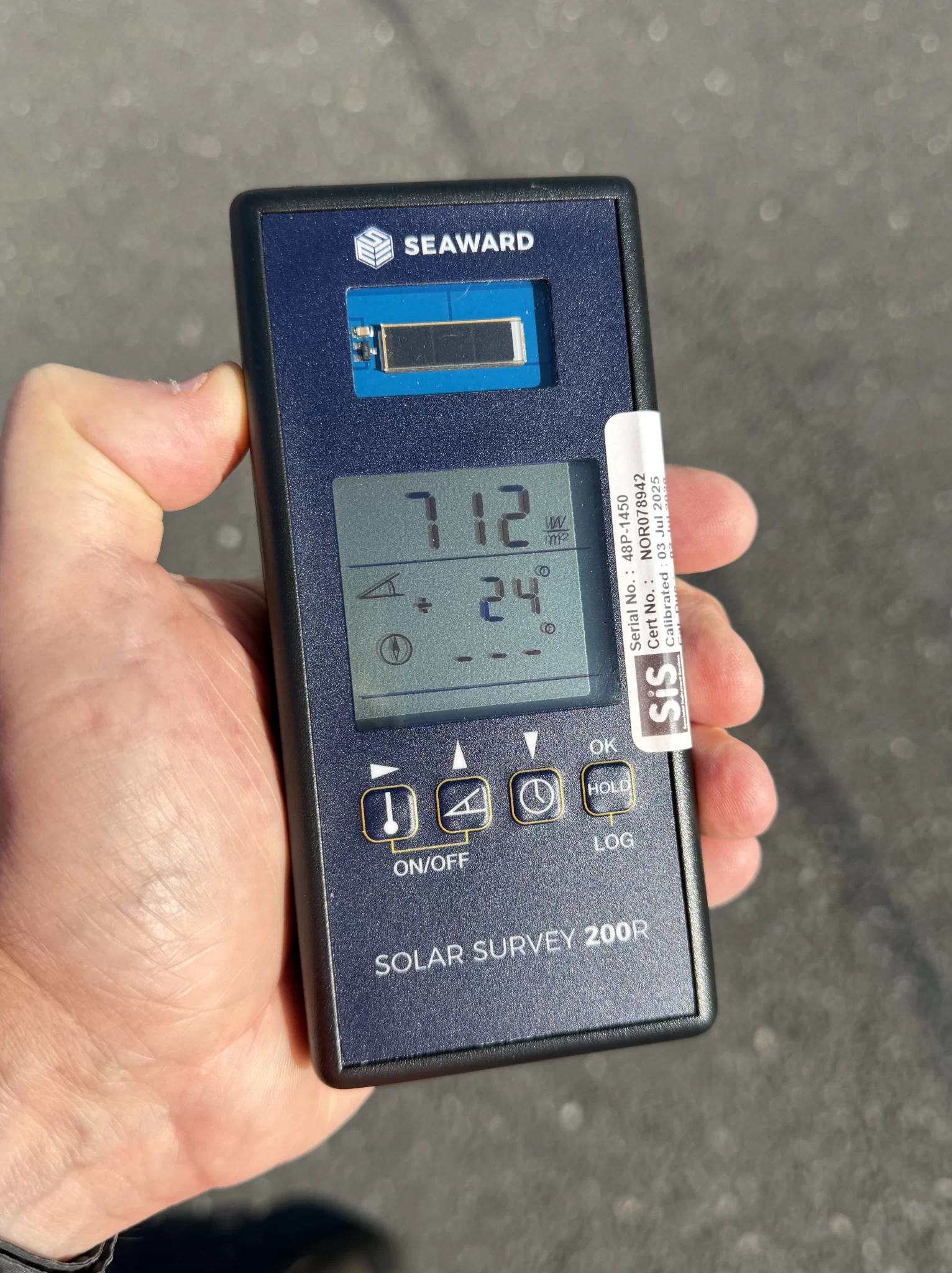
The thermal survey was flown in a single flight in late September, under a clear sky, with calm wind and in-plane irradiance between 712 and 721 W/m², comfortably above the 600 W/m² minimum IEC 62446-3 sets for a valid survey. A drone-mounted radiometric thermal camera captured the array at a consistent height above the modules, with matching visible imagery for every thermogram. Environmental conditions were logged on site throughout, and the reflected apparent temperature was taken from a thermogram of the sky, so the radiometric settings applied in analysis reflected the conditions on the day rather than defaults.
Each detailed thermogram was analysed against its own baseline, taken from healthy modules within the same image, and every anomaly was classified for severity, consequence and its nearest condition in IEC 62446-3:2017 – Annex C. Electrical testing followed later the same morning, with each of the 24 strings measured for open-circuit voltage, short-circuit current, insulation resistance and a full current-voltage trace using IEC-compliant test instruments, and earth continuity checked on the cable-run framework.
The report states plainly what the inspection could not establish. No string layout or module datasheet was available, so string voltages were reported as measured rather than compared against design values, and the insulation resistance test voltage was set conservatively to protect equipment of unknown rating, a departure declared in full.
- Included: drone thermal and visible capture of the full rooftop array, Level 3 thermographic analysis and classification, string-level electrical testing of all 24 strings, and a certified report.
- Not included: inverter diagnostics, on-roof electrical work, remedial work or any repair, which sit with a suitably qualified electrical contractor.
What did the solar PV thermographic inspection find?
The array presented as a working installation carrying cell-level activity rather than any module-scale or string-scale fault. Twelve findings were classified across ten thermograms, ranging from Low to High severity, with no finding reaching an absolute-temperature safety threshold. The dominant presentation was a repeating pattern of paired, symmetrical elevated cell anomalies. A pattern of that kind points to an electrical condition within the cells, such as cracking or interconnect degradation, rather than anything deposited on the glass, and at cell scale the bypass diodes keep each string producing. Those findings carry a Degradation Trajectory consequence: the mechanism can progress, so the cells concerned are worth reassessing at the next inspection.
Two findings stood apart. One thermogram recorded two module sub-strings at uniform elevation, consistent with bypass diodes in conduction and the output of those sections lost at the time of survey, a Yield consequence. Another recorded a thin, straight warm line running from a small asymmetric cell anomaly to the module frame, consistent with a fracture in the front glass even though none was visible in the drone imagery at survey resolution. Electrically, all 24 strings met the IEC 62446-1 thresholds, with most sitting in the insulation resistance monitoring band, a position to re-measure next time rather than a fault.
What happens next for the site?
The certified report gives the electrical contractor and the site’s owner a single, evidence-based record to act on. Investigation by a suitably qualified electrical contractor was recommended for the sub-string finding and the possible front-glass fracture, with the cell-level findings and the strings in the monitoring band set as reference points for the next inspection. Every finding is located on an array control map, so the same modules can be found again on the roof and compared at the next visit.
- Investigate the two bypassed sub-strings and confirm the cause.
- Inspect the module carrying the linear feature at close range.
- Reassess the cell-level findings and monitoring-band strings at the next inspection interval.
Read together, thermal and electrical evidence turn a rooftop array from an unknown into a documented asset, with each finding placed where it belongs: on the action list, or on the watch list.
Planning a Solar PV Inspection?
Drone Media Imaging, a trading name of VisualChaos Studios Ltd, carries out IEC 62446-3 solar thermographic inspections and IEC 62446-1 string testing on rooftop and ground-mounted arrays. We cover Sussex, Hampshire, Kent and Surrey, and travel throughout the UK, Ireland and Europe.