How Was The Survey Carried Out In A Different Country?
A commercial rooftop solar PV installation in Lanzarote, Canary Islands, required a formal thermographic inspection to the requirements of IEC 62446-3:2017. Thermal data was collected on site by a specialist local operator working under a supervised Level 1 protocol, and submitted to Drone Media Imaging for Level 3 analysis and certified reporting. The result was something we had not produced before as a formally documented outcome: a complete all-clear, with no thermal anomalies detected at any classification level across the entire installation. This post explains what that means, why it matters, and why the standard that governs the work is the same whether the panels are in Sussex or the Canary Islands.
Project Overview
Subject
IEC 62446-3 solar inspection, solar PV thermographic inspection Spain, solar thermal survey Lanzarote, international solar inspection Level 3, certified solar PV survey Canary Islands
Skills Used
IEC 62446-3 solar thermographic inspection, qualitative thermal analysis, Level 3 report writing
Portfolio Tags
solar PV inspection, IEC 62446-3, Lanzarote, Spain, international thermography, Level 3 thermographer, all-clear solar survey, solar thermal inspection Canary Islands
IEC 62446-3 solar inspection outside the UK, can a UK thermographer certify a solar inspection abroad, what does an all-clear solar thermal inspection meanIEC 62446-3 solar inspection outside the UK, can a UK thermographer certify a solar inspection abroad, what does an all-clear solar thermal inspection mean
International IEC 62446-3 Solar Survey, Viguetas – Carr. de San Bartolomé, Lanzarote, All Clear Confirmed
The standard doesn’t stop at the border. Neither does the quality.
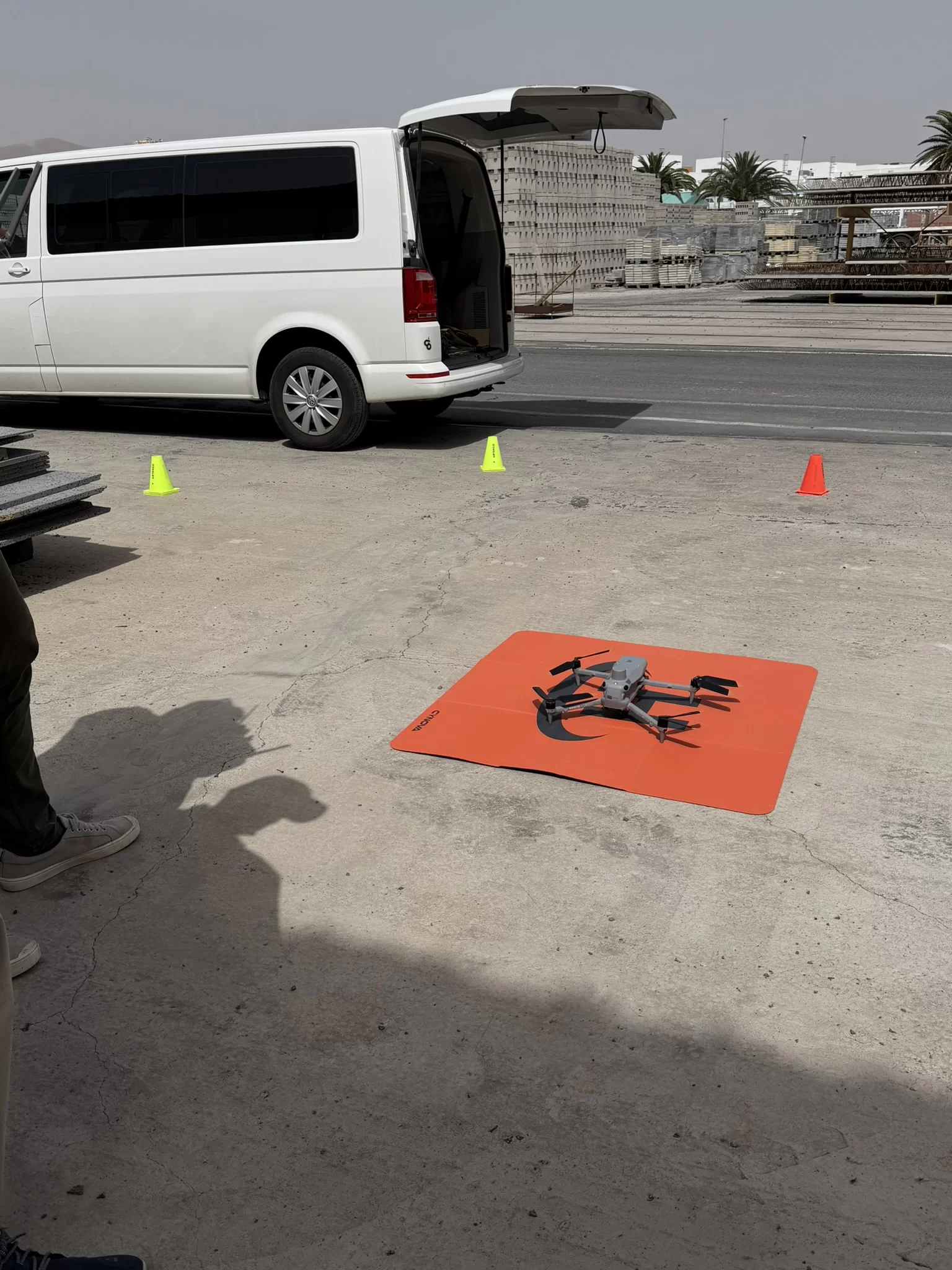
International Standars IEC62446-3:2017 Apply
Solar PV Thermal Inspection, Lanzarote: A Certified All-Clear Finding
Lanzarote sits closer to the Sahara than it does to mainland Europe, and the solar irradiance levels reflect that. Rooftop PV installations on the island operate under intense sun for a far greater proportion of the year than the equivalent commercial installation in the UK, making thermographic inspection both highly practical and highly effective. When one such installation required a formal IEC 62446-3 thermographic survey, the client needed a result that would be defensible, independently certified, and compliant with the international standard governing solar PV thermal inspection, wherever the asset happens to be located.
IEC 62446-3:2017 is an international standard, not a UK standard. It applies to photovoltaic installations globally, and the obligations it places on the thermographer, the data collection process, and the analysis methodology are the same in Spain as they are in Surrey. Drone Media Imaging was engaged to provide the Level 3 analysis and certified reporting, with thermal data collected on site in Lanzarote by a specialist drone operator working under a supervised Level 1 protocol.
The survey framing for this job is straightforward: Survey, Analysis, Reporting. Thermal data was captured on site by the Level 1 operator under direct Level 3 supervision of method and parameters. That data was then reviewed, triaged, and analysed in full by our Level 3 Master Thermographer using FLIR Studio Pro, with findings classified against the IEC 62446-3 anomaly framework before the certified report was issued. The geographical distance between the data collection and the analysis stage does not affect the validity of the process, provided the supervision structure and data standards are correctly applied.
The result, in this case, was a formally documented all-clear.
A Solar Inspection That Crossed a Border, but Not the Standard
How Was the Survey Carried Out in a Different Country?
The inspection model used for this project reflects the way IEC 62446-3:2017 is designed to work in practice. The standard defines two roles in the data collection and analysis chain. Level 1 data collection covers the on-site thermal imaging, the capture of environmental parameters, and the correct application of radiometric settings in the field. Level 3 analysis covers the review, triage, classification, annotation, and certified reporting of the resulting thermographic data. These two roles can be delivered by different people, in different locations, provided the Level 1 collection is conducted under the supervision and methodological guidance of the Level 3 analyst.
For this job, a specialist drone operator based in the Canary Islands collected the thermal data on site, working to the parameters and protocol set by our Level 3 Master Thermographer. The environmental conditions in Lanzarote at the time of survey were well suited to the inspection: strong direct irradiance, clear sky, and low wind, providing the stable thermal loading conditions that allow genuine anomalies to present clearly above the baseline. The data was then submitted to Drone Media Imaging for analysis using FLIR Studio Pro, where thermograms were tuned, triaged, and reviewed in full before any classification was applied.
The scope of the inspection covered:
- Full thermal survey of the rooftop array under IEC 62446-3:2017 simplified inspection classification
- Thermal baseline established from representative clean modules within the array
- Assessment across all standard IEC fault categories: cell-level, module-level, string-level, diode anomalies, potential induced degradation, soiling, junction box heating, and structural gaps
- Review conducted to Level 3 certified standard, independent of the on-site data collection method
- Certified Level 3 report issued in the Drone Media Imaging standard format
What Did the Thermal Analysis Find?
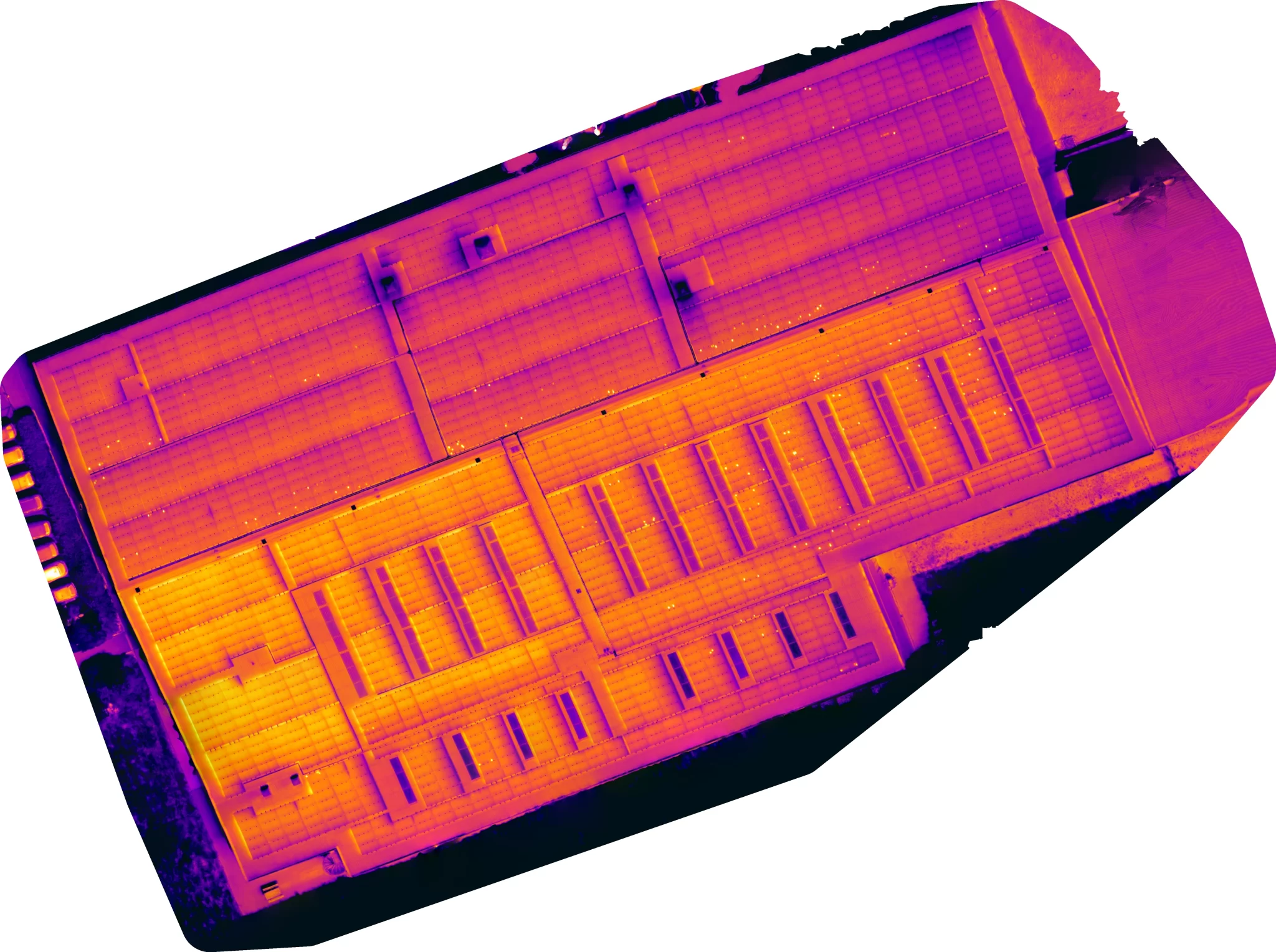
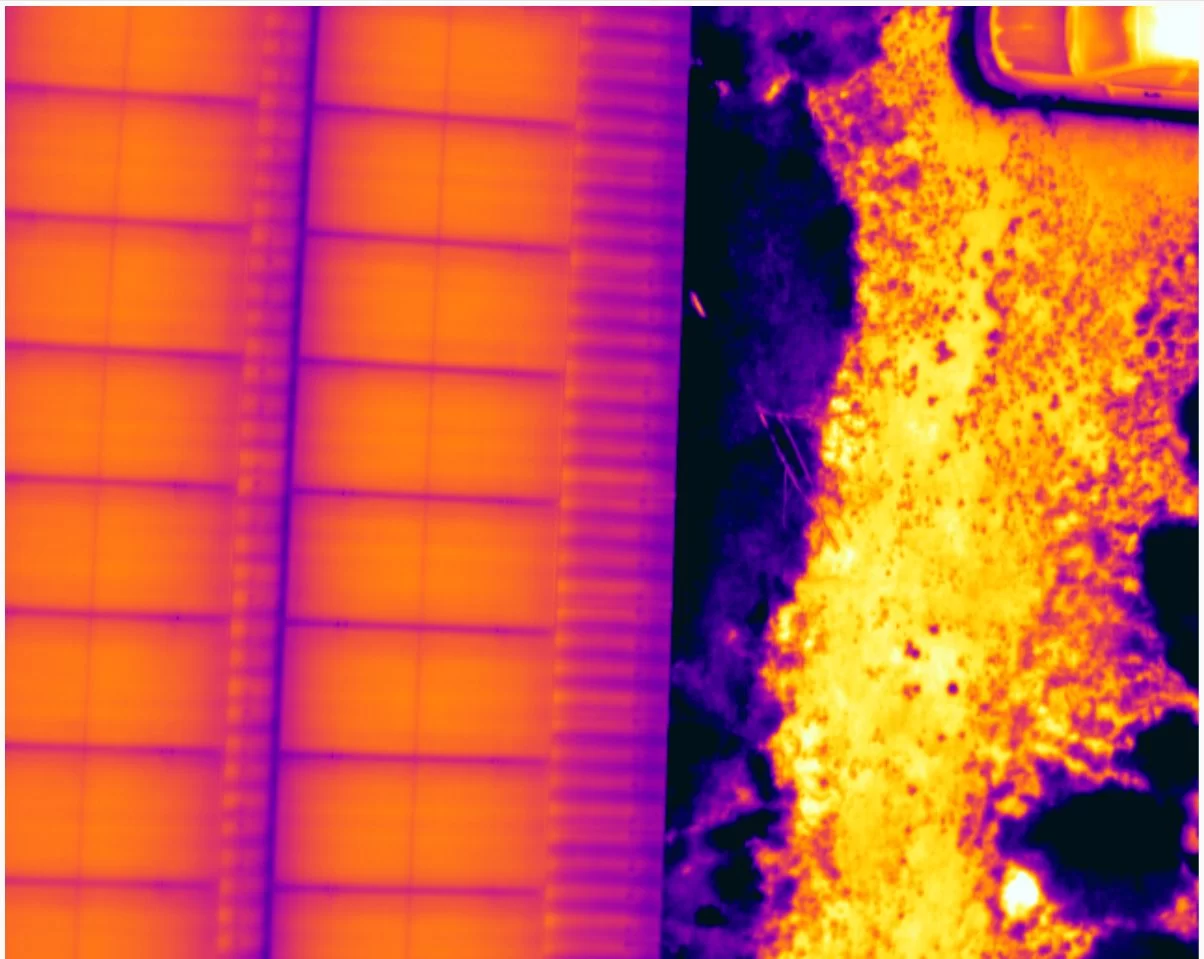
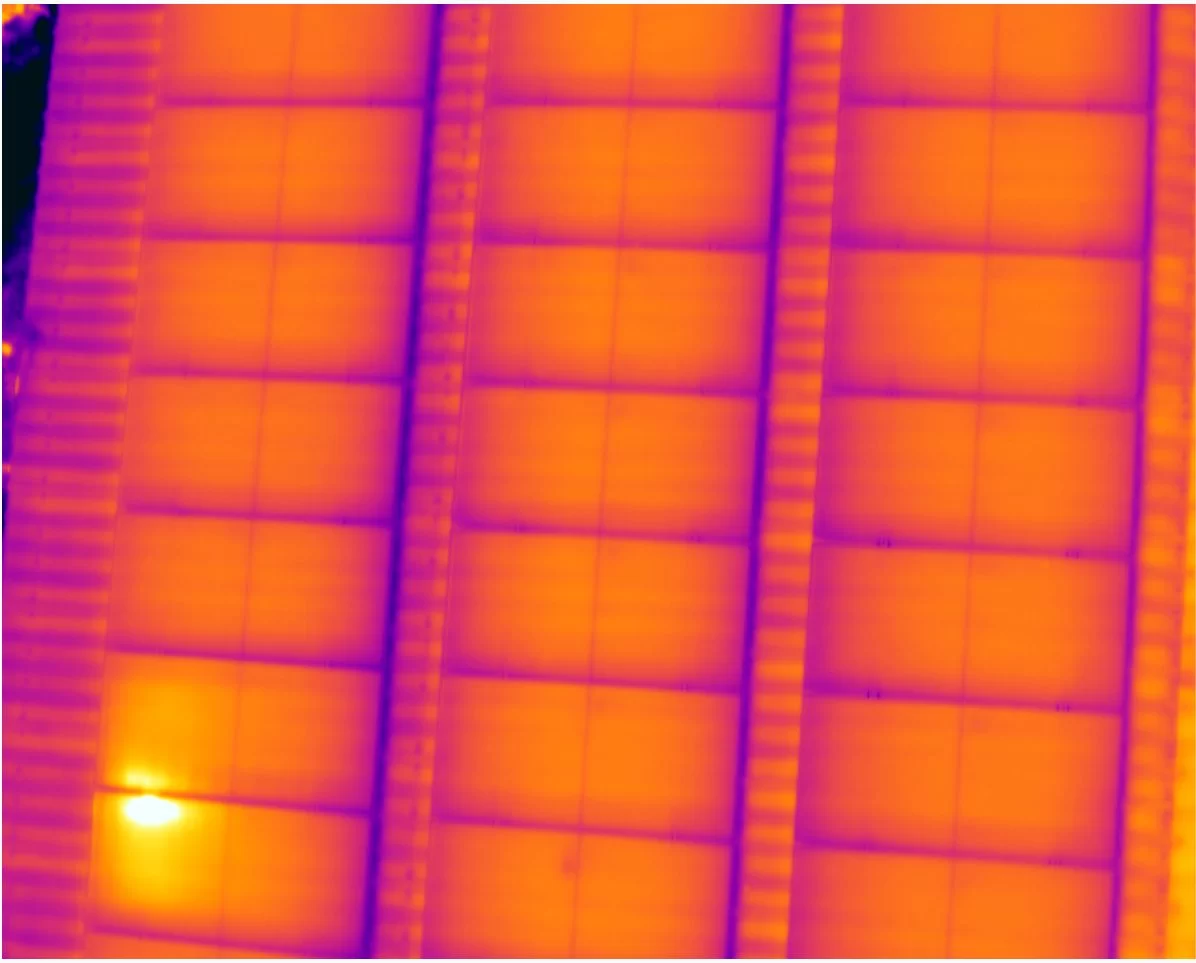
Following complete Level 3 review of the thermographic data, no anomalies were identified at any level of classification. Every module in the array presented within the expected thermal range relative to the established baseline. No cell-level hotspots, no diode activation signatures, no string-level irregularities, no patterns consistent with potential induced degradation, and no junction box or connector heating were observed. The thermal image of the installation was, in the technical sense, uniform.
It is worth being precise about what that means. In a qualitative thermographic inspection under IEC 62446-3:2017, analysis is not based on absolute temperature values. It is based on relative thermal deviation from a baseline established using clean, uniformly irradiated modules of comparable construction and orientation within the same thermogram frame. That baseline, referred to in Drone Media Imaging’s reporting methodology as the EL1 reference, is the anchor against which all other modules are assessed. When no module departs from that reference in a manner consistent with a known fault mechanism, the result is thermal equilibrium across the array.
Thermal equilibrium in a solar PV installation under correct operating conditions is the expected behaviour of a well-functioning system. Confirming it formally, under a certified inspection standard, is a meaningful outcome. It establishes a documented thermal baseline, provides the asset owner with independent verification of system health at the date of inspection, and creates a reference point against which any future inspection can be compared.
The findings were classified using the IEC 62446-3:2017 anomaly framework and the Drone Media Imaging Consequence Classification, which translates technical severity into business and safety consequence. In an all-clear result, the Consequence Classification confirms, across each category, that no safety, yield, or degradation trajectory concern was identified. That confirmation carries the same formal weight as a fault classification would in any other result.
- IEC 62446-3:2017 governs the thermographic inspection of photovoltaic modules and arrays, defining survey conditions, anomaly categories and reporting requirements for solar PV thermal surveys. This international standard applies globally and formed the primary technical framework for this inspection.
- ISO 18436-7 sets out the framework for training and competence in thermographic condition monitoring. Analysis and reporting on this project were carried out by an ITC Level III Certified Master Thermographer (Infrared Training Centre; Certification #205722059), practising in accordance with that framework.
What Could the Client Do with a Certified All-Clear?
The certified report issued at the conclusion of this inspection provides the asset owner with a formally documented statement of the installation’s thermal condition at the date of survey. For a commercial solar PV installation, this has direct practical value. It confirms that the system is operating without detectable thermal fault at module, string, or array level. It provides a defensible, independently certified record for maintenance planning, asset management, warranty documentation, or due diligence purposes.
The next steps arising from an all-clear result are straightforward:
- Retain the certified inspection report as part of the site’s asset maintenance record
- Use the thermal baseline established in this inspection as the reference for future surveys
- Plan a follow-up thermographic inspection to maintain a comparable baseline record over the service life of the installation, typically on an annual or biennial cycle
- If the installation is within a warranty period, the baseline record supports any future manufacturer claim where degradation is later identified
It is important to note that an all-clear result is specific to the date and conditions of the inspection. Thermographic inspection is a snapshot in time. The result does not guarantee the future performance of the installation, and it does not exclude latent or sub-surface conditions that do not present a thermal signature under the conditions present at the time of survey. A periodic programme of inspection is the appropriate response to a clean result, not an assumption that no further inspection is needed.
What Made This Project Different?
The detail that sets this job apart is not the outcome. It is the geography, and what the geography demonstrates about the way IEC 62446-3:2017 is structured and applied. The inspection standard does not require the thermographer to be standing next to the drone. It requires the data collection to meet defined parameters, and the analysis and reporting to be completed to certified Level 3 standard. That separation of role is built into the standard precisely because thermal data can be collected at scale, across distributed assets, by trained operators working under appropriate supervision, and then reviewed centrally by a Level 3 analyst with the full data set in front of them.
For asset owners with solar PV installations outside the UK, whether in Spain, Ireland, mainland Europe, or further afield, that model makes a certified IEC 62446-3 inspection practically accessible. Drone Media Imaging can provide Level 3 analysis and reporting against thermal data collected by a local operator anywhere that data can be submitted digitally. The standard is the same. The certification is the same. The report format is the same. The postcode of the panels is the only thing that changes.
Panels Abroad? The Standard Still Applies.
Drone Media Imaging delivers IEC 62446-3:2017 solar PV thermographic inspections across the UK, Ireland, and Europe, with Level 3 analysis and certified reporting available for thermal data collected by approved local operators anywhere in the world. Our Level 3 Master Thermographer provides certification on every report issued. If you have a solar PV asset that needs a certified thermal inspection, get in touch to discuss how we can support it.