Rooftop Solar PV Thermographic Inspection for an East Midlands Warehouse
IEC 62446-3 Drone Thermography on a Large Commercial Solar Roof
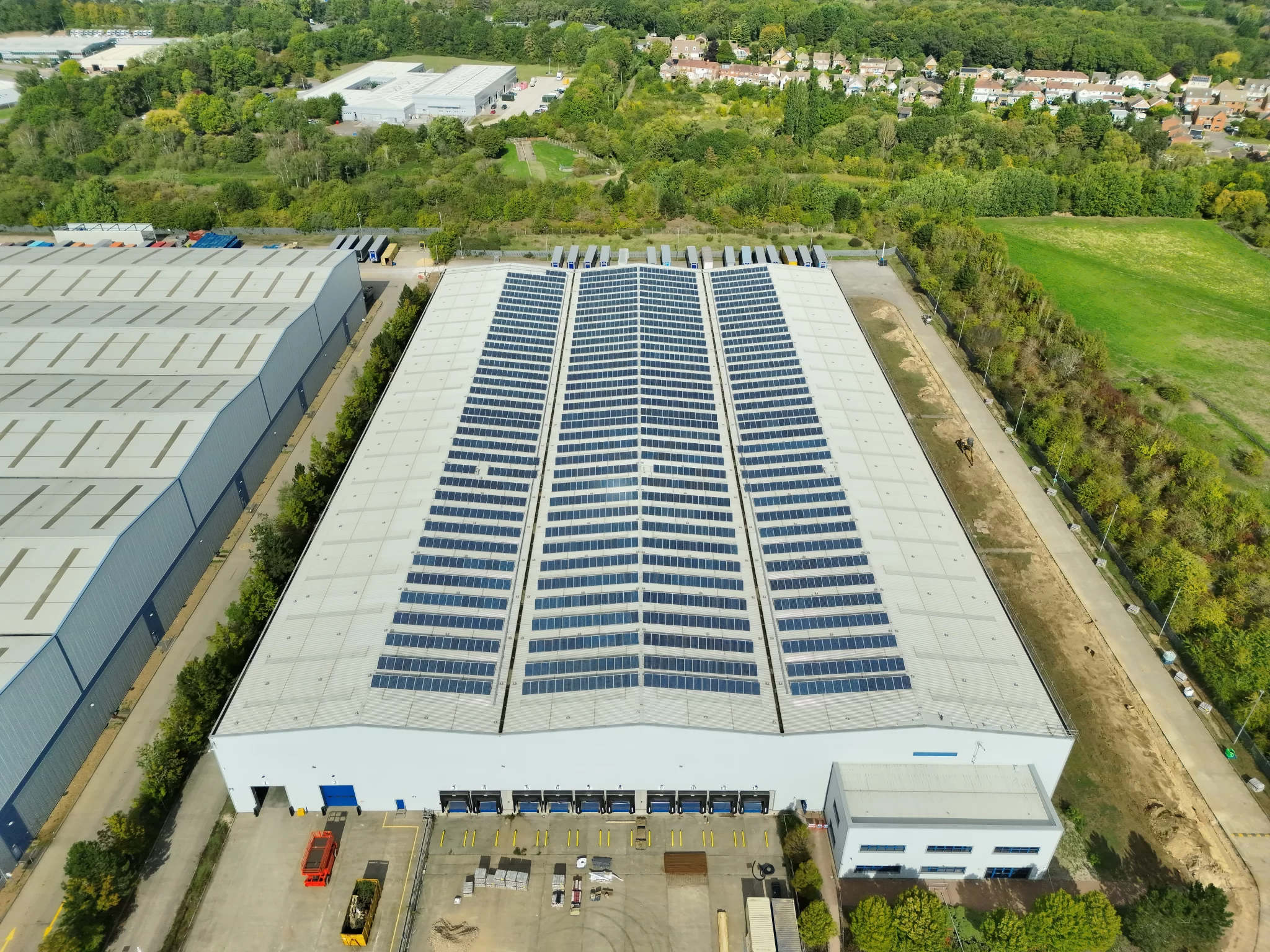
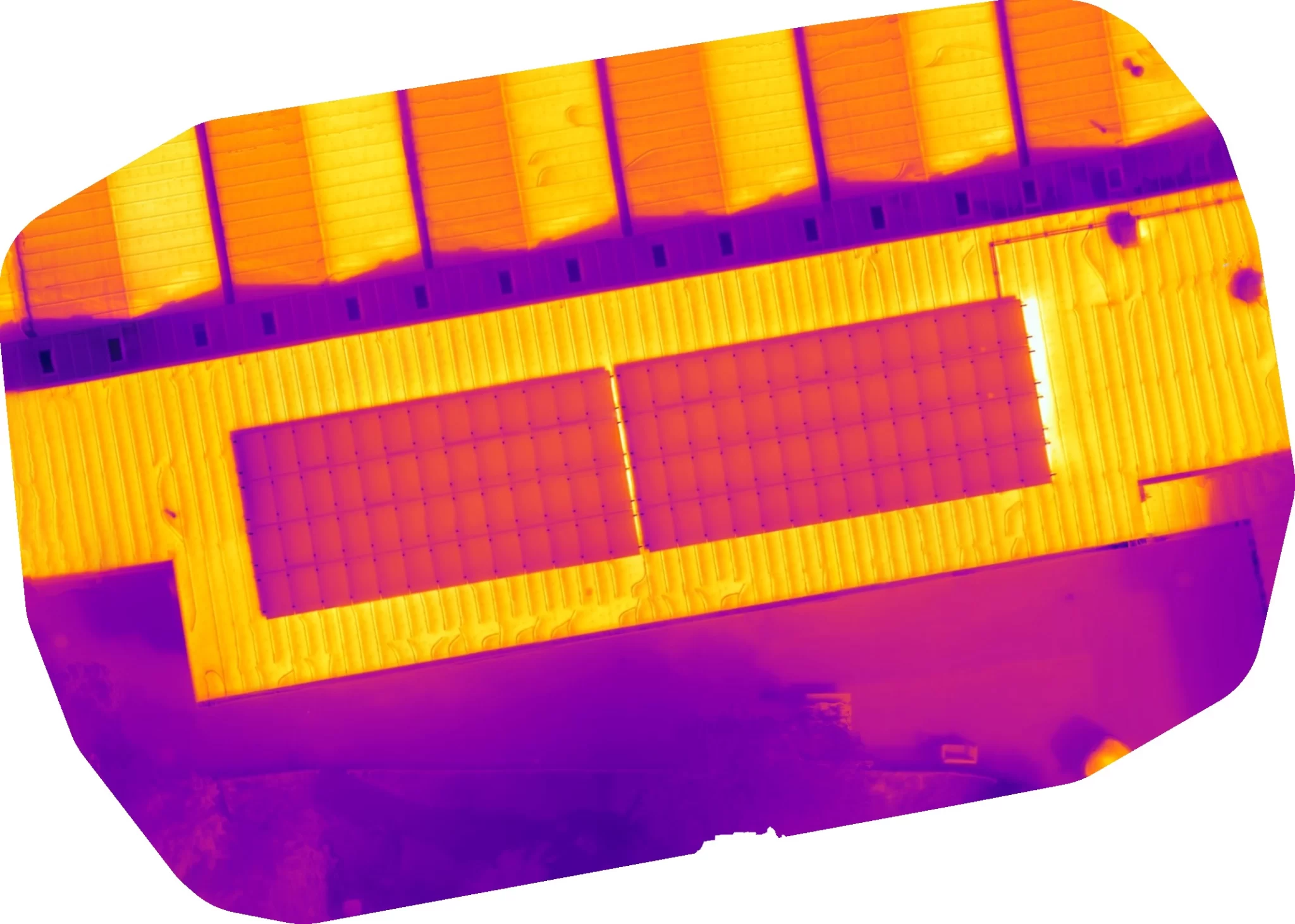
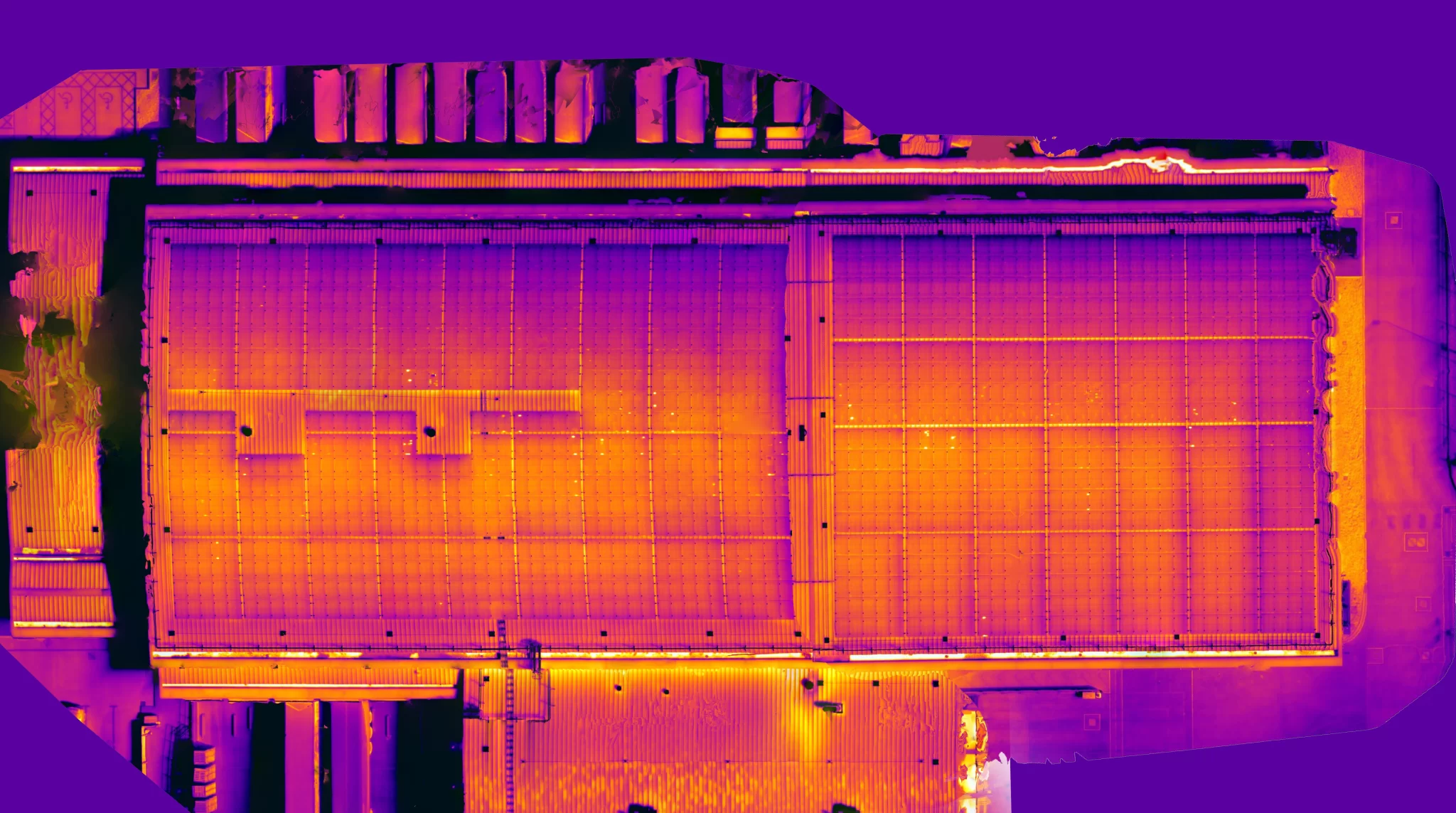
Drone Media Imaging carried out a rooftop solar PV thermographic inspection of a large commercial warehouse array in the East Midlands, under IEC 62446-3:2017 as a detailed inspection. The array was captured by drone in a single flight in clear, high-irradiance conditions, divided into four zones and analysed thermogram by thermogram by our Level 3 Master Thermographer. Thirty-seven findings were classified on the Drone Media Imaging five-tier severity scale, and none reached a Safety consequence. Most were string-scale: complete rows of modules evenly elevated with no cellular structure, the thermal signature of modules illuminated but delivering little or no current, consistent with an open-circuit condition. Two findings were High severity, thirteen Medium and twenty-two Low. The report locates each finding by row and column, assigns a consequence of Yield or Degradation Trajectory, and recommends investigation by a suitably qualified electrical contractor, beginning with the High and Medium findings.
Project Overview
Subject
rooftop solar PV thermographic inspection, commercial warehouse solar array, East Midlands, solar asset managers, IEC 62446-3:2017
Skills Used
IEC 62446-3 Solar Thermographic Inspection, Aerial Thermographic Survey, Level 3 Report Writing
Portfolio Tags
Solar PV Inspection, Commercial Rooftop Solar, East Midlands, IEC 62446-3, Solar Asset Owners, Drone Media Imaging, Aerial Thermography, How Do You Find Open-Circuit Solar Strings?
Drone Thermography For Warehouse Solar Roofs, IEC 62446-3 Detailed Thermal Inspection, Open Circuit String Detection By ThermographyDrone Thermography For Warehouse Solar Roofs, IEC 62446-3 Detailed Thermal Inspection, Open Circuit String Detection By Thermography
Rooftop Solar PV Thermographic Inspection for an East Midlands Warehouse
~ One flight, four zones and thirty-seven classified findings, each with a clear route to investigation. ~
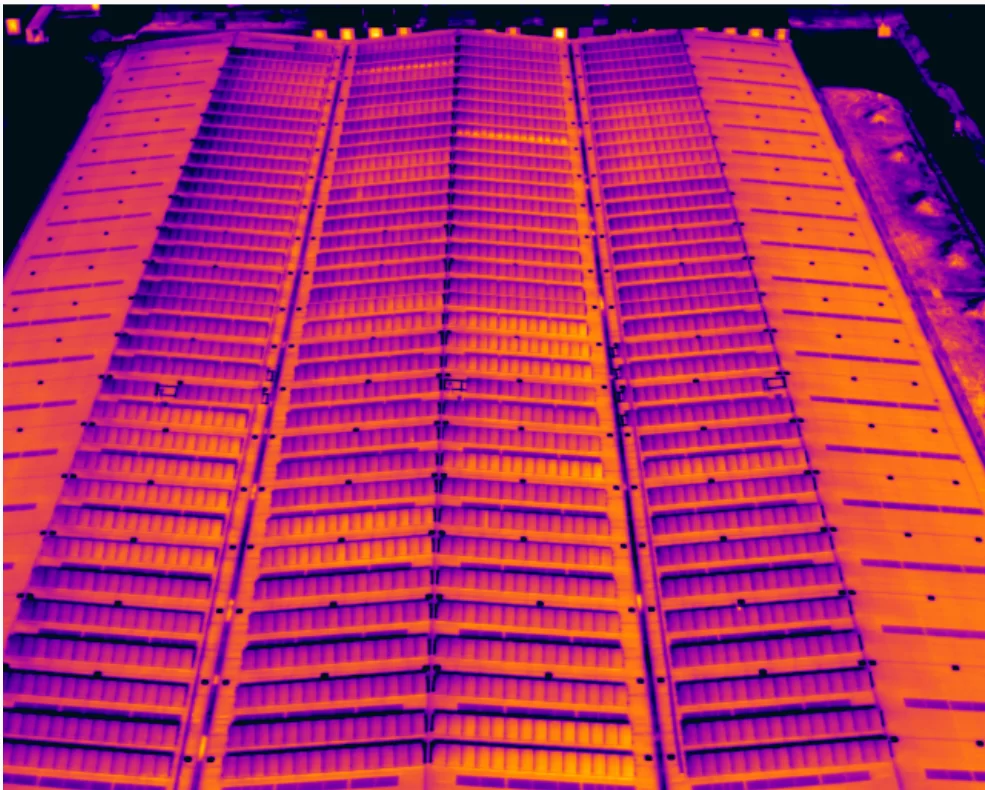
A Level 3 thermographic record of where a large rooftop array was losing output on the day.
IEC 62446-3 Drone Thermography on a Large Commercial Solar Roof
This rooftop solar PV thermographic inspection covered the array on a large commercial warehouse belonging to a toy manufacturer in the East Midlands. The roof carries a substantial low-pitch array across a single expanse. The inspection was commissioned to establish the thermal condition of that array under load, giving the asset owner an independent record of where it was performing and where it was not. The survey is assessed on its own evidence, so the report describes the condition of the array on the day it was flown and nothing more.
Thermography reveals how a photovoltaic module is behaving under load. A module that is generating normally converts part of the sunlight it absorbs into electrical current and runs at a temperature close to its neighbours. A cell, sub-string or whole string that cannot pass current turns that absorbed energy into heat instead, so the fault shows as a temperature difference against a healthy reference. Measured in the right conditions and classified against a consistent framework, those differences tell the asset owner where output is being lost and which conditions are likely to progress.
The inspection was surveyed, analysed and reported by Drone Media Imaging, a trading name of VisualChaos Studios Ltd, with every thermogram reviewed and the report certified by our Level 3 Master Thermographer. The result is a detailed inspection under IEC 62446-3:2017, with each finding carrying a severity on the Drone Media Imaging five-tier scale, a consequence and an IEC 62446-3:2017 class of abnormality, so the asset owner can see at a glance which findings matter most and why.
Governing Standards
- IEC 62446-3:2017 The international specification for outdoor infrared thermography of photovoltaic modules and plants, under which this detailed inspection was conducted.
- ISO 18436-7 The condition monitoring framework for thermography, to which the analysis and reporting are aligned.
- ASNT SNT-TC-1A and ANSI/ASNT CP-105 The personnel qualification frameworks in accordance with which the thermographer practises.
How was the rooftop solar thermographic inspection carried out?
Detailed Thermal Survey of a Warehouse Solar Array in the East Midlands
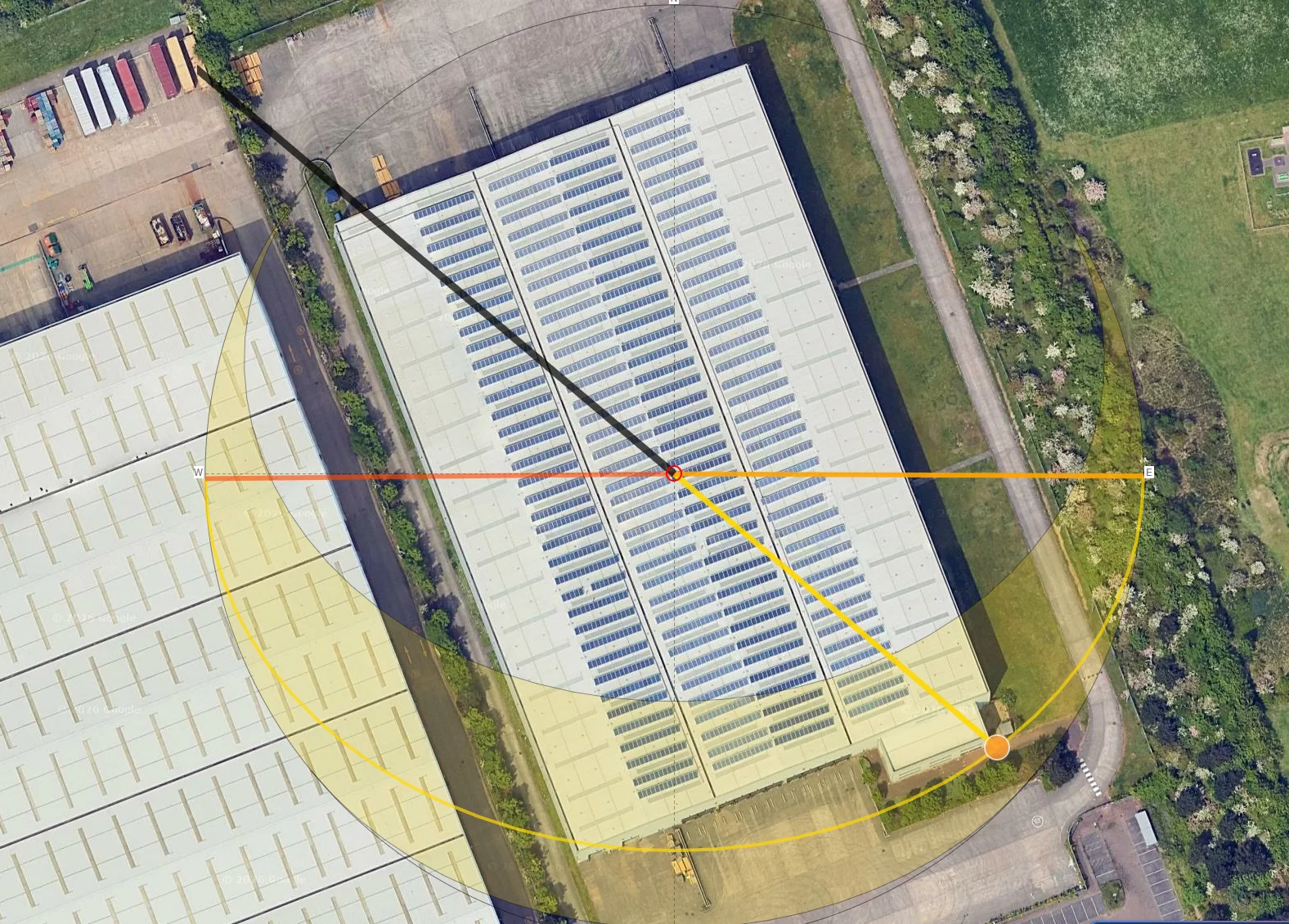
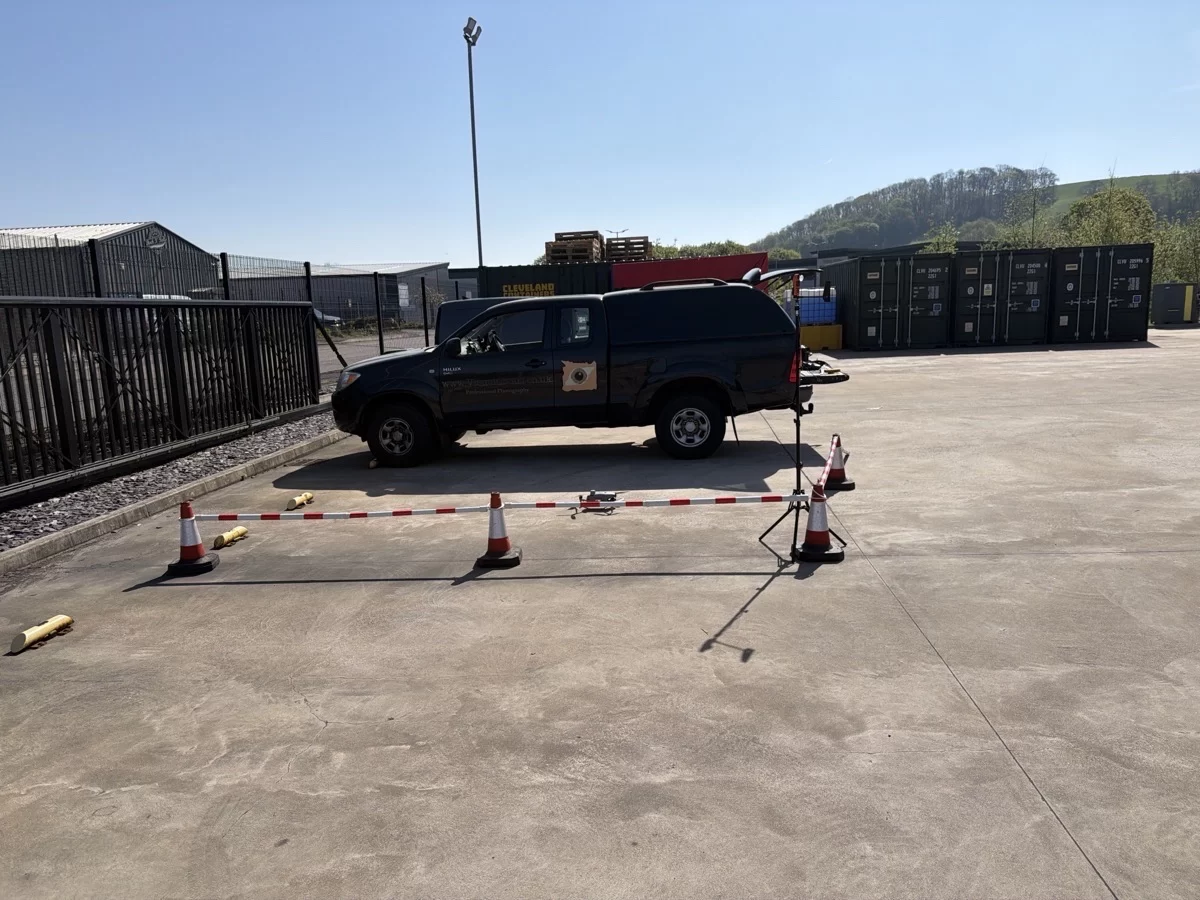
The array was flown in a single drone flight of around thirty minutes in late morning, under a clear sky with in-plane irradiance comfortably above the 600 W/m² minimum that IEC 62446-3:2017 sets for a thermographic inspection. Wind was calm and relative humidity within the specification’s limits, so the modules were under steady load and their thermal behaviour was stable across the flight. Irradiance was measured on site with an IEC-compliant irradiance meter at the start and close of the flight.
Thermal and visual imagery were captured at a consistent altitude above the modules with a radiometric thermal camera, giving a ground sample distance fine enough to resolve individual cells. The reflected apparent temperature was measured from an on-site sky thermogram, and emissivity was set for glass of unknown cleaning history. Because the roof was too large for a single analysis set, it was divided into four zones, and each thermogram was assessed against an EL1 reference measured on a healthy module, or, where no suitable module appeared in the image, a reference measured elsewhere in the same zone.
Where a row of modules was too long for one thermogram, it was recorded on two or three, and those captures were reported as a single finding classified on the highest reading. Severity was assessed on the maximum temperature difference above the reference, because averaging across a row can be distorted by edge cooling at module boundaries.
- Included: thermographic survey of the full rooftop array, Level 3 analysis of each thermogram, classification of every finding, a certified report with a reference grid of findings.
- Excluded: electrical testing, inverter diagnostics, string layout tracing, intrusive investigation and any remedial work.
What did the thermographic inspection find?
Thirty-seven findings were classified across the four zones, and none reached a Safety consequence or an absolute temperature threshold. The dominant presentation was string-scale: twenty-seven findings were complete rows of modules evenly elevated above the zone reference with no cellular structure. That pattern is the signature of modules that are illuminated but delivering little or no current, consistent with strings at or near open circuit at the time of survey. Each carries a Yield consequence, because output from the row was reduced on the day. Fifteen were Low severity and twelve Medium.
Two findings combined string-scale elevation with a repeating pattern of elevated cells along the lower cell rows of every module in the row. They were classified High and Medium, with both Degradation Trajectory and Yield consequences, because the cell-level heating is of a kind that can progress while the string-scale element reduces output now. The thermogram alone cannot separate the candidate mechanisms, so the report describes the pattern and leaves its cause to investigation.
Three cell anomalies were recorded, one of them High severity, each carrying a Degradation Trajectory consequence. Four sub-string elevations consistent with bypass diode conduction and one pair of adjacent modules at uniform elevation were classified Low severity with a Yield consequence. In total the report records two High, thirteen Medium and twenty-two Low findings.
What happens after a solar thermographic inspection?
The certified report gives the asset owner a ranked, located record of where the array was losing output and which conditions warrant monitoring. Because no string layout was available, each finding is located by row and column on a reference grid of the array rather than mapped to a string or inverter, which gives an electrical contractor a precise starting point on the roof. The report was certified by our Level 3 Master Thermographer and issued as a digitally signed document.
The string-scale findings cannot be diagnosed from thermal evidence alone. An open-circuit signature can arise from a fault in the string wiring, at a connector, at a protective device or at the inverter input, and only electrical investigation can establish which. The recommended next actions follow the severity ranking:
- Investigation by a suitably qualified electrical contractor, beginning with the High and Medium findings.
- Electrical investigation of the string-scale findings, whose cause cannot be established from the thermal evidence.
- Reassessment of the cell-level findings at the next inspection interval.
Repeated at a consistent interval, inspections of this kind let an asset owner confirm that investigated faults have been cleared and see new conditions as they emerge, each visit assessed on its own evidence.
Why measure on the maximum rather than the average?
Long rows of modules lose heat at their edges and frames, so an average across a row understates the condition the row is in. Classifying on the maximum temperature difference above a healthy reference, measured at high irradiance, gives the asset owner a worst-case view of each finding that is consistent from one thermogram to the next.
Commission a Solar Thermographic Inspection
Drone Media Imaging, a trading name of VisualChaos Studios Ltd, delivers detailed solar PV thermographic inspections under IEC 62446-3:2017, with every report analysed and certified at Level 3. We work across Sussex, Hampshire, Kent and Surrey and travel throughout the UK, Ireland and Europe.