The Interval Belongs To The Array
Anyone responsible for a commercial rooftop array eventually meets the same question, usually because an insurer, a broker or a new facilities contract has raised it: how often should it be inspected? The question expects a number. Once a year, perhaps, or every other year, something that can go into a maintenance calendar and be left alone until it comes round again.
The honest answer is less tidy and more useful. The published guidance does give intervals, and they do not agree with each other. The international technical specification for thermographic inspection of solar plants recommends one figure, the UK installation standard points to another, and the insurance industry’s own code of practice ties inspection to the maintenance cycle rather than to a date. Each of them then hands the final decision back to the owner of the installation.
That is not a gap in the guidance. It is the guidance recognising that a ten-year-old array above a warehouse full of stock is not the same asset as a two-year-old array above an open-sided barn. The interval belongs to the array, and to whatever sits underneath it. This post sets out what the codes actually recommend, then what should decide the answer for a particular roof.
Blog Content TL;DR...
There is no single correct inspection interval for commercial solar, and the published guidance says as much itself.
- IEC TS 62446-3 recommends a periodic thermographic inspection every four years, then defers to the owner, the operator and national codes.
- MIS 3002 points to a full maintenance visit every two years on most commercial and industrial buildings, with thermography recommended at that visit.
- RC62, the UK insurance industry’s own joint code of practice, recommends thermographic examination as part of the risk regime for rooftop PV.
- Array age, installation history, what the building contains and anything that has changed on the roof decide where a given site should sit.
- An array that has never been formally surveyed needs a baseline first, because every later inspection is only as useful as the one it is compared with.
Set the interval by the asset and its risk, write the reasoning down, then hold to it.
What The Guidance Actually Says
Three documents, three answers, and the one thing they agree on
The technical specification: four years, then over to you
IEC TS 62446-3 is the international technical specification for infrared thermography of photovoltaic modules and plants, and it is the document every solar PV survey we carry out is flown and analysed to. On frequency it is brief. It recommends a periodic thermographic inspection every four years, and in the same sentence says the interval applied to a specific installation shall be agreed with the owner or operator, or may be set by national electrical codes and safety regulations. Four years is its starting position, not its last word. It also sets out the conditions a survey must be carried out under and who should carry it out, and both matter more to the interval than they first appear.
The UK installation standard: every two years
MIS 3002, the Microgeneration Certification Scheme standard for solar PV, carries an advisory maintenance schedule. For most commercial and industrial buildings that means monthly visual checks by the owner, an intermediate maintenance visit each year, and a full maintenance visit using specialist test equipment every two years. Thermographic examination is recommended at that full visit.
The insurers’ code: part of the maintenance regime
RC62, the joint code of practice on fire safety with photovoltaic installations developed by the UK insurance industry’s own technical body, recommends thermographic examination of rooftop systems. Zurich’s published risk guidance advises that serious consideration be given to thermography at the time of any routine service and maintenance visit. What the three share is that inspection belongs inside a maintenance regime, not outside it as an occasional extra.
How often should commercial solar panels be inspected | What is the IEC 62446-3 inspection interval | Do insurers recommend solar thermographic inspectionHow often should commercial solar panels be inspected | What is the IEC 62446-3 inspection interval | Do insurers recommend solar thermographic inspection
What Should Decide Your Interval
The age and history of the array
Most of the faults that lead to fire on a rooftop system are built in rather than worn in. An IEC technical report published in 2021 found that, of the photovoltaic fires it studied, 72% were caused by installation or product defects. Those faults sit at connections, in cabling and inside junction boxes, and they develop slowly. An array installed under an earlier subsidy scheme, on a building that has since changed hands, with commissioning paperwork that is incomplete or missing, has had a decade for anything built into it to develop, and nobody can now say what was checked at handover.
What sits underneath it
The same fault carries a very different consequence on different buildings. A roof above combustible stock, occupied space or a process that cannot be stopped raises the stakes of an undetected hotspot far beyond a roof above an empty store. That is why the specification defers to the owner, and why the interval should follow the fire load and the cost of interruption, not only the age of the modules.
What has changed on the roof
An interval is a default between events, not a substitute for them. A storm, roof works, a lightning strike, an electrical fault or an alteration to the system all justify a survey outside the normal cycle, because each can cause exactly the kind of damage that is invisible from the ground. So can an insurer’s risk surveyor recording that no inspection arrangement exists, which is increasingly how the question arrives in the first place.
Setting An Interval That Holds Up
Start with a baseline
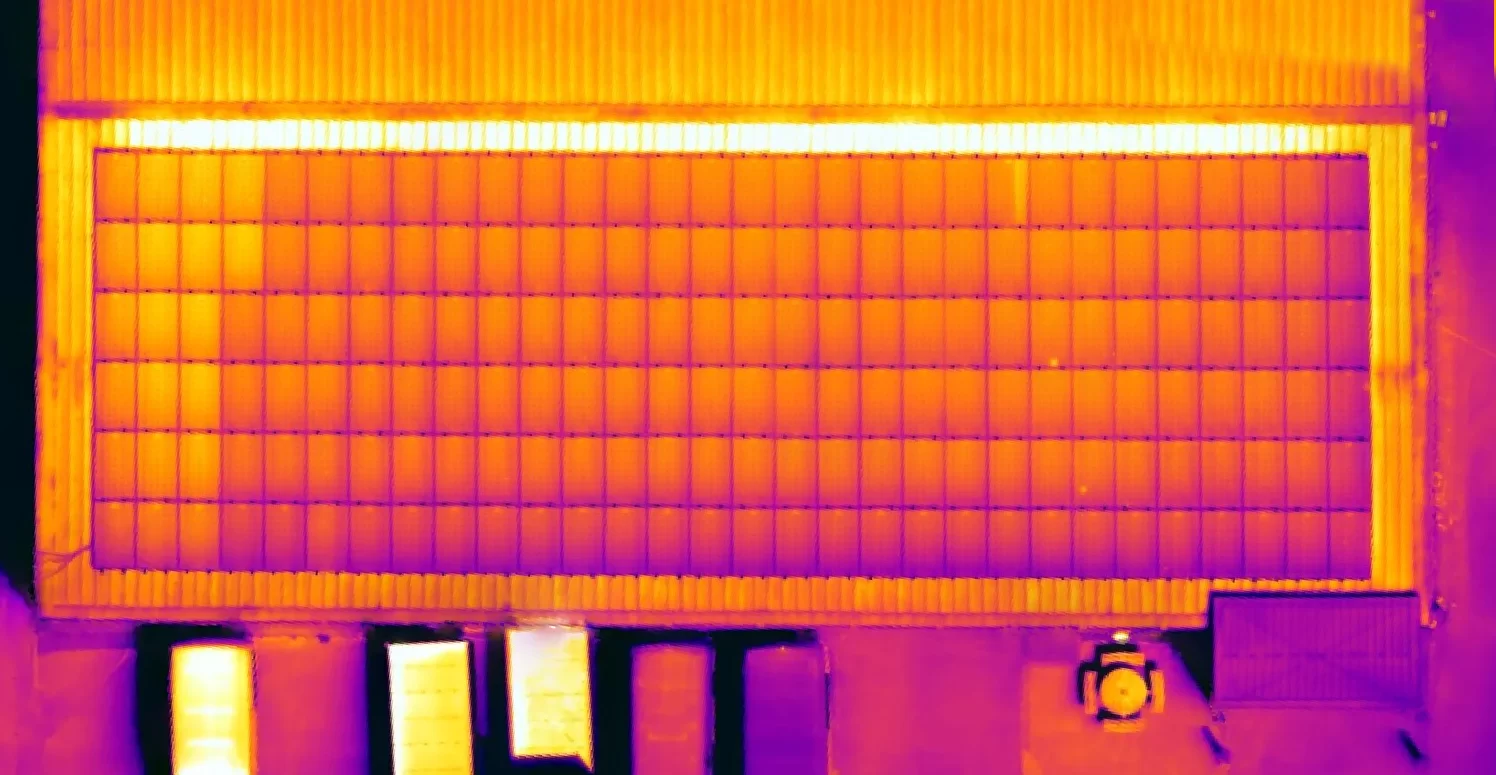
If an array has never been formally surveyed, the first inspection is not really part of a cycle at all. It records what the installation looks like now, so every later inspection has something to be compared against. A hotspot that was present and stable at the last survey is a different finding from one that has appeared since, and without that first record there is no way of telling the two apart. Generation data will not do it for you: on a recent commercial rooftop survey in South West England, several cell-level hotspots above 100°C were found on an array with no known history of concern, because an isolated cell fault of that kind causes no immediate change in output.
Then choose a cycle and keep to it
For most commercial rooftops the guidance points somewhere between the two-year full maintenance visit in MIS 3002 and the four-year recommendation in IEC TS 62446-3. Where the building, its contents or its insurer raise the stakes, the shorter end is the easier one to defend. Whichever you settle on, write the reasoning down, because an interval that can be explained is one a risk surveyor can accept and close.
Keep each inspection independent
Where the purpose of an inspection is fire prevention, IEC TS 62446-3 states that testing personnel should be independent of the owner or operator. Drone Media Imaging installs nothing and maintains nothing, so a survey has no interest in what it finds. Findings are reported as areas warranting further investigation by a suitably qualified contractor, with the conditions logged so the next inspection compares like with like. The method is set out on our IEC 62446-3 thermographic inspection page, and the insurer’s side on solar inspections for insurance.
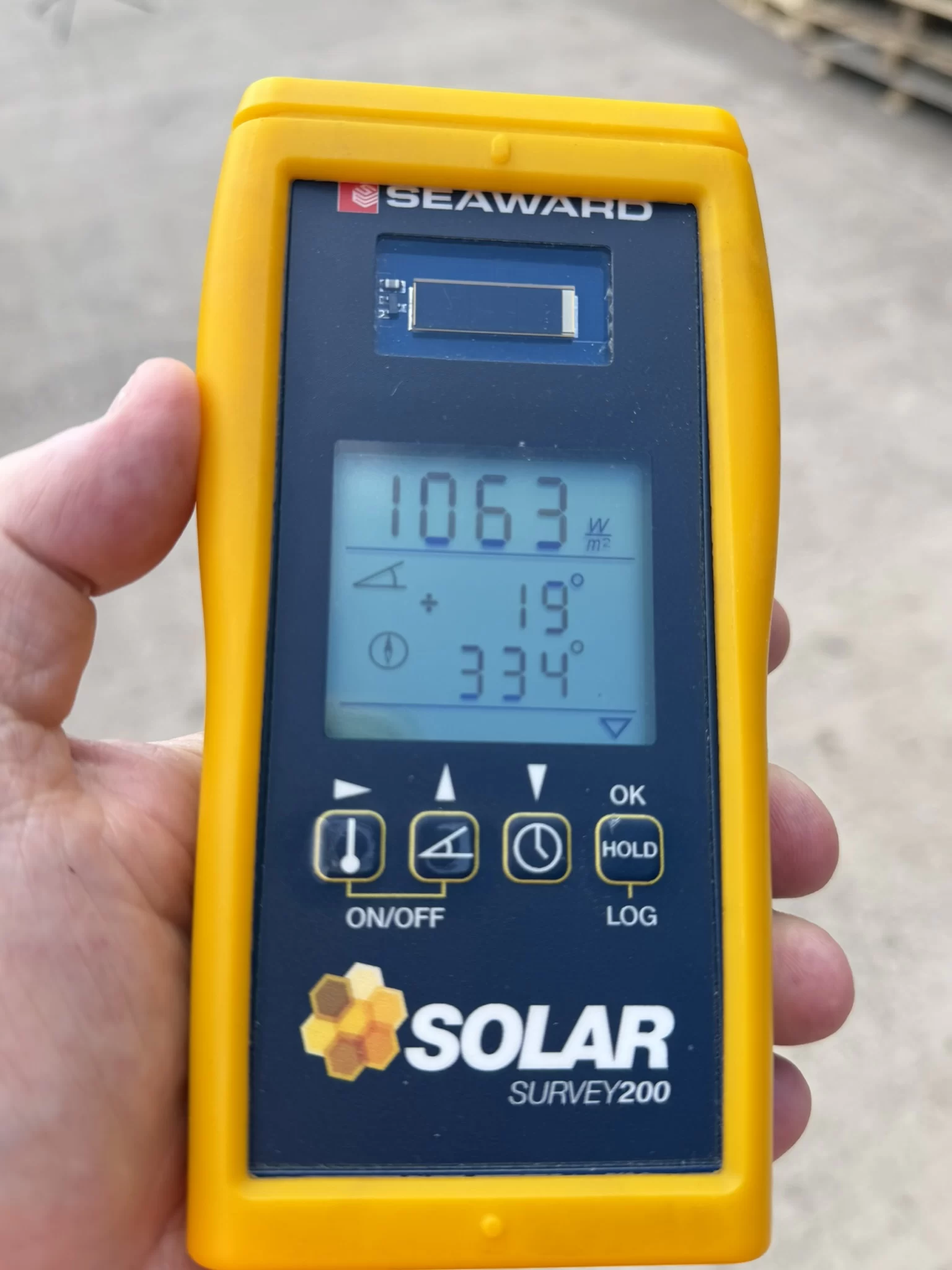
An inspection interval only earns its value if each survey can be compared with the last, and that depends on the conditions the data was captured under. IEC TS 62446-3 sets them in its Table 3: at least 600 W/m² of irradiance in the plane of the modules, wind no stronger than 4 on the Beaufort scale, or 28 km/h, and no more than 2 okta of cumulus cloud, because cloud throws misleading reflections onto the glass.
The specification also recommends waiting 15 minutes after any change in irradiance or load of more than 10% per minute, so the array is back in thermal steady state before anything is measured. Irradiance, ambient temperature and wind are recorded against the time of capture, with every instrument synchronised to the same clock beforehand.
Captured inside those limits, a temperature difference measured this year and one measured in two or four years’ time describe the same thing. Captured outside them, the comparison is guesswork, however good the images look.
Governing Standards
- IEC TS 62446-3:2017, the technical specification for outdoor infrared thermography of photovoltaic modules and plants. Clause 5.1 recommends a four-year periodic inspection interval, to be agreed with the owner or operator or set by national codes.
- IEC TS 62446-3:2017 Annex B, the section dealing with who carries out the inspection, which states that personnel should be independent of the owner or operator where the purpose is fire prevention.
- RC62, Recommendations for fire safety with photovoltaic panel installations (2023), the UK insurance industry’s joint code of practice, which recommends thermographic examination of rooftop PV.
- MIS 3002, the Microgeneration Certification Scheme standard for solar PV, whose advisory schedule points to a full maintenance visit every two years for most commercial and industrial buildings.
- Analysis by Steve Fisher, ITC Level III Certified Master Thermographer (Infrared Training Centre; Certification #205722059), practising in accordance with the frameworks of ISO 18436-7:2014, ASNT SNT-TC-1A and ANSI/ASNT CP-105, and BINDT CMGEN Appendix B as UK training governance.
Set An Interval You Can Defend
Drone Media Imaging carries out solar PV thermographic survey, analysis and reporting across Sussex, Hampshire, Kent and Surrey, travelling throughout the UK, Ireland and Europe. Tell us the age of the array, what the building is used for and whether it has ever been formally surveyed, and we will recommend an inspection interval and quote the first survey against it.
related posts
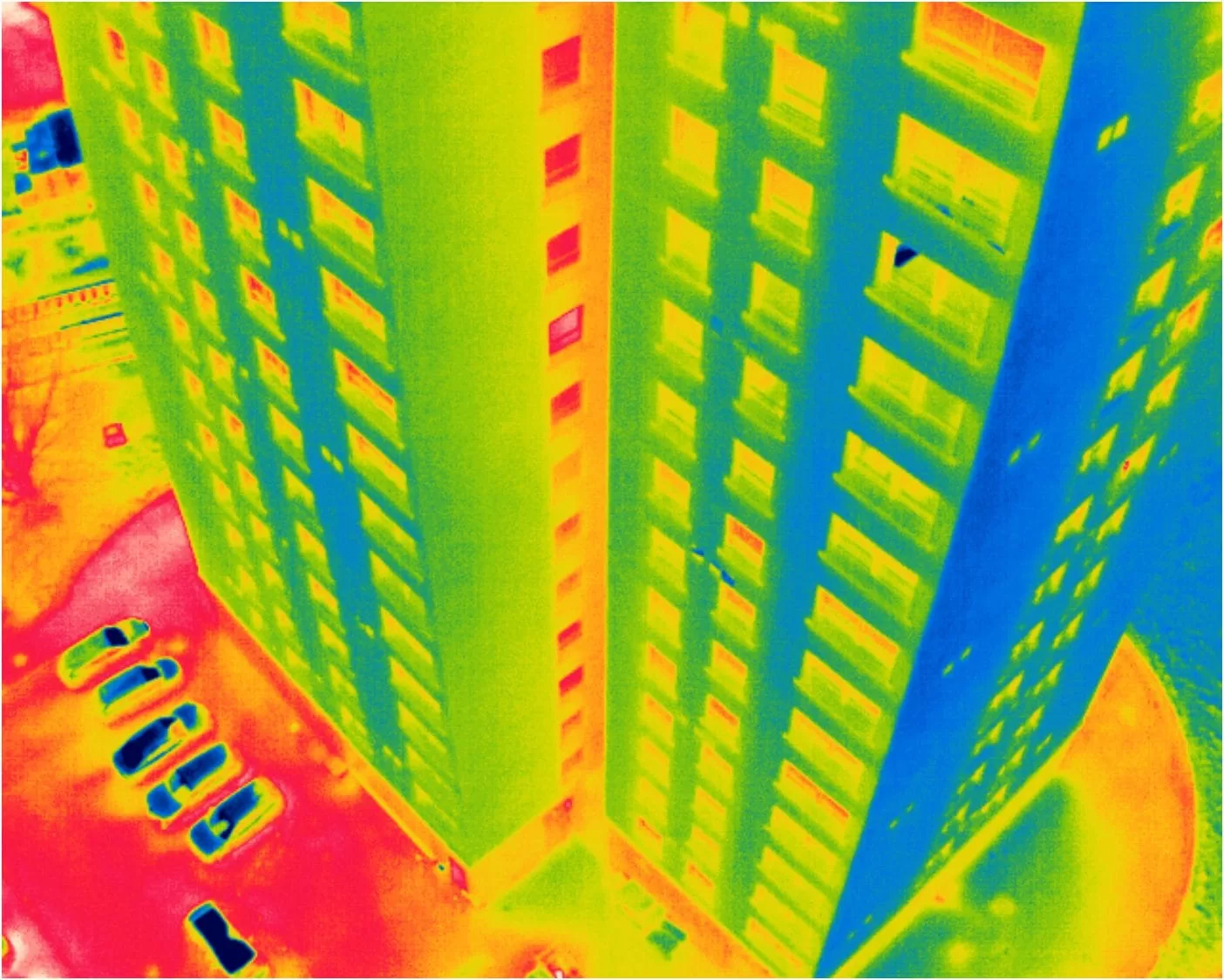
A drone operator in Scotland flew three multi-storey residential blocks in the spring of 2025. They had the aircraft, the payload and the access, but nobody able to sign the result as a certified thermographic inspection. We wrote the capture protocol for their team before the flight and certified the reporting afterwards. This piece covers why the protocol comes first, what the analysis established, and what remote reporting genuinely cannot settle.
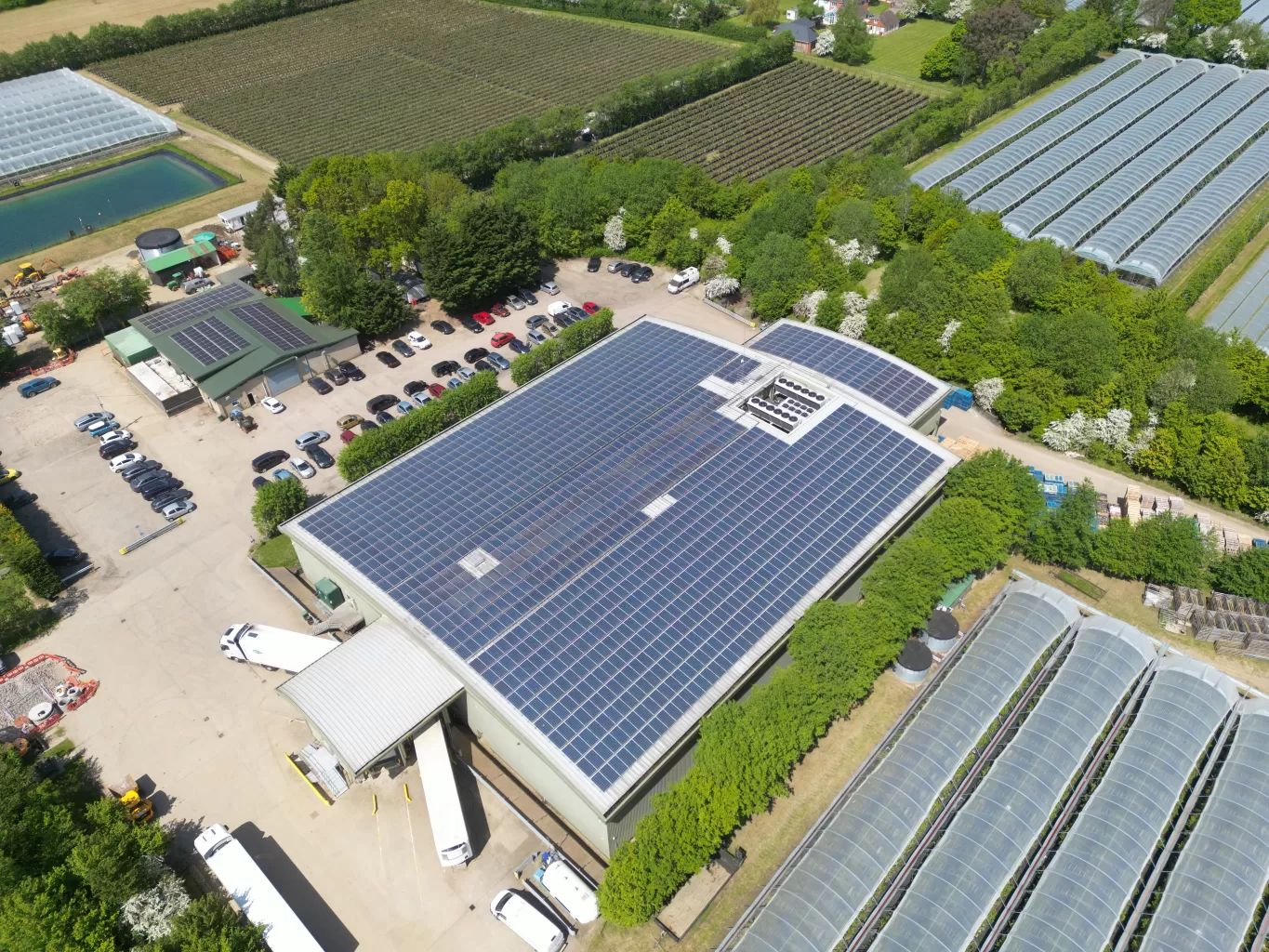
Winterwood Farms in Maidstone can rely on IEC's thermal expert solar panel inspection services to ensure optimal performance during the winter months. Our team of professionals will thoroughly assess the panels, identifying any issues that may affect efficiency. With our comprehensive inspection, Winterwood Farms can maximise energy production and minimise potential downtime.
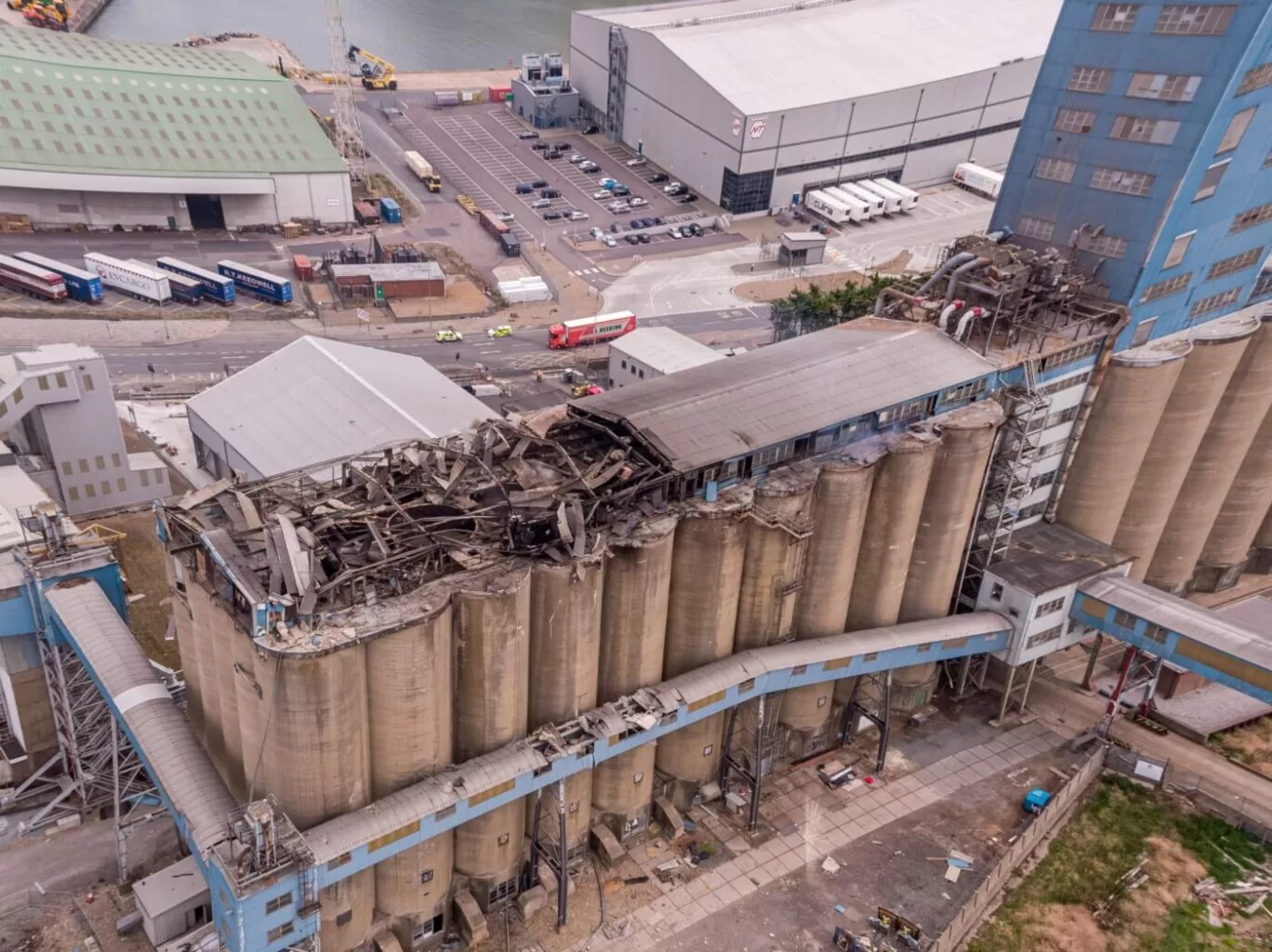
Thermal Fire Monitoring Following a Grain Store Terminal Explosion
Grain Store Explosion and Year-Long Fire – July 5, 2020 – Tilbury Port, London On July 5, 2020, a series of events (possibly by a spark) triggered a large dust explosion and a subsequent fire at the Grain Store Terminal at the Port of Tilbury in London. This was a serious event that required the attention of a large-scale emergency response to get the subsequent grain fire under control and avoid additional explosions. No one was seriously hurt, which is nothing short of a miracle given the number of people on the scene and the amount of reinforced concrete and debris thrown high into the sky before raining down on the surrounding buildings.
Traditional firefighting methods and techniques are ineffective in the case of grain storage fires. Using water to extinguish the inferno is ineffective with grain and dust fires, and the added weight might have caused a catastrophic structural collapse, exacerbating an already challenging situation. As a result, London fire teams were on the scene for days while a proper fire strategy and plan was developed and implemented, with staff always remaining on-site to monitor the situation over the following weeks.
Throughout this early period, there was always the possibility of more explosions and the fire spreading since the grain stored in the linked silos generates dust that may ignite if the temperature is high enough. Drone Media Imaging was contracted to fly thermal imaging flights to collect temperature data to estimate fire spread and track fire management efforts over time. For instance, were the temperatures rising, falling, or remaining constant?
We began operations on July 7, 2020, flying three flights each day, seven days a week initially, to compare temperatures and report back to crisis management teams and emergency service gold commanders. We eventually completed our thermal imaging missions one year and a month after the initial Grain Store explosion in late August 2021! While not all of the silos were full with grain, many were, and several were burning at temperatures far beyond 800°C. Before the fire could be quenched, the building had to be entirely demolished. Temperatures more than 80°C were still being recorded in the grain that remained on the ground after demolition 13 months later.
Gaining safe access to the terminal to fly was not without difficulty, as emergency services had imposed a 50m exclusion zone surrounding the terminal due to the possibility of additional explosions. As a result, our risk assessments and method statements had to be developed specifically for this circumstance and rigorously tested to assure both safe drone flights and the most accurate thermal data gathering at this vital juncture.
We continued to provide the Port of Tilbury London and the accompanying emergency services with daily and weekly calibrated temperature measurements that documented the progress of the grain store fire over 13 months. As thermal infrared aerial specialists, we provided data in the form of detailed reports, thermal imaging, RGB photographic and video footage.