Solar Panel Inspection for Insurance: Fire Risk and Renewal Evidence
Independent Evidence for the Question Your Insurer Is Asking
Drone Media Imaging provides the independent solar PV inspection your insurer, broker or risk surveyor is asking for. Thermographic survey to IEC 62446-3:2017, analysed at ITC Level III, with optional string-level electrical testing to IEC 62446-1 in the same visit. One provider, one report, and documented evidence produced by a certified party with no involvement in installing or maintaining your array.
Independent Evidence for the Question Your Insurer Is Asking
Your insurer has asked about the solar installation. It may have come through a renewal questionnaire, a risk surveyor’s visit, or a broker raising it as part of a wider review. Whatever the route, you now need a survey of the array and a report that will satisfy whoever asked for it.
That is a specific requirement rather than a general one. It needs to be carried out to a recognised standard, by somebody competent to interpret what they find, and by somebody with no stake in the answer. RC62, the joint code of practice issued by the UK insurance industry itself, recommends thermographic examination as part of the risk regime for photovoltaic installations, and it is the document your surveyor is most likely working from.
Drone Media Imaging delivers exactly that. Survey to IEC 62446-3, analysis at ITC Level III, and a report written so the person who asked for it can read it, act on it and file it.
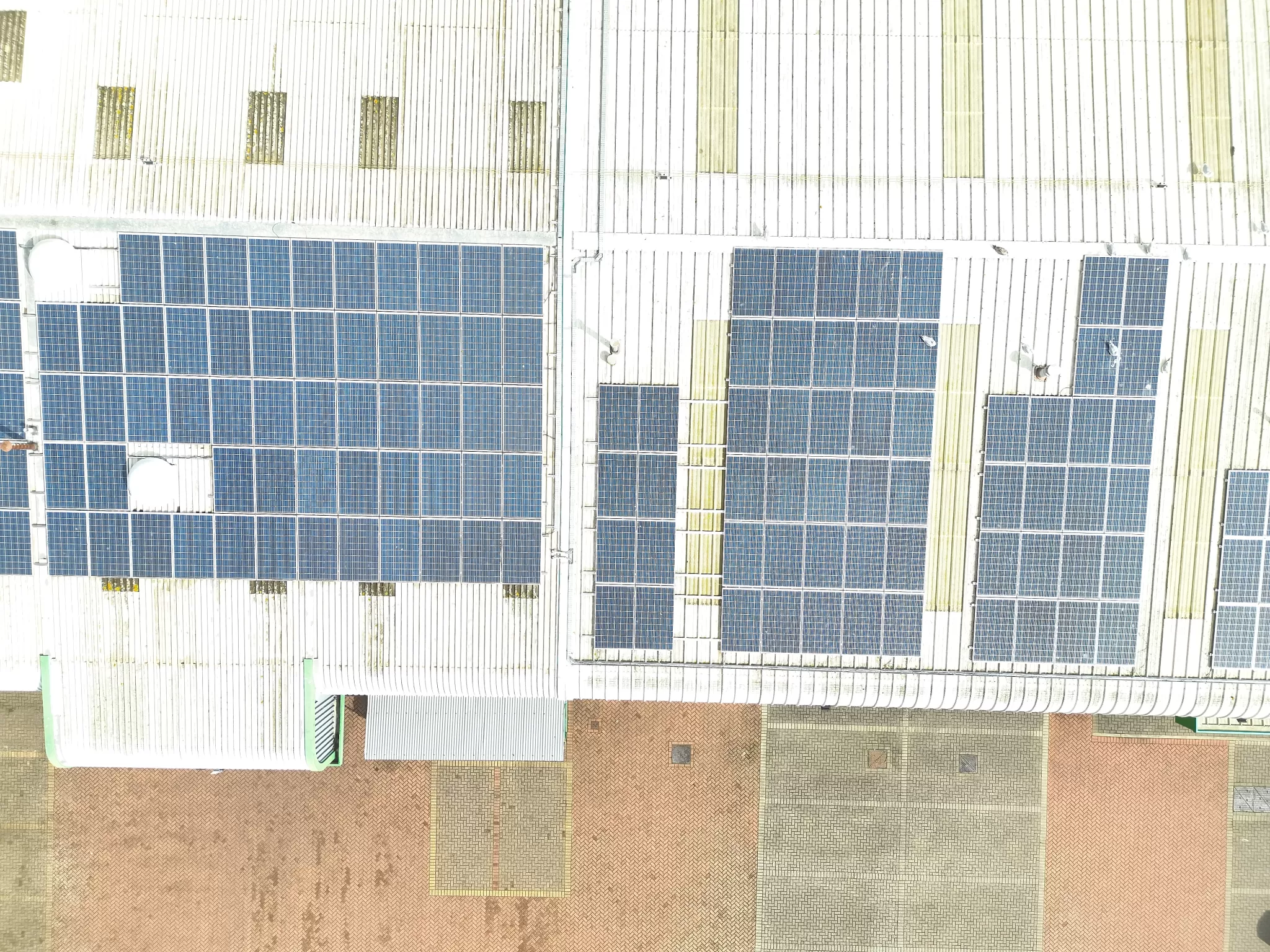
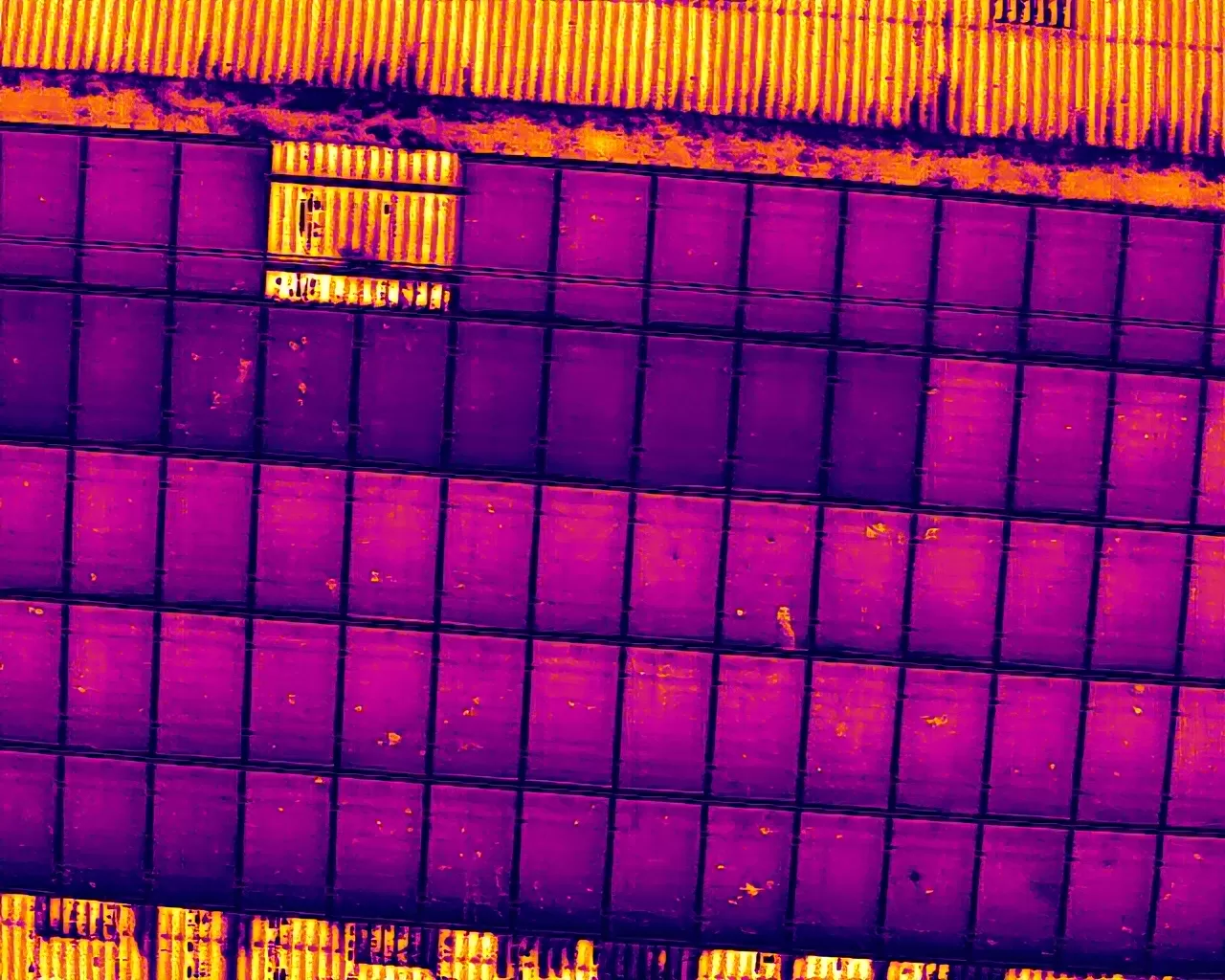
What Your Insurer Is Actually Looking For
It arrives as a question, not a demand
An insurer assessing a solar installation is working through a short list of things, and knowing what they are makes the survey straightforward to specify.
Was it done to a standard? IEC 62446-3 is the technical specification for infrared thermography of photovoltaic plants, and naming it is what turns a set of thermal images into an inspection. Every survey we carry out is flown and analysed to it.
Was the person competent? The standard sets expectations for the thermographic expert, and it is explicit that camera training from the manufacturer is not sufficient on its own. Our analysis is carried out at ITC Level III, and the certification is named and numbered in the report so it can be checked.
Were the conditions valid? Thermal data only means something while the array is generating and module temperatures are stable. We assess the window against a calibrated forecast model before mobilising, then log the actual environmental readings on site at the start and end of the flight and carry them into the report.
Can the findings be acted on? Each anomaly is compared against a clean reference module in the same thermogram, classified for severity, and located precisely enough for a contractor to walk straight to it, with the order of priority made explicit.
A report answering all four is what a risk surveyor can accept, file and close the point on. It is also, not incidentally, what tells you the real condition of an asset sitting on your roof.
At a glance
What an insurance-facing solar inspection has to demonstrate, and how Drone Media Imaging delivers all of it from one provider.
- A recognised standard. Thermographic survey carried out in line with IEC 62446-3:2017, the technical specification your surveyor will recognise by name.
- Demonstrable competence. Analysis by an ITC Level III Certified Master Thermographer, named and numbered in the report so it can be verified rather than taken on trust.
- Independence. Where the purpose is fire prevention, IEC 62446-3 states testing personnel should be independent of the owner or operator. We install nothing and maintain nothing.
- Alignment with RC62, the UK insurance industry’s own joint code of practice, which recommends thermographic examination for photovoltaic installations.
- Documented conditions. Environmental readings logged on site and carried into the report, so the survey can be shown to have been valid on the day.
- Findings that can be acted on. Severity classification, precise locations, and a clear order of priority.
- Everything from one provider. Thermal, optional IEC 62446-1 electrical testing and Level III reporting, in a single visit and a single document.
One survey, one certified analyst, one report your insurer can file.
Related Solar Survey Services
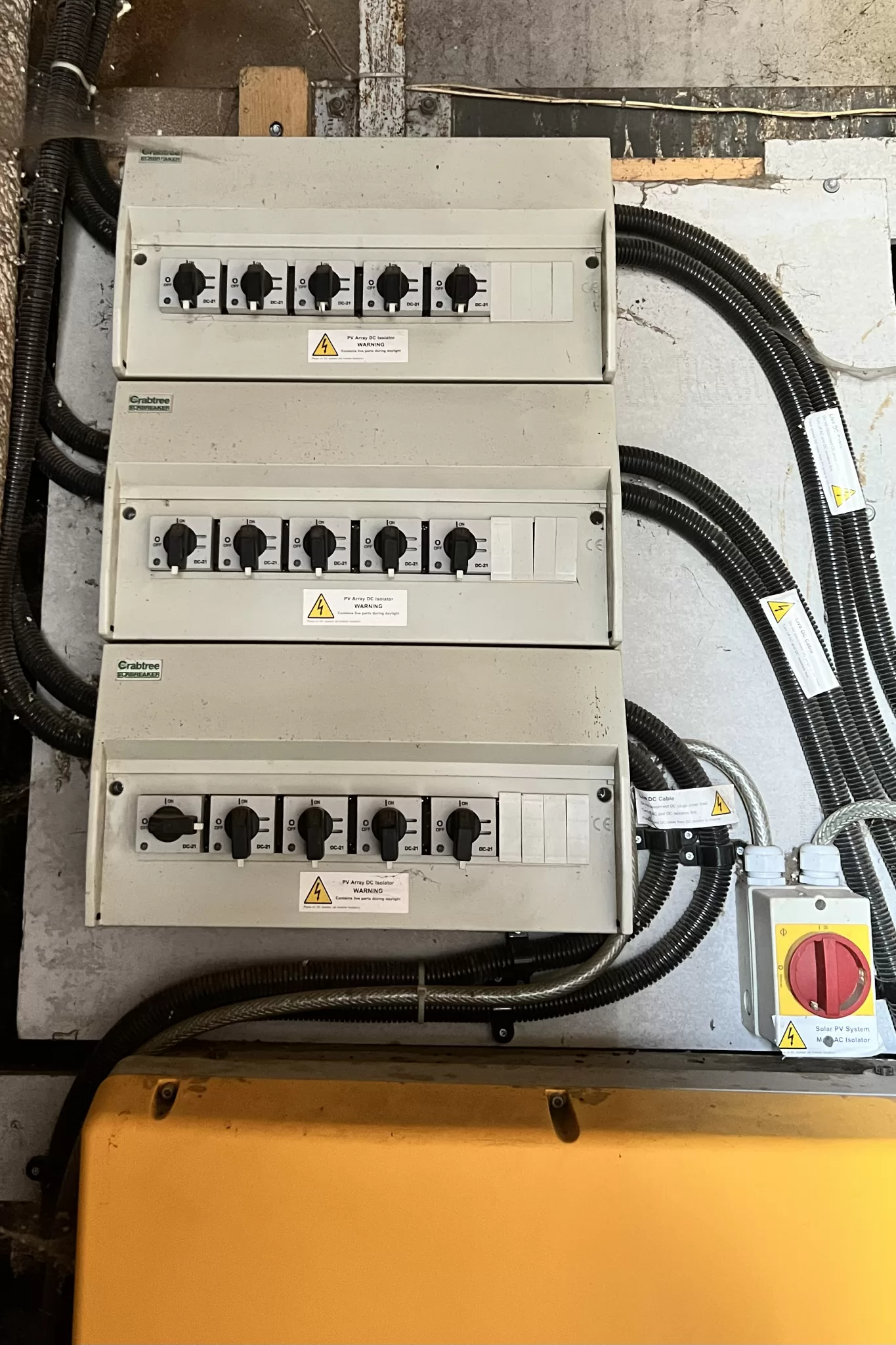
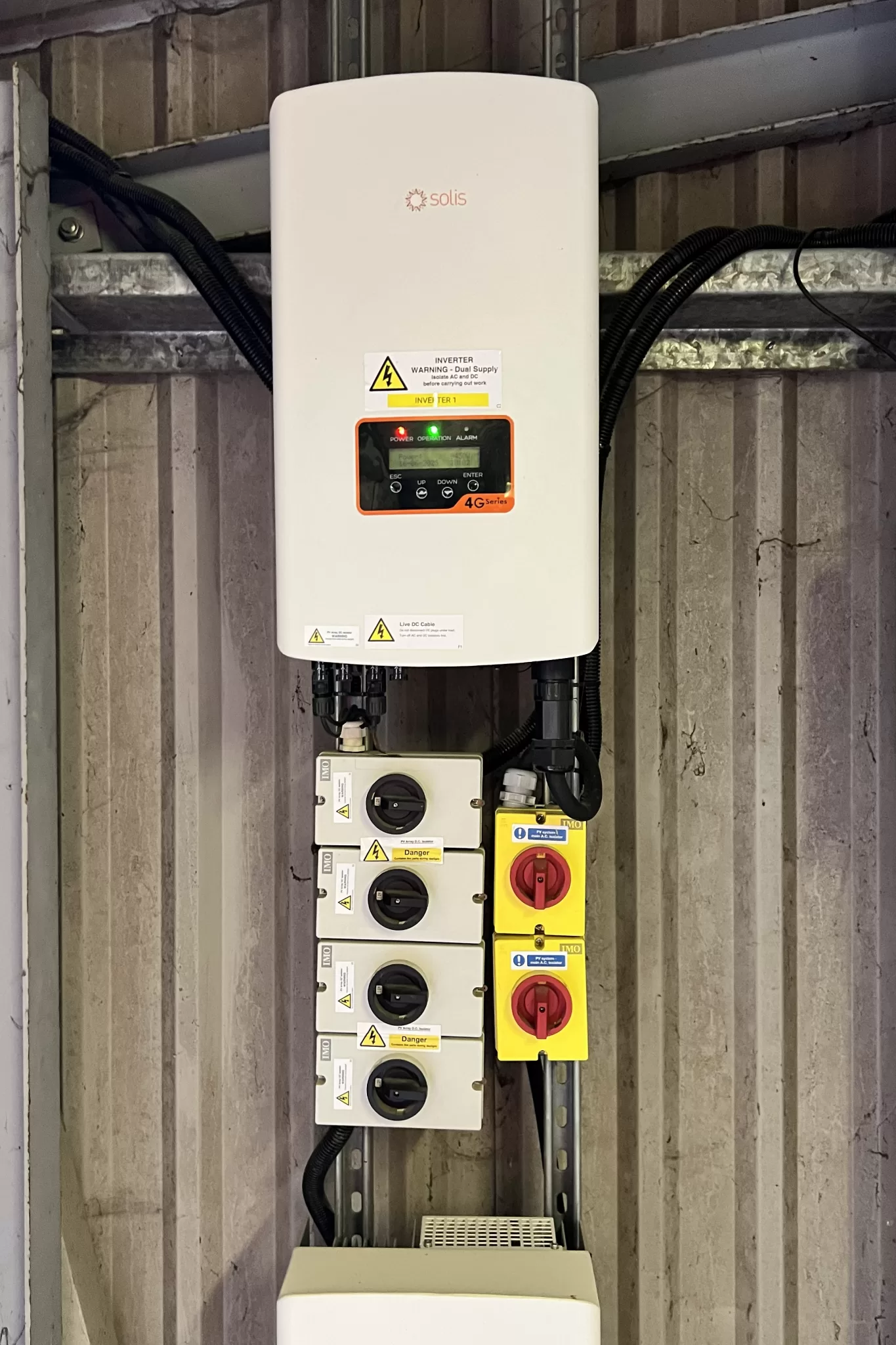
Why Independence Is the Whole Point
The standard says it plainly, and it is not a detail
IEC 62446-3 makes a point about who should carry out the work. Where the purpose of an inspection is fire prevention, the standard states that the testing personnel should be independent of the owner or operator.
That is worth knowing before you appoint anyone, because it is easy to satisfy accidentally or to miss entirely. The most convenient route is usually to ask the contractor who already maintains the array, or the company that installed it. Both know the site, both are already on the approved list, and both are being asked to report on their own work.
Drone Media Imaging installs nothing and maintains nothing. We do not carry out remedial work of any kind, so we have no commercial interest in what a survey finds. Where something needs attention it goes into the report as an area warranting further investigation by a suitably qualified contractor, and you appoint whoever you would have appointed anyway. That separation is what makes the report worth presenting to a third party rather than simply worth having.
It also means you deal with one provider for the whole thing. The flying, the thermal analysis at ITC Level III, the optional IEC 62446-1 electrical testing and the reporting are all ours, so there is no coordination between a pilot, an analyst and a testing contractor, and no gap between them where responsibility can go missing. One visit, one certified analyst, one document with a name and a certification number on it.
Why Insurers Are Asking About Solar
The interest is recent but the reasoning behind it is not complicated. Rooftop solar has a particular risk profile: the modules themselves are rarely the problem, and the failures that lead to fire are almost always at connections, in cabling, or inside junction boxes. They develop slowly, over years, and they are invisible from ground level on a working roof.
When the IEC studied photovoltaic fires in 2021, 72% of those examined were traced to installation or product defects rather than to anything the owner had done. Those faults were present early in the installation’s life and grew quietly. They are also, almost without exception, precisely what a thermographic survey finds while they are still cheap to put right.
Set that against the UK’s installed base. A great many commercial rooftop arrays went up during earlier subsidy schemes and are now a decade or more old, on buildings whose owners have changed, with commissioning paperwork that is incomplete or lost. That is the population insurers are now looking at, and it is why the question is arriving at renewal rather than at inception.
Which makes the practical answer straightforward. If the array has never been formally surveyed, a baseline now establishes its condition and gives you something to hand over. After that, RC62 recommends thermographic examination as part of the risk regime, IEC 62446-3 recommends a four-year interval, and MIS 3002 points to a full maintenance visit every two years, so most operators settle on a cycle somewhere in that range and add a survey after any storm, roof works or electrical event.
Whatever cycle you land on, the survey is the same piece of work, and the report is what your insurer wanted in the first place.
Solar PV Thermographic Inspection Uncovers Critical Safety Findings in Wiltshire
A commercial food distribution operator in Wiltshire commissioned an IEC 62446-3:2017 inspection of a rooftop array that had never been formally surveyed. Under near-ideal conditions the survey returned multiple CRITICAL severity findings carrying Safety consequence classifications, with peak temperatures approaching 122°C. Nobody at ground level knew they were there.
- IEC TS 62446-3:2017 is the technical specification for outdoor infrared thermography of photovoltaic modules and plants, and it governs the conditions, method and reporting of the survey. Its Annex B is the section dealing with the person carrying out the inspection, and it is the source of the independence position set out on this page.
- RC62, the joint code of practice issued by the UK insurance industry, recommends thermographic examination as part of the risk regime for photovoltaic installations.
- MIS 3002, the Microgeneration Certification Scheme standard for solar photovoltaic installations, points to a full maintenance visit every two years.
- IEC 62446-1:2016+A1:2018 governs the optional string-level electrical testing, covering verification, documentation and commissioning of grid-connected PV systems.
- ISO 18436-7:2014 sets the international framework for thermographic condition monitoring personnel, and our analysis practice is aligned to it, alongside ASNT SNT-TC-1A and ANSI/ASNT CP-105.
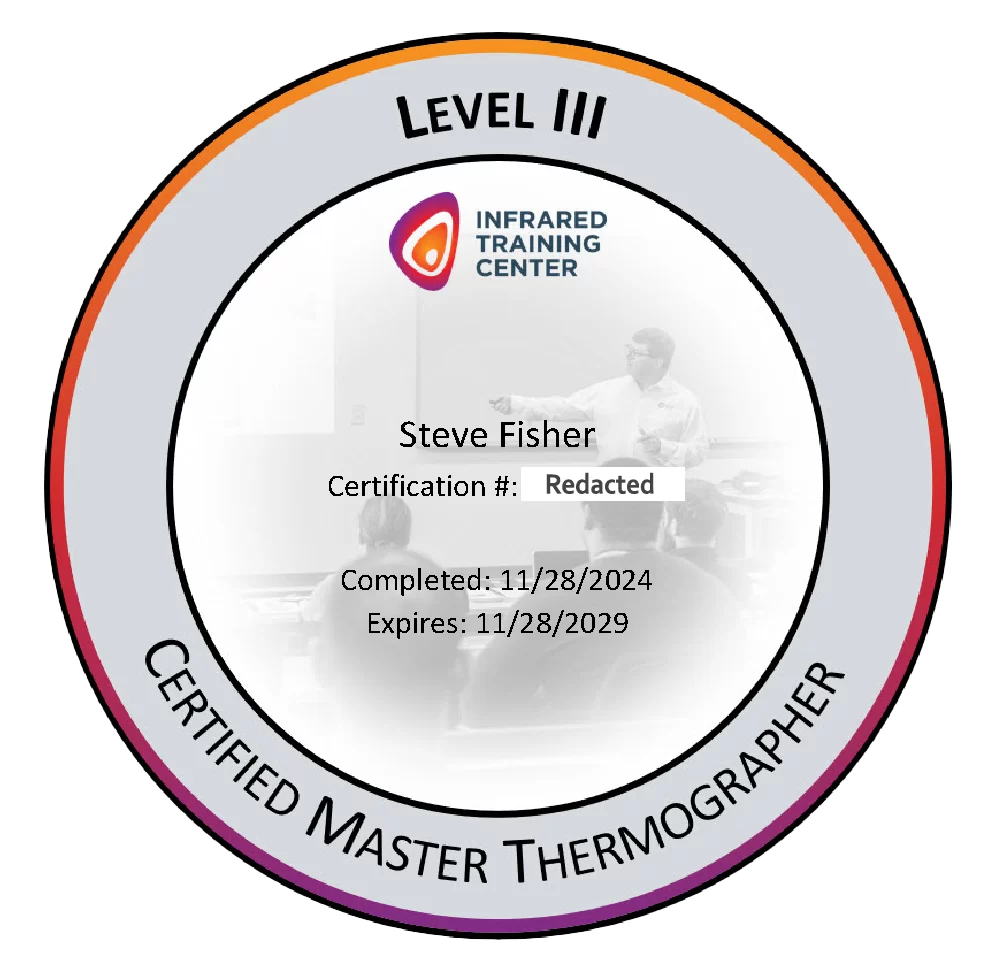
- Survey conducted by Steve Fisher, ITC Level III Certified Master Thermographer (Infrared Training Centre; Certification #205722059), holding iRed Academy Thermal Imaging Category 2 and Drone Thermography Category 1.
- Flown under CAA Operational Authorisation, with GVC and A2 CofC, and fully insured for commercial operations across the UK, Ireland and Europe.
Answer the Renewal Question Properly
Tell us the site, the approximate array size, and what your insurer or surveyor has asked for. If there is a deadline attached, say so and we will tell you honestly whether we can meet it. We will come back with a fixed price and a clear description of what the report will contain, so you know before you commit that it answers the question you were asked. Quotations and consultations are free. We work across Sussex, Hampshire, Kent and Surrey, and travel throughout the UK, Ireland and Europe.