Solar Farm Thermographic Inspection, 4 MWp Ground-Mount Array, East Midlands
IEC 62446-3 Aerial Thermography Across Seven Reporting Zones
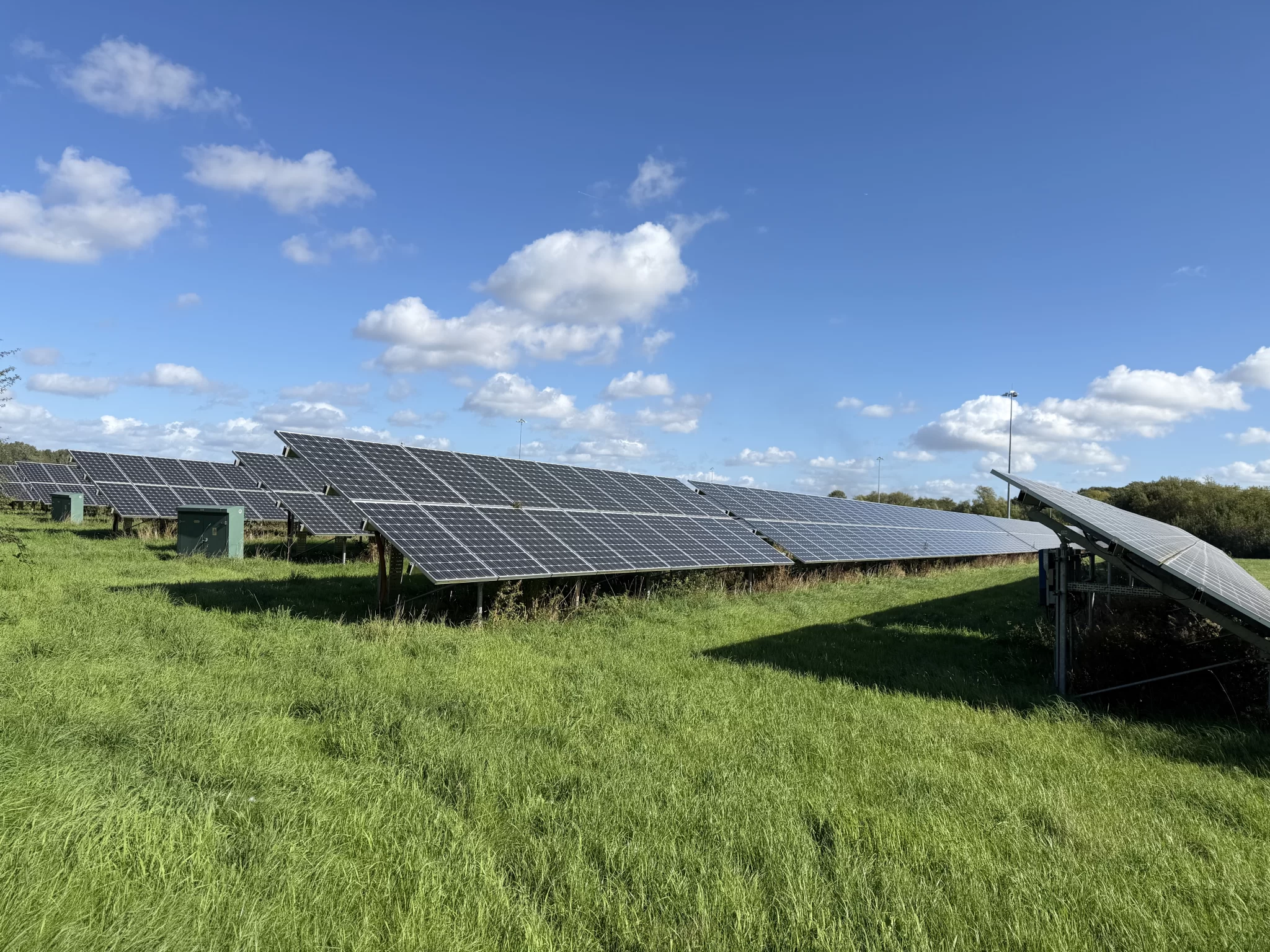
Drone Media Imaging carried out a solar farm thermographic inspection of a 4 MWp ground-mount array in the East Midlands, in service for about fifteen years. The site holds 16,794 modules on a single south-facing plane at 30 degrees, divided into seven reporting zones. Flown in two flights under a near-clear sky, with plane-of-array irradiance between 721 and 881 W/m², the survey met the conditions IEC 62446-3:2017 sets for a detailed inspection. Our Level 3 Master Thermographer analysed 352 thermograms and classified 314 findings, with one further advisory observation. Of these, 135 carry a Safety consequence: cells running at or near the temperature at which the encapsulant around them begins to degrade. A second mechanism, 70 string-scale findings, is consistent with modules that are illuminated but passing little or no current, so output is being lost. Each finding is located by row and column on a grid reference for its zone and supported by an annotated thermogram, giving the owner a prioritised investigation programme for a suitably qualified electrical contractor.
Project Overview
Subject
solar farm thermographic inspection, ground-mount PV thermography, East Midlands, solar asset owners, IEC 62446-3
Skills Used
IEC 62446-3 Solar Thermographic Inspection, Aerial Thermographic Survey, Level 3 Report Writing
Portfolio Tags
Solar Farm Inspection, Ground-Mount Solar, East Midlands, IEC 62446-3, Solar Asset Owners, Drone Media Imaging, Aerial Thermography, How Often Should a Solar Farm Be Inspected
Drone Thermography for Ageing Solar Farms, Cell Anomaly Detection at Utility Scale, IEC 62446-3 Detailed Inspection ReportsDrone Thermography for Ageing Solar Farms, Cell Anomaly Detection at Utility Scale, IEC 62446-3 Detailed Inspection Reports
Solar Farm Thermographic Inspection, 4 MWp Ground-Mount Array, East Midlands
~ Fifteen years in service, 16,794 modules, every one measured from the air. ~
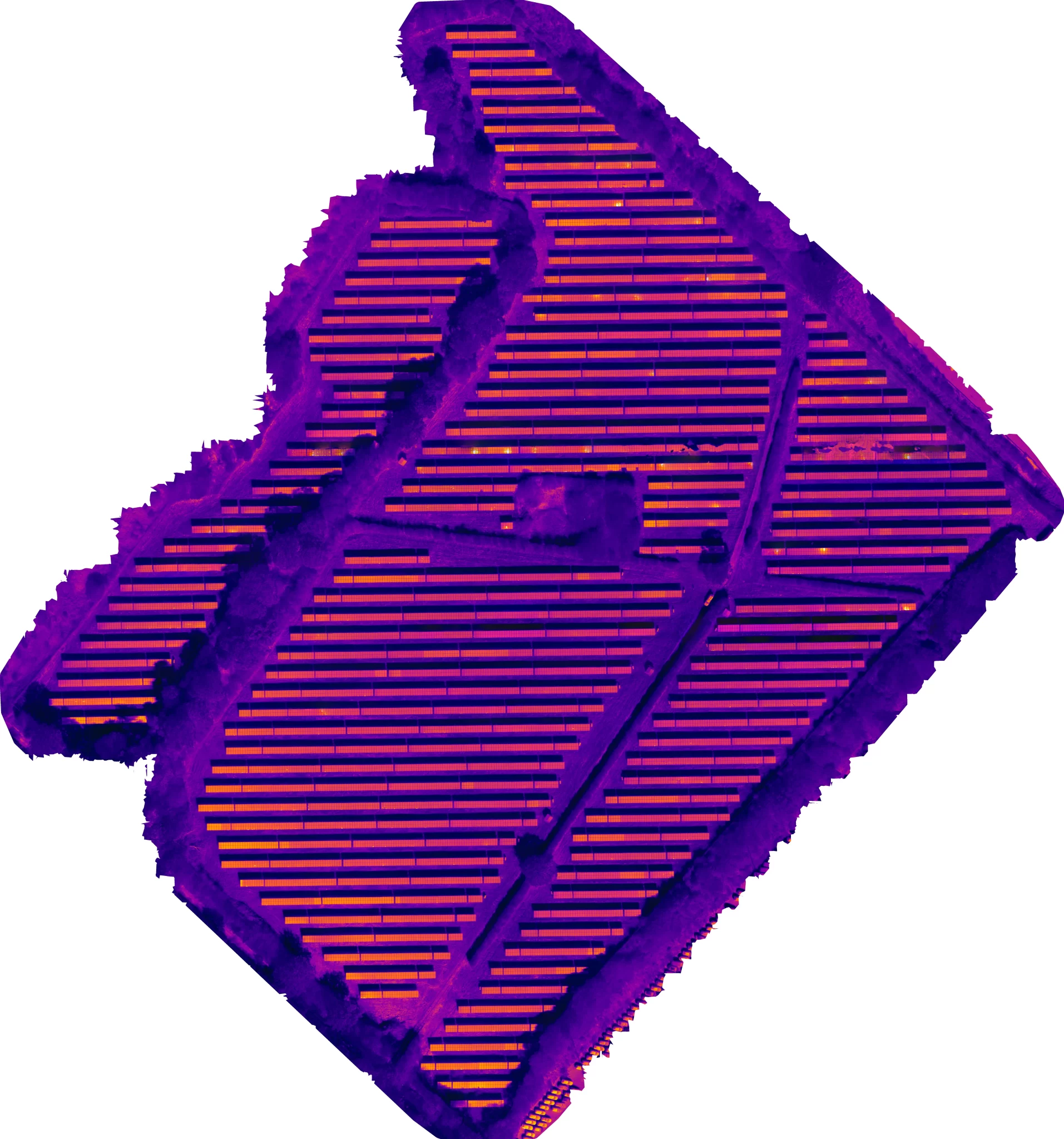
A Level 3 view of an ageing solar farm, finding by finding.
IEC 62446-3 Aerial Thermography Across Seven Reporting Zones
The client manages a 4 MWp ground-mount solar farm in the East Midlands, built in 2011 with 16,794 modules on a single south-facing plane. Drone Media Imaging has inspected the site in previous years, but each visit is treated as a new and isolated solar farm thermographic inspection, so the result stands on its own evidence rather than leaning on an earlier report. The array is divided into seven reporting zones, matched to the installer’s original layout so that findings can be handed straight to the people who will act on them.
Fifteen years is the point at which an array’s condition starts to tell its own story. Cell defects that were minor at installation can grow, solder bonds fatigue, and connections in the field can open without anyone noticing at the inverter. The owner commissioned a detailed thermal inspection to understand where the risk sits now, which findings are about safety, which are about lost output, and which simply need watching.
Thermography works because a photovoltaic module that is not converting light into current turns that energy into heat. Under strong, steady sunlight a healthy module sits at a predictable temperature, so a cell, a sub-string or a whole run of modules that departs from it shows up clearly to a radiometric camera. The skill lies in reading that pattern correctly: telling a cell defect from a bypass diode conducting, a reflection from a real anomaly, and an open-circuit string from a module that is simply shaded. Drone Media Imaging, a trading name of VisualChaos Studios Ltd, provides that analysis to the IEC 62446-3:2017 standard.
Governing Standards
- IEC 62446-3:2017 sets the method for outdoor infrared thermography of photovoltaic modules and plants, including the irradiance, sky and operating conditions under which a detailed inspection is valid.
- ISO 18436-7 is the thermographic condition monitoring framework to which our analysis practice is aligned.
- ISO 6781-3:2015 describes the qualifications of thermography operators, analysts and report writers, and our analysis and reporting are aligned with it.
How was the solar farm thermographic inspection carried out?
Finding Cell Anomalies and Open-Circuit Strings on a 15-Year-Old Array
The survey was flown on a September morning in two flights of about thirty minutes each, under a near-clear sky. Plane-of-array irradiance was 721 W/m² at the start of the first flight and 850 W/m² at the start of the second, rising to 881 W/m² by its end, all comfortably above the 600 W/m² minimum IEC 62446-3:2017 requires for a detailed inspection. Air temperature sat between 16 and 18 °C with light south-westerly wind, and the array was generating under load throughout. Each flight’s conditions were applied to the zones it covered, so the measurements rest on the conditions present when each thermogram was taken.
Capture used a radiometric thermal camera and a matched visual camera on a drone, with survey-grade RTK positioning. Detailed capture was flown at 30 m above the modules, with an overview at 50 m used only for orientation and triage. Reflected apparent temperature was measured on site from a sky thermogram, and emissivity was set for glass at the viewing angle the 30 degree tilt produces. Irradiance was read with an irradiance meter, both flat and in the plane of the array.
Every thermogram was analysed and classified by our Level 3 Master Thermographer: the anomaly type, a severity band on the measured temperature difference, a consequence (Safety, Yield or Degradation Trajectory) and the matching IEC 62446-3:2017 condition. Each finding was located by row and column on a grid reference for its zone, which the client can use directly on site.
- Included: detailed aerial thermography of all seven zones, analysis and classification of every thermogram, a findings table, annotated thermogram pages and a signed Level 3 report.
- Included: a grid reference for each zone, locating every finding by row and column.
- Excluded: electrical testing, string testing and any access to inverters or switchgear.
- Excluded: modules shaded by trees or undergrowth, which cannot be assessed thermally and are recorded as such.
What did the thermal inspection find?
The inspection recorded 314 classified findings across the seven zones, with one further advisory observation. Severity is weighted to the upper bands: 136 findings are Critical, 76 High, 42 Medium and 60 Low. Cell-level anomalies dominate, at 235 findings, where a single cell or a small group of cells runs hot while the rest of the module sits at baseline. This pattern is consistent with cell defects whose effect on output the bypass diodes contain, but the heat itself is the concern.
Of all the findings, 135 carry a Safety consequence, and every zone has some. In these, a cell stands more than 40 °C above the healthy reference module while reaching 80 °C or more, or reaches the 85 °C level at which the ethylene vinyl acetate encapsulant around the cells begins to degrade. At these temperatures the laminate can discolour and delaminate, and a severe cell anomaly is a credible ignition point. One Safety finding is an asymmetric heat pattern at a module frame edge, consistent with localised damage or an interconnection fault.
The second mechanism is string-scale. Seventy findings record runs of modules evenly elevated with no cellular structure, consistent with modules that are illuminated but passing little or no current, at or near open circuit. Sixty-five of these carry a Yield consequence for output lost at the time of survey. Six module-level elevations and four bypass diode patterns complete the set.
What happens next for the site?
The report gives the owner a prioritised programme rather than a single long list. The Safety findings come first and warrant immediate investigation by a suitably qualified electrical contractor. The string-scale, module-level and bypass diode findings follow: their cause cannot be established from thermal evidence alone, and the open-circuit runs in particular indicate output lost while they remain. The cell-level findings carrying Degradation Trajectory warrant reassessment at the next inspection interval, so their progress can be measured against this baseline.
Every finding has its own row in the findings table and its own annotated thermogram page, cross-referenced by zone and page. A contractor can walk to a row and column on the zone grid, find the module, and see exactly what the thermogram showed. The report was analysed, written and signed by our Level 3 Master Thermographer and issued as a digitally certified document.
- Immediate investigation of the 135 Safety findings by a suitably qualified electrical contractor.
- Investigation of the 70 string-scale findings, which the thermal evidence cannot trace to a string or inverter.
- Vegetation management where it shades modules, so they can be assessed at the next survey.
- Reassessment of the Degradation Trajectory findings at the next inspection interval, against this baseline.
An array of this age is still a valuable generating asset. Measured carefully and acted on in order, it can keep earning safely for years to come.
Why does vegetation matter on a solar farm?
Trees and undergrowth within and alongside the tables shaded modules in several zones. Shaded modules cannot be assessed thermally, because the camera sees the shadow rather than the module’s condition, and where shade crossed a string-scale condition the finding was reported over the visible modules only. Shade also costs output directly. Managing vegetation before the next survey improves both the yield and the completeness of the inspection.
Inspecting a Solar Farm?
Drone Media Imaging, a trading name of VisualChaos Studios Ltd, provides detailed IEC 62446-3:2017 thermographic inspection of solar farms and commercial rooftop arrays, analysed and reported by our Level 3 Master Thermographer. We are based in the South East, covering Sussex, Hampshire, Kent and Surrey, and travel throughout the UK, Ireland and Europe.