Out of Season Solar Inspection on a Commercial Rooftop Array
Winter Drone Thermography of a Two-Plane Commercial Solar Roof
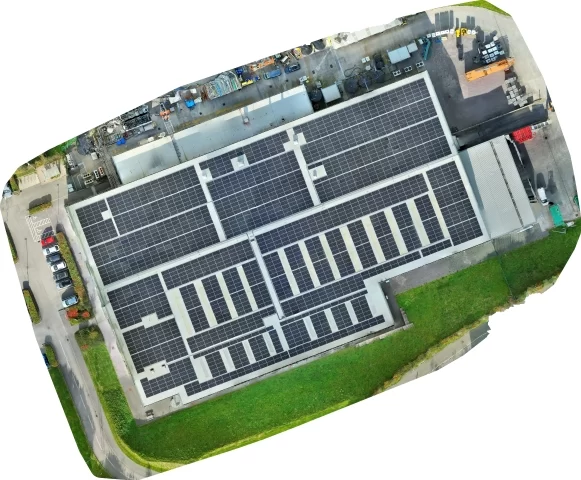
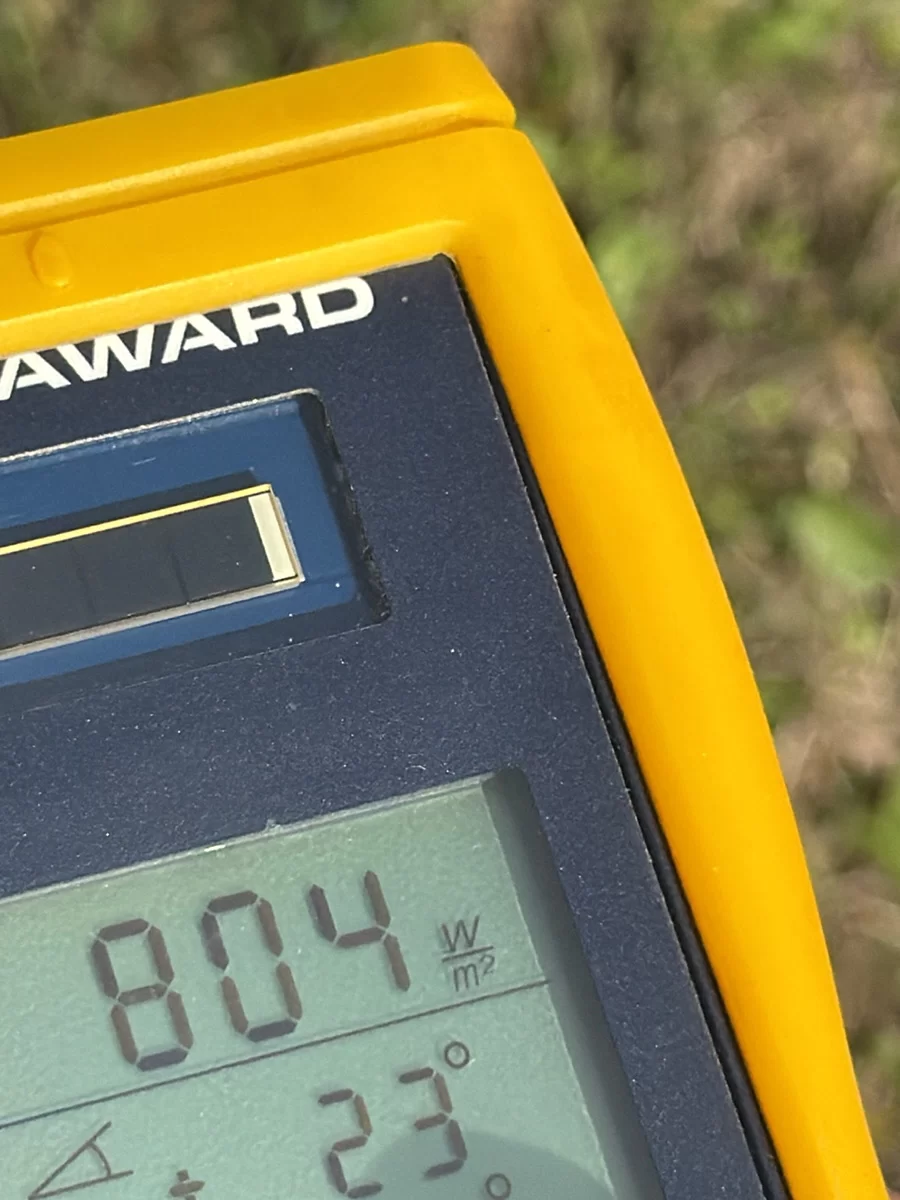
This out of season solar inspection covered a large commercial rooftop array in the South West of England, flown by drone in early November when the sun stood just 24° above the horizon at midday. Drone Media Imaging carried out a detailed thermographic inspection under IEC 62446-3:2017 across two roof planes in a single flight. The south-facing plane received 801 W/m² in-plane through a clear gap in broken cloud, enough to meet the standard. The north-facing plane had the sun behind it and received an estimated 270 W/m², so it was reported under a declared deviation. Twenty-one anomalies were classified: one High, four Medium and sixteen Low, with no Safety consequence. Most were cell anomalies carrying a Degradation Trajectory; five sub-strings showed cells heating unevenly while the bypass diode was not clamping them, and two bypass diodes were activating under shadow from nearby roof structures. Because cool modules reduce thermal contrast, the report states that differentials read lower than they would in summer, and recommends an in-season repeat to confirm severity.
Project Overview
Subject
out of season solar inspection, solar PV thermography, commercial rooftop solar, South West England, IEC 62446-3
Skills Used
IEC 62446-3 Solar Thermographic Inspection, Delta-T Assessment, Level 3 Report Writing
Portfolio Tags
solar PV thermal inspection, out of season inspection, commercial rooftop solar, South West England, IEC 62446-3, facilities and estates managers, Drone Media Imaging, can solar panels be inspected in winter
Winter Solar Panel Thermal Survey, Drone Inspection of Commercial Solar Roofs, Solar Thermography Outside the Summer SeasonWinter Solar Panel Thermal Survey, Drone Inspection of Commercial Solar Roofs, Solar Thermography Outside the Summer Season
Out of Season Solar Inspection on a Commercial Rooftop Array
~ A low November sun, cool modules and still enough contrast to find the faults that matter ~
Why inspect a solar array in November, and what can a Level 3 thermographer still find?
Winter Drone Thermography of a Two-Plane Commercial Solar Roof
The client operates a large commercial rooftop solar array, approaching 1 MWp across two roof planes, on a manufacturing site in the South West of England. The array had already been inspected earlier in the year, and the client wanted a further look before winter rather than waiting for the next summer window. This out of season solar inspection was commissioned on that basis, with both sides agreeing from the start that November conditions would limit what thermography could show.
Solar thermography works because a fault changes how current flows through a module, and the energy that is not exported leaves as heat. How much heat depends on how much sunlight the module is converting. In summer, at 800 to 1000 W/m² with the sun high, a weak cell or a failing connection stands well clear of its neighbours. In November the sun is low, the air is cold and the modules run only a few degrees above ambient, so the same defect produces a smaller temperature difference. That is the trade the client accepted: real faults can still be found, but their severity is understated, and the absence of a finding proves less.
Drone Media Imaging, a trading name of VisualChaos Studios Ltd, delivered the survey, analysis and reporting. Our Level 3 Master Thermographer reviewed every thermogram and certified the report, with the out-of-season limits and the deviations written into it rather than left for the reader to infer.
Governing Standards
- IEC 62446-3:2017 Photovoltaic systems, outdoor infrared thermography of photovoltaic modules and plants. The inspection was carried out and reported as a detailed thermographic inspection under this specification, with its known deviations declared in the report.
- ITC Level III Certified Master Thermographer Thermographic inspection, analysis and reporting are carried out by a Drone Media Imaging ITC Level III Certified Master Thermographer (Infrared Training Centre; Certification #205722059), practising in accordance with the frameworks of ISO 18436-7:2014, ASNT SNT-TC-1A and ANSI/ASNT CP-105, and BINDT CMGEN Appendix B (UK training governance).
How was the out of season solar inspection carried out?
IEC 62446-3 Solar PV Inspection in November, South West England
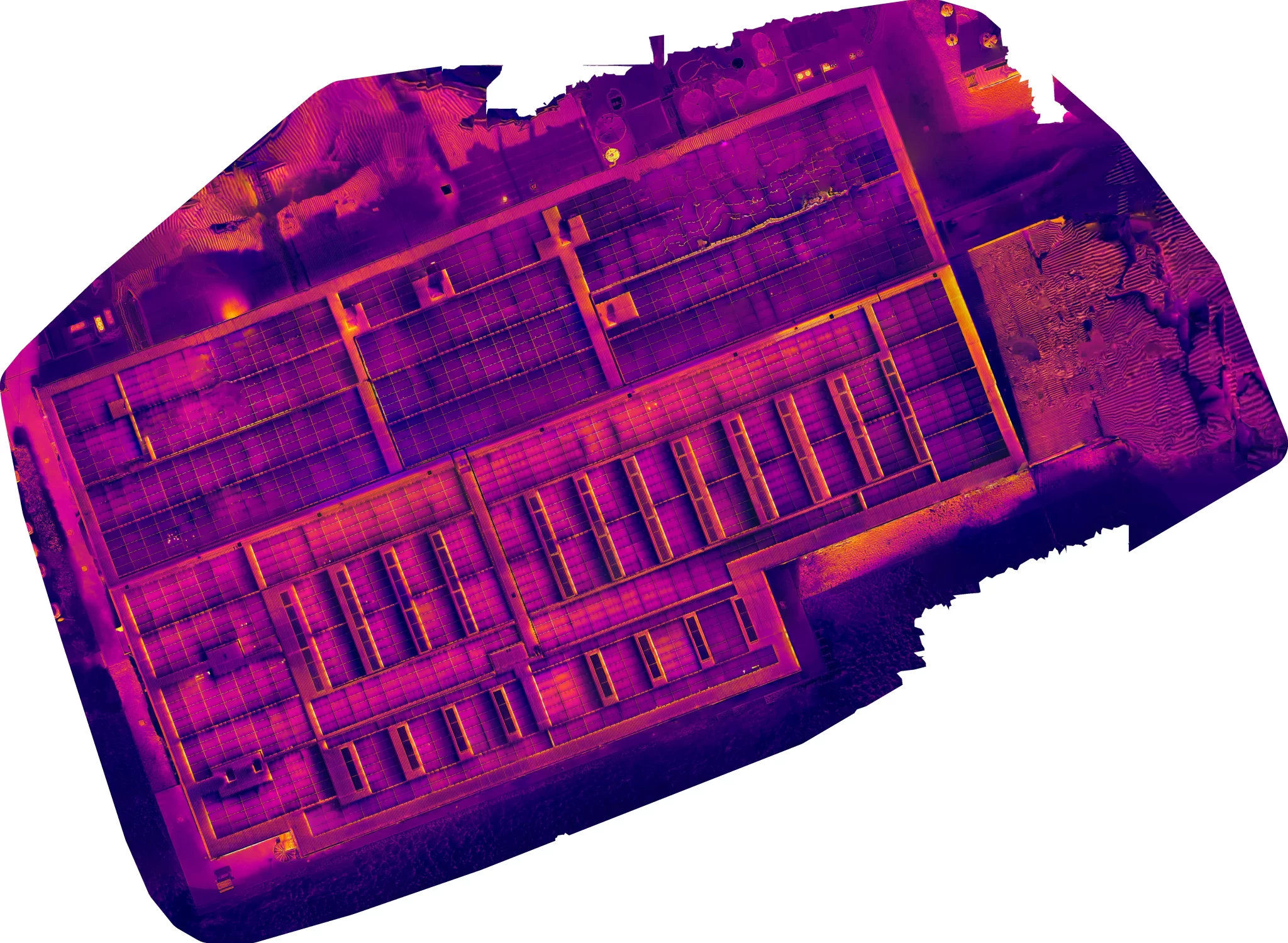
The array was flown in a single drone flight of just over half an hour around solar noon, between 11:26 and 12:02 GMT, with the sun at 24° and close to due south. A radiometric thermal camera captured both roof planes from 30 m above the modules, giving a ground sample distance of around 3 cm. Air temperature averaged 9.7 °C, relative humidity 78 % and wind 3.2 m/s, all logged throughout the flight. The sky carried about 40 % broken cloud, but a clear gap held over the roof for the whole capture, and in-plane irradiance on the south-facing plane read 801 W/m² at the start and 802 W/m² at the finish.
The analysis was set up from those conditions: emissivity determined for the module glass and its cleaning history at a near-normal viewing angle, a reflected apparent temperature taken from a sky thermogram on site, and the logged air temperature and humidity entered as flight averages. Each thermogram carries its own reference baseline, a healthy module in the same image, so every temperature difference is measured against a module working under identical conditions.
The north-facing plane needed different treatment. With the sun behind it, the plane received only scattered and reflected light, and no meter reading was taken in its plane. Its irradiance was calculated from the readings taken on site, at about 270 W/m², below the 600 W/m² the standard sets for a survey. Rather than drop the zone, it was analysed and reported under a declared deviation, with the effect on the findings explained.
- Included: both roof planes, radiometric capture, Level 3 review of every thermogram, severity and consequence classification, IEC Class of Abnormality, and a certified report.
- Excluded: electrical string testing, inverter diagnostics, intrusive investigation and any remedial work.
What Did the Out of Season Solar Inspection Find?
Twenty-one thermal anomalies were classified across the two roof planes: one High, four Medium and sixteen Low. None carried a Safety consequence, and the highest module temperature recorded was 39.0 °C, far below any material threshold. A small number of further readings sat below the classification threshold and were recorded for monitoring rather than counted as findings.
Most findings were cell anomalies: single cells running warmer than the rest of the module while the bypass diode keeps the string producing. These carry a Degradation Trajectory consequence, meaning no measurable output is lost today but the mechanism tends to progress. The most significant finding on the roof, on the south-facing plane, combined a cell anomaly 21.2 °C above its reference with a sub-string of unevenly heated cells.
That pattern, cells within one sub-string heating to different degrees with some at baseline, appeared on five findings. It points to cells limiting current while the bypass diode is not clamping the section as designed, a protection gap worth investigating before it develops. Two further findings, both on the north-facing plane, showed bypass diodes activating under shadow cast by neighbouring roof structures at the low winter sun angle, with that section’s output lost at the time of survey. One junction box was warm, at a low level and well below its safety trigger.
What Does an Out of Season Result Mean for the Asset Owner?
The findings stand as evidence: every anomaly reported is present. What winter conditions change is their scale. Because the modules were running cool, each temperature difference, and so each severity band, is likely to read lower than the same defect would show in summer. On the north-facing plane the reduction is larger again, because it was converting a fraction of the light the south plane received.
Just as important is what the survey cannot say. An area that reads clear in November is not evidence that it is free of defects, because a weak fault may not produce enough heat to separate from its neighbours. The report was certified with that limit written into it, so the result can be relied on for what it shows and is not stretched beyond it.
- Investigation by a suitably qualified electrical contractor, beginning with the High and Medium findings and the sub-string findings.
- A recheck of the shaded sections when the sun is higher and the roof structures no longer cast across them.
- A repeat inspection in season, between May and August, to confirm the findings and their true severity.
Used this way, an out of season inspection is a useful early look, not a substitute for a summer survey.
Where Can Winter Solar Thermography Be Useful?
An out of season inspection suits a site that needs answers before the next season: a suspected fault on the monitoring, a landlord or insurer asking questions, or a change of ownership. It will find active faults and give a clear starting point for investigation, provided the irradiance on each roof plane is measured and the limits are stated as plainly as the findings.
Plan Your Solar Inspection
Drone Media Imaging, a trading name of VisualChaos Studios Ltd, carries out IEC 62446-3 solar thermographic inspections of rooftop and ground-mounted arrays. We work across Sussex, Hampshire, Kent and Surrey and travel throughout the UK, Ireland and Europe. Talk to us about the right time of year to survey your array.