Do I Need a Level 3 Thermographer for a Solar Inspection?
The Honest Answer Is Probably Not the One You Expect
A plain answer to a question buyers ask before they commission: what IEC 62446-3 actually requires of the person inspecting your solar array, what it recommends, and what it says about independence where fire risk is the purpose.
What IEC 62446-3 actually asks for, and what it does not
The Honest Answer Is Probably Not the One You Expect
No. IEC 62446-3 does not require a Level 3 thermographer, and a supplier who tells you it does has misread the standard.
What the standard actually does is set a minimum and a recommendation, in Annex B, which is normative rather than advisory. For a detailed thermographic inspection it says the thermographic expert should hold a qualification equal to level 2 electro thermography, and shall hold level 1 as a minimum. Level 3 is not mentioned, because it sits above what the standard asks for.
So the honest answer to the question in the title is no. The more useful answer is that qualification on its own is the wrong thing to be comparing suppliers on.
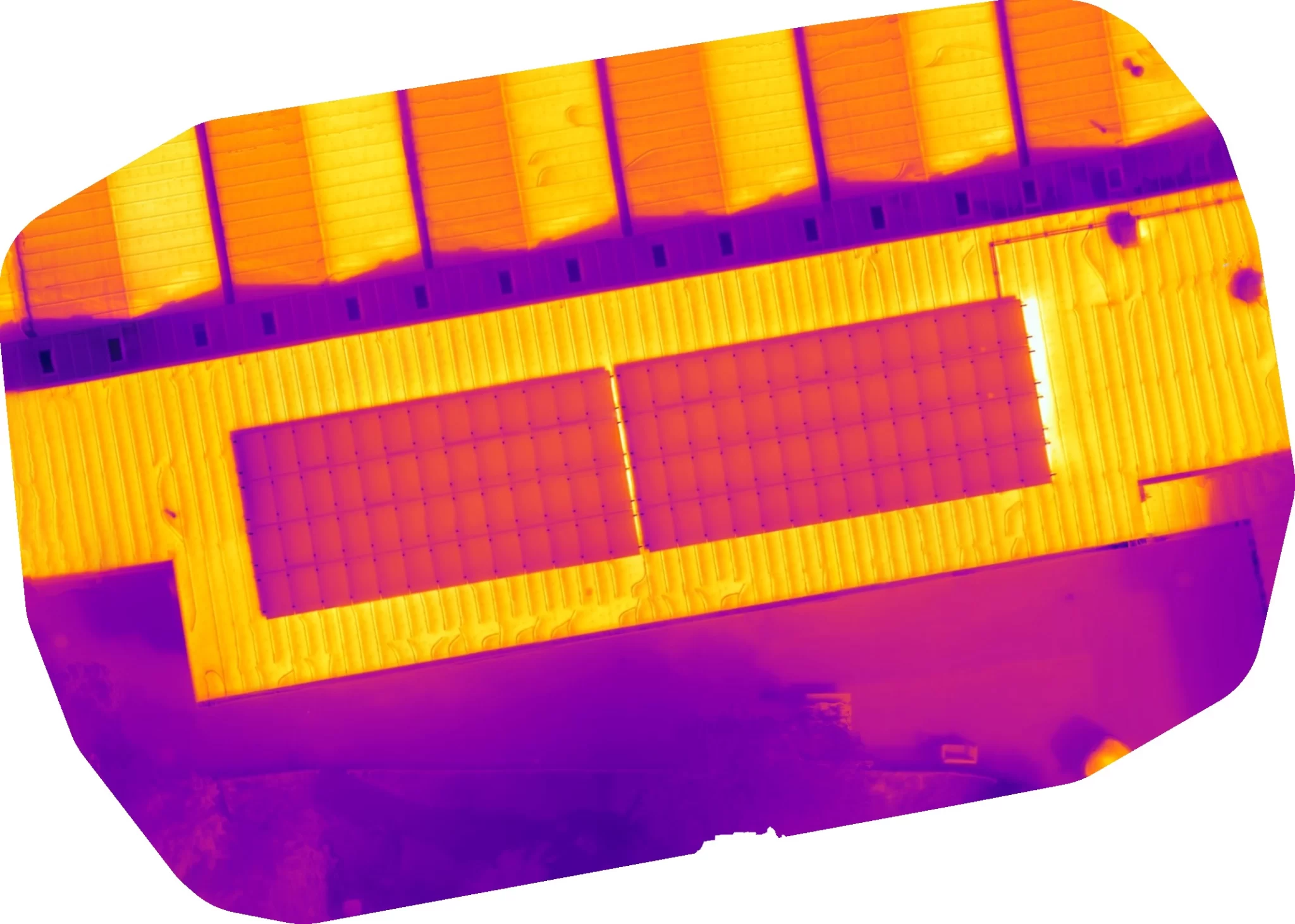
A thermal image of a solar array is easy to produce. Almost anyone with a drone and a thermal camera can hand you a folder of them, and many do. What Annex B is reaching for is not the flying, it is the interpretation: whether the person who examined those images was competent to say what they mean, and whether their conclusions would survive a challenge from your insurer, your O&M contractor or your asset manager.
That is a different question from the one you came here with, and it is the one worth asking.
What IEC 62446-3 Actually Asks For
Annex B is normative, and more specific than most of the claims made about it
A minimum and a recommendation, not a requirement for Level 3
Annex B of IEC 62446-3 is titled Qualification of personnel and it is normative, meaning it forms part of the standard rather than sitting alongside it as advice. For a detailed thermographic inspection it asks that the thermographic expert have an in-depth understanding of the photovoltaic system, its failure modes and thermographic imaging, and then sets the competence expectation in two parts: a recommendation of the equivalent of level 2 electro thermography, and a minimum of level 1.
The distinction between those two words matters. In a standard, should is a recommendation and shall is a requirement. So level 1 is the floor and level 2 is the target. Level 3 appears nowhere.
Why “the standard requires Category 2” is not right
It is a claim you will see in the trade, and it is close enough to sound authoritative. The text does not support it. The standard recommends the equivalent of level 2 for a detailed inspection and requires level 1 as a minimum, which is a different and softer statement than a requirement for Category 2.
Correcting it is not pedantry. If you commission on the basis that Category 2 is mandatory, you may reject a competent supplier who does not use that vocabulary, or accept a Category 2 certificate as sufficient when the standard is actually reaching for something broader.
ISO 9712 is one route, not the only one
Annex B offers a certificate to ISO 9712 as something that can serve as confirmation of competence, and for the basic level it says a level 1 certification “or equivalent” should be proven. That phrase does real work. The standard is asking you to satisfy yourself that the person is qualified, and it names one recognised way of demonstrating it without excluding others.
Our own position is set out plainly on the qualifications and accreditations page, including the certifications we hold and the ones we do not.
At a glance
The short version, if you are comparing suppliers:
- IEC 62446-3 does not require a Level 3 thermographer. The standard never mentions Level 3 at all.
- Annex B asks for level 1 as a minimum, and recommends the equivalent of level 2 for a detailed inspection.
- The common trade claim that the standard “requires Category 2” is not what the text says.
- ISO 9712 is offered as one way of confirming competence, not the only one. The standard’s own wording is “or equivalent”.
- Where the purpose is fire prevention, the standard says the inspector should be independent of the owner or operator.
Ask what your inspector is qualified to conclude, not just what they are qualified to fly.
Related Solar Survey Services
The Question Behind the Question
Capture is not analysis, and the standard knows the difference
Two different jobs, often sold as one
Flying an array and interpreting what comes back are separate activities requiring separate competence, and the standard treats them separately. It contemplates drones explicitly, and it is relaxed about the aircraft: what it cares about is whether the method still meets the resolution requirements, and that any known deviations or limitations are recorded in the report.
Where it becomes exacting is on the analysis. The person forming conclusions is expected to understand the photovoltaic system, its failure modes and thermographic imaging together, because a temperature difference on a module means nothing until it is read against how that particular system fails.
Why the same image supports two different conclusions
A warm cell can be a bypass diode operating exactly as designed, or a microcrack, or the early signature of potential induced degradation, or nothing at all. The temperature figure does not distinguish between them. The pattern, the symmetry, the position within the string and the conditions at capture do.
That is why a folder of thermal images is not an inspection, and why a report that lists hot spots without classifying them leaves you with the same decision you had before you commissioned it.
What this means when you appoint
Ask who performs the analysis, what they are qualified to conclude, and whether the report will classify findings by severity and consequence rather than simply flag them. A supplier who captures well and interprets weakly will give you something that looks thorough and settles nothing.
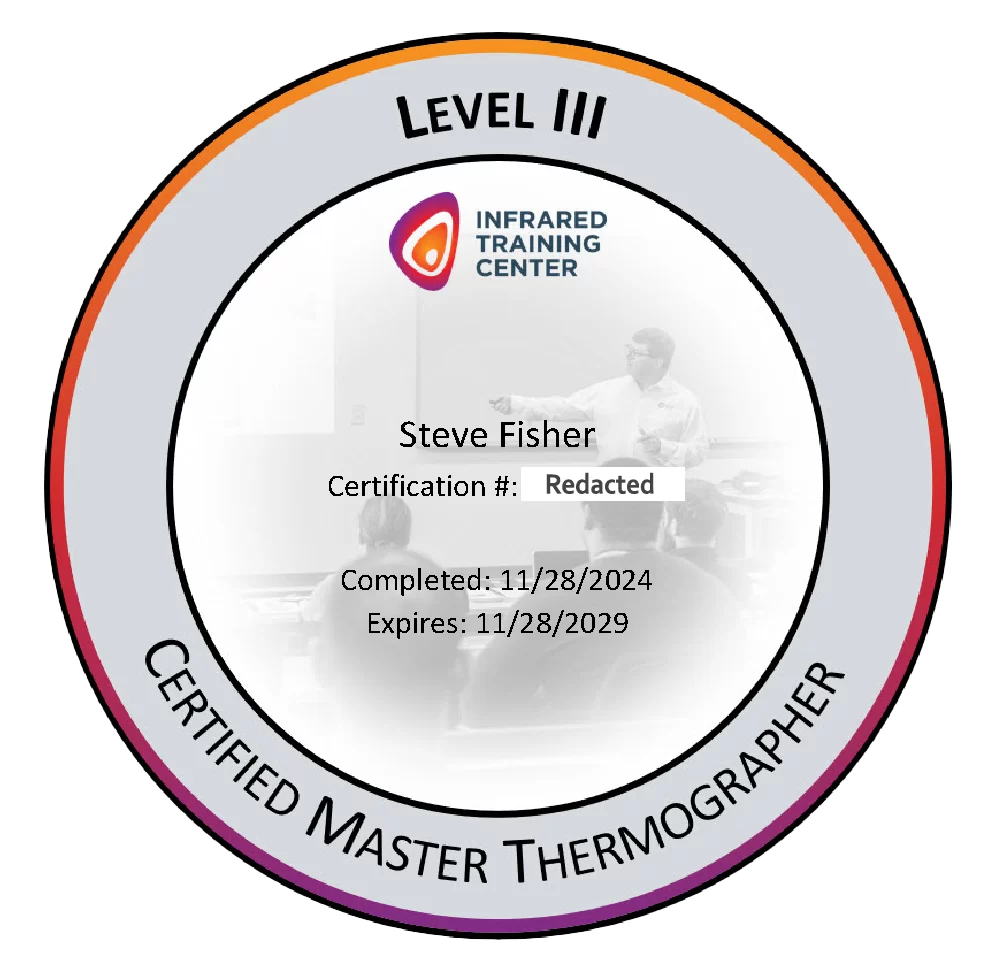
Every survey we carry out is analysed and reported by Steve Fisher, ITC Level III Certified Master Thermographer (Infrared Training Centre; Certification #205722059). Capture and interpretation are not sold as the same thing here, because they are not.
Governing Standards
- Thermographic inspection, analysis and reporting are conducted by Steve Fisher, ITC Level III Certified Master Thermographer (Infrared Training Centre; Certification #205722059), practising in accordance with the frameworks of ISO 18436-7:2014, ASNT SNT-TC-1A and ANSI/ASNT CP-105, and BINDT CMGEN Appendix B (UK training governance).
- Inspection methodology is aligned with IEC 62446-3:2017 (solar PV) and EN 13187:1999 (building envelopes) as applicable.
- References to Annex B on this page are to IEC TS 62446-3:2017, Annex B, Qualification of personnel, which is normative.
- IEC TS 62446-3 is a Technical Specification rather than an International Standard.
- ISO 9712 personnel certification is issued only by accredited certification bodies. It is described on this page because the standard refers to it, and it is not held or claimed by Drone Media Imaging.
The Independence Clause
The part of Annex B that changes who can do the work
There is a sentence in Annex B that has nothing to do with certificates and rather more commercial weight than the qualification levels. Where the purpose of the inspection is the prevention of fire hazards, the standard says the testing personnel should be independent, meaning not personnel of the owner or operator.
That is the insurance case almost exactly. When an insurer asks for thermographic evidence, fire risk is usually why, and the standard’s own text points that work away from whoever maintains the installation and towards a third party.
Why an O&M contractor inspecting its own array is a weaker document
It is not an accusation of bad faith. It is that the finding and the remedy sit with the same party, and a reader who is deciding whether to accept a risk can see that. An independent inspection removes the question before it is asked, which is worth more at renewal than a slightly cheaper survey.
This is also why we write reports for other operators. Where a company captures its own data but needs the analysis to stand separately, our third-party report writing service provides the independent interpretation without the flight.
Where competence and independence meet
The two requirements are easy to satisfy separately and harder together. An independent inspector who cannot interpret produces a defensible-looking document with weak conclusions. A competent inspector employed by the operator produces sound conclusions a third party may discount. For fire-risk purposes the standard asks for both, and it is reasonable to expect a supplier to be able to demonstrate both.
What to Ask Before You Appoint
Five questions that separate suppliers quickly
Who performs the analysis, and what are they certified to? Not who flies. Ask for the certificate as issued, by whom and to what expiry. A supplier confident in their qualification will tell you without hesitation.
Will the report classify findings, or only list them? A classification carries a severity and a consequence, which is what lets you decide what to do first. A list of hot spots does not.
Are you independent of whoever maintains this installation? If the purpose is fire risk or insurance evidence, the standard’s own position is that the inspector should be.
What conditions will you insist on, and what happens if they are not met? IEC 62446-3 sets minimum irradiance and steady-state conditions. A supplier who will fly regardless of conditions is selling you images rather than evidence.
What will the report say it could not determine? Thermography has real limits, and a report that acknowledges them is more useful, not less, because a reader can see where the evidence stops.
The answer, restated plainly
You do not need a Level 3 thermographer to satisfy IEC 62446-3. You need someone who meets Annex B, who can interpret rather than only capture, and who is independent where the purpose is fire prevention. Level 3 is above that bar rather than required by it, and what it buys you is depth of interpretation, not compliance you would otherwise lack.
Annex B requires testing personnel to have sufficient knowledge of electrical installations, photovoltaic plants and thermography, including the analysis of thermographic findings in electrical systems. For a basic inspection it recommends that an education such as a level 1 certification, or equivalent, should be proven. For a detailed inspection the thermographic expert should have a qualification equal to level 2 electro thermography and shall have level 1 as a minimum.
Two further provisions sit alongside the levels and are easy to overlook. Where the purpose of the inspection is the prevention of fire hazards, the testing personnel should be independent of the owner or operator. And access to the electrical installation, including opening enclosures where live parts are exposed, is restricted to electrically qualified persons, which is a separate competence from thermography.
Clause 5.1 adds a requirement that is easily missed: at least one person performing the inspection shall have technical knowledge of the specific system, and of photovoltaic plants in general.
Ask Us What We Are Qualified to Conclude
Drone Media Imaging provides IEC 62446-3 aligned solar thermographic inspections across Sussex, Hampshire, Kent and Surrey, travelling throughout the UK, Ireland and Europe. Analysis and reporting are carried out at ITC Level III on every survey, and we are independent of whoever installs or maintains your system. Tell us about your array and what the inspection is for, and we will come back with a straightforward quotation.