Combined Solar Thermal and Electrical Inspection: IEC 62446-1 String Testing
Some Faults Are Invisible to a Thermal Camera
Drone Media Imaging is one of very few UK drone operators offering thermographic survey to IEC 62446-3 and string-level electrical testing to IEC 62446-1 as a single service, with the thermal analysis carried out at ITC Level III. Thermal finds what is running hot; electrical testing finds the open circuits, insulation failures and performance losses that never produce a heat signature at all.
Some Faults Are Invisible to a Thermal Camera
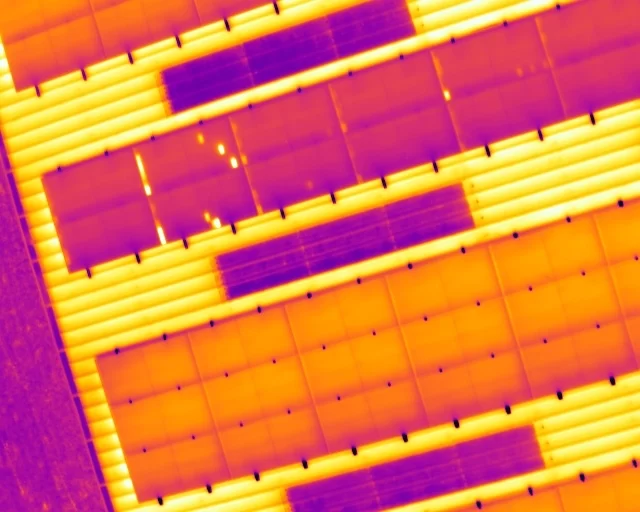
A thermal survey is very good at finding faults that produce heat. A hot cell, a failed bypass diode, a badly connected junction box, a shaded string working against itself: all of these show up clearly in infrared, and a competent thermographic inspection will find them.
What infrared cannot see is a fault that produces no heat at all. An open circuit carries no current, so it stays exactly the same temperature as everything around it. Degraded insulation resistance is invisible until it becomes a safety problem. A string quietly underperforming against its neighbours, losing a few percent a year, looks completely normal in a thermogram.
Those faults are found electrically or they are not found. Bringing both disciplines to the same site on the same day means the array is examined once, properly, with two independent sets of evidence that either agree or point at something worth a closer look.
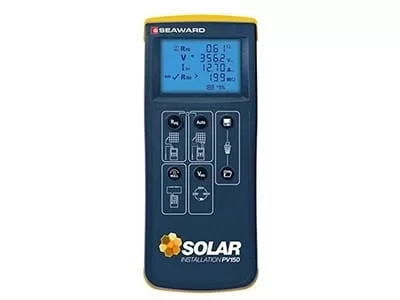
What String-Level Testing Adds to a Thermal Survey
Two methods, two failure modes, one array
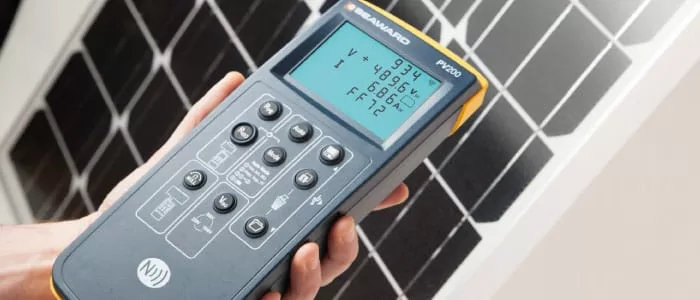
Electrical testing to IEC 62446-1 measures what the array is actually doing rather than how warm it is. The tests are carried out one string at a time at ground level, where the strings terminate, so no rooftop access and no work inside the inverter is required.
Four of them are quick and tell you a great deal. Open-circuit voltage shows whether every panel in a string is present and connected. Short-circuit current shows whether the string is delivering what its neighbours are. Polarity confirms the installation is wired the way it was designed to be, which sounds trivial until it is not. Insulation resistance measures how well the cabling and connectors are still keeping electricity where it belongs, and it is the test most directly connected to fire risk.
The fifth is the one that repays the effort. Rather than taking a single reading, an I-V curve measures the string right across its working range and plots the result. A healthy string produces a characteristic shape, and the ways a curve departs from that shape point at different underlying causes. It is the most diagnostic test available at string level, and it finds losses long before they are large enough to show up on a generation figure.
Read alongside the thermal imagery, the two sets of evidence corroborate each other. A string that images normally but tests poorly, or a hotspot that shows no electrical signature at all, tells you more than either result would on its own.
At a glance
Thermal and electrical inspection answer different questions about the same array. Running both in one visit is the only way to see all of it.
- Thermographic survey to IEC 62446-3:2017 and string-level electrical testing to IEC 62446-1:2016+A1:2018, delivered together.
- Thermal finds faults that give off heat: hot cells, failed bypass diodes, poor connections, shading losses and physical damage.
- Electrical finds what makes no heat at all: breaks in a circuit, insulation that has degraded, wiring errors, and strings quietly underperforming their neighbours.
- Five tests, from quick checks on voltage, current, polarity and insulation through to a full I-V curve across the string’s working range.
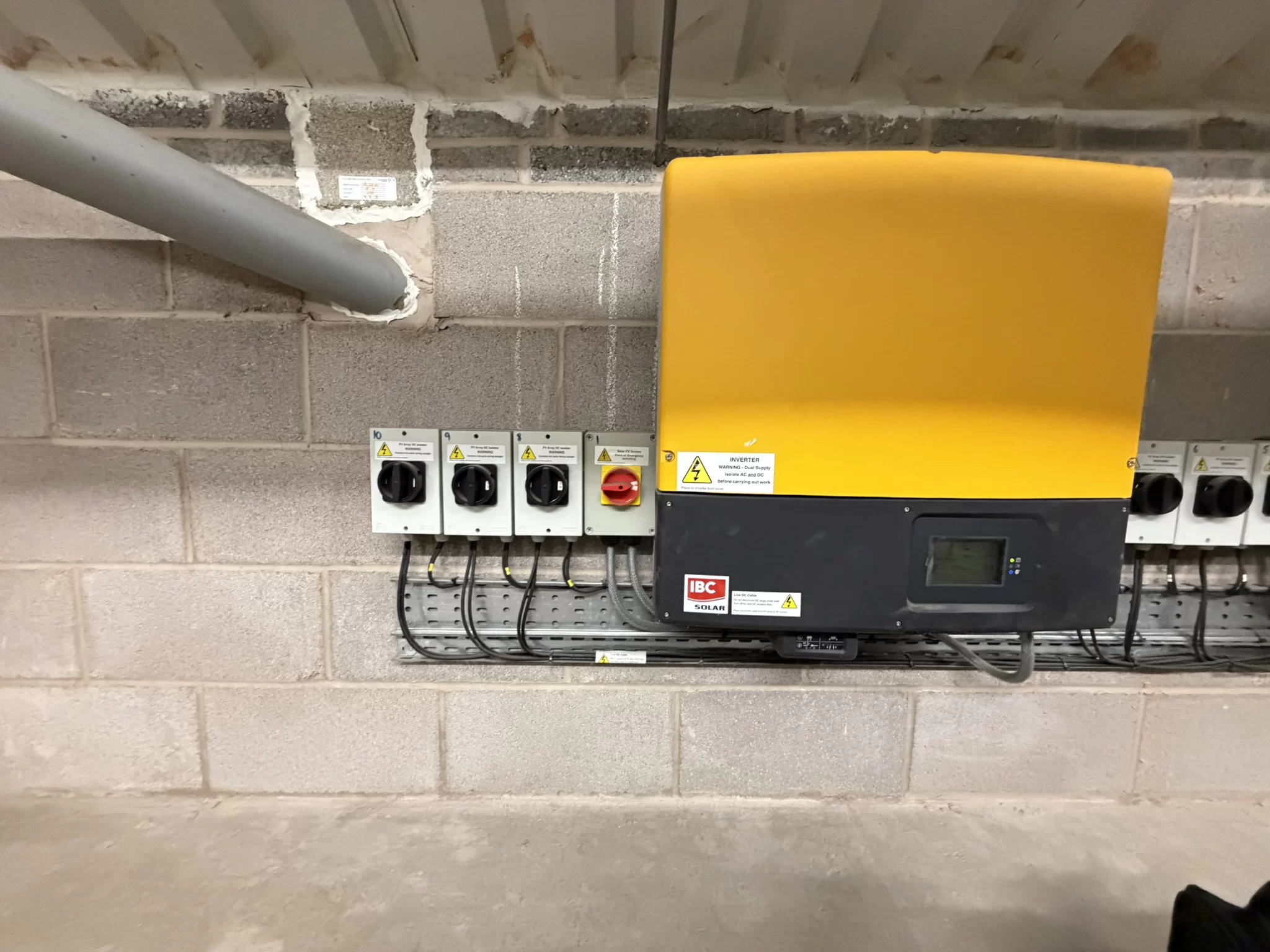
- All electrical testing is carried out at ground level. No inverter diagnostics, no switchboard work, no on-roof electrical.
- Both sets of findings arrive in one report, so the thermal and electrical evidence can be read against each other.
- Analysis by an ITC Level III Certified Master Thermographer.
A break in a circuit is the same temperature as everything around it. That is the whole argument for doing both.
Related Solar Survey Services
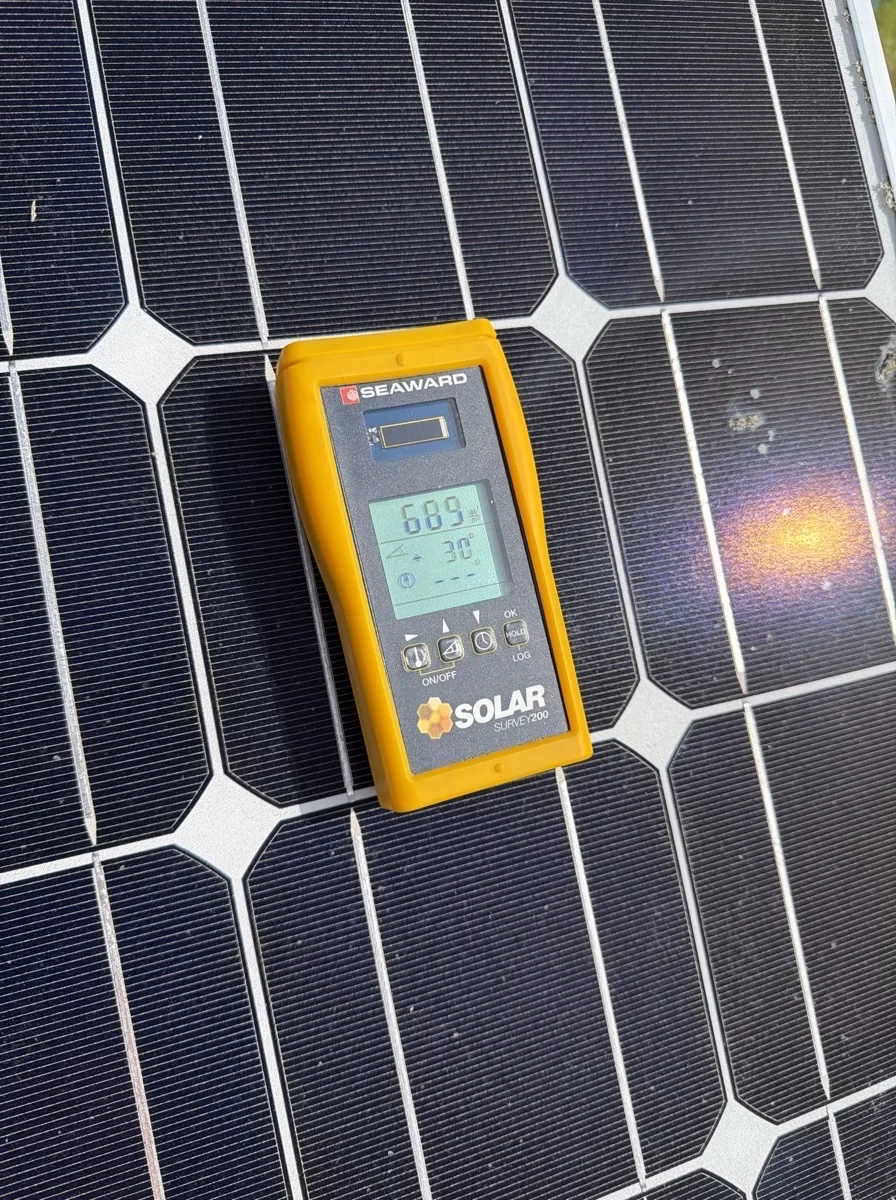
When You Need Both, and When Thermal Alone Will Do
We will tell you when you do not need the electrical half
Not every array needs both halves, and we would rather say so at the quotation stage than sell you a service you have no use for.
A routine condition survey on a healthy array, where nothing has changed and nobody is asking difficult questions, is well served by thermal alone. It is quicker, it costs less, and it will find the faults that matter most for fire risk and yield.
The combined service earns its place when the answer has to be defensible or the problem is not showing up. At commissioning, where IEC 62446-1 testing is how a new installation is verified in the first place and the results become your baseline. At handover or acquisition, where you are inheriting an asset on somebody else’s word. During a warranty or performance dispute, where a thermal image on its own tends to invite argument and a measured I-V curve does not. And on an array with an unexplained yield gap, where the thermal survey has come back clean and the generation figures still do not add up, which is very often an open circuit or a degraded string doing exactly what it does best, nothing visible.
The scope is deliberately bounded. We test at string level, at ground level, using IEC-compliant test instruments. We do not diagnose inverters, work inside switchboards, or carry out electrical work on the roof. Where a finding needs that kind of intervention, it goes into the report as an area warranting further investigation by a suitably qualified contractor, and you appoint whoever you normally would.
What Is Solar String Testing?
A string is a run of solar modules wired in series, and it is the unit an installation is actually built from. String testing measures the electrical behaviour of each of those runs and compares it against the others and against what the design says it should be doing. Because the modules are in series, a single bad module drags the whole string down, which is exactly why testing at string level finds things that a look at the inverter’s total output never will.
The tests are the ones set out in IEC 62446-1, the standard that governs how a grid-connected PV system is verified, documented and commissioned. It is the same standard your installer should have worked to when the array was first energised, which is why the results are directly comparable with the commissioning paperwork, if you still have it.
In practice the testing happens at the string termination point, at ground level, using IEC-compliant test instruments. Each string is isolated in turn, measured, and returned to service. The array is out of production for the duration of the test on that string and no longer.
Two things make the results worth more than the numbers themselves. The first is comparison: a string measured on its own tells you little, whereas twenty strings measured under the same conditions on the same afternoon tell you a great deal about which one is wrong. The second is the pairing with thermal, which is the reason this page exists. Between them, the two methods cover the faults that make heat and the faults that do not, and there is no third category.
Combined Solar PV Thermographic and Electrical String Testing Inspection
A West Midlands healthcare centre, told by its insurance auditors to have a decade-old 200-panel rooftop array assessed. Drone Media Imaging covered every panel and every string in a single visit, thermographic survey to IEC 62446-3:2017 alongside electrical testing to IEC 62446-1. The findings went considerably further than the insurance brief had anticipated.
Most electrical tests hand you a single number and a pass or a fail. An I-V curve hands you a shape, and the shape is where the diagnosis lives. The letters are nothing more than the conventional labels for current, written as I, plotted against voltage, written as V.
The test asks the string to work across its entire operating range and records what it does at every point. At one end it is producing its full voltage and no current at all. At the other it is producing its full current and no voltage. Between those two extremes it traces a curve, and somewhere along that curve is the point where it delivers the most power it is capable of. Finding and holding that point is what an inverter spends its working life doing.
A healthy string draws a curve with a characteristic square-shouldered shape. Faults deform it, and they deform it in ways specific to their cause, so the shape indicates what kind of problem is present rather than simply that one exists. Shading, a failed bypass diode, mismatched cells, added resistance somewhere in the wiring and ordinary age-related degradation each leave a different signature. A single voltage reading at the inverter would show none of them.
Read alongside the thermal imagery, it closes most of what is left. Thermal shows where the array is losing energy as heat and puts a location on it. The curve shows how much the string is actually producing and what is holding it back, including the faults that generate no heat whatsoever. Neither is complete on its own, which is the entire argument for carrying out both in the same visit and under the same conditions.
- IEC 62446-1:2016+A1:2018 governs the electrical half of this service: system documentation, verification and commissioning testing for grid-connected photovoltaic systems, including insulation resistance, polarity, open-circuit voltage and short-circuit current.
- IEC 61829 covers on-site measurement of PV array current-voltage characteristics, the basis of the I-V curve and fill factor analysis.
- IEC TS 62446-3:2017 is the technical specification for outdoor infrared thermography of photovoltaic modules and plants, and governs the thermal half.
- ISO 18436-7:2014 sets the international framework for thermographic condition monitoring personnel, and our analysis practice is aligned to it, alongside ASNT SNT-TC-1A and ANSI/ASNT CP-105.
- Survey conducted by Steve Fisher, ITC Level III Certified Master Thermographer (Infrared Training Centre; Certification #205722059), with BS 7671:2018 Level 3 electrical competence.
- Flown under CAA Operational Authorisation, with GVC and A2 CofC, and fully insured for commercial operations across the UK, Ireland and Europe.
Get Both Halves in One Visit
Tell us the site, the approximate array size, the number of strings if you know it, and what the survey has to prove. If thermal alone is enough for what you need, we will say so. Scope and location determine cost on this work, which is why we quote rather than publish a rate card. Quotations and consultations are free. We work across Sussex, Hampshire, Kent and Surrey, and travel throughout the UK, Ireland and Europe.