IEC 62446-3 Solar Inspection: Certified Thermographic Surveys
The Standard Your Solar Survey Should Be Carried Out To
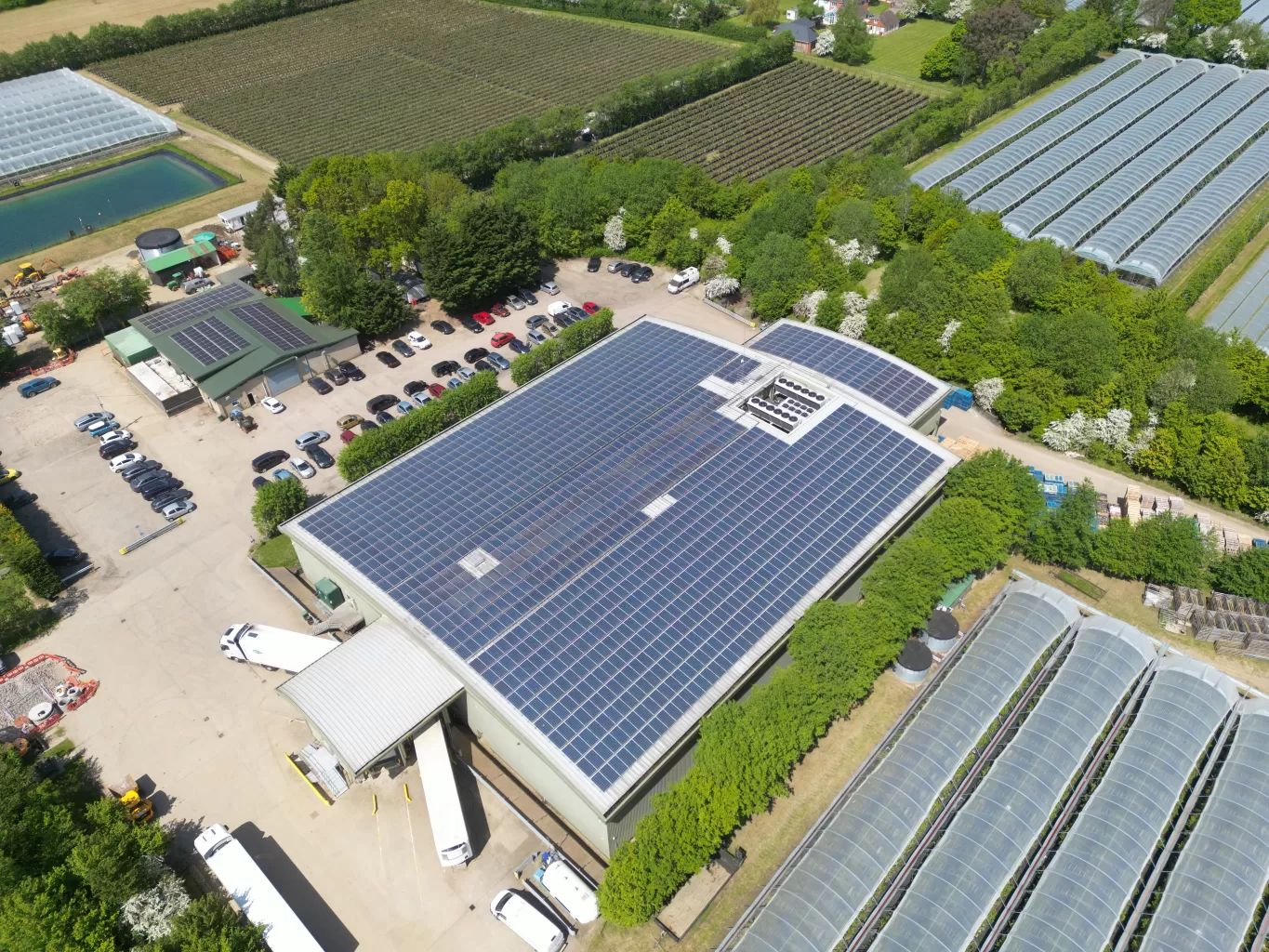
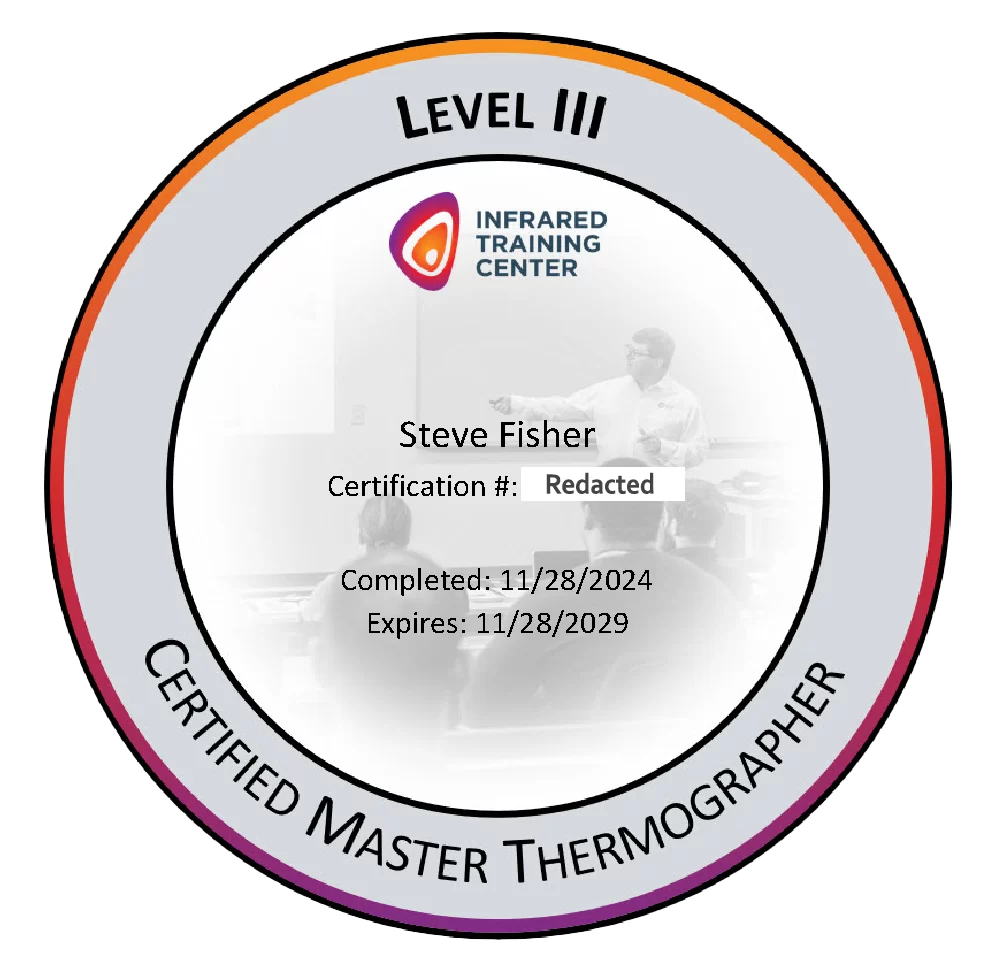
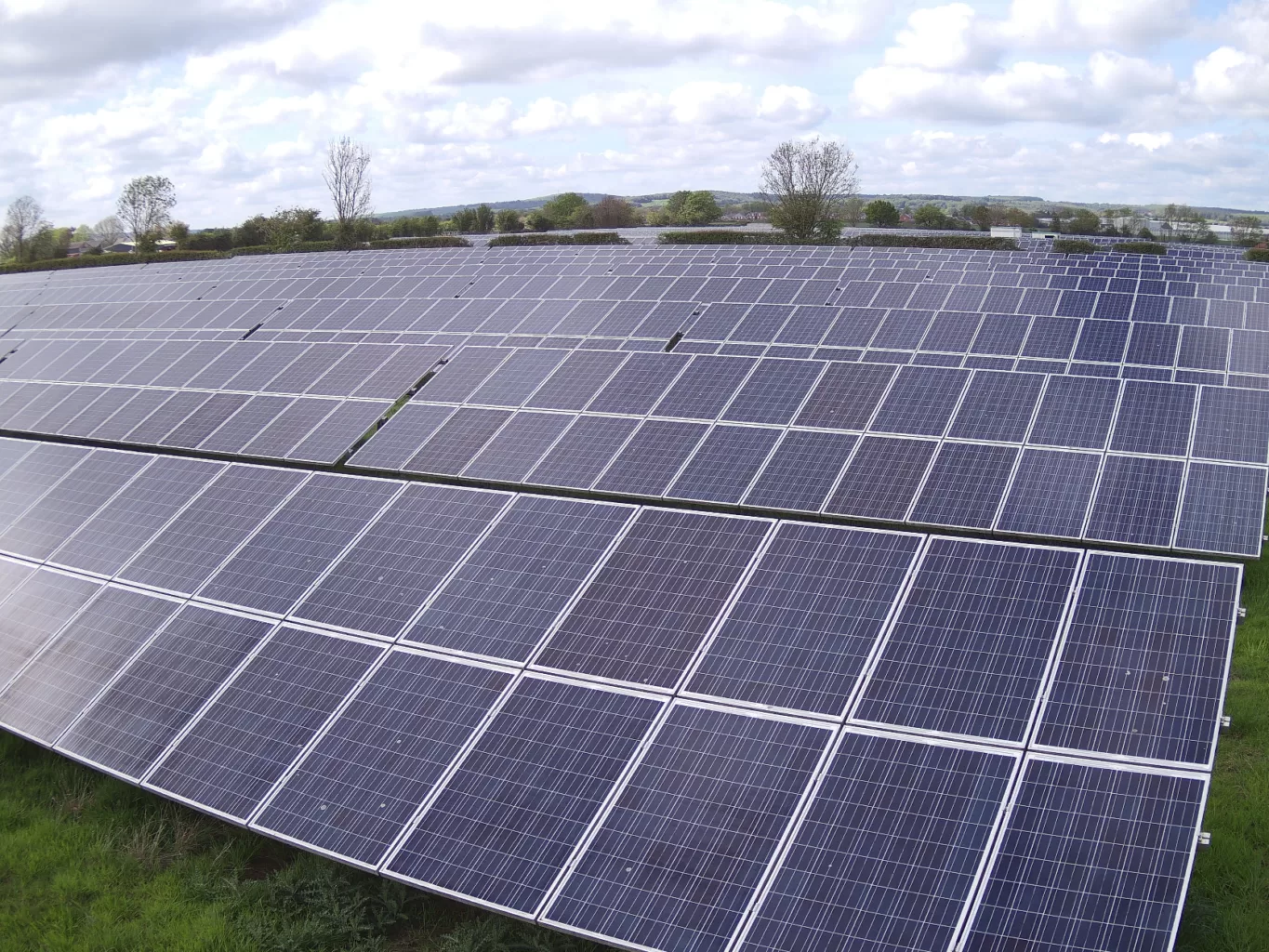
Drone Media Imaging carries out solar PV thermographic inspection in line with IEC 62446-3:2017, across commercial rooftop arrays, ground-mount solar farms and utility-scale sites throughout the UK. Capture is flown under CAA Operational Authorisation and the analysis is carried out by our ITC Level III Certified Master Thermographer, so the conclusions in your report are ones you can put in front of anyone who asks.

The Standard Your Solar Survey Should Be Carried Out To
If you have been told your solar array needs an IEC 62446-3 inspection, you already know more than most buyers of this service. The harder question is who is qualified to carry one out, because the phrase appears on a great many websites belonging to operators who hold a flying licence and nothing else.
The standard is not a badge. It sets the conditions under which thermal data means anything, the way the array must be flown, and what the person reading the results has to be able to demonstrate. An inspection that ignores any of the three produces imagery that looks convincing and proves very little.
Drone Media Imaging works to it end to end. We fly the capture and we carry out the analysis ourselves, at ITC Level III, so nothing is handed to a third party and nothing is left for you to interpret.
What an IEC 62446-3 Inspection Actually Covers
Conditions, capture and analysis, and all three have to hold
An inspection to this standard is not a single act. It is three things that have to hold together, and the weakest of them determines what the report is worth.
The first is conditions. Thermal imaging of a photovoltaic array only works while the modules are generating and their temperatures are stable, which puts real limits on how much sun, wind and cloud is acceptable. Fly outside them and the differences you are looking for are either not there yet or are being washed out by something else. We assess the window against a calibrated forecast model before mobilising, so a survey is booked when it can produce a valid result rather than when the diary happens to suit.
The second is capture. The array is flown close enough that every cell is resolved properly, on a path square to the modules so nothing is photographed at an angle that distorts the reading. The camera is corrected for the conditions on the day as well, because a thermal camera does not read temperature directly and has to be told what surface it is looking at and what is being reflected off it. Thermal and ordinary high-resolution photography are collected together, so an anomaly can be checked against what the panel physically looks like rather than inferred from heat alone.
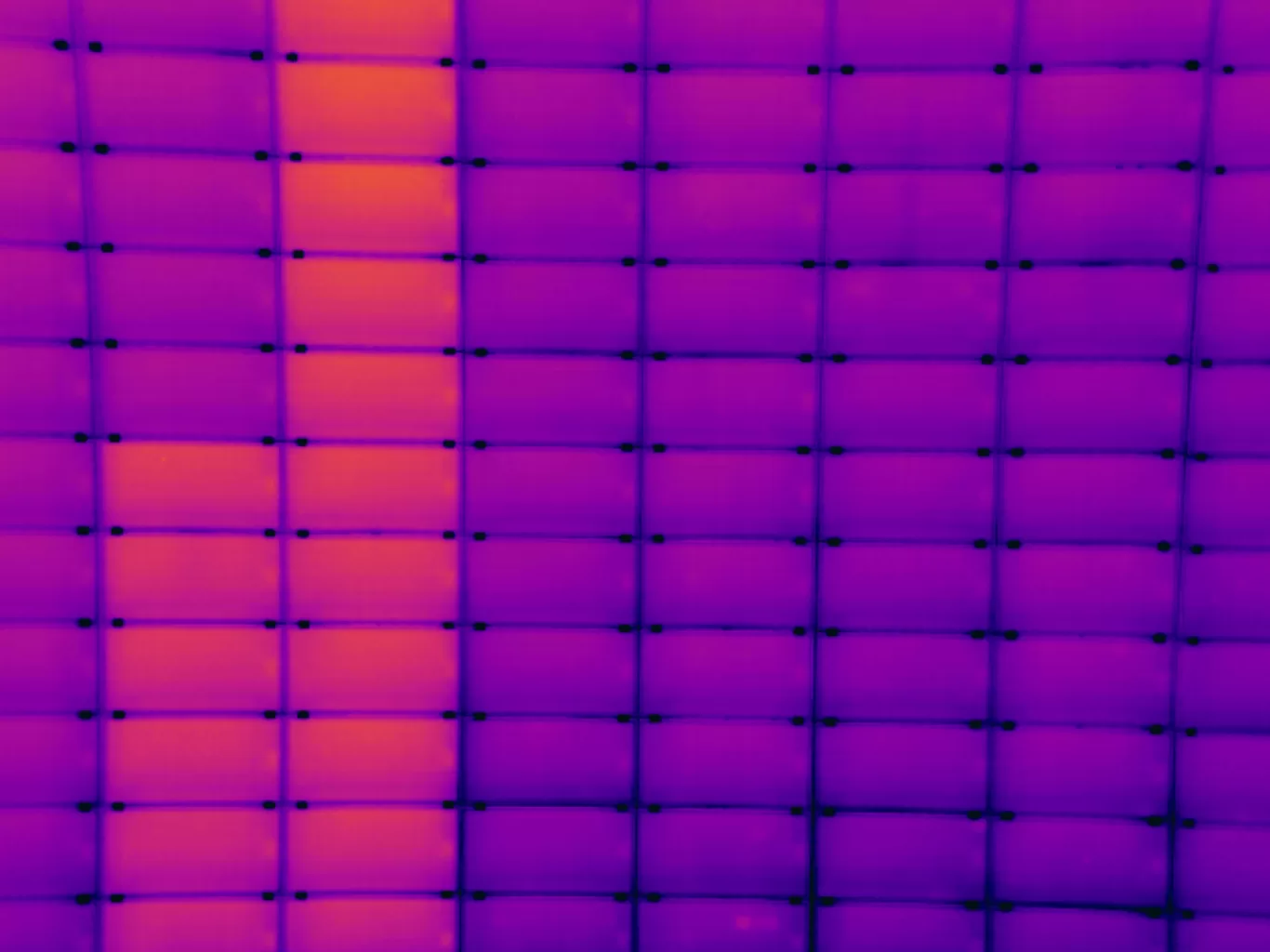
The third is analysis, and it is the one most often skipped. Every anomaly is compared against a healthy panel in the same image, classified for severity against the standard’s own categories, and located precisely enough that somebody can walk to it. Findings are presented as areas warranting further investigation by a suitably qualified contractor, in priority order, with the reasoning visible.
At a glance
What an IEC 62446-3 inspection from Drone Media Imaging involves, and what separates it from a drone flight with a thermal camera on it.
- Carried out in line with IEC TS 62446-3:2017, the technical specification for outdoor infrared thermography of photovoltaic modules and plants.
- Conditions are assessed against a calibrated irradiance model before we mobilise, because the standard sets thresholds a survey has to meet to be valid.
- Environmental readings are logged on site at the start and end of the flight and carried into the report as evidence, not assumption.
- Analysis by an ITC Level III Certified Master Thermographer, not by the pilot who flew the capture.
- Every anomaly is compared against a clean reference module in the same thermogram, classified for severity and located precisely enough to walk to.
- Radiometric thermal and high-resolution RGB imagery delivered together, so findings can be checked against what the module physically looks like.
- Optional IEC 62446-1 string-level electrical testing where the thermal picture needs corroborating.
The standard describes the work. The certification says who is allowed to conclude anything from it.
Related Solar Survey Services
Why the Inspector Matters as Much as the Standard
Anyone can say they work to it. Fewer can demonstrate it.
Most of IEC 62446-3 deals with equipment and method: the conditions the array has to be flown in, what the camera must be able to resolve, how the imagery is recorded and reported. One section deals with something else entirely. Annex B is the part of the standard concerned with the person, setting out what the thermographic expert carrying out the inspection is expected to know and to hold.
The fact that it exists at all is the useful bit. The authors evidently concluded that competence is a variable which changes the result, not a formality to be assumed, so they wrote down what it looks like. Two of its statements are worth knowing before you compare quotations. That training on the infrared camera, provided by its manufacturer, is not sufficient. And that a simplified inspection cannot produce authoritative conclusions regarding module quality.
Read those against how the UK market is actually made up. Most operators offering solar thermography hold CAA certification and nothing beyond it. That authorisation proves somebody can fly safely and legally, which is necessary and says nothing at all about whether they can read a thermogram. Several providers put the position in their own terms in writing, stating that interpreting the results is the client’s responsibility. If your report has to survive a warranty claim or an insurer’s question, that is the wrong place for the work to stop.
Drone Media Imaging carries the analysis itself, at ITC Level III, practising in accordance with the frameworks of ISO 18436-7:2014, ASNT SNT-TC-1A and ANSI/ASNT CP-105.
The same annex makes a second point, about who you appoint rather than what they know. Where the purpose of an inspection is fire prevention, it states that testing personnel should be independent of the owner or operator. An O&M contractor inspecting the installation it maintains does not meet that, however good its work. We have no stake in what a survey finds, which is precisely what makes the finding worth something.
What You Receive, and What It Proves
The deliverable is a structured report, written so that three different readers can each get what they need from it without translation. Your maintenance contractor needs to know what to attend to and in what order. Your insurer or warranty provider needs to see that the survey was carried out competently and under valid conditions. You need to know whether the asset is performing and what it will cost to keep it that way.
It contains the radiometric thermal imagery and the matching high-resolution visual imagery, the environmental conditions recorded on site, module and string level anomaly classification with severity, geolocation precise enough to find each item on the array, and a prioritised summary of what warrants further investigation.
What it does not contain is a repair quotation. Drone Media Imaging surveys, analyses and reports; we do not carry out remedial work, and that separation is deliberate. An inspector who also sells the fix has an interest in what the inspection finds, which is the same conflict the standard’s independence clause exists to avoid.
On the question of how often, there is no single legal interval and any provider telling you inspection is mandatory annually is overstating the position. IEC 62446-3 recommends every four years and explicitly defers to the owner, the insurer or national codes. In UK practice those usually tighten it: MIS 3002 points to a full maintenance visit every two years, and RC62, the joint code of practice issued by the UK insurance industry itself, recommends thermographic examination as part of the risk regime.
Our practical guidance is to survey at commissioning to establish a baseline, then at whatever interval your insurer or maintenance regime sets, and again after any event that could have damaged modules.
Combined Solar PV Thermographic and Electrical String Testing Inspection
Two rooftop arrays at a Hampshire golf club, surveyed to IEC 62446-3:2017 with string-level testing to IEC 62446-1. Every module was captured under stable, high-irradiance conditions and each thermal signature validated against a clean reference module in the same thermogram, with the electrical results reported alongside the thermal findings.
A thermal camera does not measure temperature. It measures infrared radiation arriving at its sensor and converts that into a temperature reading, which is a different thing and matters more than it sounds. The conversion rests on two assumptions about the surface in front of it, and if either assumption is wrong the number on the screen is wrong with it.
The first is emissivity, which is simply how efficiently a surface gives off infrared radiation compared with a perfect emitter. A dull, dark surface radiates freely and has a high emissivity. Polished metal barely radiates at all and has a very low one. Solar module glass sits high on that scale, which is helpful, but the aluminium frames and any exposed metalwork sit far lower, so a single camera setting cannot be correct for both. Get it wrong and a module can read several degrees hotter or cooler than it really is, which is the difference between a finding and a false alarm.
The second is reflected apparent temperature. Anything that does not radiate perfectly reflects instead, so part of what the camera sees coming off a panel is not the panel at all. It is the sky, the surrounding buildings, and on a bad day the aircraft itself. A clear sky is radiatively very cold and pushes readings down; heavy cloud is much warmer and pushes them up. The correction has to be worked out on the day, at the site, because it changes with the weather and with what happens to be standing next to the array.
This is why the same array can be surveyed twice in a week and produce two different sets of numbers, and why a survey that does not record these parameters cannot be checked by anyone afterwards. We establish both at the time of capture and carry the values into the report, so the basis on which every temperature was calculated is visible to whoever reads it. It is also the underlying reason the standard concerns itself with conditions at all. Without them, the imagery is a picture rather than a measurement.
- IEC TS 62446-3:2017 is the technical specification for outdoor infrared thermography of photovoltaic modules and plants, and it governs the conditions, method, competence and reporting of every survey on this page.
- IEC 62446-1:2016+A1:2018 covers electrical testing, documentation and commissioning verification for grid-connected PV systems, and governs our optional string-level testing.
- ISO 18436-7:2014 sets the international framework for thermographic condition monitoring personnel, and our analysis practice is aligned to it, alongside ASNT SNT-TC-1A and ANSI/ASNT CP-105.
- Survey conducted by Steve Fisher, ITC Level III Certified Master Thermographer (Infrared Training Centre; Certification #205722059), holding iRed Academy Thermal Imaging Category 2 and Drone Thermography Category 1.
- Flown under CAA Operational Authorisation, with GVC and A2 CofC, and fully insured for commercial operations across the UK, Ireland and Europe.
Book an IEC 62446-3 Inspection
Tell us the site, the approximate array size and what the survey has to prove, whether that is an insurer’s question, a warranty claim, a commissioning obligation or an unexplained drop in yield. We will scope it properly and come back with a fixed price. Scope and location determine cost on this work, which is why we quote rather than publish a rate card. Quotations and consultations are free. We work across Sussex, Hampshire, Kent and Surrey, and travel throughout the UK, Ireland and Europe.