Solar PV Thermographic Inspection, Food Manufacturing Rooftop Array, East of England
Drone Thermal Imaging of a 704 Module Rooftop Solar Array
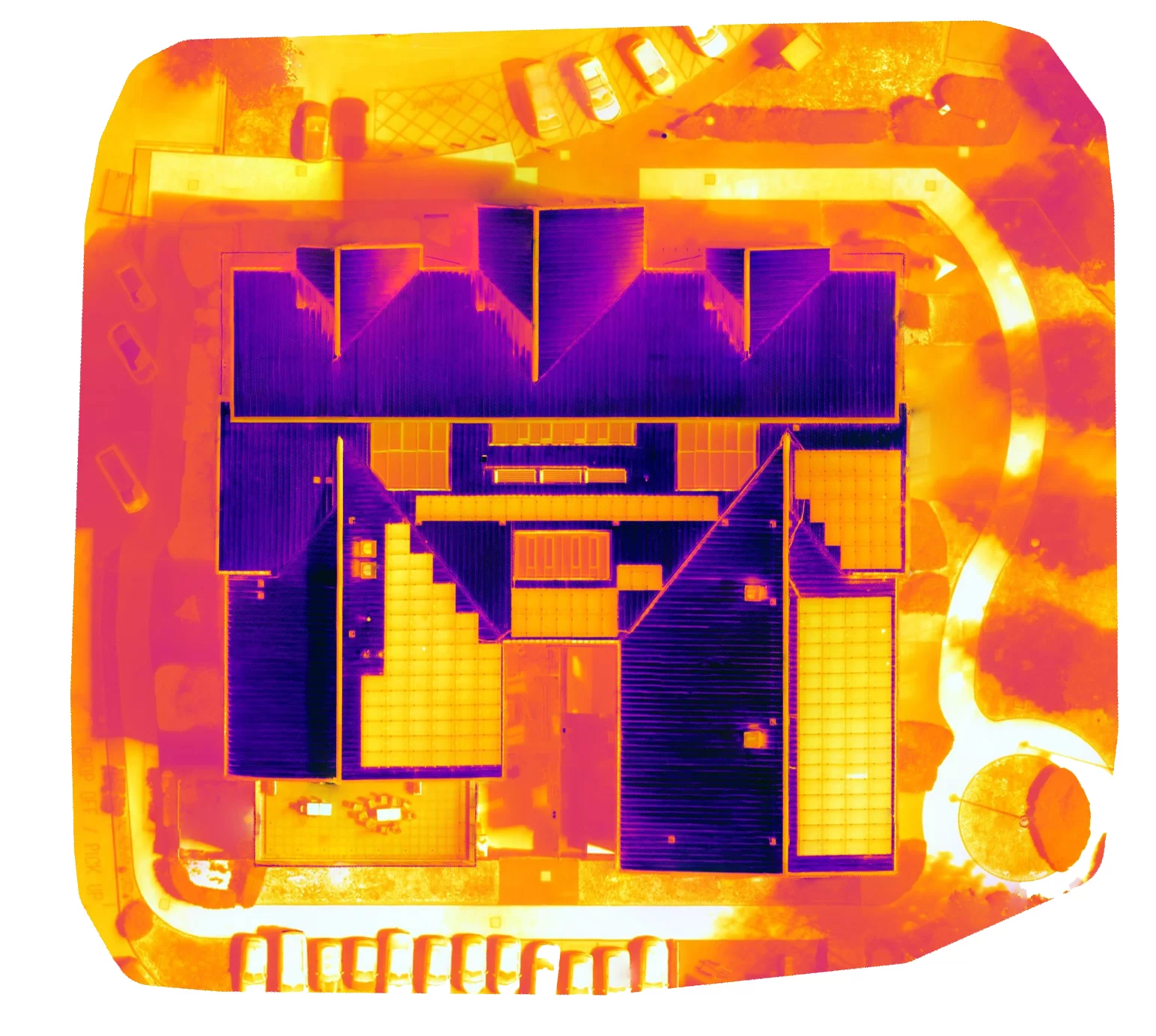
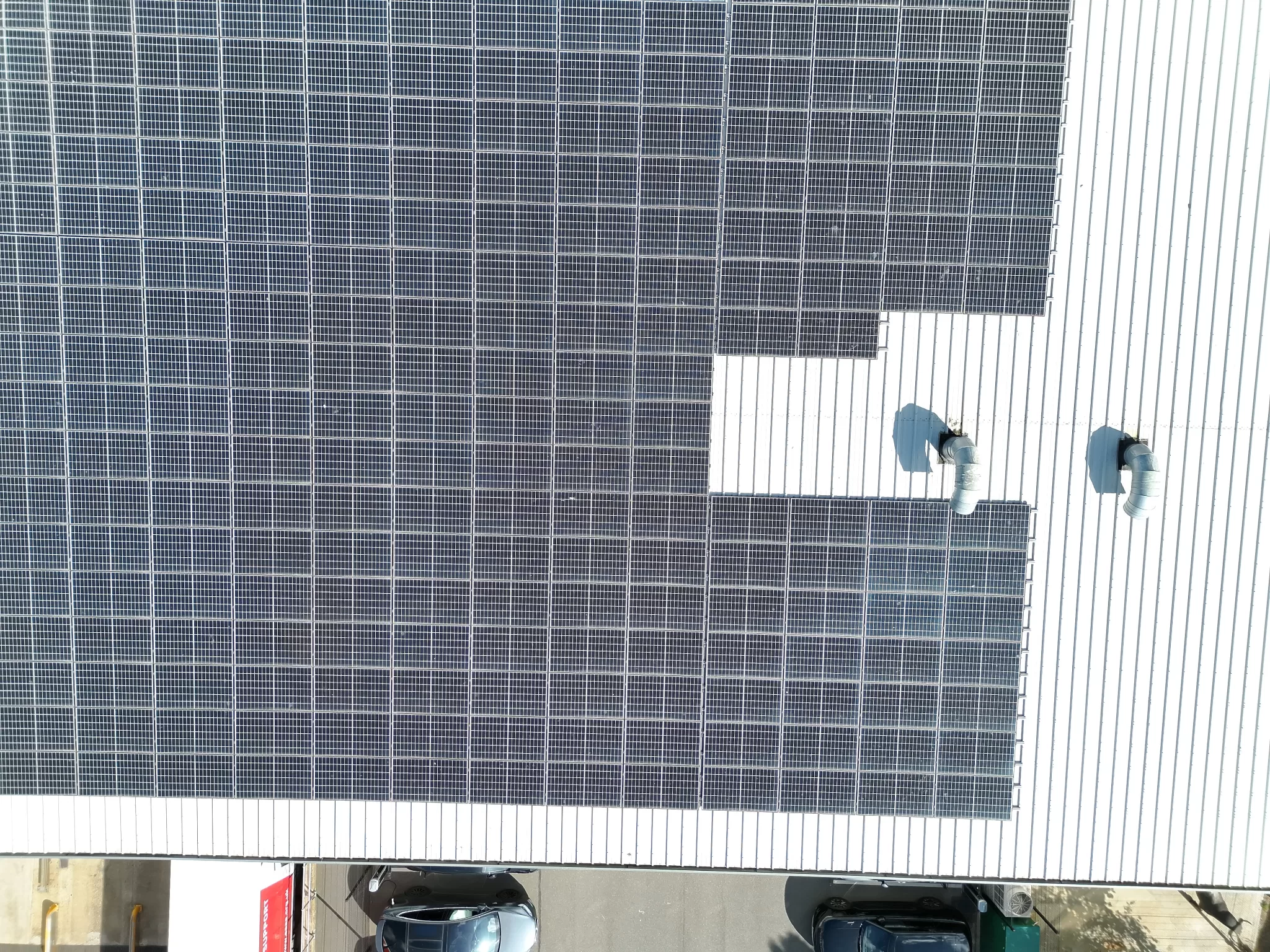
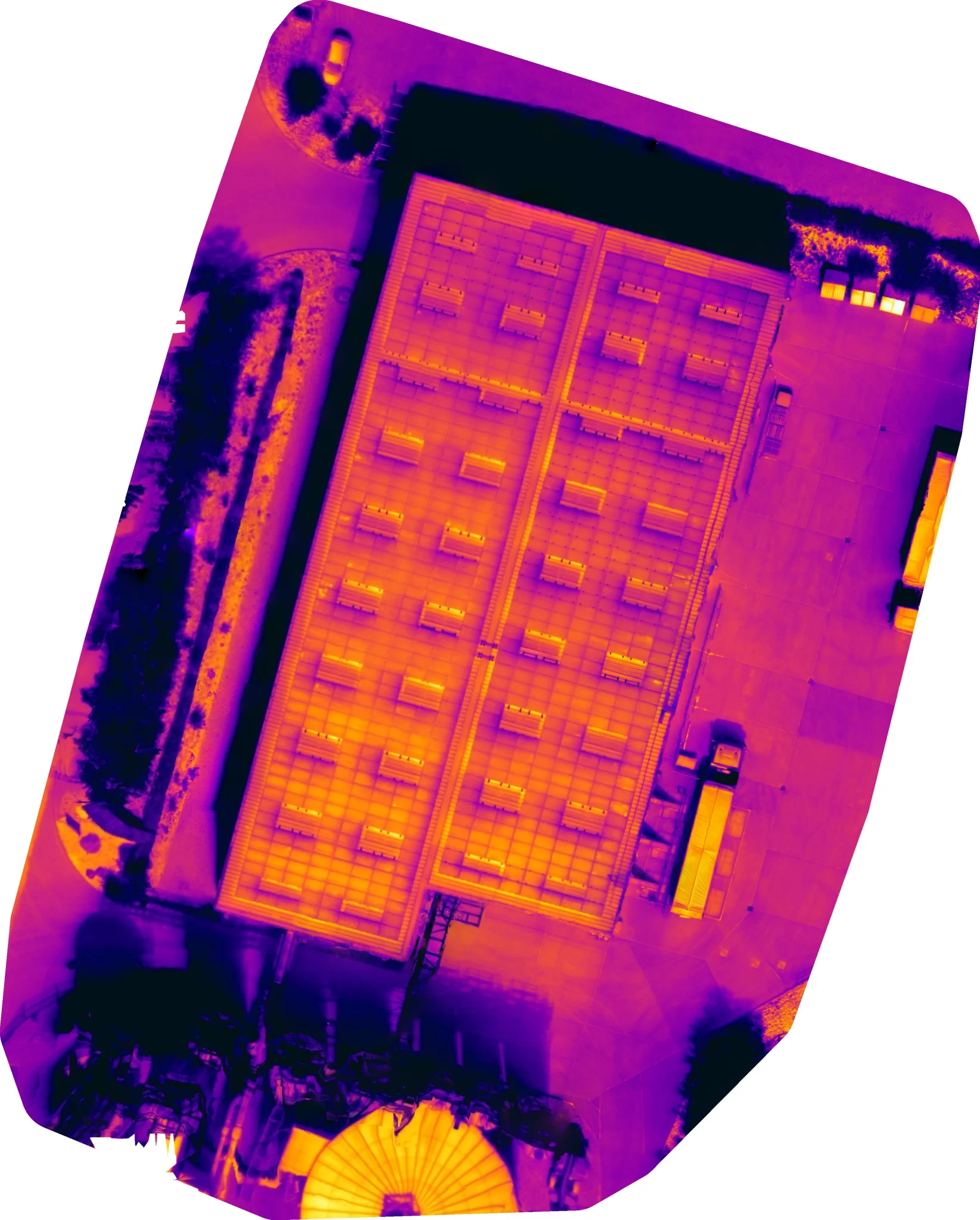
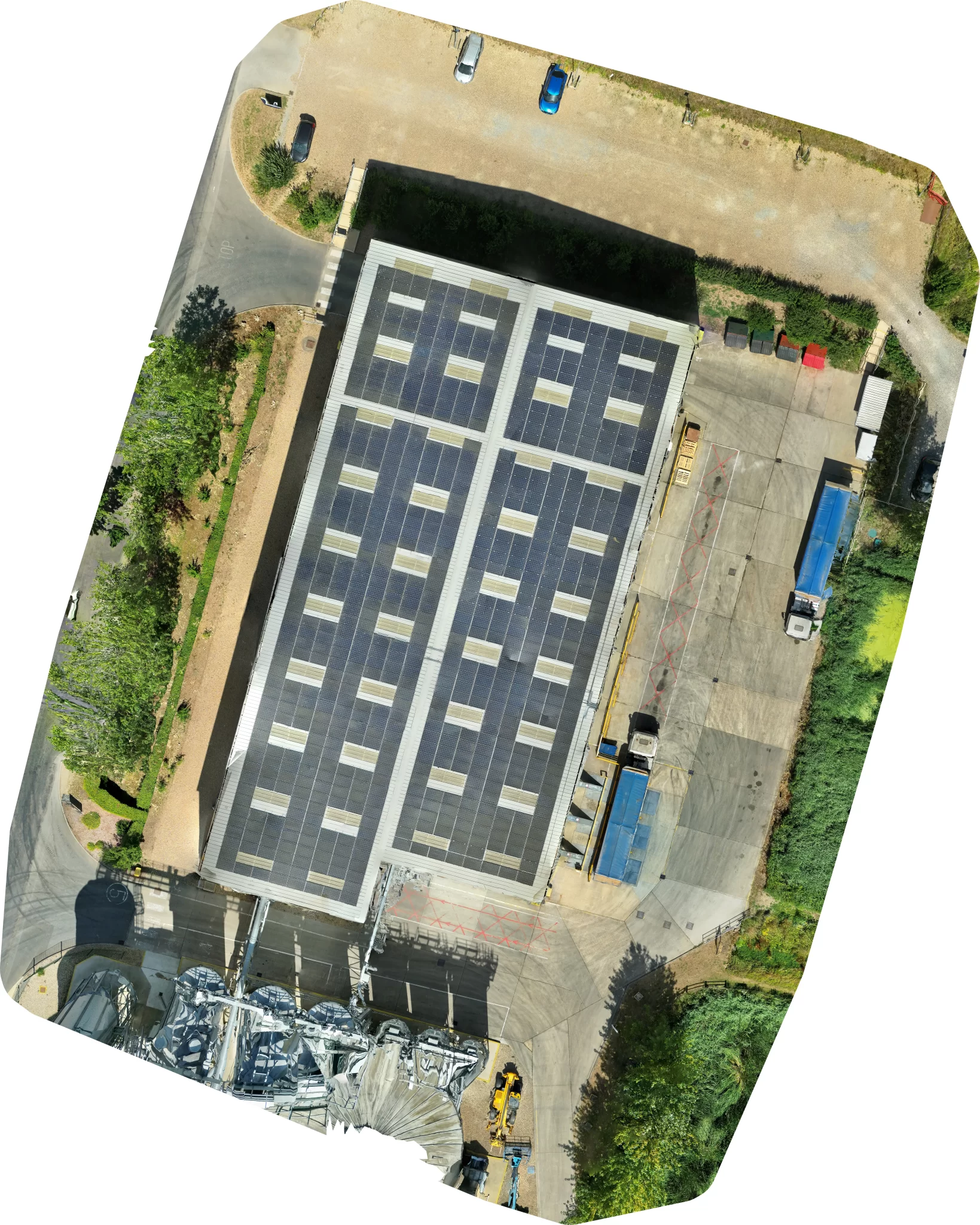
This solar PV thermographic inspection covered a 704 module rooftop array at a working food manufacturing site in the East of England, operated by a large whisky distiller and food manufacturer. Drone Media Imaging surveyed both pitches of the dual-pitch roof by drone-mounted radiometric thermal imaging under IEC 62446-3:2017, in clear-sky conditions with the array on load. The site presented an unusual analytical challenge, a heavy layer of raw-material dust and early lichen growth across the module surfaces, producing a patchy thermal profile that could easily mask or mimic genuine faults. Every measured anomaly was therefore validated against a per-zone thermal baseline, separating symmetrical electrical signatures from asymmetric surface soiling. The certified Level 3 report classified findings at cell, module and sub-string scale, with severities from Low to High and consequences of Yield and Degradation Trajectory, and identified no safety-related findings at the time of survey. The operator received clear investigation priorities for the module and sub-string findings, monitoring recommendations for the wider cell population, and independent evidence of the array’s condition beneath its soiling.
Project Overview
Subject
Solar PV thermographic inspection, Rooftop solar array survey, East of England, Food manufacturing, IEC 62446-3:2017
Skills Used
IEC 62446-3 Solar Thermographic Inspection, Hotspot Detection, Level 3 Report Writing
Portfolio Tags
Solar PV Inspection, Aerial Thermography, Rooftop Solar Array, East of England, IEC 62446-3, Food Manufacturing, Drone Media Imaging, What Is A Solar Thermal Survey?
How Does Drone Thermography Find Solar Panel Faults?, Solar Panel Inspection For Food Manufacturers, IEC 62446-3 Rooftop Solar Survey East Of EnglandHow Does Drone Thermography Find Solar Panel Faults?, Solar Panel Inspection For Food Manufacturers, IEC 62446-3 Rooftop Solar Survey East Of England
Solar PV Thermographic Inspection, Food Manufacturing Rooftop Array, East of England
~ Clear findings from a dusty roof, 704 modules classified under IEC 62446-3 ~
Level 3 certified analysis for a hard-working industrial roof
Drone Thermal Imaging of a 704 Module Rooftop Solar Array
The client for this solar PV thermographic inspection is a large whisky distiller and food manufacturer operating a substantial production site in the East of England. Their rooftop array of 704 modules spans both pitches of a dual-pitch roof and works hard, sitting directly above an active manufacturing environment with raw-material storage, processing plant and constant site traffic below. The array had no recent thermal inspection history, and the operator wanted an independent, standards-based picture of its condition.
Industrial rooftops of this kind present a genuine analytical challenge for thermography. Airborne dust from raw-material handling settles across the module glass, changing how each panel absorbs and emits heat, and creating a patchwork of warmer and cooler areas that has nothing to do with electrical health. Circular surface spotting consistent with early lichen growth had also begun to establish on the accumulated soiling. Without a disciplined baseline method, surface contamination of this kind can either hide real faults or masquerade as them, which is exactly why a qualitative comparison against a clean reference module within each thermogram sits at the heart of the IEC 62446-3 approach.
The inspection was delivered by Drone Media Imaging, with all analysis, classification and reporting carried out by our Level 3 Master Thermographer. Findings were assessed on two axes, the IEC 62446-3 severity of each thermal anomaly and the Drone Media Imaging Consequence Classification, which translates technical severity into what it means for the operator, output today or condition tomorrow.
Governing Standards
- IEC 62446-3:2017 The international standard for outdoor thermographic inspection of photovoltaic modules and plant, governing the environmental conditions, capture method and classification approach applied throughout this survey.
- ISO 18436-7 The condition monitoring and diagnostics framework for thermography personnel, one of the alignment frameworks under which our Level 3 Master Thermographer is trained.
How was the solar thermographic inspection carried out?
How Was the IEC 62446-3 Solar Thermal Survey Carried Out?
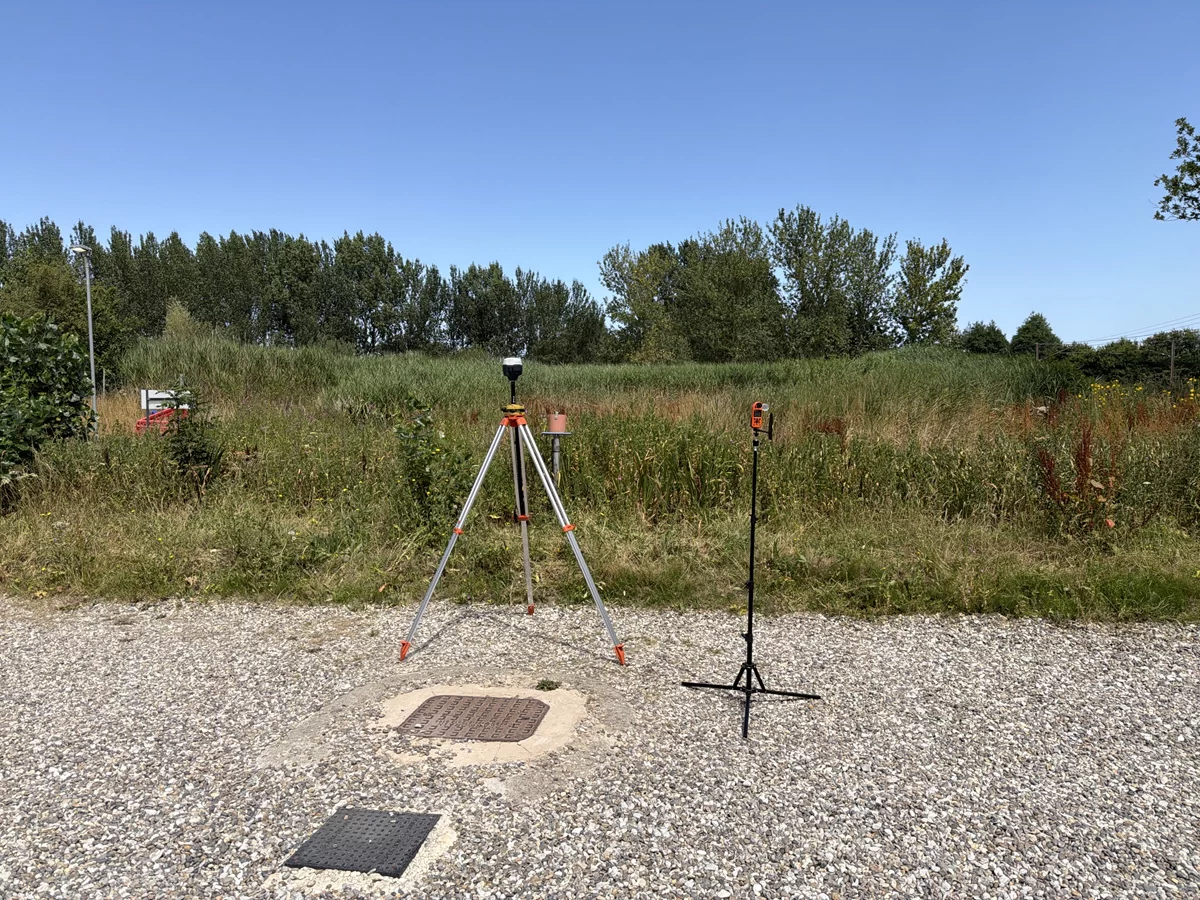
The survey was flown by drone in a single midday window in July, timed close to solar noon so both the east-facing and west-facing pitches received comparable irradiance. Conditions were ideal for thermography, a completely clear sky, irradiance above 900 W/m² throughout, light winds, and the array confirmed on load and generating for the whole capture. Environmental conditions were logged continuously with an IEC-compliant weather meter and irradiance meter, and the radiometric parameters, emissivity, reflected apparent temperature and atmospheric values, were measured on site rather than assumed.
Capture used a drone-mounted radiometric thermal sensor flown at a consistent height above the modules, giving cell-level detail across the full array. Analysis then followed the IEC 62446-3:2017 method, each thermogram carries its own good-sample baseline, an ellipse over a healthy module in the same image, and every measured anomaly is classified by its temperature rise above that baseline rather than by absolute temperature alone. On a heavily soiled roof this discipline matters even more than usual, because it separates the symmetrical, discrete signatures of genuine electrical anomalies from the asymmetric patterns that dust and surface growth produce.
The inspection scope covered:
- Thermographic survey of all 704 modules across both roof pitches, under IEC 62446-3:2017.
- Per-zone baseline analysis and two-axis classification of every measured anomaly.
- A certified Level 3 report with annotated thermograms, findings tables and per-zone summaries.
The scope did not include electrical testing, intrusive investigation or remedial work. Findings identify areas warranting further investigation by a suitably qualified contractor.
What did the solar thermal survey find?
The classified findings resolved into three distinct groups. The largest was a population of discrete, single-cell anomalies distributed across both pitches. Each presented as a symmetrical elevation confined to one cell, independent of the asymmetric soiling pattern, which is consistent with an electrical origin at cell level rather than a shading or debris effect. As isolated cell faults, these do not reduce string output, so they carry a Degradation Trajectory consequence, conditions to monitor rather than losses today.
The second group comprised module-scale features, whole modules carrying distributed multi-cell patterns consistent with degradation broad enough to reduce that module’s output. These carry a Yield consequence, a measurable reduction in generation at the time of survey. The third group comprised sub-string features consistent with bypass-diode activity, some actively conducting and shedding their sub-string’s output, others developing toward that condition. Severities across the survey ranged from Low to Medium, with a single High severity differential recorded on the east-facing pitch. No finding met a safety threshold at the date and time of survey, and no fire, arc-fault or encapsulant-degradation condition was evident.
What did the operator receive, and what happens next?
The operator received a certified Level 3 report signed off by our Level 3 Master Thermographer, containing annotated thermograms for every classified finding, a master findings table across both zones, per-zone condition summaries, and the full environmental and radiometric record that makes each classification defensible. The surface soiling and lichen growth were reported as a distinct maintenance consideration in their own right, separate from the electrical findings, with their cumulative yield and degradation implications explained in plain language.
The recommended next steps were set out in priority order:
- Further investigation of the module-scale and active sub-string findings by a suitably qualified electrical contractor, as these affect output now.
- Monitoring of the wider cell-level population for progression at the next scheduled inspection.
- Consideration of professional module cleaning, given the extent of raw-material soiling and the establishing lichen growth.
With a documented baseline now in place, future inspections can track progression rather than starting from scratch, which is where the long-term value of standards-based thermography lies.
A compound anomaly worth noting
One finding stood out technically, an L-shaped cluster of elevated cells, with two arms running perpendicular to each other along two sub-strings and meeting at a single origin cell. A vertical run of warm cells normally suggests bypass-diode activity, but a diode acts along one sub-string only, so the perpendicular arm did not fit that mechanism alone. The Level 3 read, a single cell failure at the junction of two sub-strings, presenting thermal continuity into one sub-string with local conduction feeding the other, shows why unusual thermal patterns warrant expert interpretation rather than a label from a lookup table.
Independent Solar PV Inspection, Certified to IEC 62446-3
Drone Media Imaging delivers standards-based solar PV thermographic inspections with certified Level 3 analysis and reporting. We cover Sussex, Hampshire, Kent and Surrey, with travel throughout the UK, Ireland and Europe. Talk to us about a baseline inspection for your rooftop or ground-mount array.