Solar PV Thermographic Inspection of Three Agricultural Rooftop Arrays
Why an Ageing Farm Solar Array Benefits From Thermographic Inspection
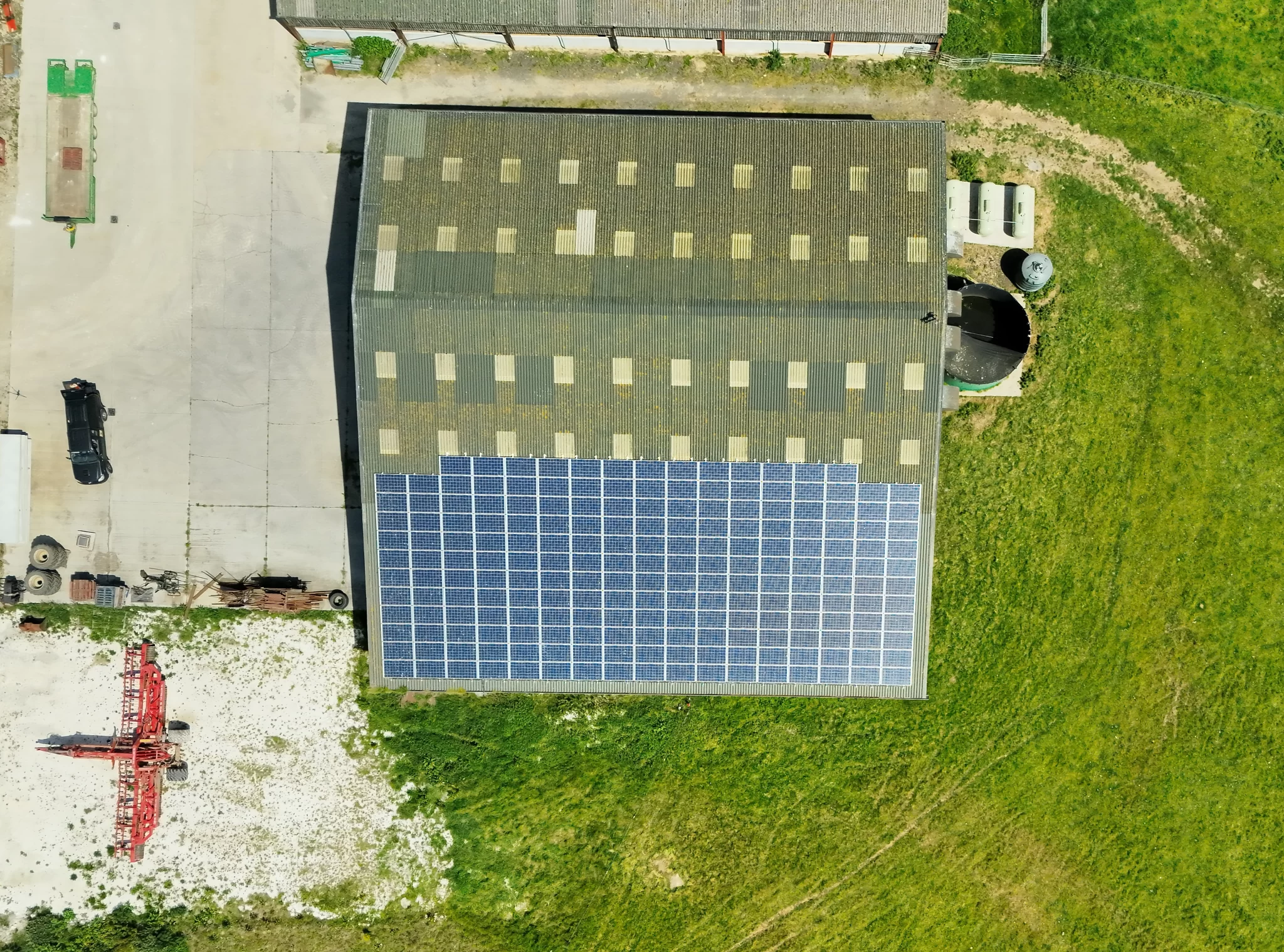
This solar PV thermographic inspection covered three separate photovoltaic systems on a working farm in Whitchurch, Shropshire, installed between 2011 and 2014 by different contractors and comprising 622 modules across two roofs. Drone Media Imaging surveyed all three arrays by drone in a single visit under IEC 62446-3:2017, flying under stable high-irradiance conditions and applying a separate radiometric parameter set to each roof to account for their differing pitch and exposure. Eighteen thermograms were analysed in detail and 87 individual thermal features measured against a healthy reference module in the same image. The overall condition proved normal for the service life of the arrays, with no string-scale or array-scale problem and no soiling found. Six findings did carry operational consequence: three cells had reached the temperature at which module encapsulant begins to degrade, and three further findings represented generation already being lost. The certified Level 3 report gave the owner a clear basis for prioritising a small number of specific investigations rather than a whole-system concern.
Project Overview
Subject
solar PV thermographic inspection, agricultural solar array, Shropshire, solar asset owners, IEC 62446-3:2017
Skills Used
IEC 62446-3 Solar Thermographic Inspection, Delta-T Assessment, Level 3 Report Writing
Portfolio Tags
Solar PV Inspection, Agricultural Solar, Rooftop Array, Shropshire, IEC 62446-3, Solar Asset Owners, Drone Media Imaging, Is My Solar Array Still Healthy
How Often Should A Solar Array Be Thermally Inspected, Solar PV Thermographic Inspection For Farms, IEC 62446-3 Drone Solar Survey UKHow Often Should A Solar Array Be Thermally Inspected, Solar PV Thermographic Inspection For Farms, IEC 62446-3 Drone Solar Survey UK
Solar PV Thermographic Inspection of Three Agricultural Rooftop Arrays
~ Three arrays, two roofs, one survey, and a clear answer on condition ~
Knowing the difference between an ageing array and a failing one
Why an Ageing Farm Solar Array Benefits From Thermographic Inspection
Solar arrays installed during the first wave of United Kingdom commercial deployment are now entering their second decade of service, and their owners are increasingly asking a simple question: is this still working as it should? Generation data alone rarely answers it. A meter tells you what the system produced, not why, and a gradual decline can look identical whether it comes from ordinary ageing spread evenly across a roof or from a handful of specific components heading towards failure. Those two situations call for very different responses.
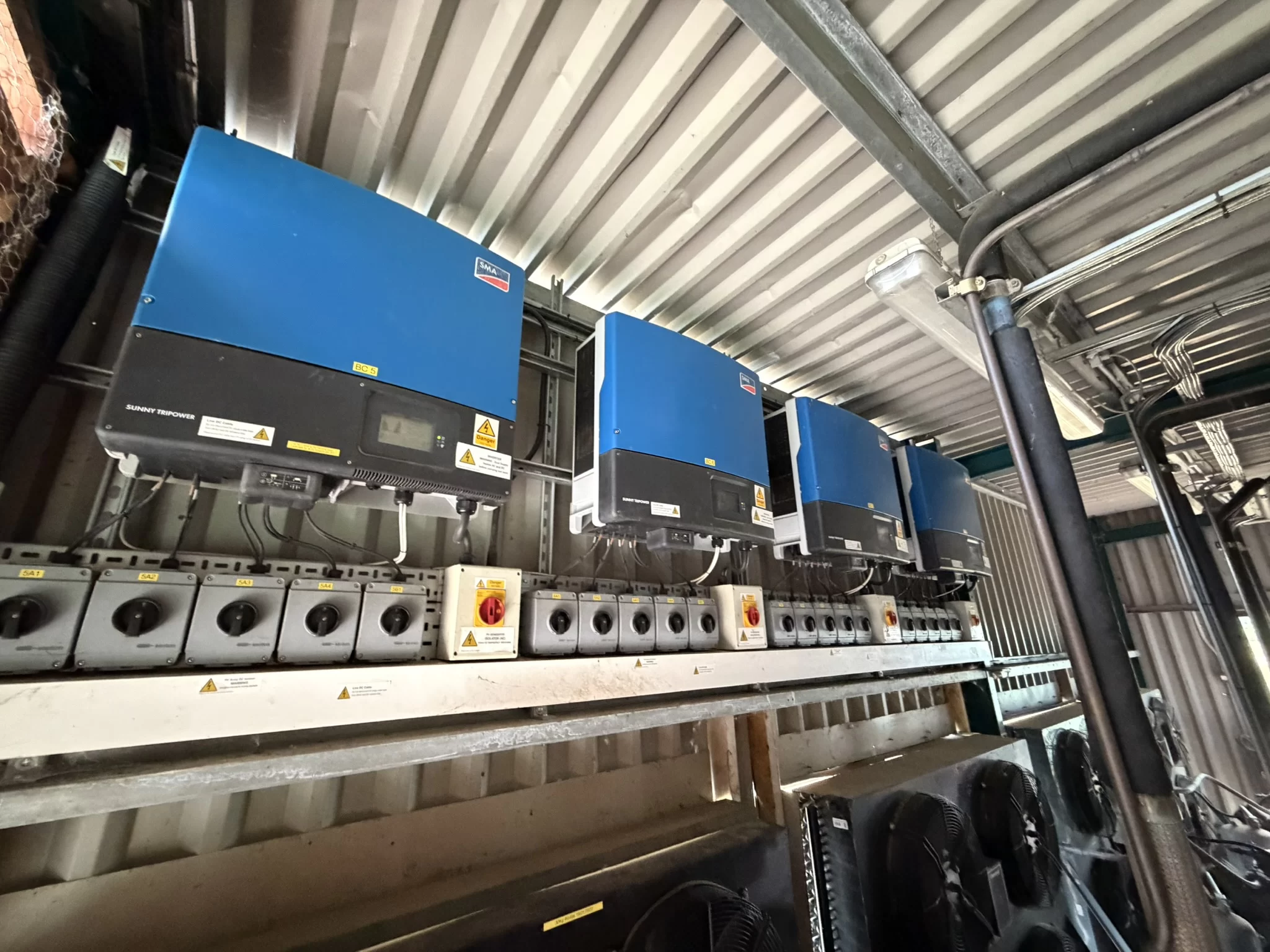
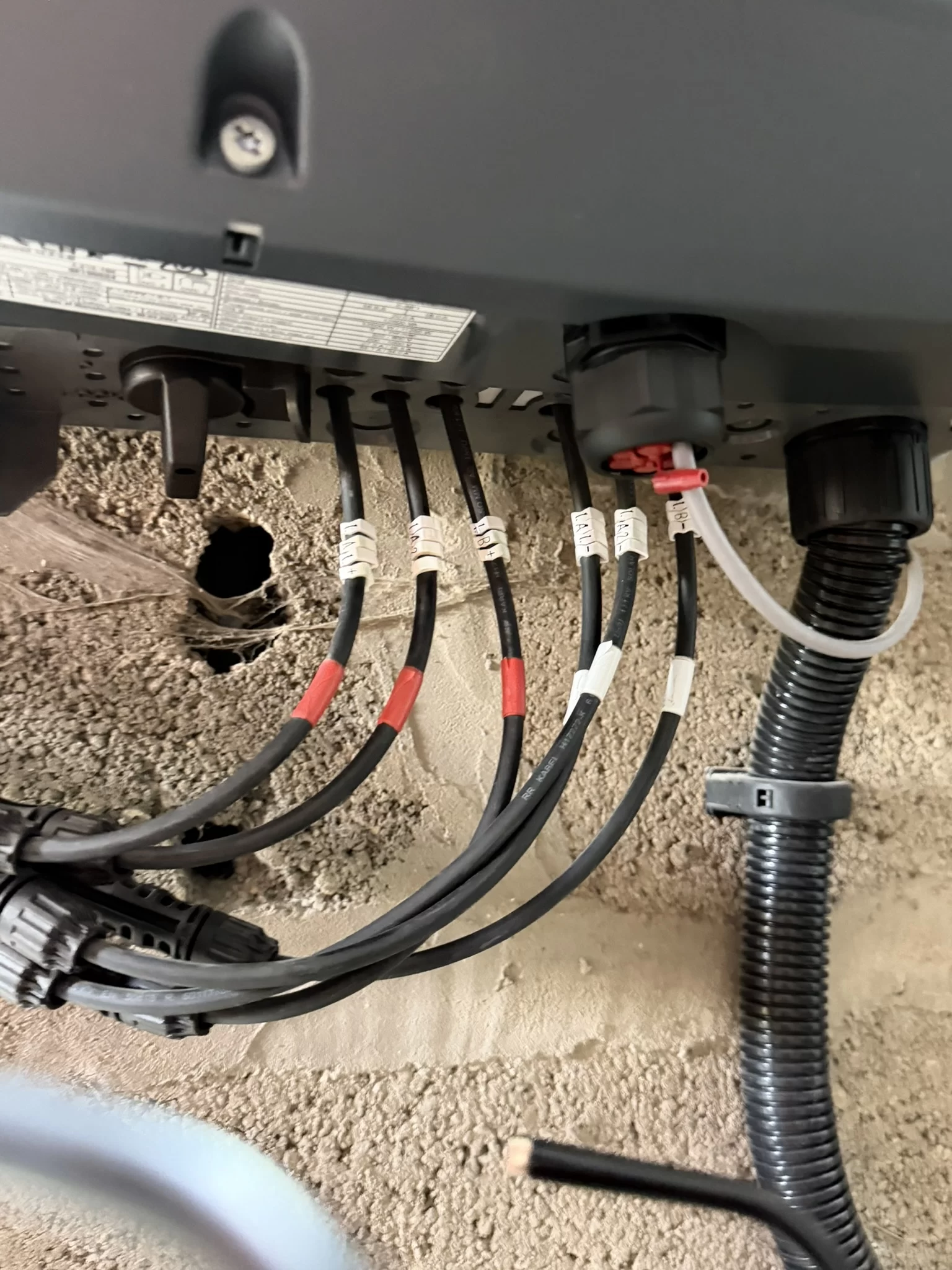
This site presented that question in a particularly awkward form. Three separate photovoltaic systems had been installed across two roofs between 2011 and 2014, by different contractors, using different modules and different inverters, and the installation documentation that survived did not match what was actually on the roofs. Two of the three layout drawings named inverters that were no longer fitted, and one stated a module count the survey did not support. The owner needed an independent picture of the current condition of all three, established from the arrays themselves rather than from paperwork.
Thermographic inspection answers that question directly, because a photovoltaic cell that is not converting light into electricity converts it into heat instead. A module or a cell working below its neighbours therefore runs warmer than them, and that difference is visible to a calibrated thermal sensor long before it is visible in generation figures. The survey and the certified Level 3 analysis and reporting were delivered by Drone Media Imaging.
Governing Standards
- IEC 62446-3:2017 governs thermographic inspection of grid-connected photovoltaic systems, setting the operating and environmental conditions the survey must be flown under and the framework by which thermal anomalies are classified.
- ISO 18436-7 is the alignment framework for thermographic condition monitoring competence, under which our Level 3 Master Thermographer is trained.
How was the solar PV thermographic inspection carried out?
How Was the Solar PV Thermographic Inspection Carried Out?
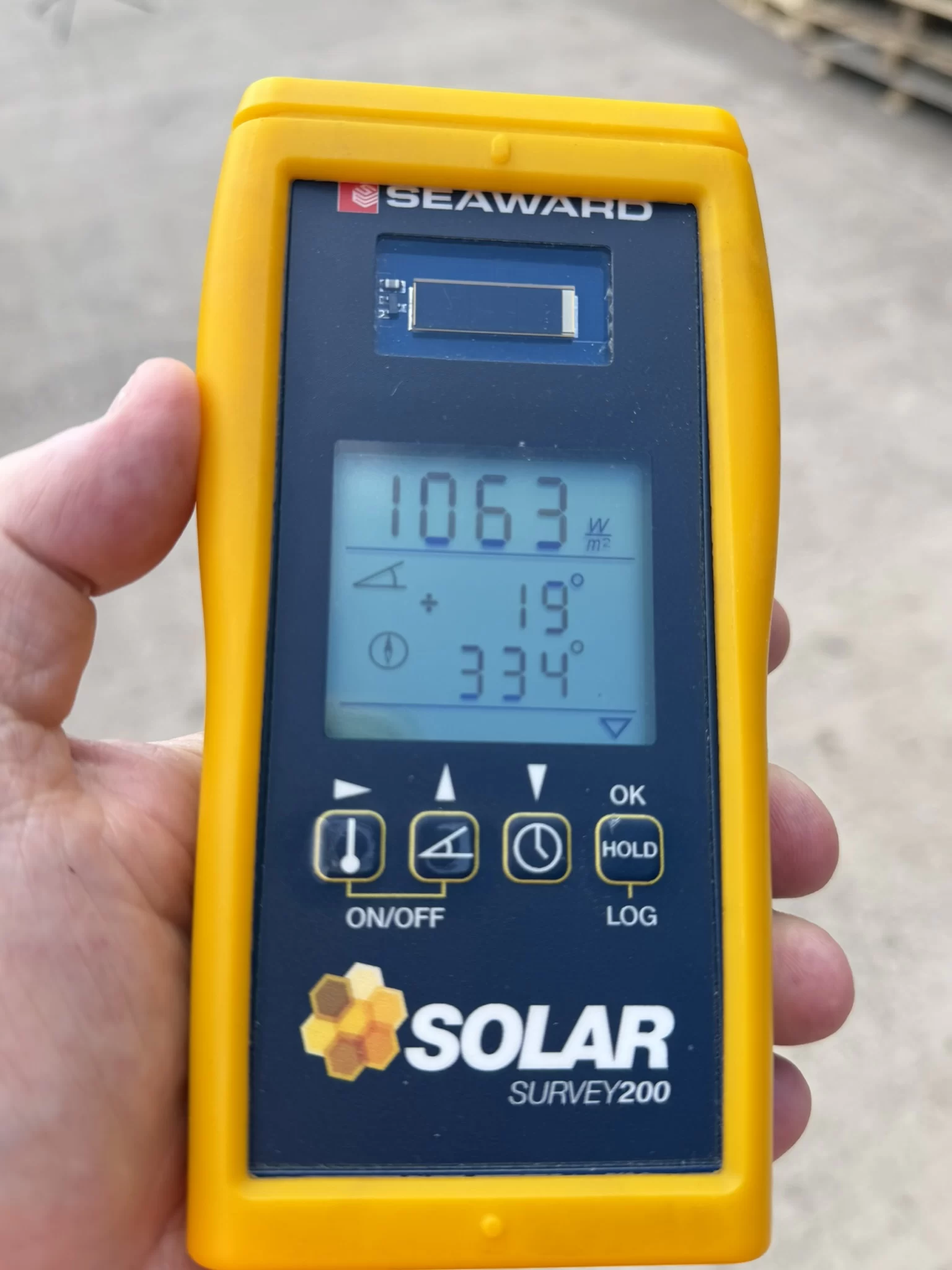
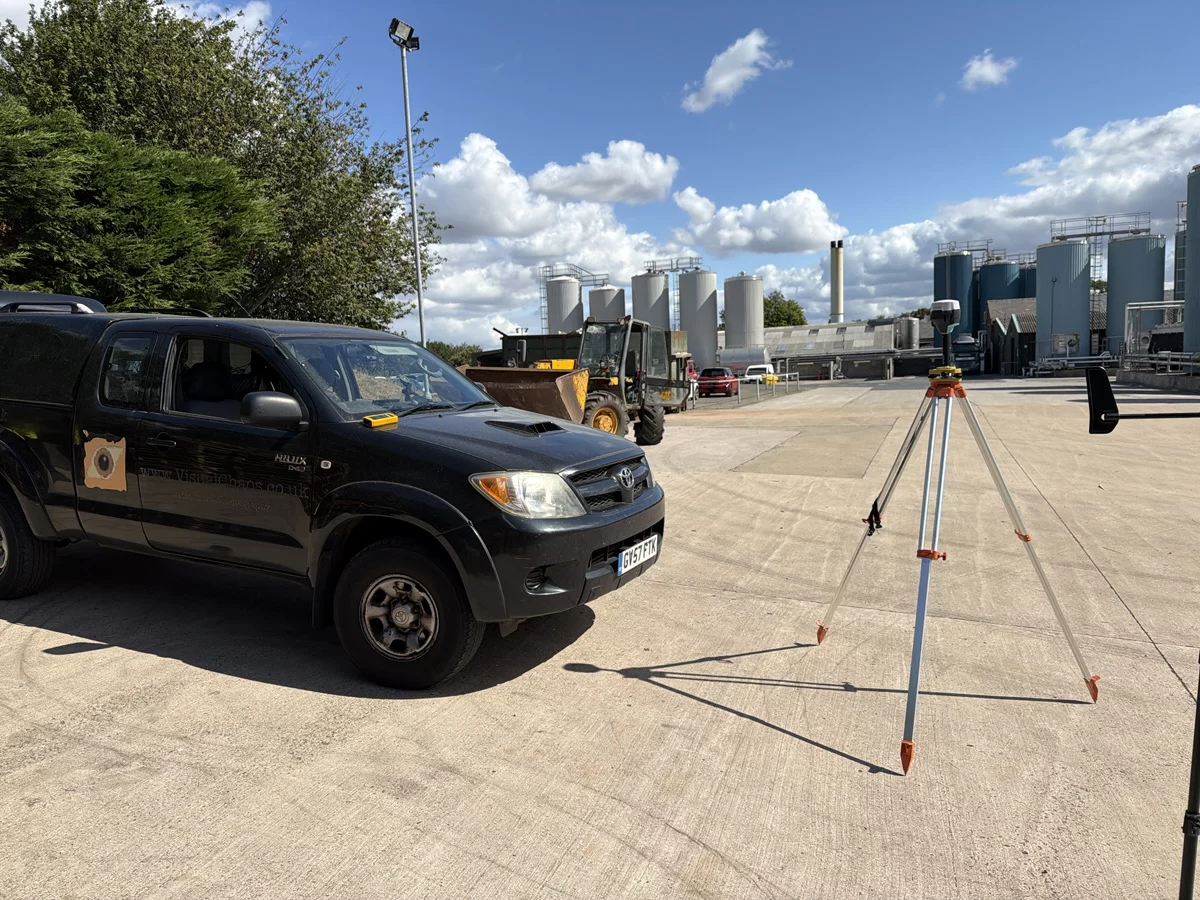
Inspection under IEC 62446-3:2017 depends as much on the conditions as on the equipment. The standard requires the array to be generating under sufficient irradiance for thermal differences to develop and be measurable, so the survey window is chosen for the weather rather than for convenience. On the day, in-plane irradiance stayed between 913 and 1117 watts per square metre against a required minimum of 600, wind speed peaked at just over four metres per second against a limit of seven, and cloud cover held stable throughout. Both roofs were flown inside a single hour.
Capture was by drone, flown at a consistent height above the module surface to hold a uniform ground sample distance across every array. The two roofs sit at markedly different pitches and were surveyed nearly forty minutes apart under different air temperatures, so each was given its own radiometric parameter set rather than a single set applied across the site. Getting that right matters: the same measurement analysed under the wrong parameters returns a different absolute temperature, and absolute temperature is what determines whether a finding is a safety concern.
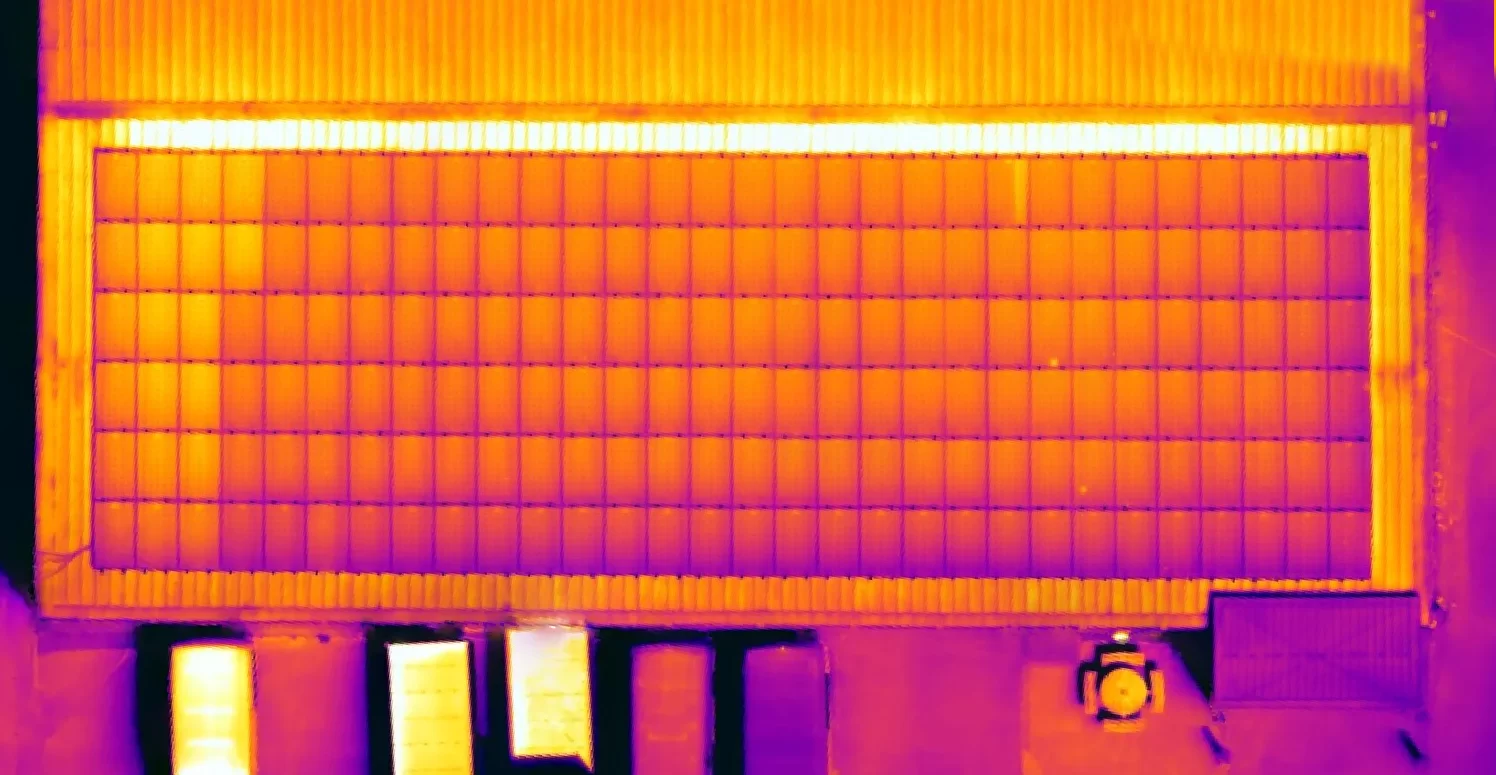
Every anomaly was then assessed against a healthy reference module captured in the same thermal image, under identical light and identical conditions. That comparison is what separates a genuine fault from a reflection, a shadow or a difference in irradiance across a roof.
- Included: thermographic survey of every module on all three arrays, anomaly classification under IEC 62446-3:2017, consequence classification, an array map locating every finding, and a certified Level 3 report.
- Not included: electrical testing, string measurement, intrusive investigation, cable tracing, and any remedial or corrective work.
What did the thermographic inspection find?
The headline result was a reassuring one. Across all three arrays the overall thermal condition proved normal for the service life of the systems, and no string-scale or array-scale problem was found anywhere on the site. The modules also presented as clean, with no soiling or surface obstruction identified on review of the visual imagery, which on a working agricultural site is not a given.
Most of what was measured was low-grade activity at individual cell level, the sort of small, discrete warm feature that is the most commonly encountered result in photovoltaic thermography and is entirely consistent with arrays that have been generating for between eleven and fifteen years. Ten of the eighteen thermograms classified at the lowest severity band. Findings of this kind are recorded, located and given a trajectory rather than treated as problems requiring action.
Six findings stood apart. Three cells had reached the temperature at which the encapsulant sealing a module begins to degrade, the highest approaching ninety five degrees, and these carry a Safety consequence under the Drone Media Imaging Consequence Classification framework because the mechanism is self-reinforcing once that threshold is passed. Three further findings represented generation already being lost at the time of survey rather than a condition developing towards it. Separately, three module positions in one row of the smallest array were found empty, with no module fitted and nothing in the documentation to explain it.
What did the client get, and what happens next?
The deliverable was a certified report signed off by our Level 3 Master Thermographer, carrying every classified finding with its measurement, its position on the array and a plain explanation of what it means. Each of the three arrays received its own map locating every affected module, so a contractor attending the site can go straight to a position rather than searching a roof.
The practical value of the result is proportion. An owner told that eighteen thermograms carry findings could reasonably assume a system in trouble. What the report established is that the arrays are in normal condition for their age, and that attention is warranted at six specific locations rather than across the installation as a whole. That distinction changes what needs budgeting for and when.
- Refer the safety-classified findings and the output-related findings to a suitably qualified electrical contractor for investigation.
- Establish, through electrical investigation, how the row containing the empty module positions has been made off.
- Bring the installation records into line with the as-built configuration, which materially assists any future fault investigation.
- Re-inspect periodically to establish whether the cell-level findings are developing, and at what rate.
A single survey is a snapshot. Its greatest value is realised when it becomes the first point in a series, because rate of change is what distinguishes a stable array from a deteriorating one, and no individual inspection can show it.
A note on documentation that no longer matches the roof
One finding of this job was not thermal at all. On an installation of this age, with several contractors involved over several years, the surviving paperwork had drifted a long way from reality: inverters replaced without record, a module count that no longer held, and one array with no layout drawing at all. None of this prevented the inspection, because the arrays themselves were surveyed and counted directly, but it is worth flagging to any owner of an older system. Accurate records are what allow a fault to be traced quickly when one does appear.
Is your solar array still performing as it should?
Drone Media Imaging carries out IEC 62446-3:2017 thermographic inspections of rooftop and ground-mounted solar arrays, with certified Level 3 analysis and reporting. We cover Sussex, Hampshire, Kent and Surrey, and travel throughout the United Kingdom, Ireland and Europe. Get in touch to discuss a survey of your installation.