
Thermal Imaging – Fact Versus Fiction
There’s some fiction that surrounds thermal imaging which is understandable as it is relatively new technology and it has been heavily used in the film and tv industry in, shall we say, some fairly creative capacities.
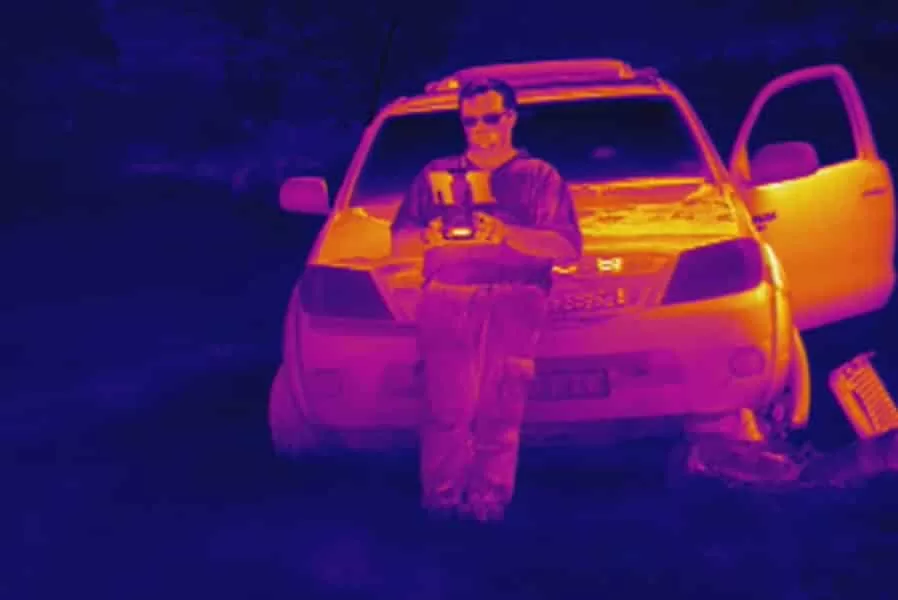
A thermal imaging camera works just in the same way any other camera in that it create an image via a lens. However, instead of using visible light as a standard camera would, a thermal imaging camera uses infrared waves and focuses these onto a specialised sensor to create a ‘thermal profile’ of the temperature of images in relation to those around them.
Can a Thermal Imaging Camera See Through Walls?
Nope, not outside of Hollywood. Thermal cameras measure the heat of what is front of them and so would measure the temperature of the wall and not what’s behind it. They see the heat that comes from the house which makes them invaluable in terms of detecting dampness, insulation efficiency, moisture ingress and delaminating render etc. They actually can’t even see through glass as this has it’s own thermal profile.
Can a Thermal Imaging Camera See Through Clothes?
Again, this is a bit of a Hollywood myth. The heat signature of a person is read from the outside, with the clothes and body being treated as a single heat source. The one broad exception to this would be if a person had an item underneath their clothes that was significantly hotter or colder than their body, this would be highlighted as a patch of different temperature in a thermal image.


In the above two images, you can see a human hand placed on a cold granite work surface with the whiter, brighter areas indicating the higher temperatures. You can see that the hand cools towards the extremities with the ends of the fingers being a fair amount colder than the centre of the hand. What is interesting to see, and invisible to the naked eye, is the second image of the residual heat that is left when the hand is taken away.

Photogrammetry For Roof inspections, Solar Panels, and Hard-To-Reach Assets: A Technical Approach
Photogrammetry for roofs, solar panels, and complex vertical structures requires far more precision than standard terrain mapping. This post from explores why traditional workflows fall short and how operators can use tools such as terrain-following, custom camera profiles, circlegrammetry, and automated vertical scanning to achieve consistent results. Packed with real-world examples and scientific validation, it provides a practical technical guide to improving model accuracy, mission repeatability, and inspection efficiency across challenging commercial environments.Capturing quality photogrammetry data from vertical and elevated structures remains one of the trickier challenges in commercial drone operations. Traditional surveying workflows fail here. Kristaps Brass, Product Owner at UgCS, has spent years working with operators who tackle these missions daily. Solar farms, building facades, communication towers, dam inspections. The pattern is consistent: manual flying burns time and money, and processed models show gaps where critical details should be. This article covers what actually works, based on field-tested methods and real operator feedback.

IEC 62446 Solar String Testing Now Available
Drone Media Imaging now offers certified IEC 62446-compliant solar string testing, delivering complete electrical diagnostics for commercial PV systems. This new service verifies string integrity, insulation, voltage, current, and performance using advanced I-V curve tracing and Fill Factor analysis. Ideal for commissioning, troubleshooting, and maintenance, our testing supports safety, compliance, and ROI assurance. Combined with thermal imaging, we offer a powerful dual-inspection approach. Book today to ensure your solar array is operating safely, efficiently, and within international performance standards.
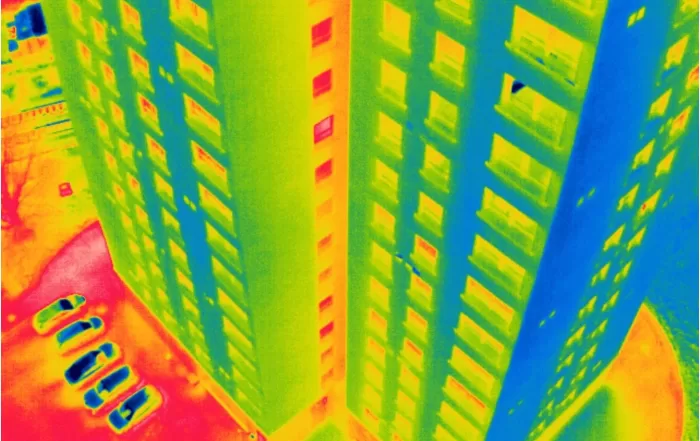
Level 3 Thermography Reporting Project – 3 Multi-Storey Residential Blocks
We supported a large thermal inspection project across three residential buildings by providing certified Level 3 thermographic reporting based on drone data collected by the client. Using a protocol we developed, they captured radiometric thermal images, which we analysed remotely to identify heat loss, glazing issues, and roof moisture indicators. This collaborative approach showcases how our clients can carry out surveys independently, while we deliver professional-grade thermographic interpretation and reporting — cost-effectively and without needing site access.
Drone Services Enquiry
Thermography | Inspections | Solar | Photogrammetry
Discover how drone technology can enhance your operations with a free quotation from our experts. Get a Free Quote or Make an Enquiry Today!