Exploring the Impact of Thermal Convection on Building Room Corners
Discover the effects of thermal convection on building room corners with insights from thermal imaging. Uncover hidden insights.

Exploring the Impact of Thermal Convection on Building Room Corners: Insights from Thermal Imaging
Have you ever wondered how thermal convection affects the corners of a building? In this post, we will delve into the fascinating world of thermal imaging and explore the impact of thermal convection on building room corners.
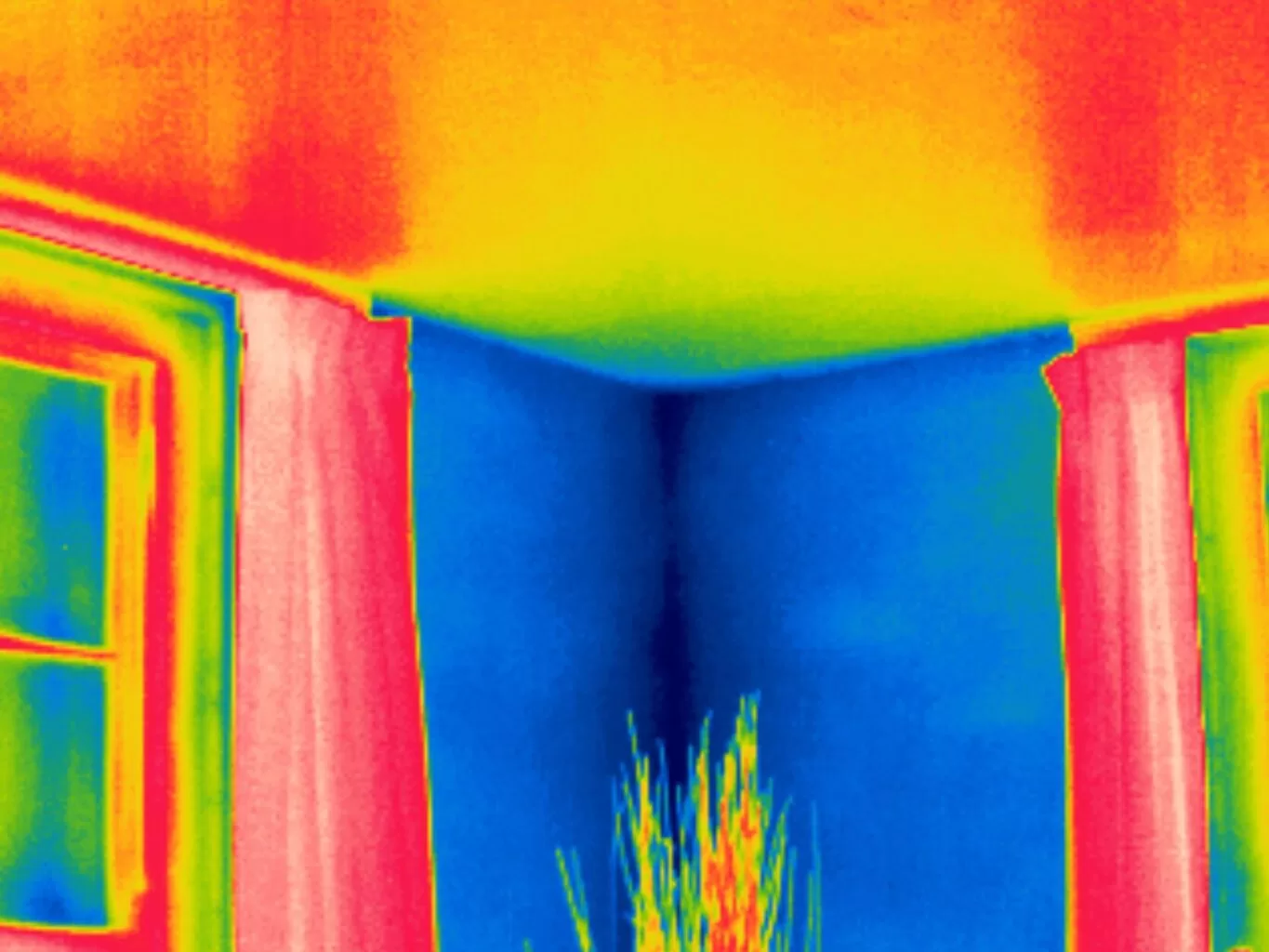
Thermal imaging is a powerful tool that allows us to visualise and analyse temperature variations on surfaces in a given space. By using infrared cameras, we can capture thermal images that reveal the heat distribution within a building. This technology has revolutionised the way we understand and optimise energy efficiency in buildings.
When it comes to building room corners, thermal convection plays a significant role in heat transfer and distribution. Convection is the process by which heat is transferred through the movement of fluids and gases, such as air or water. In the context of buildings, air convection is the primary mechanism responsible for heat transfer in room.
 The corners of a room are often overlooked when it comes to insulation continuity and therefore energy efficiency. However, our thermal imaging studies have shown that corners can be contentious spots for heat loss or gain. Due to the nature of airflow patterns and Newton Law of Convection, warm air tends to accumulate in the upper corners of a room, while cooler air settles in the lower corners. This temperature difference can lead to discomfort, condensation, damp and general energy inefficiency.
To address this issue, it is crucial to optimise the insulation and airflow in room corners. By identifying areas of heat loss or gain through thermal imaging, building owners and designers can take targeted measures to improve airflow and energy efficiency. This may include adding insulation, sealing gaps, or adjusting HVAC systems to ensure proper airflow.
According to a study conducted by the UK Department for Business, Energy & Industrial Strategy, improving insulation and energy efficiency in buildings can lead to significant cost savings. The study found that implementing energy-efficient measures in buildings could save up to 20% of energy consumption, resulting in an annual UK saving of £7.5 billion.
The impact of thermal convection in building room corners has implications for indoor air quality and occupant comfort. Poor airflow in corners can lead to stagnant air, which may contribute to the accumulation of pollutants and allergens and even the development of mould. By addressing these issues, we can create healthier and more comfortable indoor environments.
Remember, understanding the intricacies of thermal convection and its impact on buildings is crucial for creating sustainable and comfortable indoor environments. Harness the power of thermal imaging to unlock the potential for energy efficiency surveys and improved occupant well-being.
#ThermalImaging #EnergyEfficiency #BuildingInsulation #IndoorAirQuality #OccupantComfort
Building Surveys using Thermography
Don’t let your building’s corners be the chink in your armour! Understand the power of thermal convection and let us help you harness the potential of thermal imaging to make your building more energy efficient and comfortable. Discover the secrets of your building’s corners and save on energy costs, improve indoor air quality and make your spaces more comfortable. Don’t wait, delve into the fascinating world of thermal imaging now and optimise your building’s energy efficiency. Act now and transform your building into a comfortable, energy-efficient space!
We are experienced and certified level 2 category thermographers. We work boith from the air using specialist thermal drone technology as well as on the ground using traditional building thermal imaging techiques to inspect commericla and domestic properties.
Thermography is a non-destructive and non-invasive technology looking at the anomolies, faults and observations covering moisture, water ingress, insulation continuity, heat loss, air leakage, thermal bridging and insect infiltration.
Drone Services Enquiry
Thermography | Inspections | Solar | Photogrammetry
Discover how drone technology can enhance your operations with a free quotation from our experts. Get a Free Quote or Make an Enquiry Today!