Blog Content TL;DR...
The advantages and practicality of fire extinguishing using liquid Nitrogen
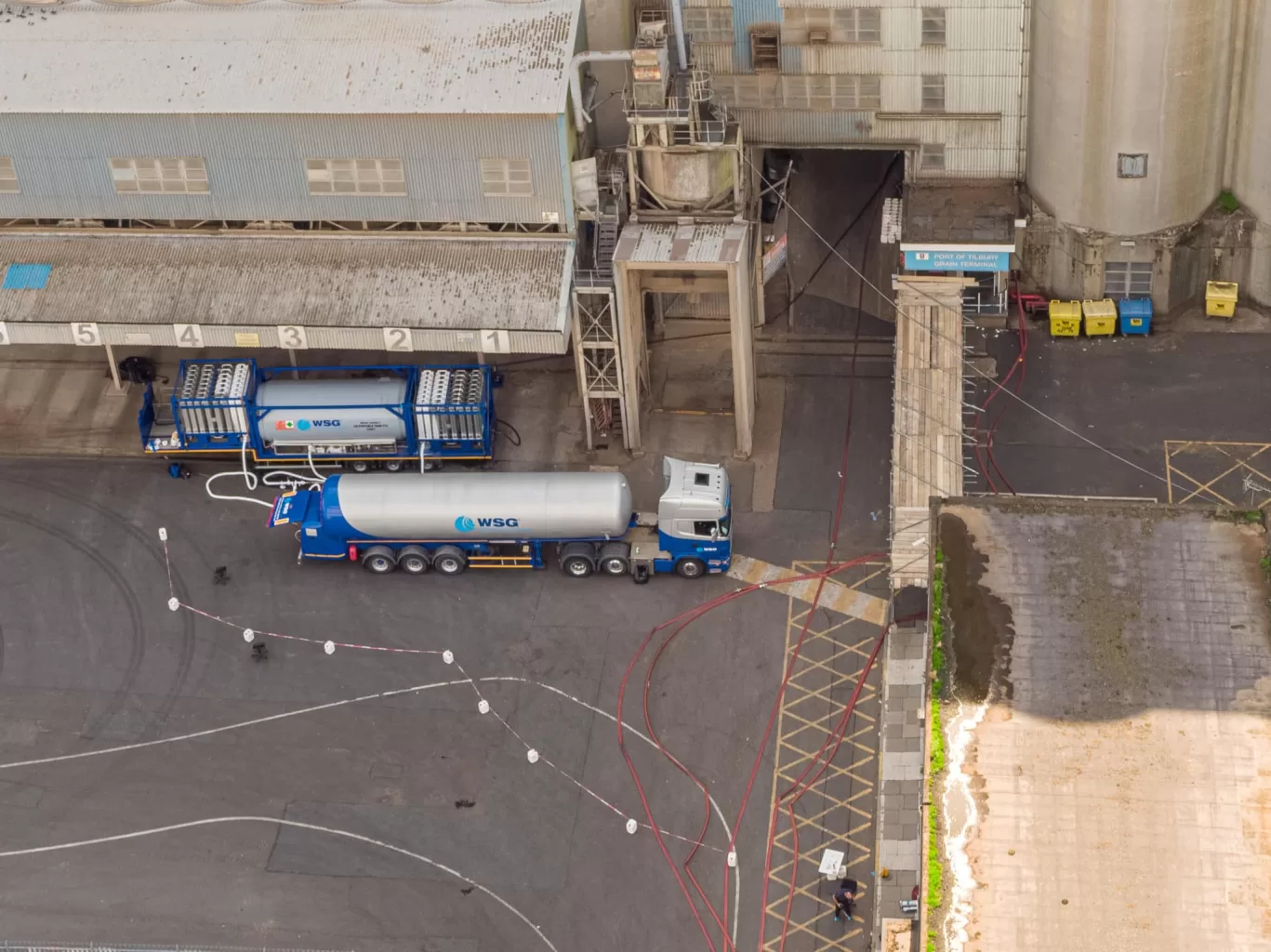
Liquid Nitrogen (LN2)
Nitrogen makes up 78.08 per cent of the air volume and is colourless, odourless, and non-toxic. It is easily detachable from the air. Nitrogen is easily accessible as a byproduct of the oxygen generation process. When Nitrogen is cooled to 195.8 °C under normal pressure, it becomes liquid Nitrogen, with a density of 810 kg/m3.
Nitrogen is incombustible and has excellent stability. As a result, numerous advantages exist for utilising liquid Nitrogen as a fire extinguisher.
- Significant cooling capacity. Liquid Nitrogen has an exceptionally low temperature, typically 196 °C. As a result, liquid Nitrogen has a greater cooling capability. Liquid Nitrogen has a high capacity for heat absorption while rapidly vaporising. When 1 kilogramme of liquid Nitrogen fully vaporises at 0 °C, it may absorb 420 kJ of heat, forming a heat absorption barrier. It has the potential to lower the temperature of the combustion region and therefore weaken the flame. Nitrogen has a heat capacity of 1.038 kJ/(kgK) at constant pressure and 0.741 kJ/(kgK) at constant volume, implying it can also cool the zone as it is heated.
- Excellent suffocation effect. When the ambient temperature is 25 °C, liquid Nitrogen expands at a volume ratio of roughly 1:717. Liquid Nitrogen vaporises rapidly as it reaches the combustion region. Nitrogen’s volume percentage in the air rapidly increases, while oxygen’s volume fraction decreases. When the oxygen volume fraction in the space falls below roughly 15%, most plastics and solids, including wires and cables, become incapable of sustaining combustion, and the flame goes out.
- Capable of covering in the gaseous form. With a relative density of 0.98, liquid Nitrogen vaporises to become gaseous Nitrogen. Nitrogen spreads rapidly once released, gradually filling the region and rendering flammable gas inert. Thus allowing the nitrogen injection region to retain a low oxygen content for an extended period of time.
- Environmentally responsible. Nitrogen is one of the sufficient elements in the atmosphere and has zero global warming potential (GWP = 0). When discharged into the atmosphere during fire extinguishing, it has no adverse effect on the environment.
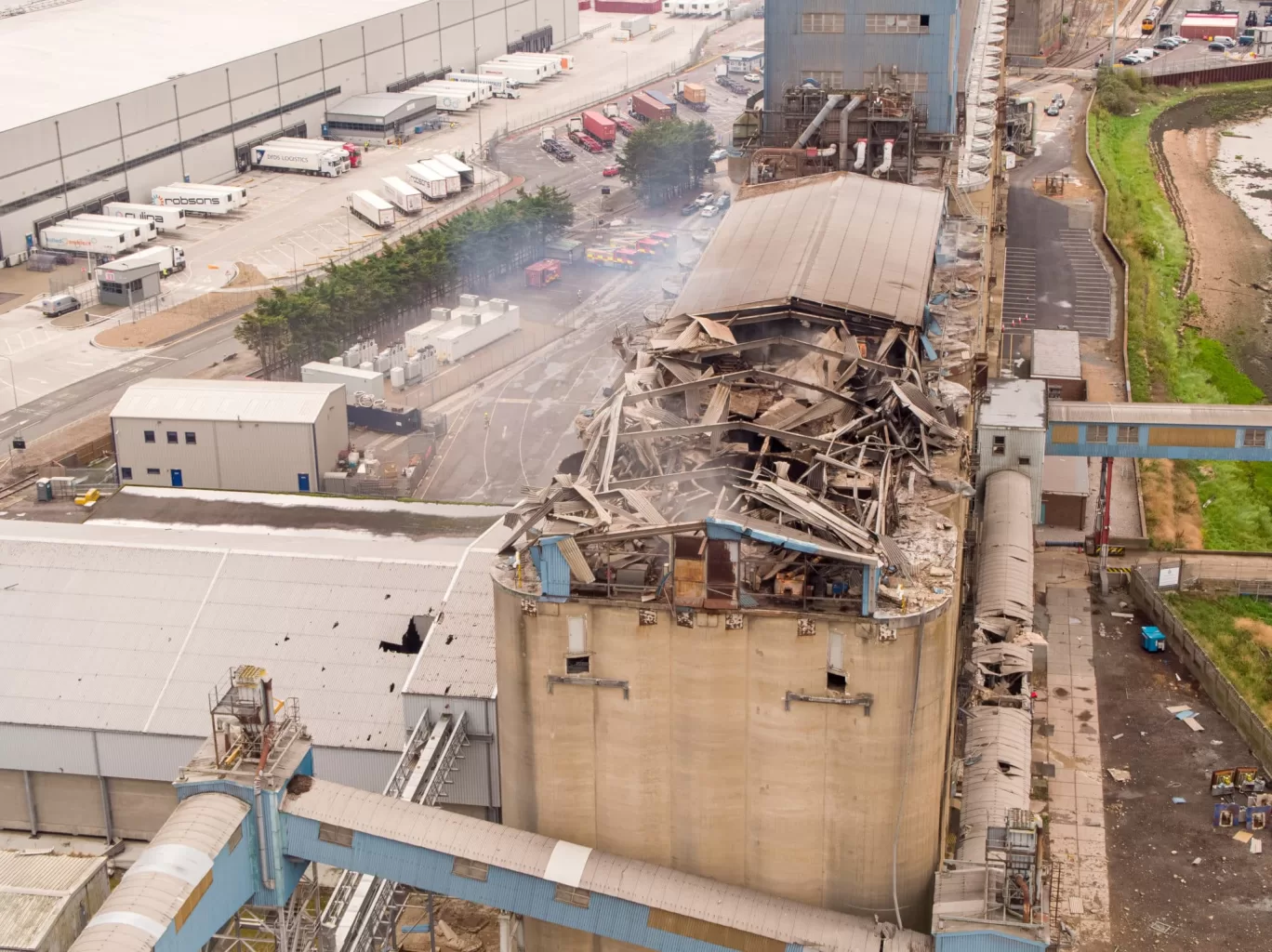
The Use Of Liquid Nitrogen following a Grain Store Explosion at the Port of Tilbury London
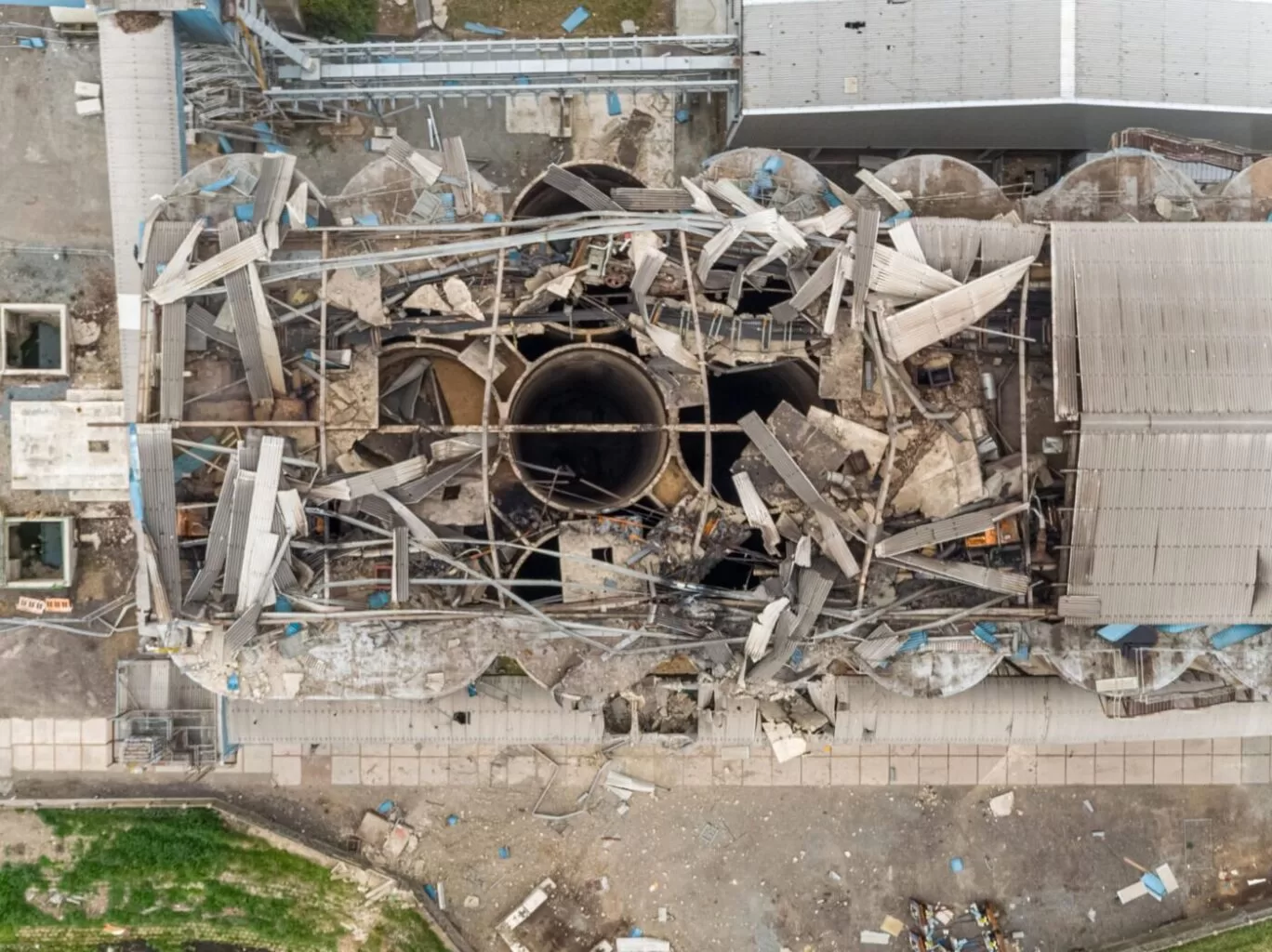
Following a Grain Store dust explosion at the Port Of Tilbury London in July 2020, the subsequent fire was managed by the pumping of Liquid Nitrogen into the grain silos to lower temperatures.
Drone Media Imaging provided the Port of Tilbury London and supporting emergency services with hourly, daily, and weekly calibrated thermal imagin reports on the temperature measurements that indicated the grain store fire’s development. Comprehensive reports, thermal imaging data, RGB photography, and video were utilised to efficiently convey the temperature facts necessary to handle the crisis until the building was successfully demolished in August 2021.
Aerial Thermography Services and Category 2 Thermographic Reporting
We are certified and approved drone pilots and work throughout the UK to provide both aerial and ground based photography, video/filming and thermography services. Fully insured and certified by the CAA with enhanced permissions for day and night time flights
Recent, Related and Associated Posts
Standoff Distance in Aerial Inspection: Optical Reach Versus Getting Close
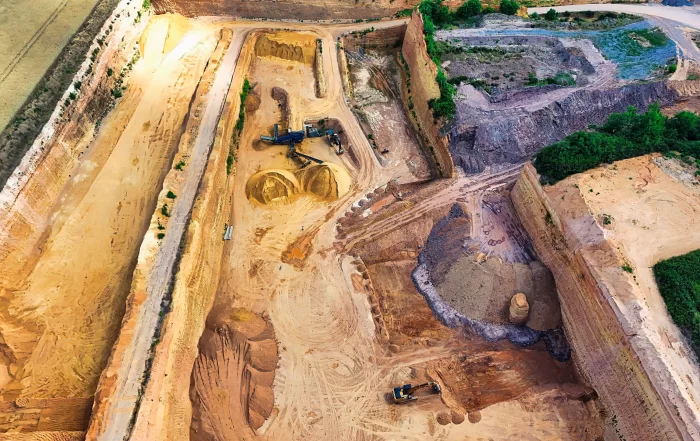
The instinct on an inspection is to move in close. On most sites that is the least useful thing the pilot can do, because proximity puts the platform among the hazards and changes the surface being measured. Standoff inverts the trade, letting the optics close the gap instead. This piece sets out what standoff buys on a working site, what actually governs the working distance, and where the limits sit, including why a thermal measurement is never a zoomed view.
Why Wet Roof Insulation Shows Up on a Thermal Image
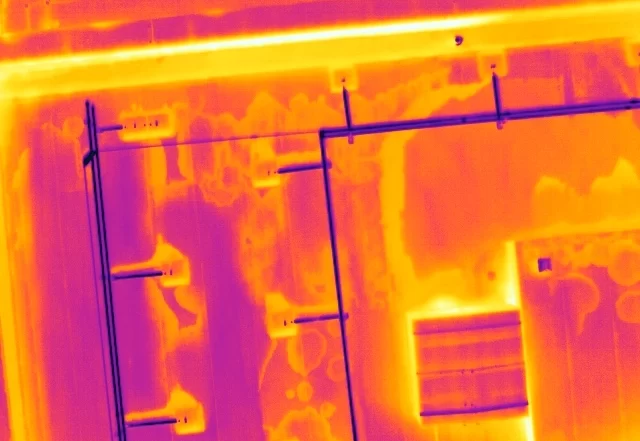
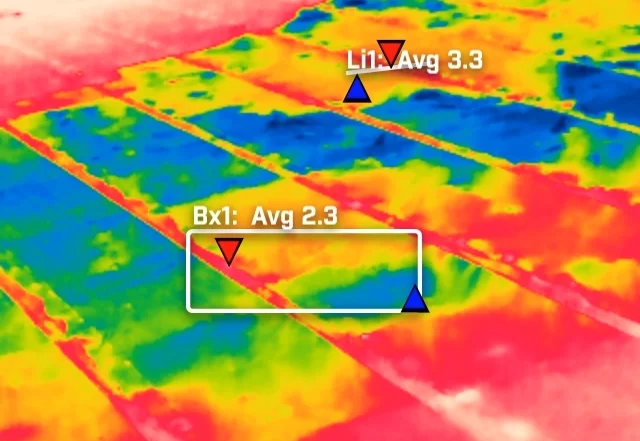
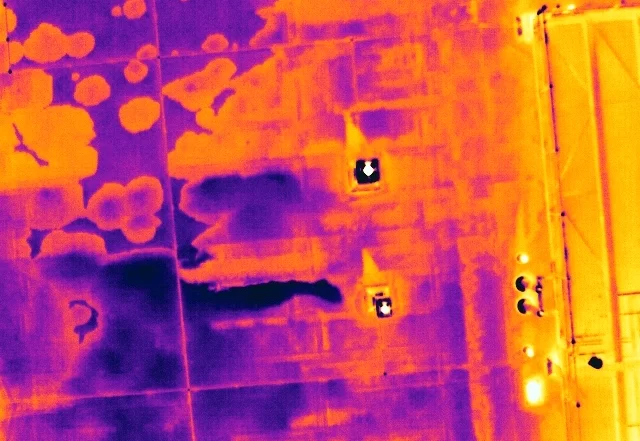
A flat roof is a layered build-up, and only the membrane is designed to keep water out. Once water gets past it, the insulation holds it, and wet insulation gives up its heat far more slowly than dry insulation does. That difference in cooling rate is what a thermal survey records. Because water tracks sideways once it is inside the build-up, the leak, the wet area and the stain below are rarely in the same place.
related posts

How close can a drone legally fly to people and buildings in the UK? This piece sets out the ground rules in plain terms: the Open category subcategories A1, A2 and A3, the 120 m height limit, the separation kept from uninvolved people and from residential, commercial, industrial and recreational areas, what "uninvolved" means for your own staff and visitors, and why a Specific category Operational Authorisation is what lets a commercial operator work closer on a busy site.
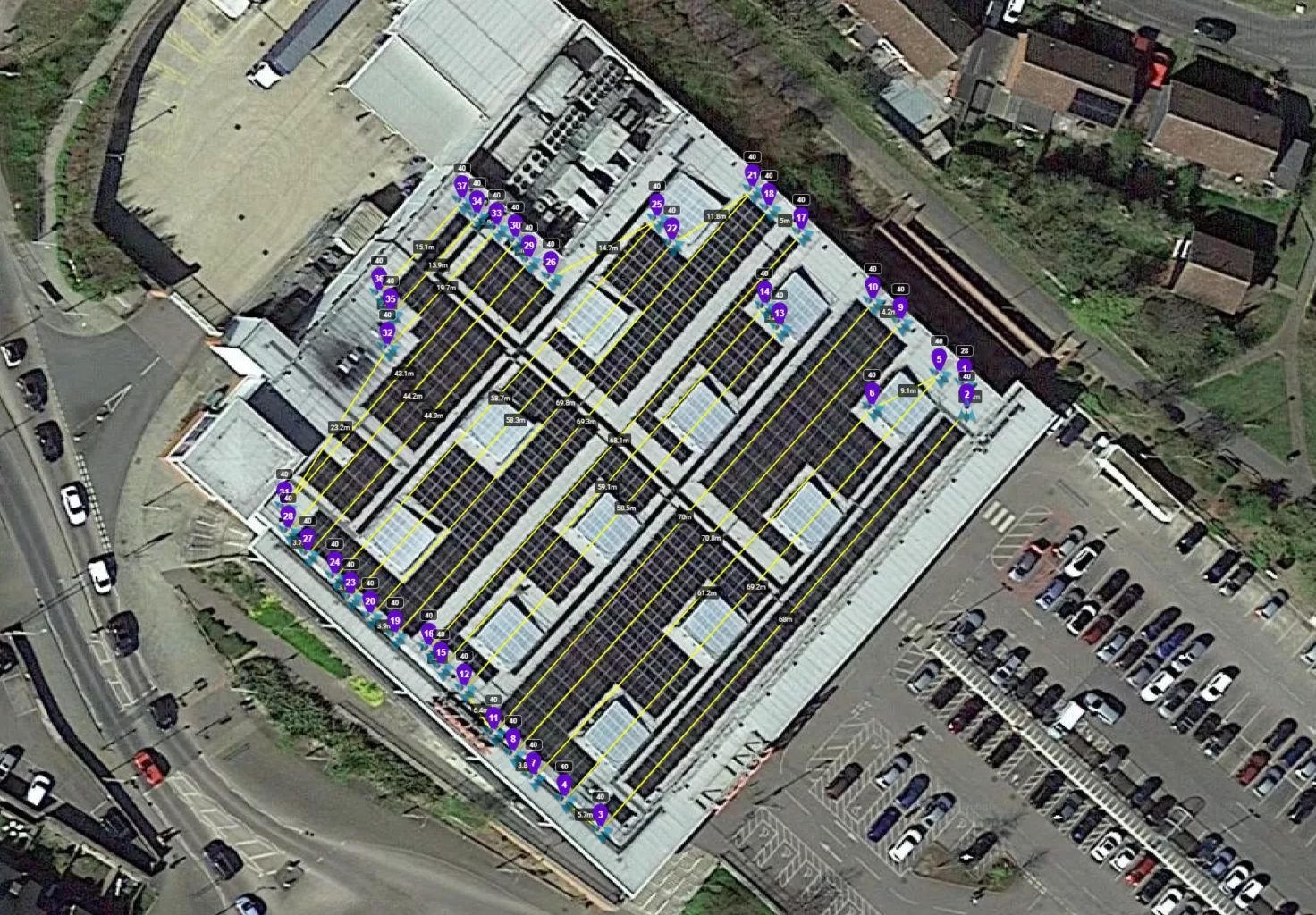
In an unusually sunny September, we completed 20 solar panel inspections across the UK, including 17 at supermarket sites. Typically, inspections occur in summer due to optimal solar irradiation. This year’s record-breaking sunshine allowed us to extend operations safely into autumn.

Insurance companies can greatly benefit from embracing drone technology, particularly in the areas of claims assessment, risk prevention, and post-disaster response. Drones can quickly and accurately assess damage, provide risk mitigation recommendations, and aid in resource allocation during disasters.