Solar PV Thermal Inspection, Multi-Roof Commercial System, Kent
Identifying Bypass Diode Anomalies and Lichen Hot Spots in a Commercial Roof Array
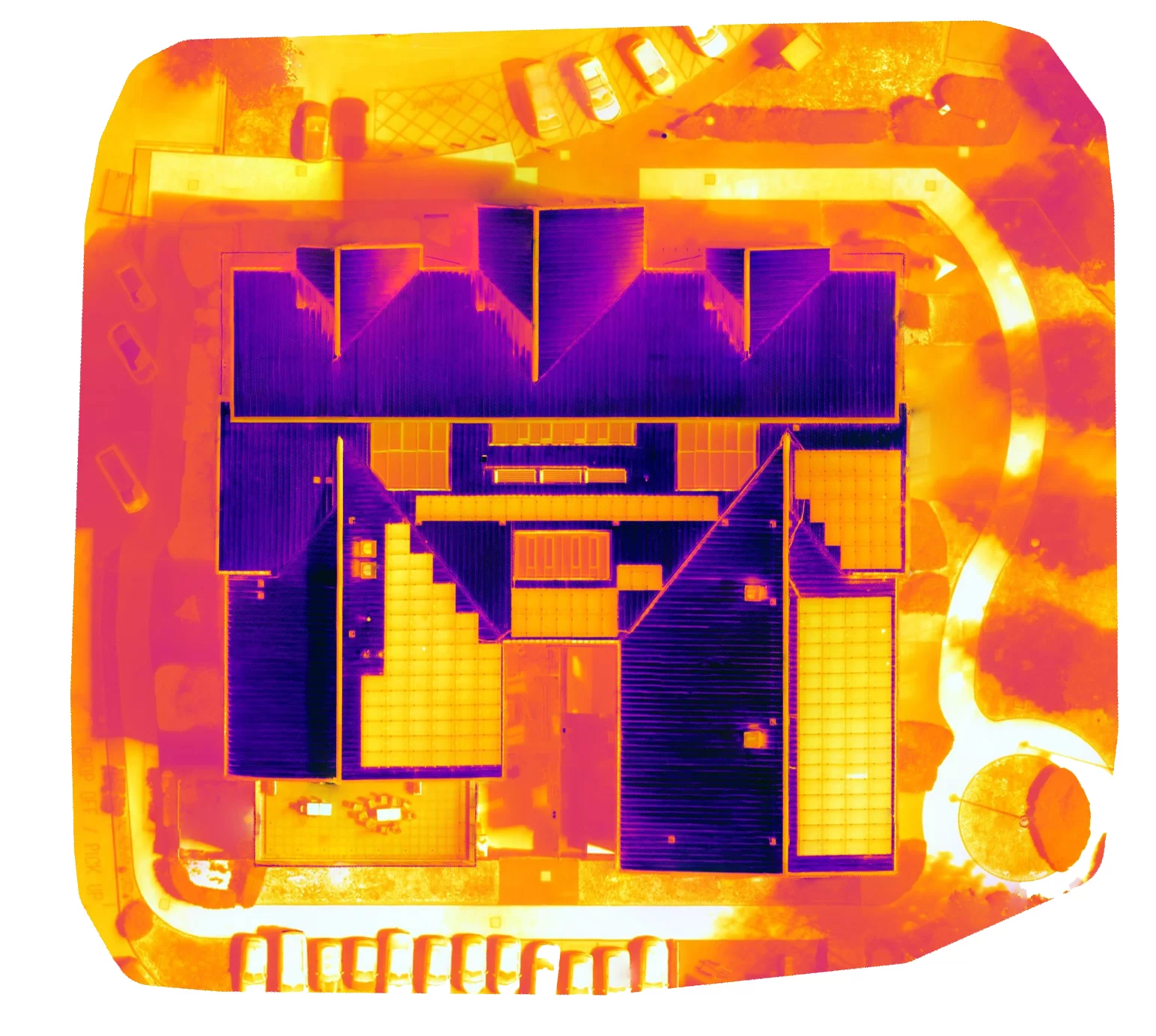
A commercial solar PV thermographic inspection was carried out by Drone Media Imaging at a 60 kWp roof-mounted installation in Kent, covering 256 modules across three connected roof sections. The survey was conducted under IEC 62446-3:2017 as a full-service inspection, with thermographic data captured by drone at high radiometric resolution and analysed by our Level 3 Master Thermographer. Three thermal anomalies were identified and classified across the array. Two findings at Medium severity were recorded: one showing a multi-cell thermal pattern consistent with bypass diode activation across multiple substring protection zones, and one showing distributed cell hot spots consistent with lichen colonisation on the module surfaces. Both carry a Yield and Degradation Trajectory consequence, indicating active production loss and a progressive degradation mechanism requiring investigation. A third finding at Low severity presented as a string-level thermal elevation with a localised maximum, consistent with mild series resistance increase, carrying a Yield consequence. No Safety-consequence findings were identified. The inspection was certified at Level 3 by Drone Media Imaging, with a full classified report and annotated thermograms provided to the asset owner.
Project Overview
Subject
solar PV thermographic inspection, commercial rooftop solar survey, Kent solar inspection, commercial property owner, IEC 62446-3
Skills Used
IEC 62446-3 Solar Thermographic Inspection, Aerial Thermographic Survey, Level 3 Report Writing
Portfolio Tags
Solar PV Inspection, Commercial Rooftop, Kent, IEC 62446-3, Thermal Anomaly Classification, Drone Media Imaging, Commercial Property, What Causes Solar Panel Hot Spots
Commercial Solar PV Thermal Survey Kent, IEC 62446-3 Solar Panel Inspection Commercial, Solar Lichen Hot Spot Detection Roof ArrayCommercial Solar PV Thermal Survey Kent, IEC 62446-3 Solar Panel Inspection Commercial, Solar Lichen Hot Spot Detection Roof Array
Solar PV Thermal Inspection, Multi-Roof Commercial System, Kent
~ A multi-roof commercial solar array in Kent, surveyed to IEC 62446-3, with bypass diode activity and lichen hot spots among the findings. ~
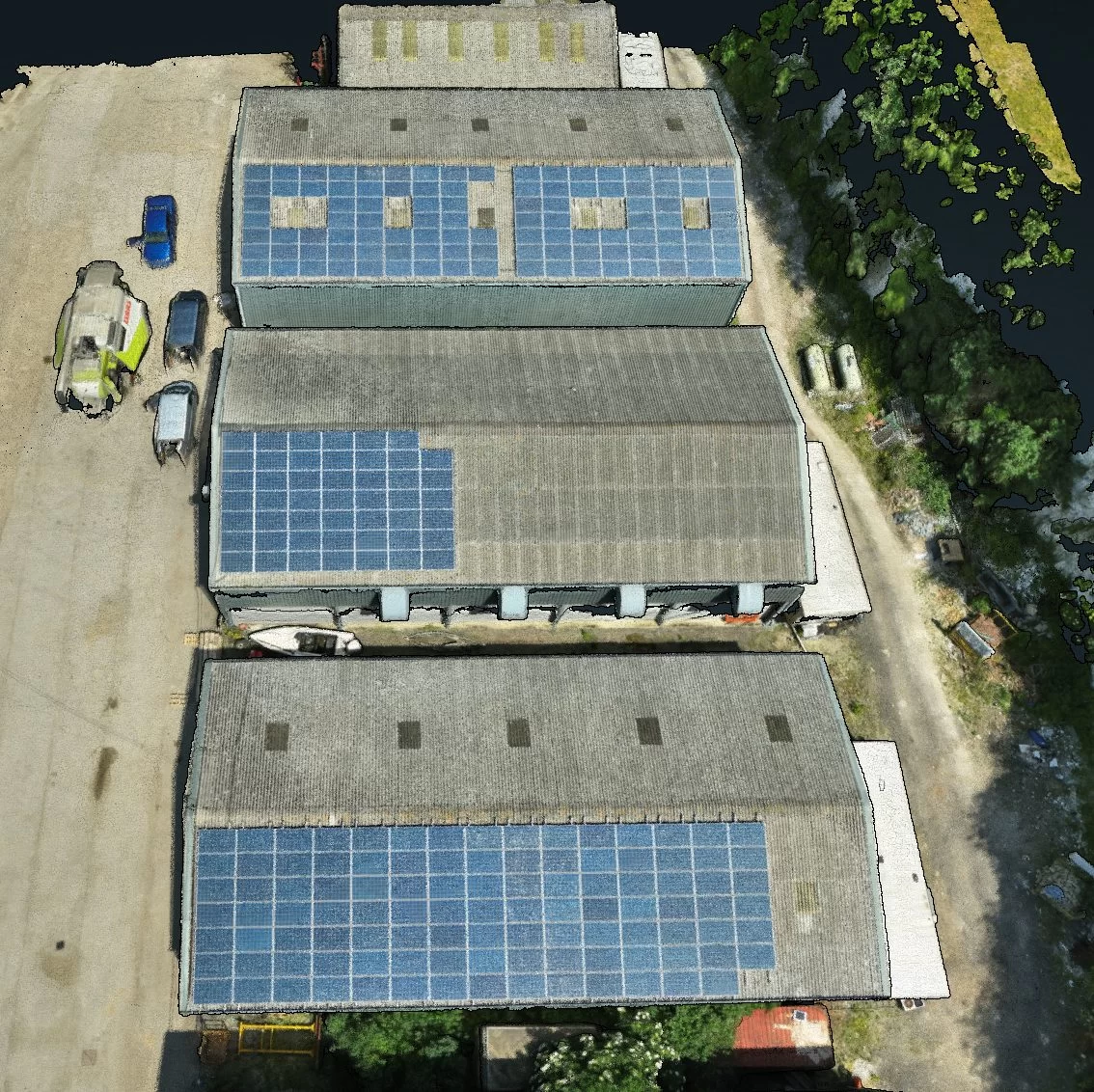
Level 3 thermal analysis of a multi-roof commercial solar installation in Kent
Identifying Bypass Diode Anomalies and Lichen Hot Spots in a Commercial Roof Array
The client, a commercial renewable energy asset manager operating in the South East of England, commissioned Drone Media Imaging to carry out a thermographic survey of a roof-mounted photovoltaic installation comprising 60 kWp across three adjacent roof sections. The system had been in operation for a number of years without a formal thermal inspection baseline, and the client required a structured assessment to support ongoing maintenance planning and asset management decisions. Drone Media Imaging was engaged to deliver a complete survey, analysis, and certified report under IEC 62446-3:2017.
Thermographic inspection of solar PV arrays provides a non-intrusive method of identifying cell-level faults, connection anomalies, and biological effects that inverter monitoring data alone cannot detect. When a photovoltaic cell develops a defect, it can begin to convert absorbed irradiance to heat rather than electrical energy, creating a characteristic thermal signature visible to a calibrated thermal imaging camera under the right conditions. Bypass diodes protect healthy cells from the heat generated by defective neighbours, but can themselves become thermally active when they carry sustained current around affected substring zones. Biological growth such as lichen on module surfaces introduces shading and localised absorption effects that produce a similar hot-spot response, and both mechanisms tend to progress over time without intervention.
For this inspection, Drone Media Imaging applied the full IEC 62446-3:2017 simplified thermographic survey methodology, with all data collected by our own crew using a professional-grade radiometric drone platform and all analysis and reporting carried out by our Level 3 Master Thermographer. The survey covered all three roof sections under a single merged zone, with 256 modules confirmed from the aerial RGB imagery and used as the authoritative count for the inspection record.
Governing Standards
- IEC 62446-3:2017 governs thermographic inspection of grid-connected photovoltaic systems, setting the operating and environmental conditions the survey must be flown under and the framework by which thermal anomalies are classified.
- ISO 18436-7 is the alignment framework for thermographic condition monitoring competence, under which our Level 3 Master Thermographer is trained.
How was the solar PV thermal inspection carried out?
IEC 62446-3 Thermal Survey of a Three-Roof 60 kWp Commercial Installation
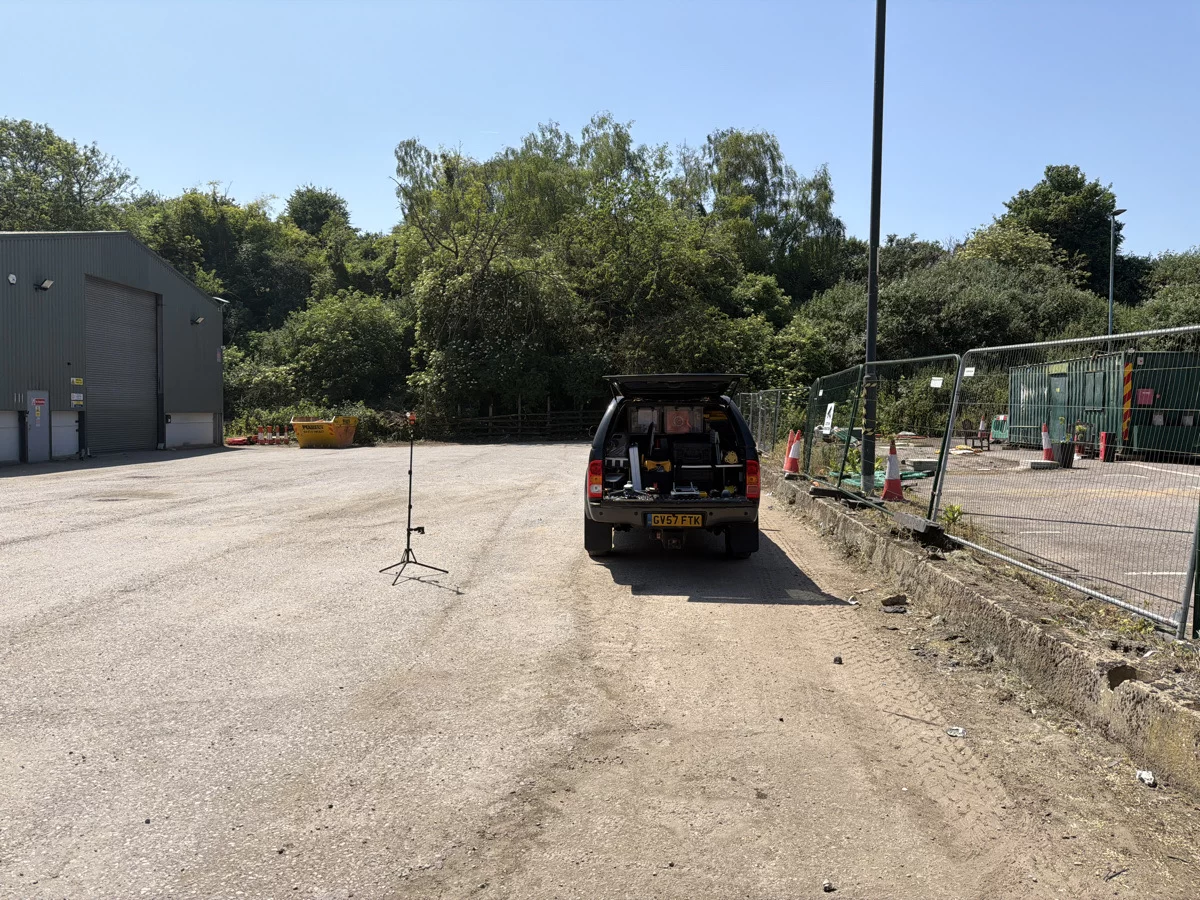
The survey was conducted on a clear-sky day with solar irradiance between 976 and 990 W/m² throughout the 32-minute session and wind speeds not exceeding 2.8 m/s, satisfying all IEC 62446-3:2017 environmental compliance requirements. The survey midpoint fell within one minute of solar noon for the site, placing the solar elevation at approximately 60° at the time of inspection, a particularly favourable geometric position for minimising reflective interference and maximising thermal contrast between anomalous and healthy modules. Environmental conditions were logged continuously using a calibrated weather monitoring instrument throughout the session.
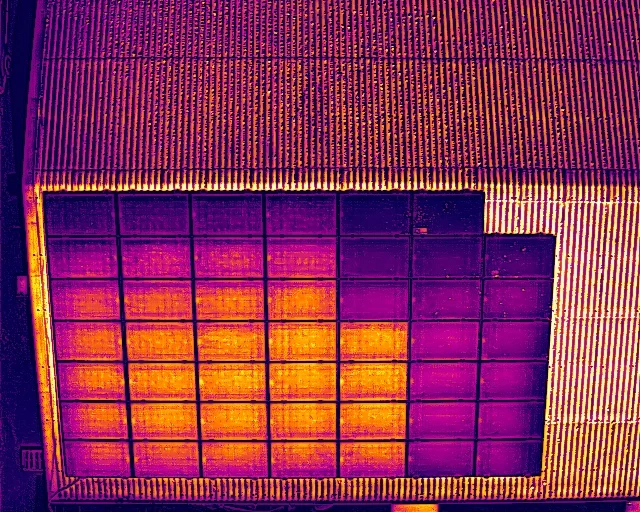
Detail thermograms were captured at a fixed radiometric distance above the module surfaces to achieve a ground sampling distance well within the IEC 62446-3 resolution requirement for cell-level anomaly detection. Radiometric parameters were applied consistently across all thermograms, with emissivity set at the standard value for monocrystalline silicon and the reflected apparent temperature determined by direct sky thermogram measurement. The EL1 baseline method was applied to each thermogram individually, establishing the expected operating temperature of a healthy reference module and classifying all anomalies relative to that per-thermogram baseline.
No commissioning documentation or prior inspection record was available, so peer-group comparison within the surveyed system served as the classification baseline throughout, in full compliance with IEC 62446-3:2017. The following scope inclusions and exclusions applied to this inspection:
- Included: all 256 modules across the three roof sections
- Included: detail and overview thermograms at calibrated radiometric distances
- Included: Level 3 anomaly classification, EL1 baseline, and Drone Media Imaging Consequence Classification
- Excluded: electrical string testing (not commissioned for this inspection)
- Excluded: intrusive investigation, remedial works, or structural assessment
What Did the Solar Thermal Survey Find?
Three thermographic anomalies were identified and classified across the surveyed array. Two findings reached Medium severity and one reached Low severity. No Safety-consequence findings were identified at any location.
The first Medium-severity finding was located on the northernmost roof section, presenting as a multi-cell thermal pattern distributed across four adjacent modules. The anomaly is consistent with bypass diode activation across multiple sub-module substring protection zones, indicative of discrete cell-level degradation within the affected substrings. When cells within a bypass protection zone degrade, the associated diode conducts current around them to protect the healthy portion of the module, generating heat at both the defective cell sites and the diode junction. This mechanism carries a consequence classification of Yield and Degradation Trajectory: the affected modules are actively under-producing relative to healthy peers, and the underlying cell degradation is a progressive condition that can be expected to worsen without investigation.
The second Medium-severity finding was located on the southernmost roof section, where visible-light imagery from the aerial survey identified extensive biological growth consistent with lichen colonisation across a three-column group of modules. The thermal data showed distributed cell hot spots of varying intensity across the same column group, with temperature differentials firmly in the Medium severity range. Lichen colonisation reduces optical transmittance at the affected cell surfaces, directing absorbed irradiance into heat rather than electrical conversion; sustained hot-spot conditions at these levels are consistent with progressive EVA encapsulant deterioration and cell micro-cracking beneath the contaminated surface. This finding also carries a Yield and Degradation Trajectory consequence. The extent of biological growth observed in the RGB data suggests the condition may be more widespread across the roof section than the thermal anomaly detections alone indicate.
A Low-severity string-level anomaly was recorded on the central roof section, presenting as a localised thermal elevation within an otherwise mild string background, consistent with mild series resistance increase or a thermally active connection point. This finding carries a Yield consequence and is appropriate for monitoring at the next inspection interval.
Inspection Outcome and Next Steps
The inspection was completed under IEC 62446-3:2017 and certified at Level 3 by Drone Media Imaging. A full classified report was delivered to the asset owner, including annotated thermograms, an environmental conditions record, and a complete Thermal Findings Table with Consequence Classification for each identified anomaly.
The two Medium-severity findings represent the primary investigation priority. Electrical investigation is warranted to characterise the cell defects underlying the bypass diode activation pattern on the northern roof section, and the biological contamination on the southern section should be assessed for full extent and addressed through cleaning to arrest the hot-spot progression. The Low-severity string finding is appropriate for monitoring at the next scheduled thermographic inspection. Recommended next actions include:
- Commission a suitably qualified electrical contractor to investigate the bypass diode anomaly on the northern roof section
- Assess the full extent of lichen colonisation across the southern roof section and arrange appropriate biological cleaning
- Monitor the Low-severity string finding at the next scheduled thermographic inspection
- Consider establishing this inspection as a thermal baseline for trend analysis at future intervals
Routine thermographic inspection to IEC 62446-3:2017 gives commercial solar asset owners a systematic method of identifying faults before they progress to higher-severity conditions. For this client, the survey identified two active degradation mechanisms at a stage where intervention remains practical, providing a clear evidence base for prioritised maintenance.