Commercial Solar PV And Electrical String Inspection On A Kent Rooftop Array
A commercial solar PV inspection in Kent combined an aerial thermographic survey with full electrical string testing to give the owner a complete, defensible picture of a rooftop array’s health on a single visit. Drone Media Imaging surveyed the 50 kWp installation under clear, high-irradiance conditions close to solar noon, capturing radiometric thermal imagery of every module and then testing all eight DC strings across the two inverters to IEC 62446-1. The thermographic survey, conducted to IEC 62446-3:2017, identified a band of around forty modules running uniformly warm, alongside localised cell hotspots linked to surface soiling and a single early-stage cell anomaly.
Cross-checked against the electrical results, which showed every string healthy and well matched, our Level 3 Master Thermographer read the warm band as an operating-state signature rather than module degradation, a distinction that changes what the owner needs to do next. The result was a certified report that separated genuine priorities from reassuring results, classified each finding by severity and real-world consequence, and pointed clearly to the areas warranting further investigation.
Project Overview
Subject
solar PV inspection, commercial rooftop solar, IEC 62446-3 thermographic survey, PV string testing, solar inspection Kent
Skills Used
IEC 62446-3 Solar Thermographic Inspection, IEC 62446-1 String Testing, Delta-T Assessment
Portfolio Tags
Solar PV Inspection, Commercial Solar, Thermographic Survey, String Testing, IEC 62446-3, Kent, Drone Media Imaging, How To Inspect Solar Panels
Commercial Solar PV Inspection Kent, Solar Panel Thermal Imaging And String Testing, How To Inspect A Commercial Solar ArrayCommercial Solar PV Inspection Kent, Solar Panel Thermal Imaging And String Testing, How To Inspect A Commercial Solar Array
Commercial Solar PV Thermal Inspection and Electrical String Testing in Kent, Drone Media Imaging Case Study
~ Thermal imaging asks the question, string testing answers it. ~
Combining a thermographic survey with electrical string testing, interpreted by our Level 3 Master Thermographer.
Commercial Solar PV and Electrical String Inspection on a Kent Rooftop Array
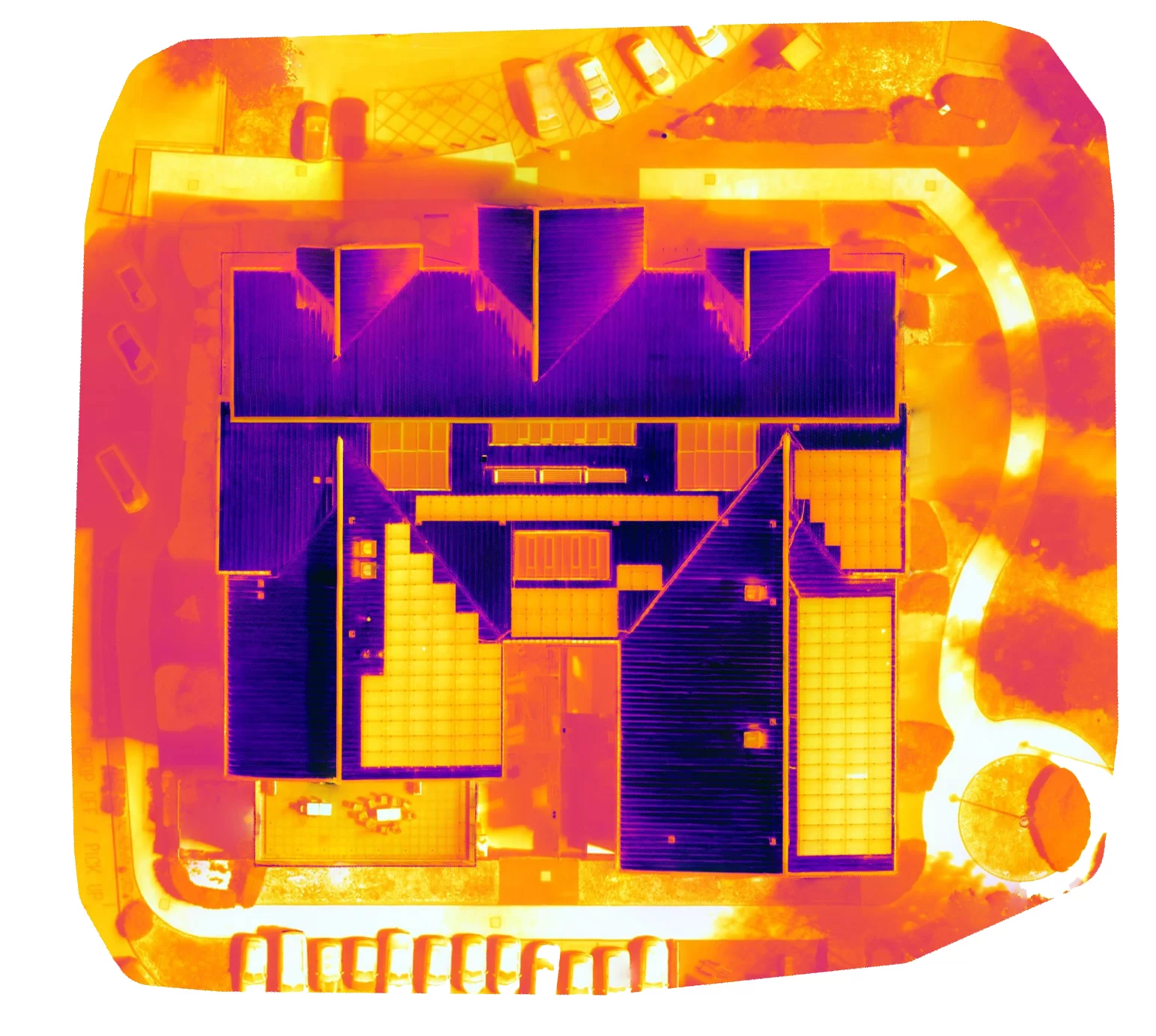
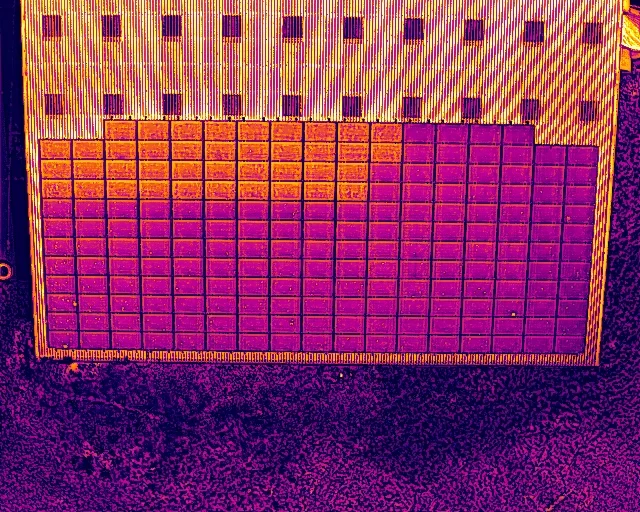
When a thermal survey shows dozens of solar panels glowing warm, it is tempting to assume the worst. On a commercial rooftop in Kent, that is exactly the pattern that appeared, a band of around forty modules running noticeably warmer than the rest of the array. The real question was not whether the pattern existed, but what it actually meant for the asset, and that is a question a thermal image alone cannot answer.
Drone Media Imaging was commissioned to inspect the installation using two complementary disciplines on a single visit, an aerial thermographic survey of every module and full electrical testing of every string. What follows is how the work was carried out, what each dataset revealed, and why reading the two together turned a worrying-looking image into a clear and confident result.
Solar PV Inspection in Kent, Combined Thermal and Electrical Survey
Why This Commercial Array Needed a Combined Inspection
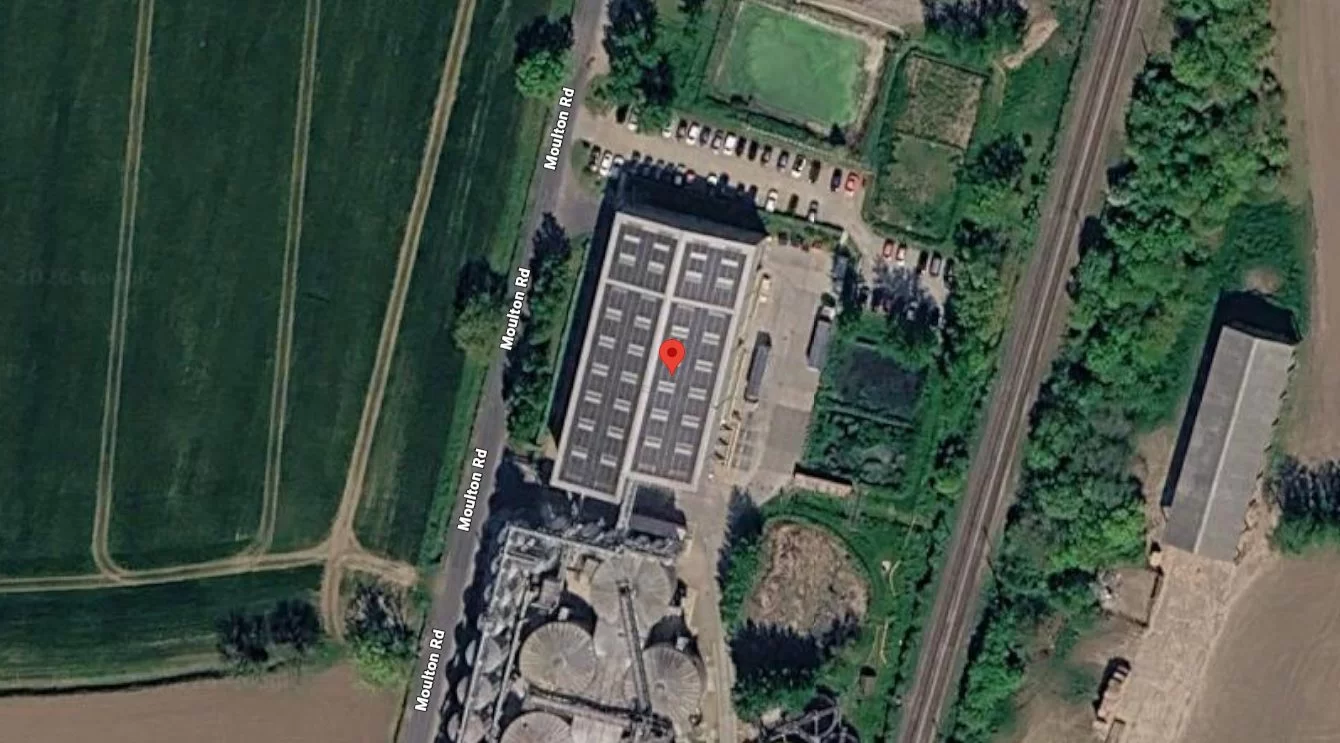
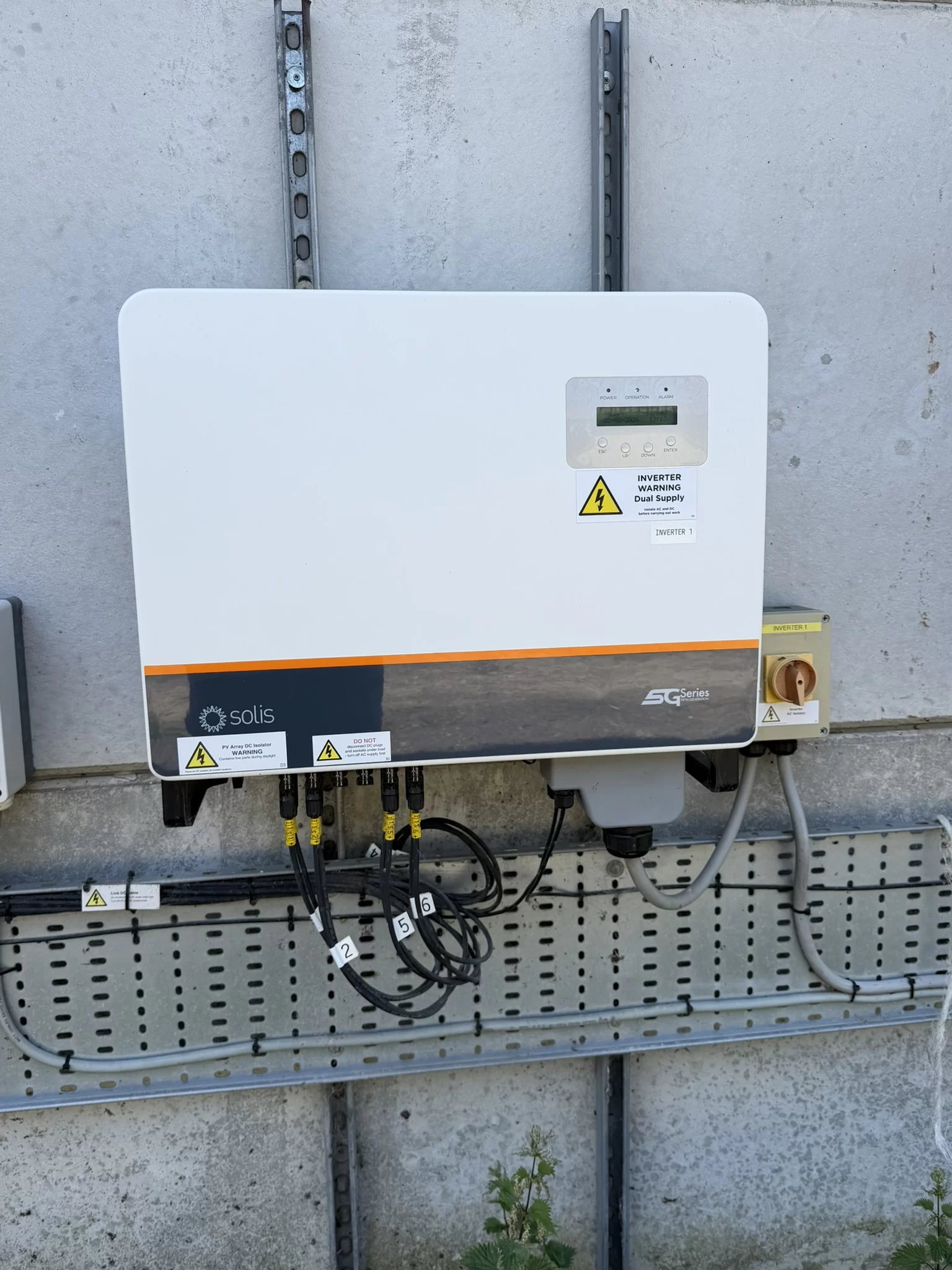
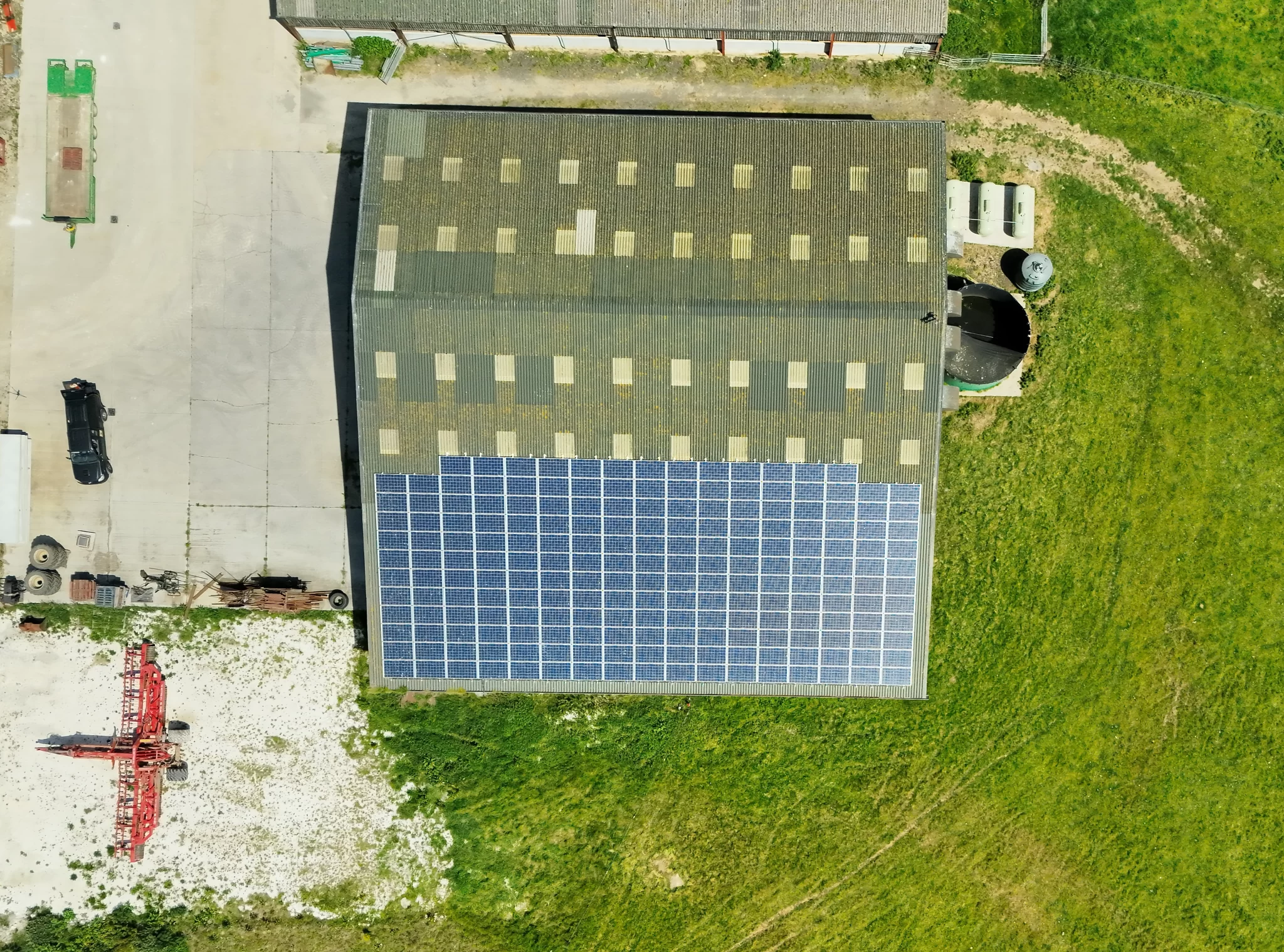
Drone Media Imaging was commissioned by a renewable energy client to carry out a combined inspection of a commercial rooftop solar PV array in Kent. The installation is a 50 kWp system of around 200 modules, arranged as eight strings across two grid-connected inverters on a single roof. For an asset of this kind, periodic inspection is the practical way to confirm that the modules are performing as they should and that the electrical system remains safe and within specification. The owner wanted a clear, defensible picture of the array’s condition rather than a simple pass or fail.
The inspection paired two complementary disciplines. An aerial thermographic survey looks at how every module behaves thermally under load, which is highly effective at revealing anomalies that affect temperature. Electrical string testing measures the actual electrical condition of each string against recognised thresholds. On their own, each tells only part of the story. Read together, they allow a finding in one dataset to be tested against the other, which is where the real diagnostic value lies.
What made this project instructive was a pattern in the thermal data. A contiguous band of around forty modules read uniformly warmer than the surrounding array, the sort of result that can look alarming at first glance and prompt assumptions about widespread module damage. Rather than take the thermal image at face value, the combined approach allowed that pattern to be interrogated against hard electrical evidence before any conclusion was drawn. This case study sets out how the work was done, what the two datasets showed, and why interpreting them together changed the practical answer for the owner.
How Was the Solar PV Inspection Carried Out?
The solar PV inspection followed Drone Media Imaging’s standard process for solar work, survey, analysis and reporting. The thermographic survey was carried out to IEC 62446-3:2017, the international standard for the thermographic inspection of photovoltaic modules and arrays, and the electrical string testing to IEC 62446-1:2016+A1:2018, which governs the testing of grid-connected PV systems. Both were completed on the same day, under the clear-sky, high-irradiance conditions the thermal standard requires, with the survey timed for the period around solar noon when modules are working hardest and anomalies show most clearly.
Thermal data was captured by a radiometric thermal imaging drone flown at a fixed working distance above the array, fine enough to resolve detail at individual cell level. Each thermogram was assessed against an in-image baseline taken from healthy, cleanly irradiated modules, so that every temperature difference was measured against the array’s own normal behaviour on the day rather than an arbitrary figure. This delta-T method, expressed as degrees above the local baseline, is the foundation of a defensible thermographic classification, because it accounts for irradiance, ambient temperature and operating conditions at the moment of capture.
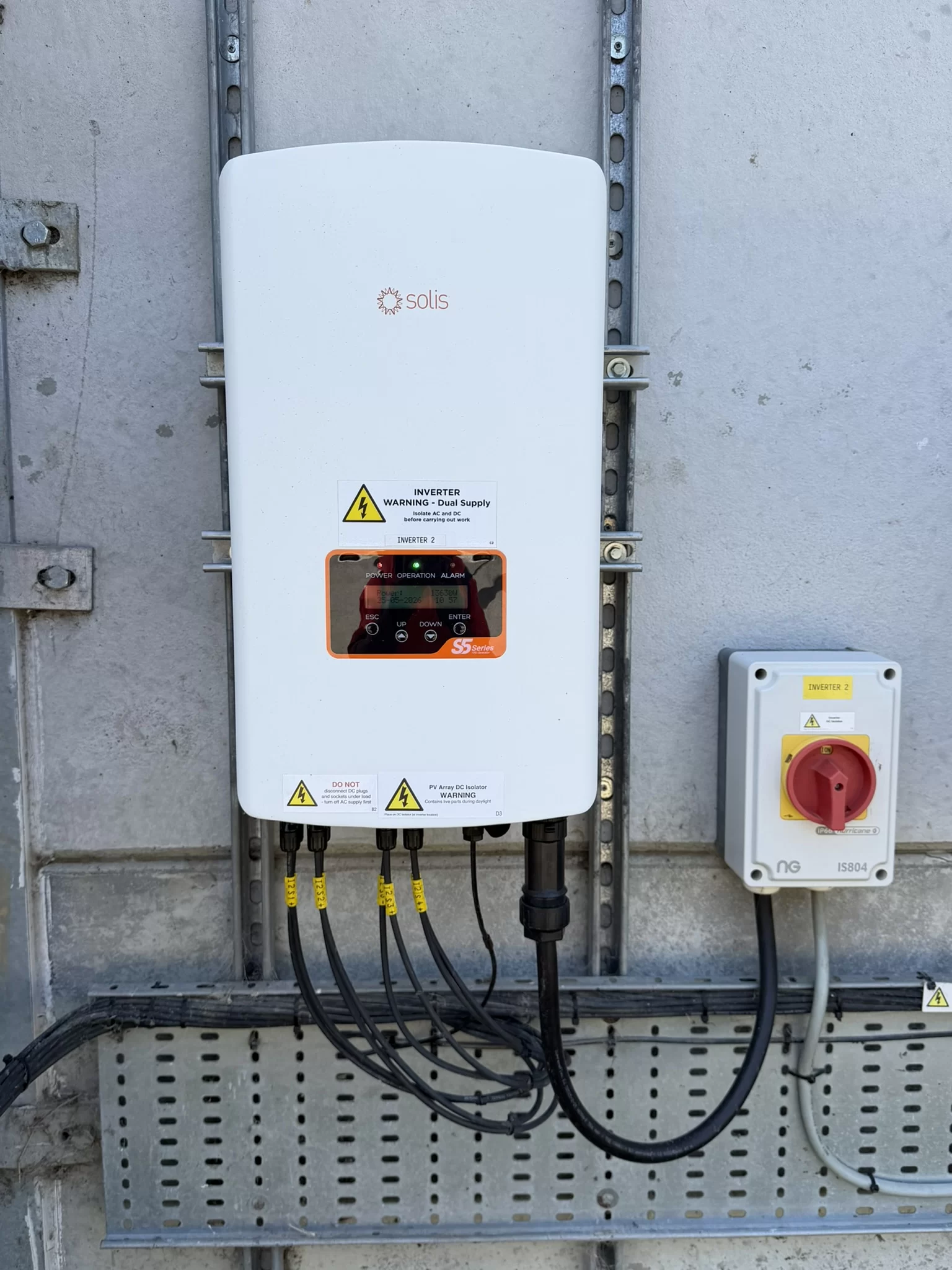
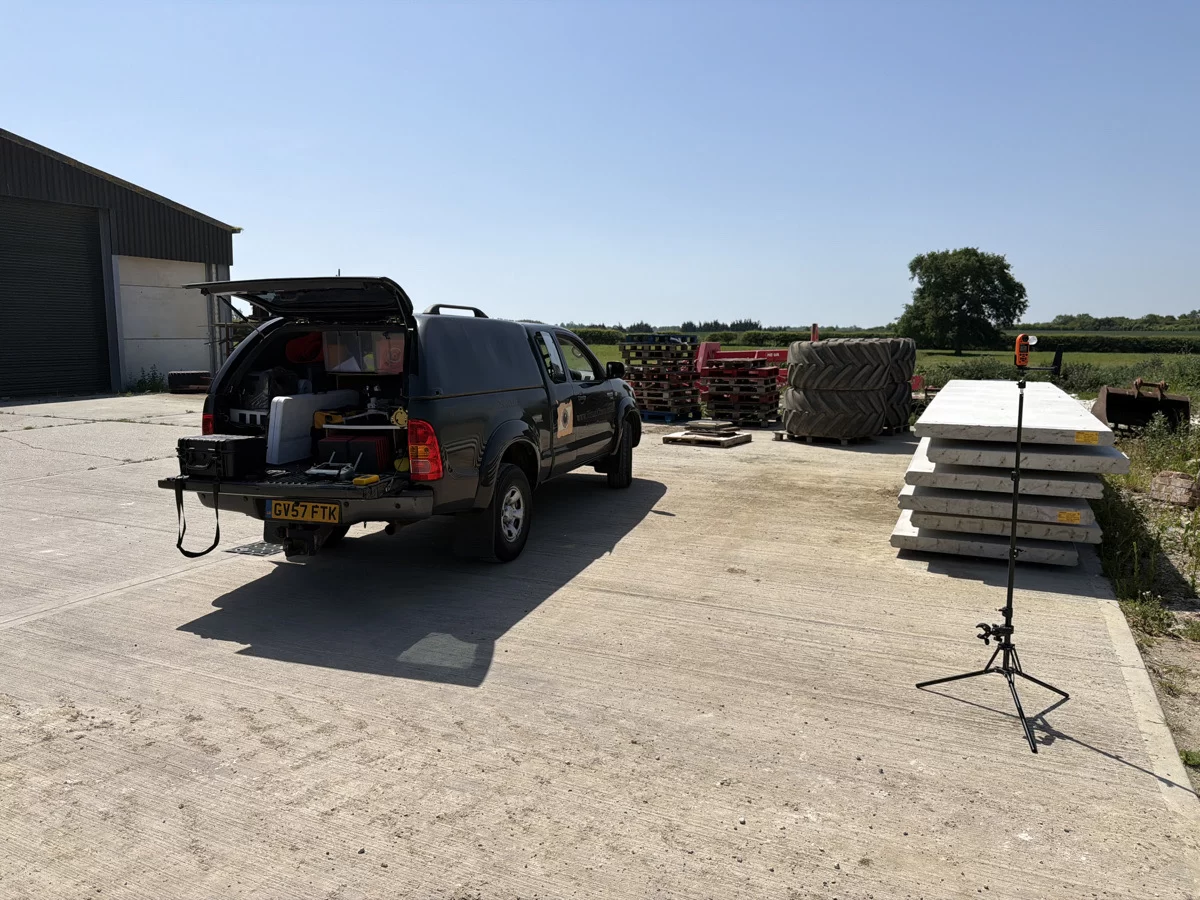
On the electrical side, every string was tested with a calibrated PV string tester, recording protective earth continuity, insulation resistance, open-circuit voltage, short-circuit current and an IV curve for each string. Environmental conditions were logged throughout with a calibrated weather meter to confirm the survey met the standard.
Scope of the inspection:
- In scope: an aerial thermographic survey of all modules to IEC 62446-3:2017
- In scope: electrical string testing of every string to IEC 62446-1, with severity and consequence classification of each finding
- Out of scope: the AC side of the installation and the inverter internals
- Out of scope: any work constituting a full periodic electrical installation condition report
Governing Standards
Standards and Governance
- IEC 62446-3:2017 governs the thermographic inspection of photovoltaic modules and arrays, defining survey conditions, anomaly categories and reporting requirements for solar PV thermal surveys.
- IEC 62446-1:2016+A1:2018 sets the requirements for electrical testing, documentation and commissioning of grid-connected PV systems, covering string-level electrical verification.
- ISO 18436-7 defines the training and certification requirements for thermographic condition monitoring personnel.
- ISO 9712 sets the general framework for the qualification and certification of non-destructive testing personnel.
What Did the Inspection Find?
Three thermal conditions were recorded, each classified for severity under IEC 62446-3:2017 and given a Drone Media Imaging Consequence Classification that translates the technical result into what it means for the asset. The most extensive was the band of around forty modules running uniformly warm. Measured against the baseline, the elevation was modest and fell into the Low severity band, and its warmest point sat comfortably below any temperature of concern. Because the warmth was even across a whole run of modules, with none of the sharp, isolated hotspots that point to a damaged cell, it was classified with a Yield consequence, indicative of a possible reduction in output rather than a safety issue.
A second condition appeared as small, localised hotspots on cells across several modules, coinciding with surface debris consistent with bird fouling. Where droppings or debris shade part of a cell, that area can no longer generate and instead dissipates energy as heat, producing the warm spots seen here. This was classified as Low severity with a Degradation Trajectory consequence, because the immediate output effect is minor, but sustained shading of this kind can, over time, lead to lasting cell damage if left unaddressed. A third finding was a single cell showing the classic symmetrical signature of an early, localised cell condition, classified at Medium severity and also as Degradation Trajectory, as that mechanism tends to progress.
On the electrical side the results were reassuring. Every one of the eight strings passed its IEC 62446-1 tests, with insulation resistance, earth continuity, voltage and current all within limits and closely matched to one another, and no safety conditions triggered.
What Did the Inspection Mean for the Client?
This is where reading the two datasets together changed the answer. A uniform warm band set against eight electrically healthy strings is the signature of how the array was operating at the instant of capture, not of failing modules. When a group of modules is momentarily not exporting its energy, perhaps because of how the inverter was tracking at that moment, it dissipates that energy as heat and runs warm, even though the modules themselves are sound. The electrical tests confirmed the strings were in good order, so the warm band was correctly read as an operating-state question to investigate, not a set of degraded panels to replace.
The owner received a certified report, signed off by our Level 3 Master Thermographer, that carried the work through survey, analysis and reporting and set out each finding with its severity, its consequence and its priority. Crucially, it separated the one item worth investigating from the results that were simply healthy, so attention and budget could go where they genuinely mattered. In line with good practice, the report does not prescribe specific repairs. Instead it identifies the areas warranting further investigation by a suitably qualified electrical contractor.
Next steps for the owner:
- Investigate the operating cause behind the warm band as the clear first priority
- Keep the soiled modules and the single cell anomaly under review at the next scheduled inspection
- Use the certified report as the baseline thermal record for future comparison
More broadly, this project shows why combined inspection is becoming the expectation for commercial solar assets. As portfolios age and owners look to protect long-term yield, the ability to cross-check a thermal pattern against hard electrical evidence is what separates a confident, actionable result from a worrying image without context. It is the difference between knowing what to do next and guessing.
What Made This Project Notable?
The standout feature of this inspection was not the size of the array or the number of findings, it was the interpretation. A thermal survey on its own might have flagged forty warm modules and left the owner fearing a major fault. The electrical string testing, read alongside the thermal data by our Level 3 Master Thermographer, reframed that pattern entirely. This is the practical value of a combined inspection and of the Consequence Classification approach, where technical findings are translated into clear commercial meaning, so that an alarming-looking image becomes a precise, defensible and genuinely useful answer.
Thinking About a Commercial Solar PV Inspection?
Drone Media Imaging delivers combined solar PV thermographic and electrical string-testing inspections to IEC 62446-3:2017 and IEC 62446-1, with all analysis and reporting carried out by our Level 3 Master Thermographer. We work across Sussex, Hampshire, Kent and Surrey, and travel throughout the UK, Ireland and Europe. Get in touch to discuss your array and arrange an inspection.