Solar PV Thermographic Inspection and String Testing at a Hampshire Golf Club
Combined Thermal and Electrical Inspection of Two Rooftop Solar Arrays
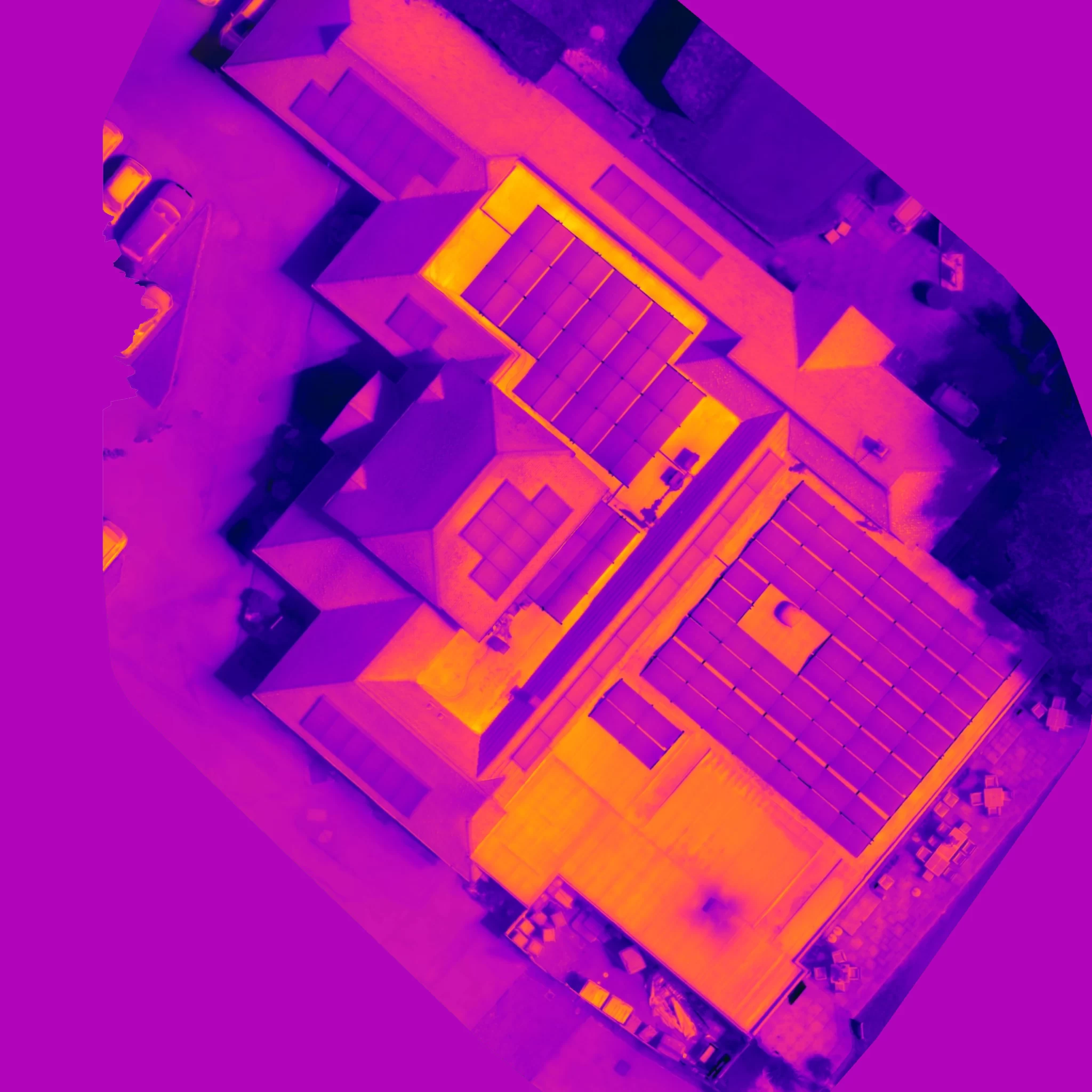
This solar PV thermographic inspection covered two rooftop arrays at a golf club in Hampshire, delivered by Drone Media Imaging to IEC 62446-3:2017 and IEC 62446-1:2016+A1:2018. Using a survey-grade drone-mounted thermal sensor, our Level 3 Master Thermographer captured every module across both roofs under stable, high-irradiance conditions, then validated each thermal signature against a clean reference module within the same thermogram. Both arrays were found clear of classified thermal anomalies. Three Advisory observations were recorded on the larger roof, each caused by localised shading from the roof apex and a nearby tree, and each showing the correct protective response from the module bypass diodes. Electrical string testing on the smaller array confirmed a healthy string, with insulation resistance far above the required threshold and a clean current-voltage curve. On the larger array, module-level power optimisers meant conventional string testing did not apply, so earth continuity was verified instead, in line with the standard. The result is a certified Level 3 baseline for a recently commissioned system, with the shading recorded for monitoring rather than any fault requiring action.
Project Overview
Subject
solar PV thermographic inspection, rooftop solar array inspection, Hampshire, golf club solar survey, IEC 62446-3
Skills Used
IEC 62446-3 Solar Thermographic Inspection, IEC 62446-1 String Testing, Level 3 Report Writing
Portfolio Tags
Solar PV Inspection, Rooftop Solar, Golf Club, Hampshire, IEC 62446-3, Commercial Solar Owners, Drone Media Imaging, What Is A Solar Thermographic Inspection
Solar Panel Thermal Inspection For Golf Clubs, IEC 62446-3 Rooftop Solar Survey In Hampshire, Combined Thermal And String Testing Of Solar ArraysSolar Panel Thermal Inspection For Golf Clubs, IEC 62446-3 Rooftop Solar Survey In Hampshire, Combined Thermal And String Testing Of Solar Arrays
Solar PV Thermographic Inspection and String Testing at a Hampshire Golf Club
~ A combined thermal and electrical inspection of two rooftop solar arrays at a Hampshire golf club, delivered and certified to Level 3. ~
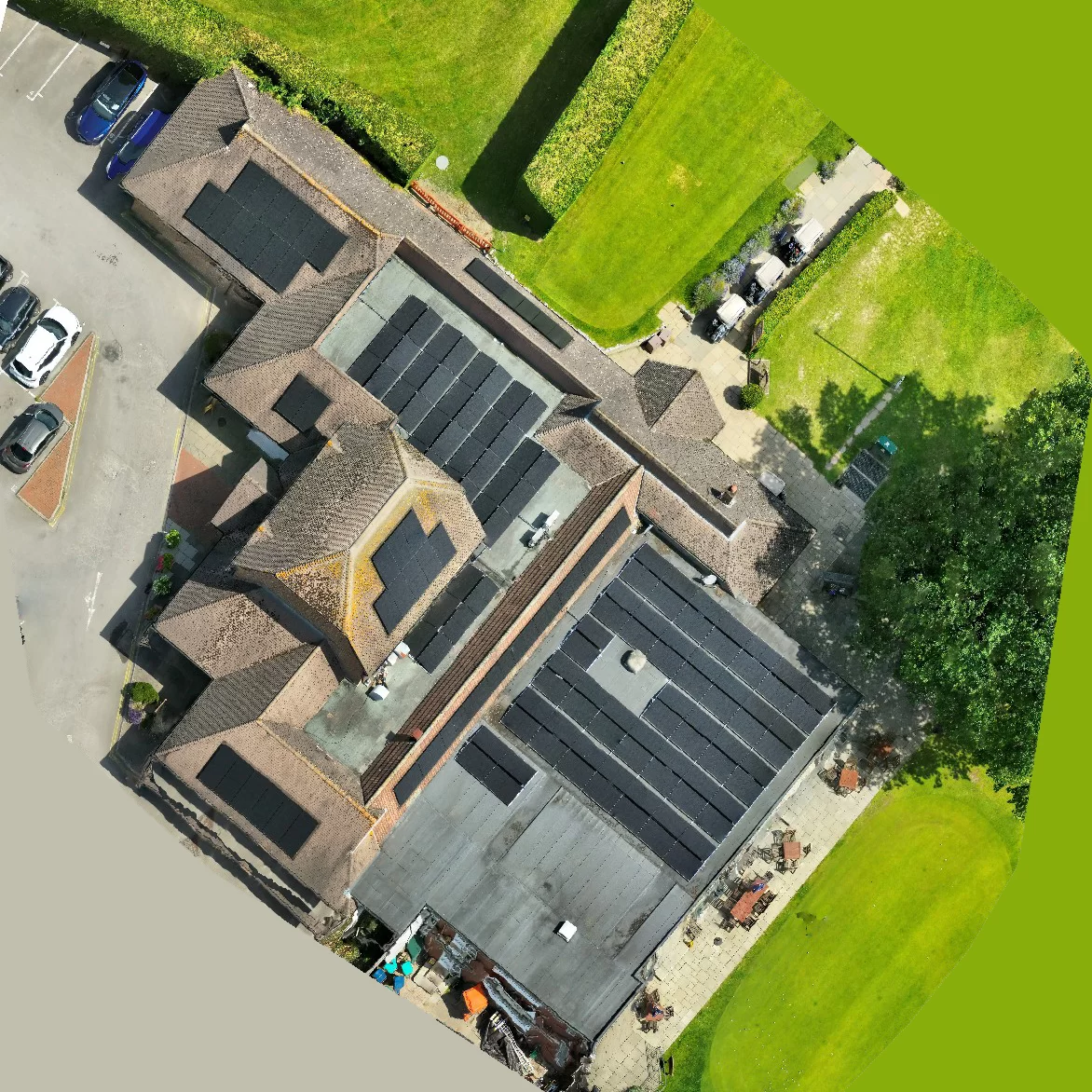
A certified Level 3 baseline for a recently commissioned rooftop solar installation.
Combined Thermal and Electrical Inspection of Two Rooftop Solar Arrays
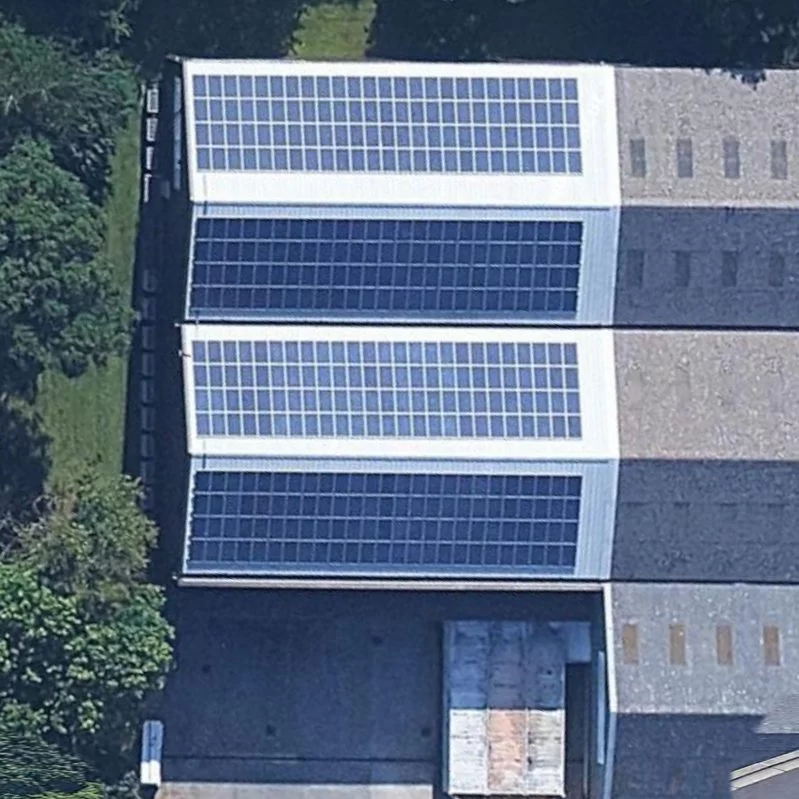
Solar photovoltaic systems are a growing feature on commercial and leisure premises, and a golf club in Hampshire had two roof-mounted arrays installed across its main clubhouse and an ancillary building. With the system recently commissioned, the owner wanted independent verification that both arrays were performing as intended and free of the early-life faults that can develop unseen. Drone Media Imaging was engaged to carry out a combined thermographic and electrical inspection to the relevant international standards.
A solar PV thermographic inspection under IEC 62446-3:2017 is a qualitative survey that reads the thermal behaviour of every module while the array is working under load. Cells that are faulty, shaded or electrically compromised dissipate energy as heat rather than converting it to electricity, and that heat shows as a distinct thermal signature. Capturing the arrays from the air allows the full module population to be surveyed quickly and safely, without foot traffic on the roof, and every signature is then validated against a clean reference module of comparable orientation within the same thermogram to separate genuine faults from harmless reflections.
The inspection was delivered by Drone Media Imaging, a trading name of VisualChaos Studios Ltd, and analysed and signed off by our Level 3 Master Thermographer. Pairing the aerial thermal survey with electrical string testing gives a fuller picture than either method alone, cross-checking what the thermal image suggests against measured electrical performance, and it is the approach we recommend for any commercial rooftop array where access and architecture allow.
Governing Standards
- IEC 62446-3:2017 governs the thermographic inspection of photovoltaic modules, defining the qualitative aerial survey method and the operating conditions under which thermal anomalies can be validly assessed.
- IEC 62446-1:2016+A1:2018 sets the electrical test and verification requirements for grid-connected PV systems, including insulation resistance and string performance checks.
- ISO 18436-7 is the international framework for thermographic condition-monitoring competence, aligning the analyst’s Level 3 qualification with recognised practice.
How was the inspection carried out?
How an IEC 62446-3 Solar Inspection Is Carried Out on a Rooftop Array
Thermography is environmentally dependent, so timing and conditions matter. The survey was carried out under clear skies with solar irradiance above 900 watts per square metre and light winds, comfortably within the operating conditions IEC 62446-3 sets for a valid inspection. Ambient temperature, humidity, wind and irradiance were all logged on site so the results could be interpreted against the exact conditions on the day.
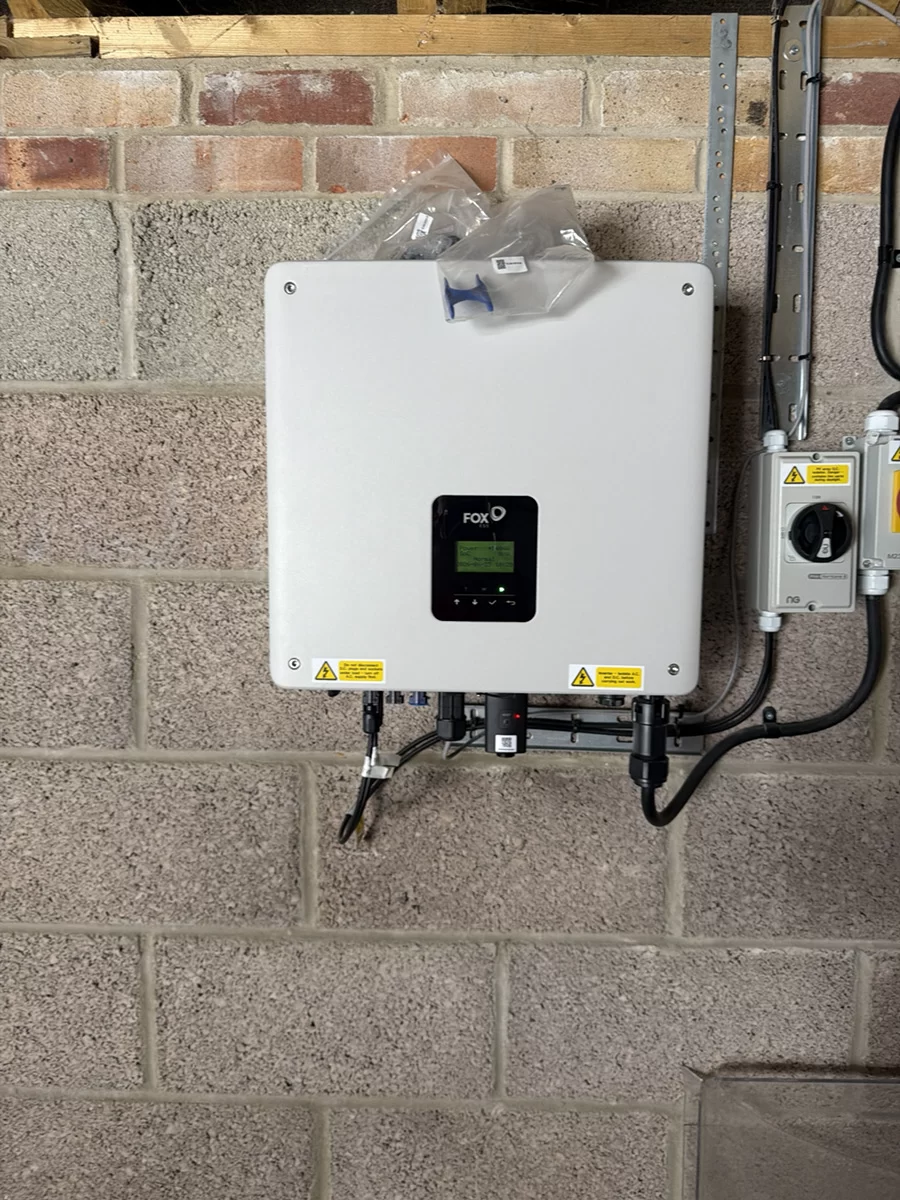
Every module across both roofs was captured with a survey-grade drone-mounted thermal sensor, flown to a consistent height and angle to keep the imagery uniform. Each thermogram was reviewed against a clean reference module within the same image, and any elevated signature was measured and classified. The electrical stage used IEC-compliant test instruments to check the accessible array, verifying insulation resistance and tracing the full current-voltage curve of the string to confirm its performance against expected values.
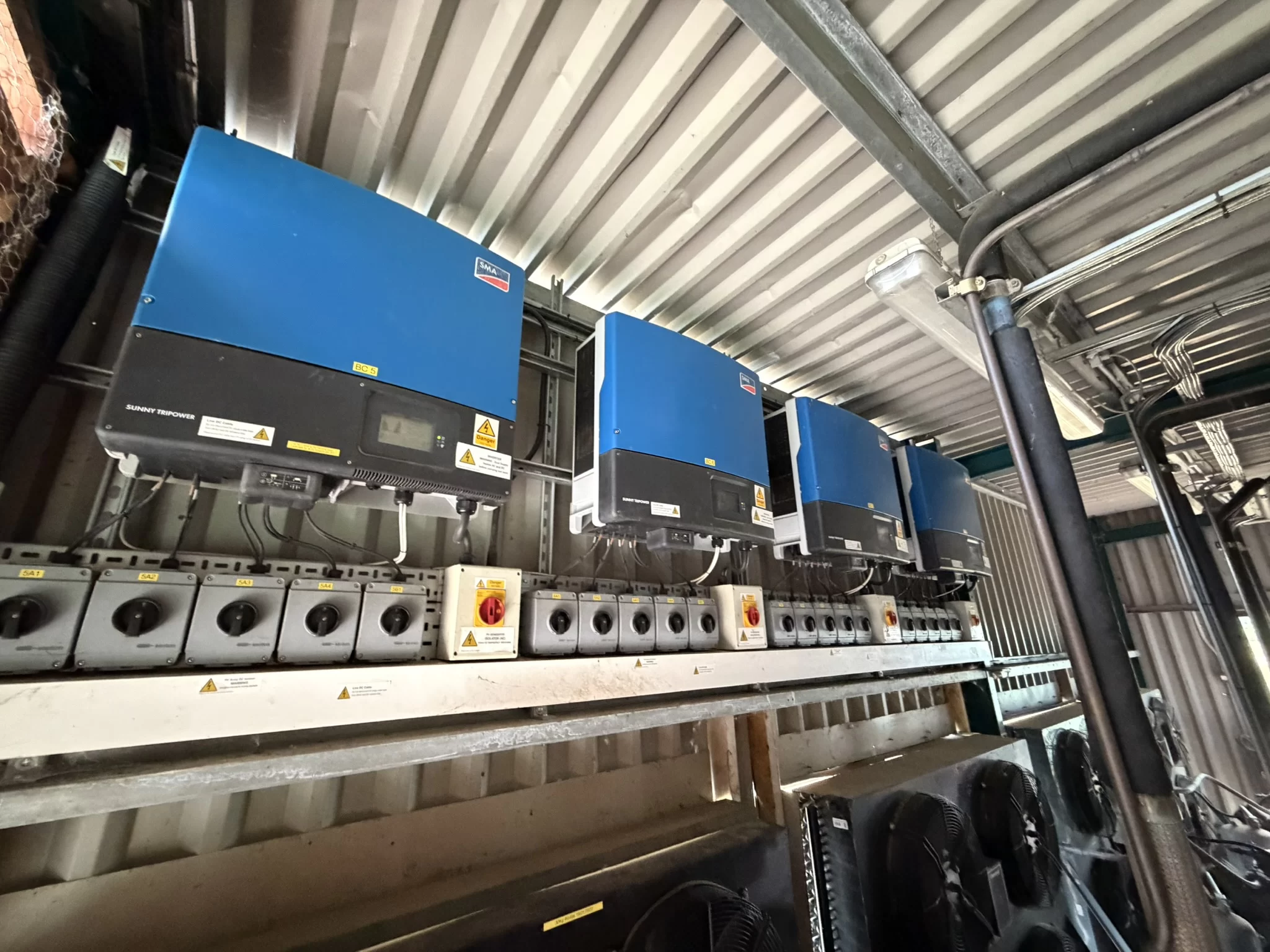
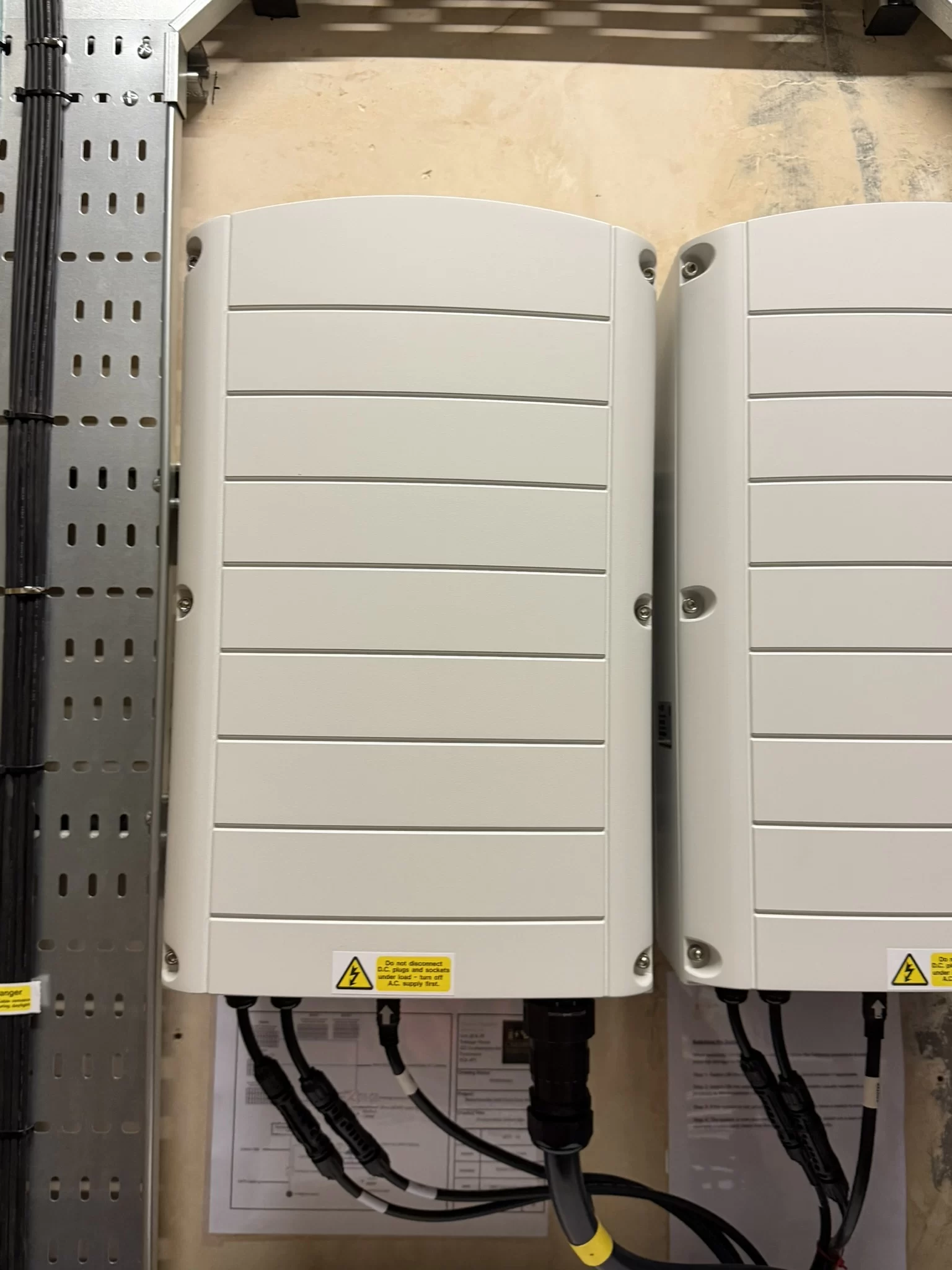
One array used module-level power optimisers, an architecture that clamps the string voltage to a safe level when the inverter is isolated. Conventional string testing cannot be performed meaningfully on that architecture, so the standard provides for a modified regime, and earth continuity was verified in its place. This is a defined provision of the standard, not a limitation of the inspection.
The inspection covered:
- Full aerial thermographic survey of both rooftop arrays, every module, to IEC 62446-3:2017.
- Electrical string testing of the accessible array to IEC 62446-1, insulation resistance and current-voltage performance.
- Earth continuity verification on the optimiser-based array, in line with the standard’s modified regime.
- On-site logging of environmental conditions and radiometric set-up.
Not included: inverter diagnostics, switchboard or on-roof electrical work, and any remedial activity, all of which sit outside the scope of a survey, analysis and reporting engagement.
What did the inspection find?
Both arrays were certified clear of classified thermal anomalies. No module returned a thermal signature that reached the classification threshold, and no temperatures approached the levels associated with cell damage or any safety concern. For a recently commissioned system, this is exactly the clean baseline an owner wants to see.
Three Advisory observations were recorded on the larger roof. Each was caused by localised partial shading, two from the roof apex and one from a nearby tree, and in every case the affected section showed the correct protective response, with the module bypass diodes conducting to isolate the shaded cells. An Advisory sits below the level of a classified fault, it is a monitor-only observation rather than a defect. Under the Drone Media Imaging Consequence Classification framework these carry a Degradation Trajectory flag, because bypass diodes that activate repeatedly over many years can gradually fatigue, so the value in recording them now is a documented reference point for future comparison.
The electrical string test on the smaller array returned a healthy result, with insulation resistance far above the required minimum and a clean, well-formed current-voltage curve showing no sign of mismatch or damage.
The outcome and next steps
The installation was certified clear of classified thermal anomalies across both arrays, with the electrical testing confirming a sound string where it could be applied. The report was analysed and signed off by our Level 3 Master Thermographer, giving the owner an independent, defensible record of the system’s condition shortly after commissioning.
The shading observations are design and geometry matters rather than faults, and they are recorded for monitoring rather than action. Recommended next steps are straightforward:
- Retain this inspection as the baseline record for the installation.
- Monitor the shaded sections at the next scheduled inspection to see whether the thermal signatures change.
- Where the owner wishes to explore the shading further, review it with a suitably qualified contractor alongside the system’s own performance monitoring.
Thermography is a snapshot in time and a non-intrusive method, so periodic re-inspection is the most effective way to track a system’s health as it ages. A clean early-life baseline like this one makes any future change far easier to spot.
A note on combined inspections
This job is a good example of why pairing thermal and electrical methods matters. The thermal survey confirmed the modules were sound, while the string test independently verified electrical performance, and the optimiser architecture on one roof showed why the method has to be matched to the system. Reading both together, under one Level 3 sign-off, gives an owner more confidence than either test alone.
Considering a solar inspection for your site?
Drone Media Imaging delivers IEC 62446-3 solar PV thermographic inspections and IEC 62446-1 string testing, analysed and certified to Level 3. We cover Sussex, Hampshire, Kent and Surrey, and travel throughout the UK, Ireland and Europe. Get in touch to discuss an inspection of your array.