IEC 62446-3:2017 Solar PV Thermal Inspection, Agricultural Roof with Just One Anomaly Classified
A 50 kW roof-mounted solar installation on a commercial farm building in the South Midlands needed an IEC 62446-3:2017 solar PV thermal inspection: evidence of system condition, a certified report, and a clear answer on whether the array was performing as it should. Drone Media Imaging flew the survey under optimal conditions, clear sky and irradiance consistently above 1,000 W/m², completing the thermal window in eighteen minutes. One classified anomaly was confirmed across two thermogram frames. Two unoccupied module positions were noted as a compliance observation. A certified Level 3 inspection report was delivered covering every finding with severity classification, consequence, and recommended next steps.
Project Overview
Subject
solar PV thermal inspection, IEC 62446-3 solar inspection, agricultural solar inspection, farm roof solar survey, commercial solar PV survey
Skills Used
IEC 62446-3 solar thermographic inspection, hotspot detection, delta-T assessment
Portfolio Tags
solar PV inspection, IEC 62446-3, thermal drone survey, agricultural solar, farm roof solar, bypass diode fault, Drone Media Imaging, South Midlands
IEC 62446-3 solar PV inspection for farm buildings, how often should a commercial farm solar installation be inspected, certified solar thermal survey for small commercial roof installationIEC 62446-3 solar PV inspection for farm buildings, how often should a commercial farm solar installation be inspected, certified solar thermal survey for small commercial roof installation
Solar PV Thermal Inspection on a Commercial Farm Roof, South Midlands
~ Eighteen minutes of survey time. One fault found. Everything documented. ~
IEC 62446-3 Solar PV Inspection, Agricultural Roof Installation, One Anomaly Found
IEC 62446-3:2017 Solar PV Thermal Inspection, Agricultural Roof Installation, One Anomaly Classified
Why small commercial solar installations need a formal IEC 62446-3:2017 inspection
Roof-mounted solar on farm buildings is one of the most common small commercial installations in the UK. These systems reduce energy costs, support sustainability commitments, and often represent a meaningful investment in agricultural infrastructure. What they rarely receive is a formal thermographic survey under IEC 62446-3:2017, the international standard that governs how a solar PV inspection should be planned, conducted, classified, and reported.
That is a missed opportunity. A farm-scale installation is no different in principle from a large commercial or ground-mounted system. The same fault types develop, the same degradation mechanisms are at work, and the same thermal survey will identify them. The difference is that a farm-scale inspection is fast, cost-effective, and accessible to a small commercial owner, and the resulting certified report has genuine value: for insurance purposes, for asset condition records, for maintenance planning, and for the reassurance that the system is working as it should.
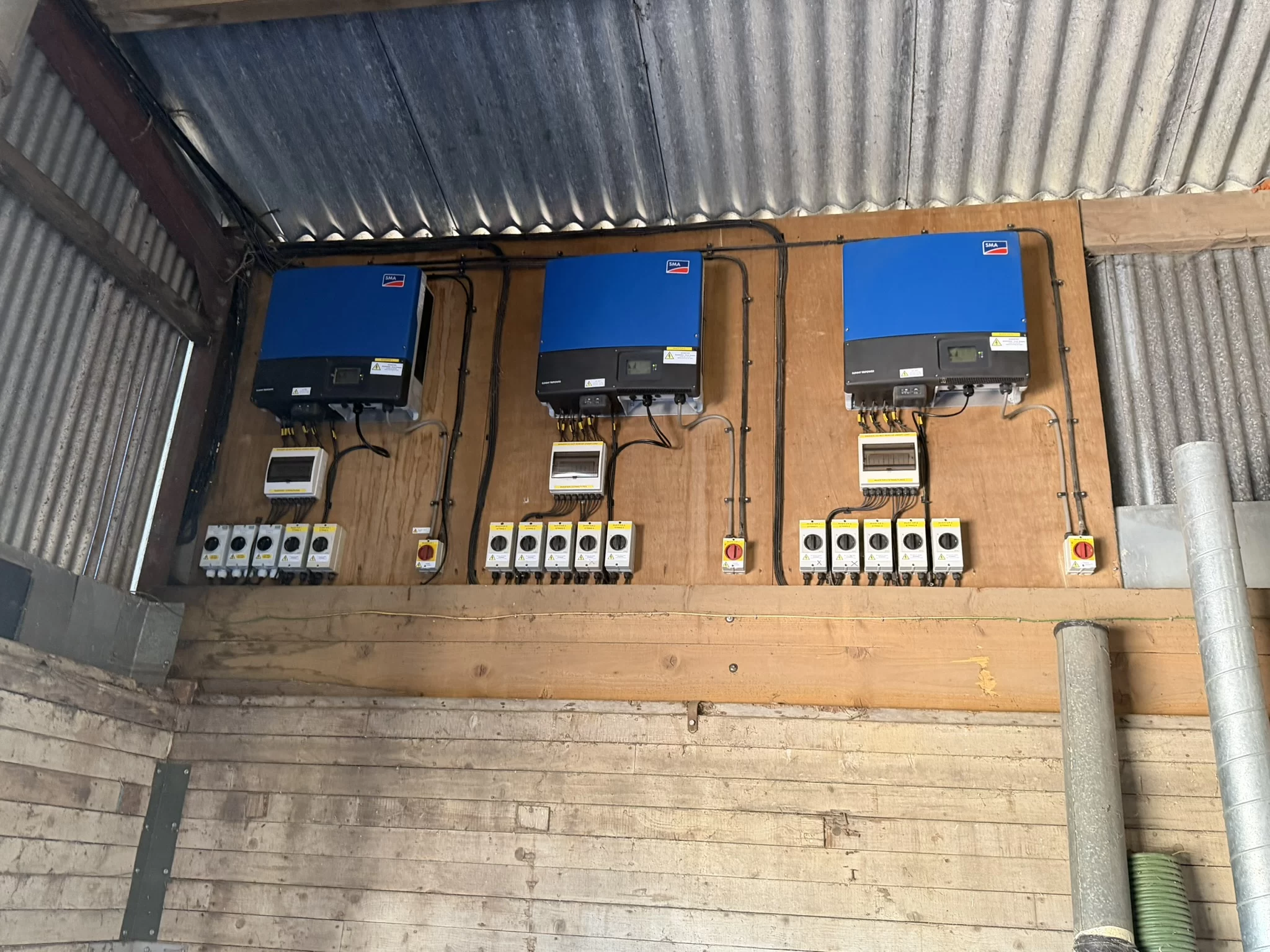
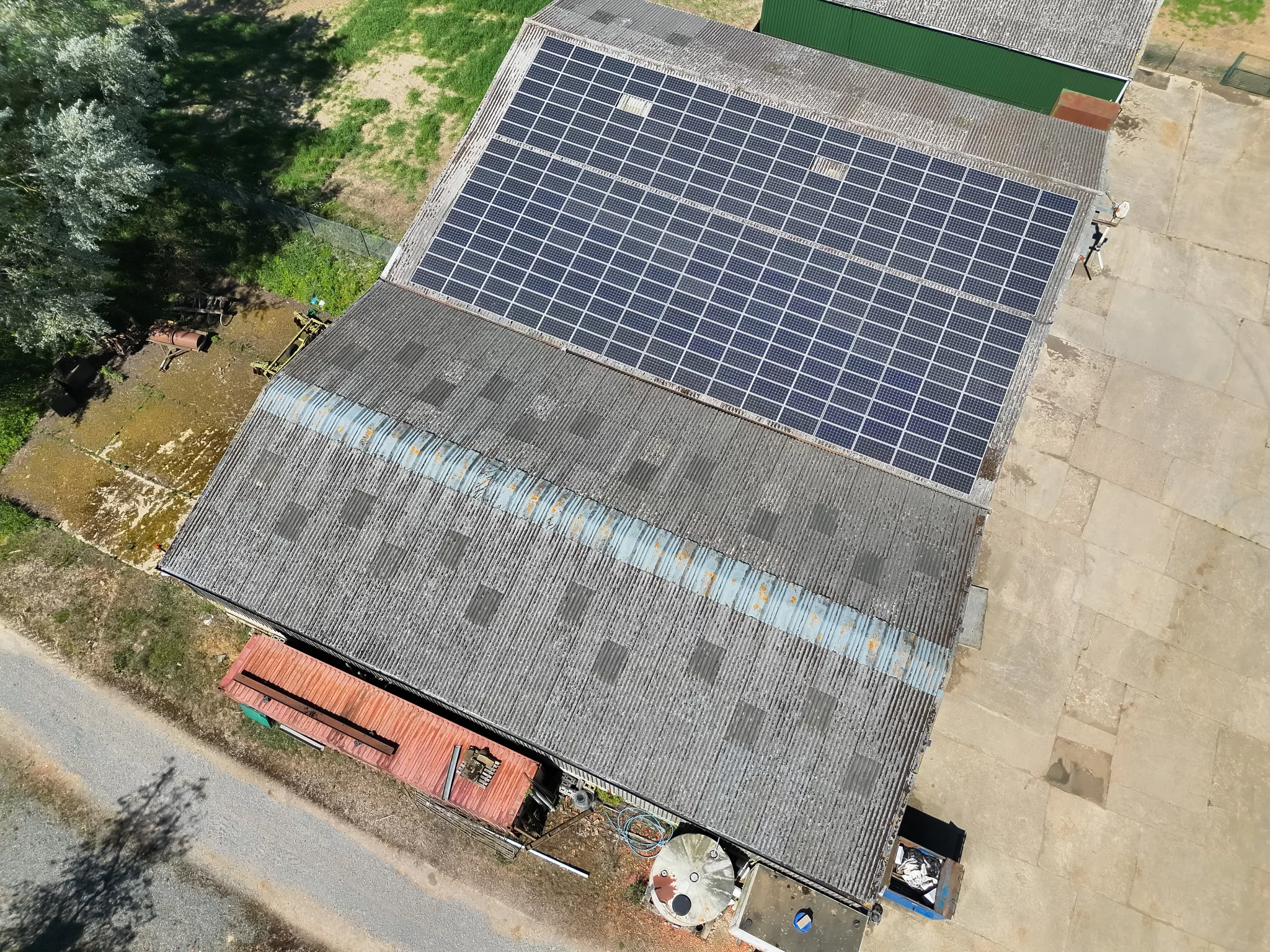
This project was a single-zone, roof-mounted array on an agricultural building in the South Midlands. All fifteen strings across three inverters were confirmed energised and under load at the time of survey. Drone Media Imaging conducted the Survey, Analysis, and Reporting under IEC 62446-3:2017 by our Level 3 Master Thermographer, with survey conditions close to optimal throughout the eighteen-minute thermal window.
Farm Roof Solar Inspection Under IEC 62446-3, Certified Report Delivered
How is a solar PV thermal inspection carried out on a farm roof?
A solar PV thermal inspection under IEC 62446-3:2017 is a simplified, qualitative survey. It does not require the system to be taken offline, it involves no electrical testing, and it does not interrupt power generation. The survey is conducted from the air using a thermal drone, capturing infrared imagery of the module surfaces at a controlled altitude under defined environmental conditions.
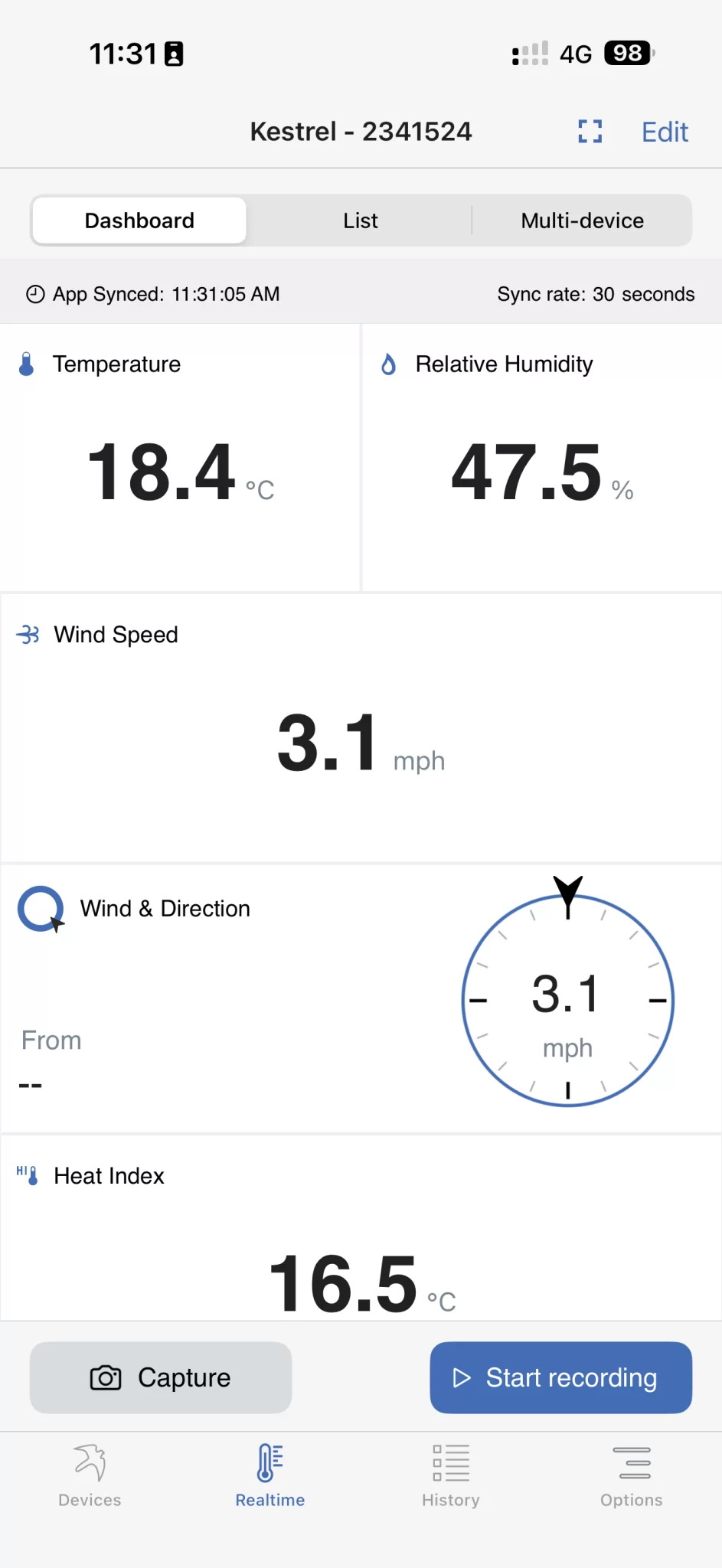
The standard sets clear minimum thresholds for a valid inspection: solar irradiance of at least 600 W/m², stable cloud conditions, and wind speed within limits that allow accurate thermal pattern resolution at the capture altitude. For this survey, irradiance at start was 1,020 W/m² and remained above 998 W/m² throughout. The sky was completely clear, and wind speed was well within range. These are conditions close to optimal for IEC 62446-3:2017 thermographic work.
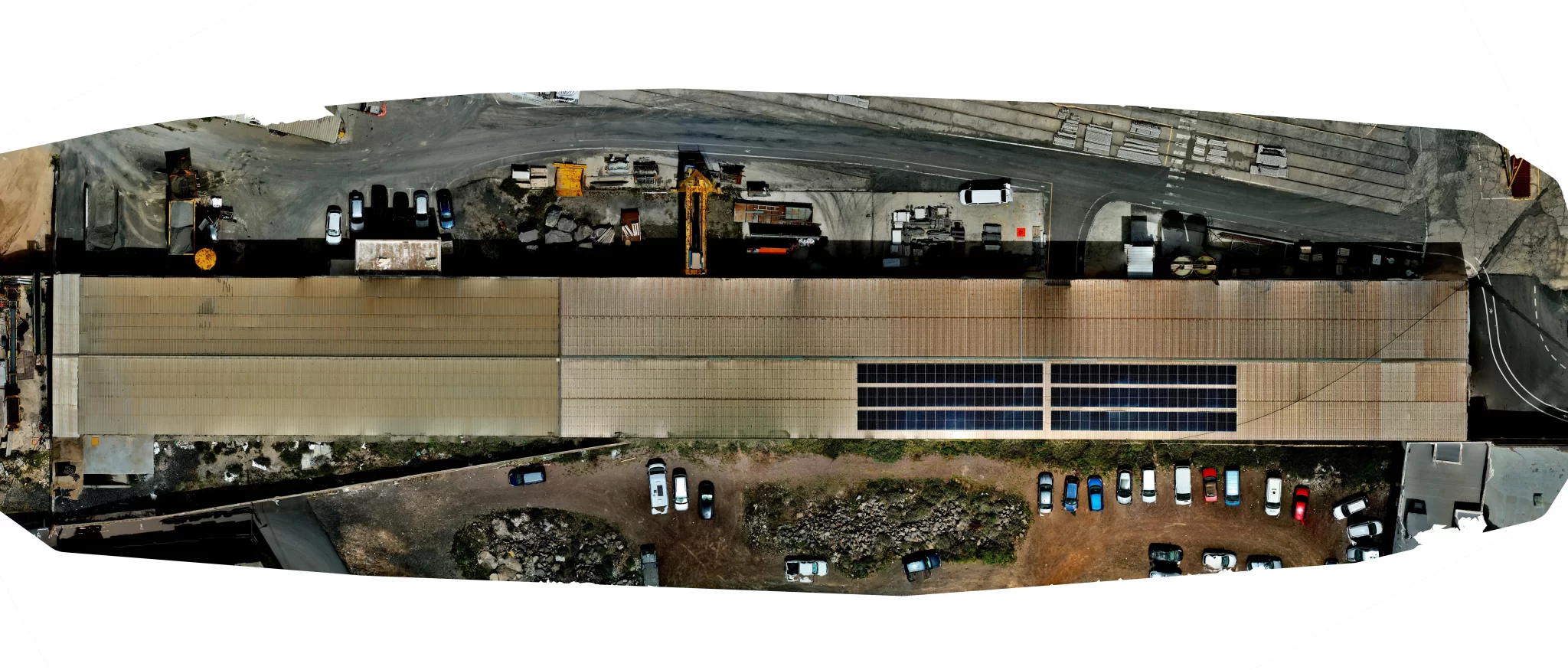
The survey followed a two-pass approach: an orthomosaic overview at 30 m above the modules, building a complete thermal picture of the entire array, followed by detail-altitude anomaly capture at 25 m. The overview identifies high-radiance areas, unoccupied positions, and any array-level issues at a glance. The detail pass captures individual modules at resolution sufficient for classification against the IEC 62446-3:2017 severity framework. The EL1 thermal reference baseline was established within each thermogram frame, ensuring every differential temperature measurement was accurate and specific to the conditions at the moment of capture.
This inspection included:
- Full thermographic survey of the roof array under IEC 62446-3:2017
- Orthomosaic overview and detail-altitude anomaly capture
- IEC 62446-3:2017 severity classification on all identified anomalies
- DMI Consequence Classification alongside IEC severity on every finding
Governing Standards
- IEC 62446-3:2017 governs the thermographic inspection of photovoltaic modules and arrays, defining survey conditions, anomaly categories and reporting requirements for solar PV thermal surveys.
- ISO 18436-7 defines the training and certification requirements for thermographic condition monitoring personnel, underpinning the Level 3 Master Thermographer qualification held by the inspecting analyst.
What did the solar PV inspection find?
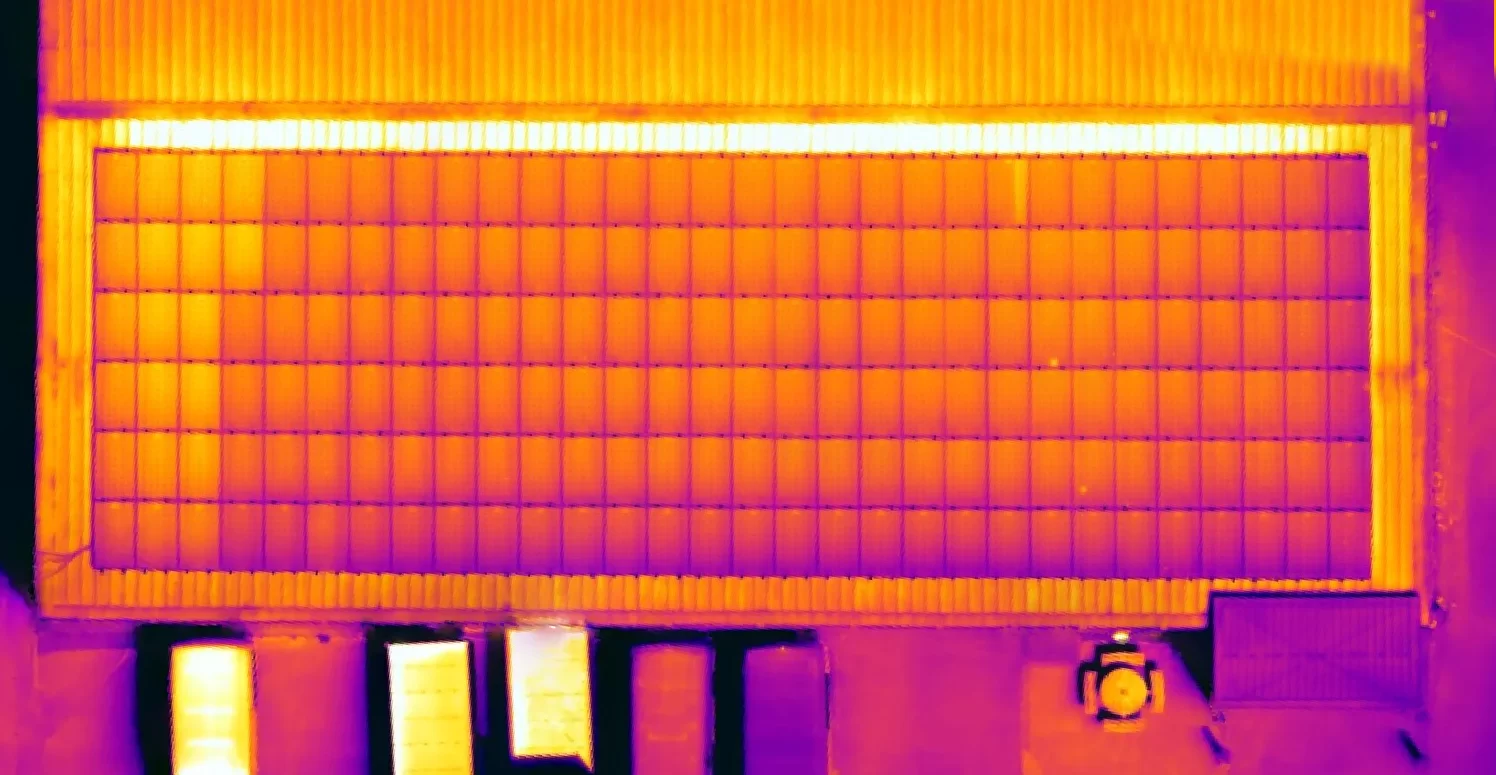
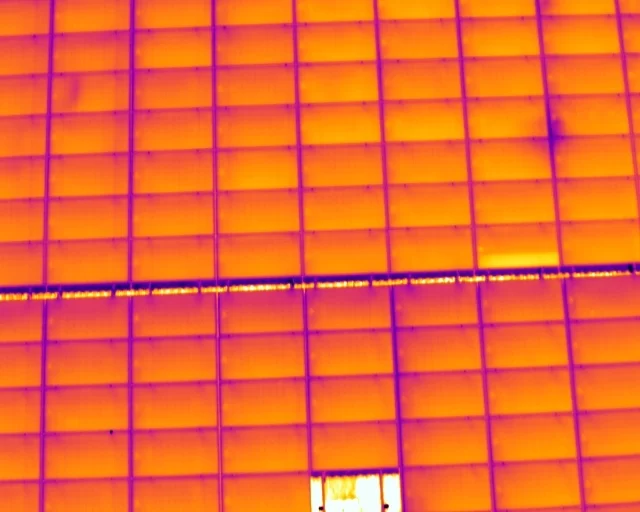
The thermal orthomosaic confirmed that the array was, at the time of survey, broadly operating within normal parameters. The module field presented a consistent and uniform thermal signature with one exception: a single module in the mid-section of the array showed a diffuse, zone-scale elevation in surface temperature that crossed the IEC 62446-3:2017 anomaly reference threshold.
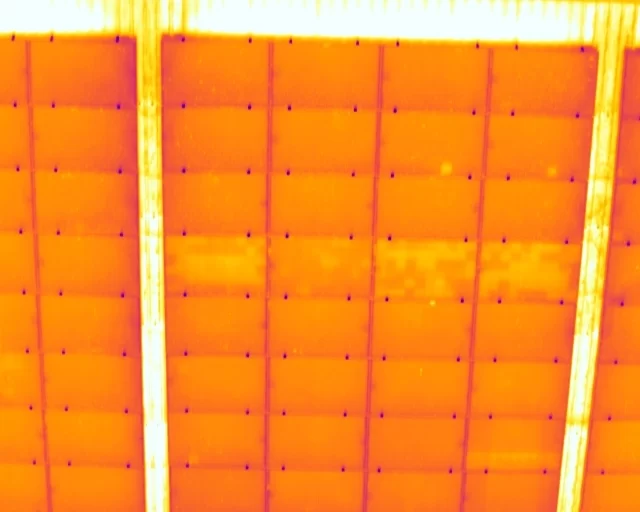
The affected module was assessed across two consecutive thermogram frames. In the primary frame, the measurement zone recorded a peak temperature of 48.5°C against an EL1 baseline of 43.0°C, giving a peak differential of ΔT +5.5°C. The anomaly reference threshold under IEC 62446-3:2017 is EL1 +4°C. At +5.5°C, the measured peak exceeded that threshold by 1.5°C, confirming the finding as a classified anomaly, with consistent readings across both frames.
The thermal morphology was diffuse and zone-scale, with no discrete focal hotspot and no observable anomaly at the junction box. RGB review in both thermogram frames confirmed no shading as a contributing cause. This pattern, in the absence of shading and without junction box elevation, is consistent with bypass diode passive activation: the module’s bypass diode is likely conducting in response to a cell-level performance deficit within one substring, indicative of early-stage microcracking or localised shunting reducing the substring photocurrent below the series conduction threshold.
The finding was classified as IEC 62446-3:2017 Severity Low, reflecting a ΔT in the 4 to 10°C band. DMI Consequence Classification identified a Yield consequence: the affected module is likely producing less electricity than it should. This warrants investigation by a suitably qualified electrical contractor within the planned maintenance programme, but does not represent an immediate safety concern.
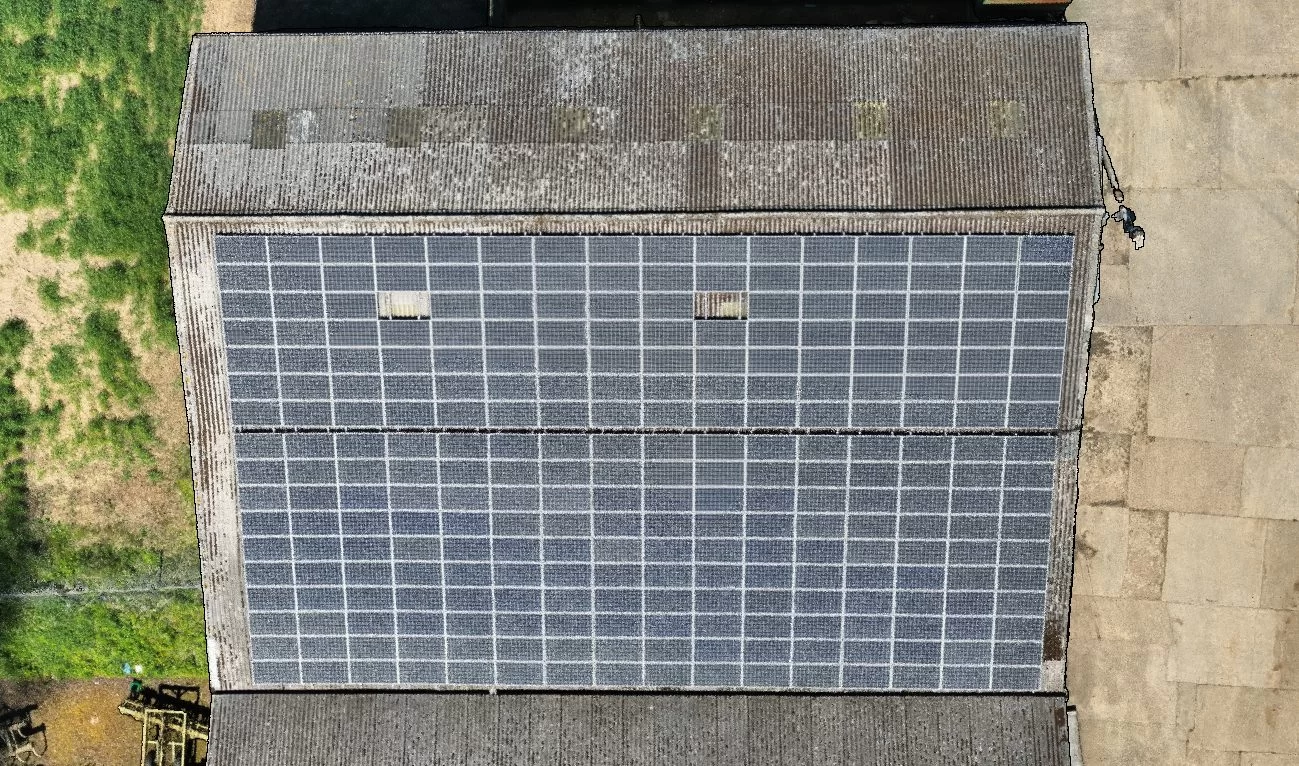
Two unoccupied module positions in the upper section of the array were noted under Additional Observations. Both appeared as high-radiance areas in the thermal overview, consistent with direct solar loading of exposed roof substrate without an active module. These are not classified anomalies under IEC 62446-3:2017, but string continuity at both positions was recommended for verification.
What does a certified inspection report mean for a farm owner?
The report delivered to this client covered every stage of the process: environmental conditions logged at survey, radiometric parameters applied to the thermal data, the EL1 baseline for each thermogram, ΔT measurements and anomaly reference thresholds, and classification with both IEC 62446-3:2017 severity and DMI Consequence Classification. The annotated thermogram appendix recorded findings directly against each frame, certified and signed by our Level 3 Master Thermographer.
For a small commercial owner on a farm or agricultural property, a thermal inspection delivers:
- Certified evidence of system condition for insurance or asset records
- A signed IEC 62446-3:2017 inspection report from a Level 3 Master Thermographer
- Clear identification of any anomaly with severity, consequence, and recommended action
- Confirmation of which modules were performing within normal parameters at the time of survey
- A thermal baseline for comparison at the next inspection interval
The cost of not inspecting is not zero. A Low severity bypass diode fault left unmonitored may develop into a more significant finding. An unoccupied module position with unconfirmed string continuity is a potential open-circuit condition that a qualified electrical contractor needs to check. Neither finding in this inspection was urgent, but both are documented, classified, and ready to act on.
The IEC 62446-3:2017 thermographic survey is one of the most practical maintenance tools available to a farm solar owner. It does not take the system offline, does not disrupt operations, and is completed in under an hour on site for a typical small array. The report that follows is structured to support insurance requirements, maintenance scheduling, and asset management, and written to be understood by the owner rather than filed and forgotten.
Get a Certified Solar PV Inspection for Your Farm Installation
Drone Media Imaging delivers certified IEC 62446-3:2017 solar PV thermal inspections for commercial and agricultural roof installations across Sussex, Hampshire, Kent, and Surrey, with survey capability throughout the UK, Ireland, and Europe. Every inspection is analysed and reported by our Level 3 Master Thermographer, with a certified report covering findings, consequence classification, and recommended next steps. If your installation has not had a formal thermal inspection, get in touch to discuss your site and arrange a survey.