Annual Solar PV Thermographic Inspection of an 816-Module Rooftop Array
Why Insurers Ask for Annual Solar PV Thermographic Inspection
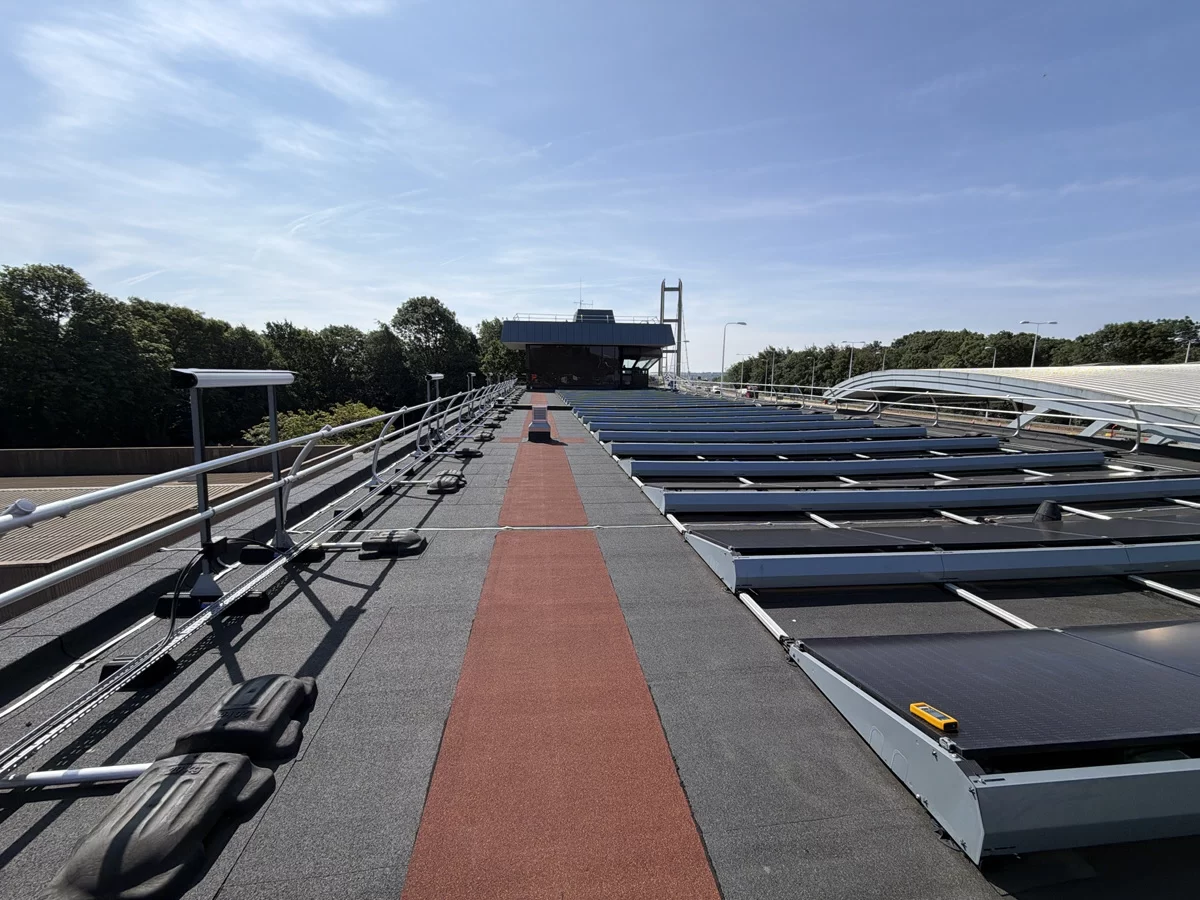
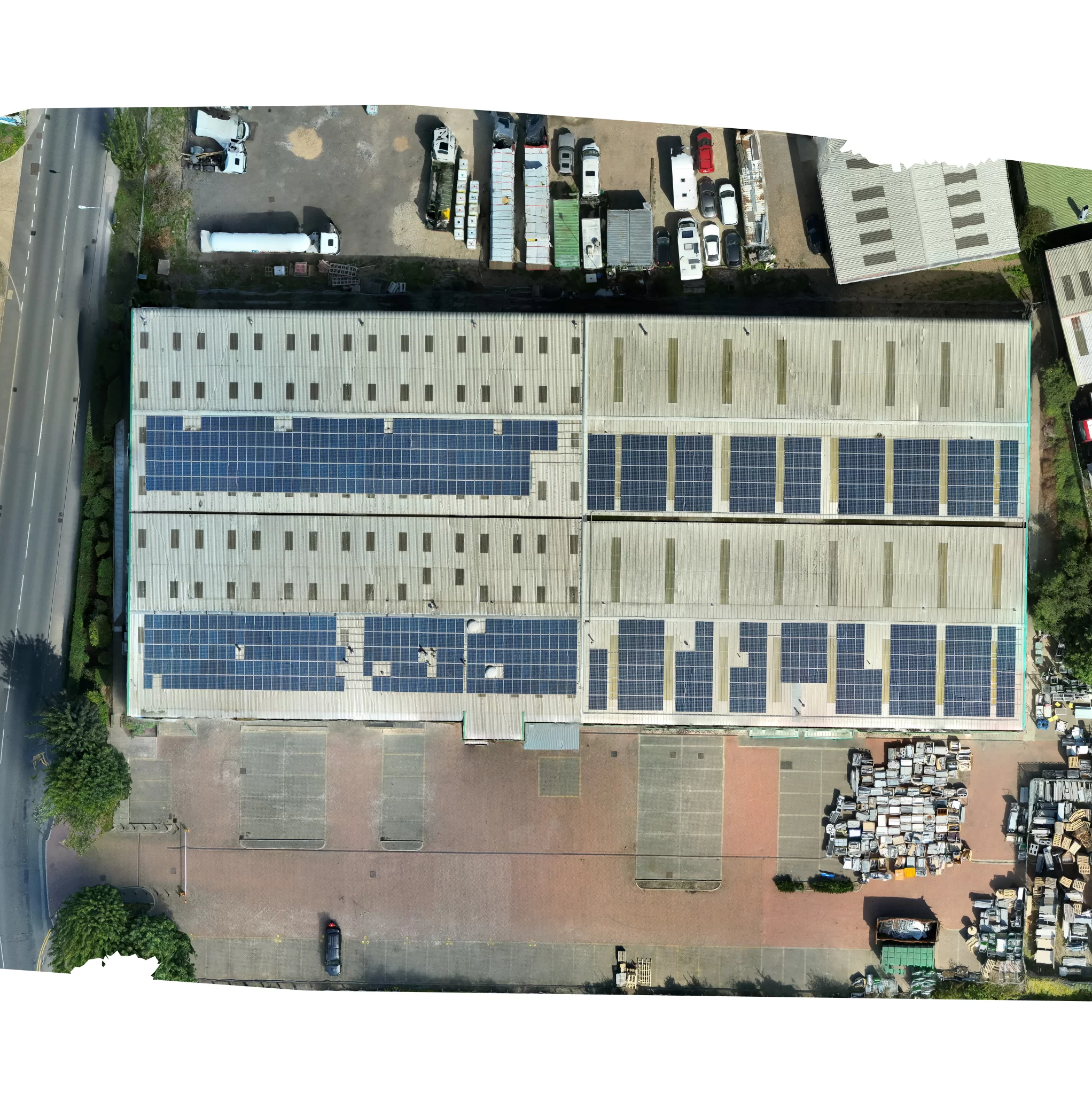
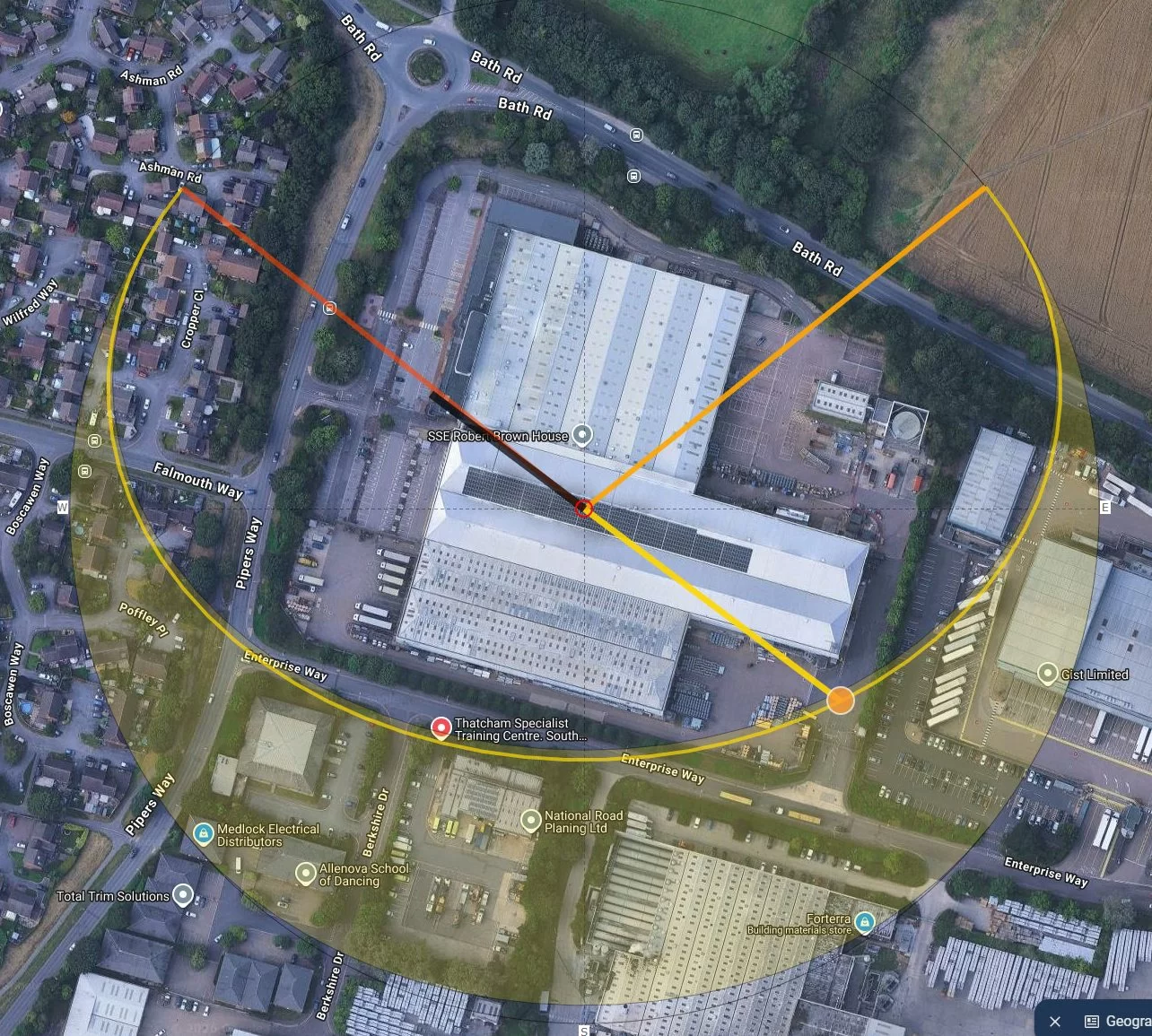
A solar PV thermographic inspection was carried out on a commercial rooftop array in southern England, where the site’s insurer had made an annual thermal survey a condition of cover. The array, close to ten years in service and comprising 816 modules across a nominal 191.56 kWp, had never been surveyed thermally before, so no baseline existed against which change could be measured. Drone Media Imaging flew the complete array under IEC 62446-3:2017 in a single session, in clear-sky conditions with irradiance above 900 W/m² and almost no wind. Twelve anomalies were classified across nine thermograms: nine cell-level faults, two bypass diode conditions and one low-magnitude feature recorded without attribution to any single cause. Five carried a Safety consequence, five a Degradation Trajectory consequence, and two a Yield consequence where sub-strings had stopped contributing to output. The array itself presented as functioning as intended, with the anomalies isolated rather than systemic. The certified Level 3 report separated what warranted immediate investigation from what only needed monitoring, and established the thermal baseline this array had never had.
Project Overview
Subject
solar PV thermographic inspection, commercial rooftop solar array, southern England, solar asset owners, IEC 62446-3:2017
Skills Used
IEC 62446-3 Solar Thermographic Inspection, Hotspot Detection, Level 3 Report Writing
Portfolio Tags
Solar Thermography, Commercial Rooftop Solar, Aerial Thermal Survey, Southern England, IEC 62446-3, Solar Asset Owners, Drone Media Imaging, What Is A Bypass Diode Fault
Annual Thermographic Survey For Solar PV Insurance Requirements, How Are Solar Panel Hotspots Found By Drone, IEC 62446-3 Solar Inspection Southern EnglandAnnual Thermographic Survey For Solar PV Insurance Requirements, How Are Solar Panel Hotspots Found By Drone, IEC 62446-3 Solar Inspection Southern England
Annual Solar PV Thermographic Inspection of an 816-Module Rooftop Array
~ Twelve anomalies across 816 modules, and the five that mattered most. ~
A decade of service, and no thermal record of it
Why Insurers Ask for Annual Solar PV Thermographic Inspection
Commercial rooftop solar is often the quietest asset a business owns. It generates, it feeds the meter, and unless output falls far enough to notice on a bill, it tends not to ask for attention. This array in southern England had been running for close to a decade in exactly that way. What changed was not the system, it was the insurance: the site’s insurer made an annual thermographic survey a condition of continued cover, which is an increasingly common position across the sector and a sensible one.
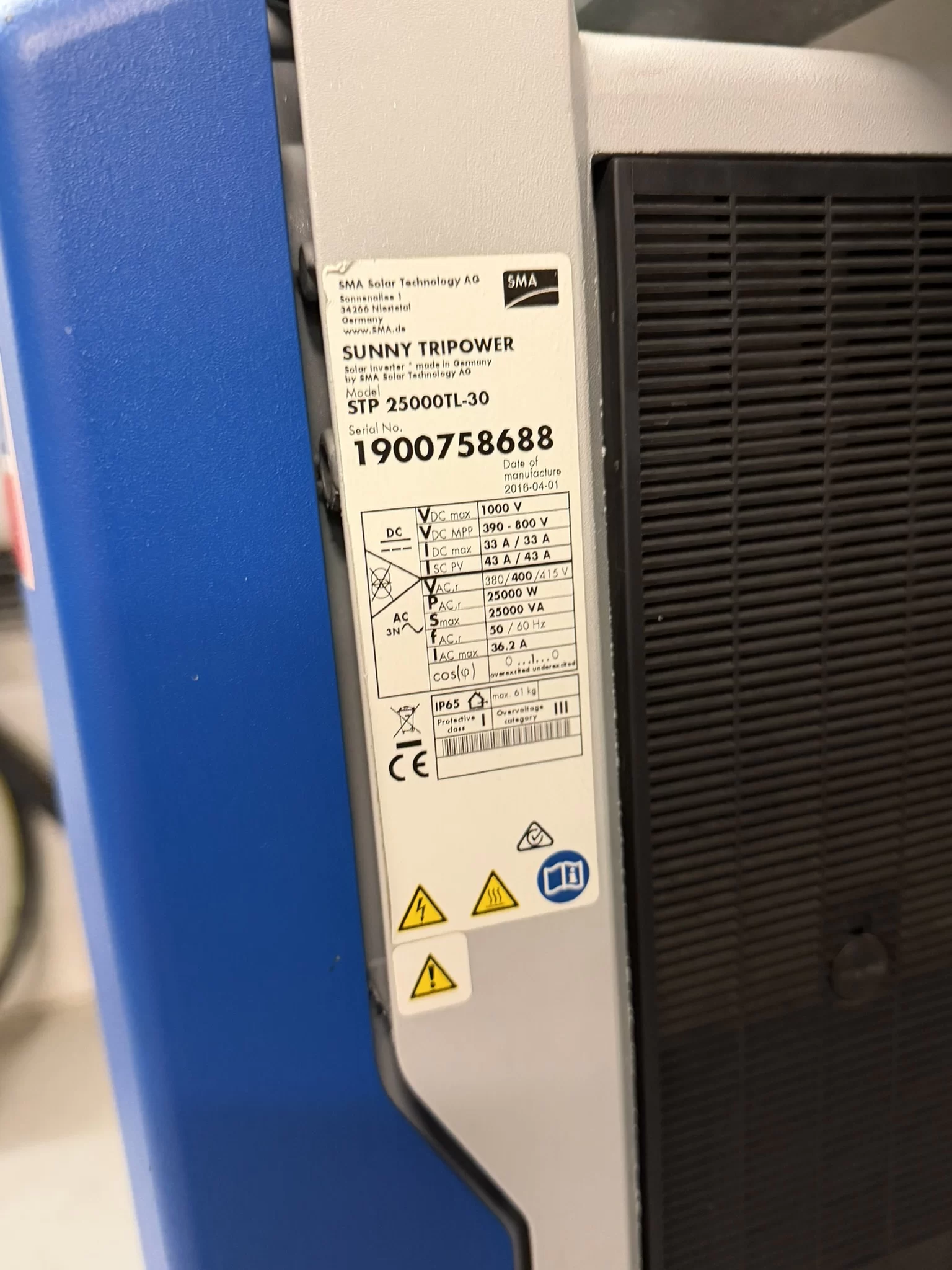
The array is a single roof-mounted installation of 816 modules, a nominal 191.56 kWp, served by six string inverters in a conventional string architecture. No thermal survey had ever been carried out on it, and no commissioning records or electrical certification were available to work from. That matters more than it sounds. Without a previous survey there is no baseline, nothing to compare against, and no way to say whether a warm module has been warm for five years or five weeks.
Thermography suits this problem because of how a solar cell fails. A cell that is cracked, mismatched or losing its connection stops converting light efficiently, and the energy it can no longer convert leaves as heat instead. That heat is invisible from the ground and often invisible in the generation data too, because a single underperforming module inside a large array is easily lost in the noise. It is not invisible to a thermal sensor. This inspection was delivered by Drone Media Imaging under IEC 62446-3:2017, with analysis and classification carried out by our Level 3 Master Thermographer.
Governing Standards
- IEC 62446-3:2017 The international standard for thermographic inspection of grid-connected photovoltaic systems, governing the conditions under which a survey may be flown, the way anomalies are identified against a healthy reference module, and the severity classification applied to every finding.
How was the thermographic inspection carried out?
How Is an IEC 62446-3 Solar Thermographic Inspection Carried Out?
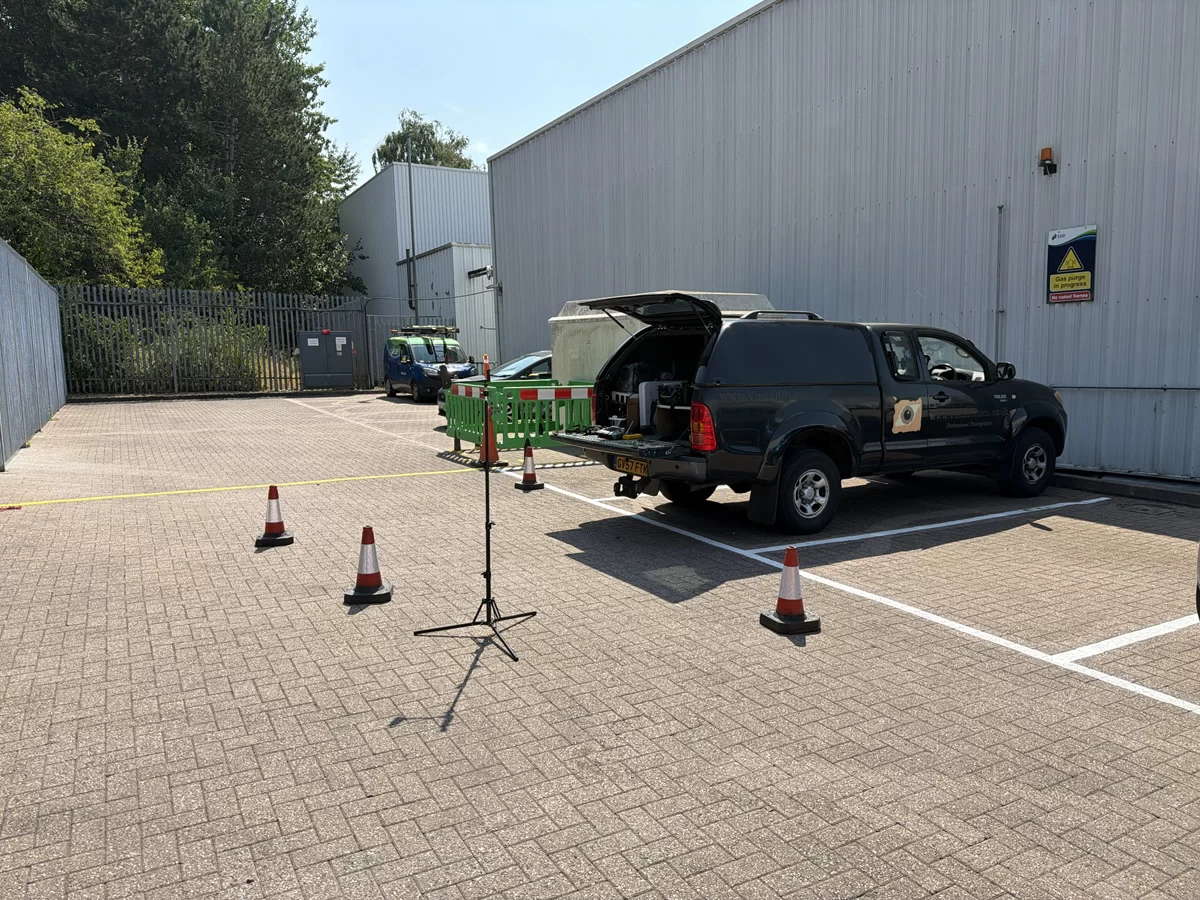
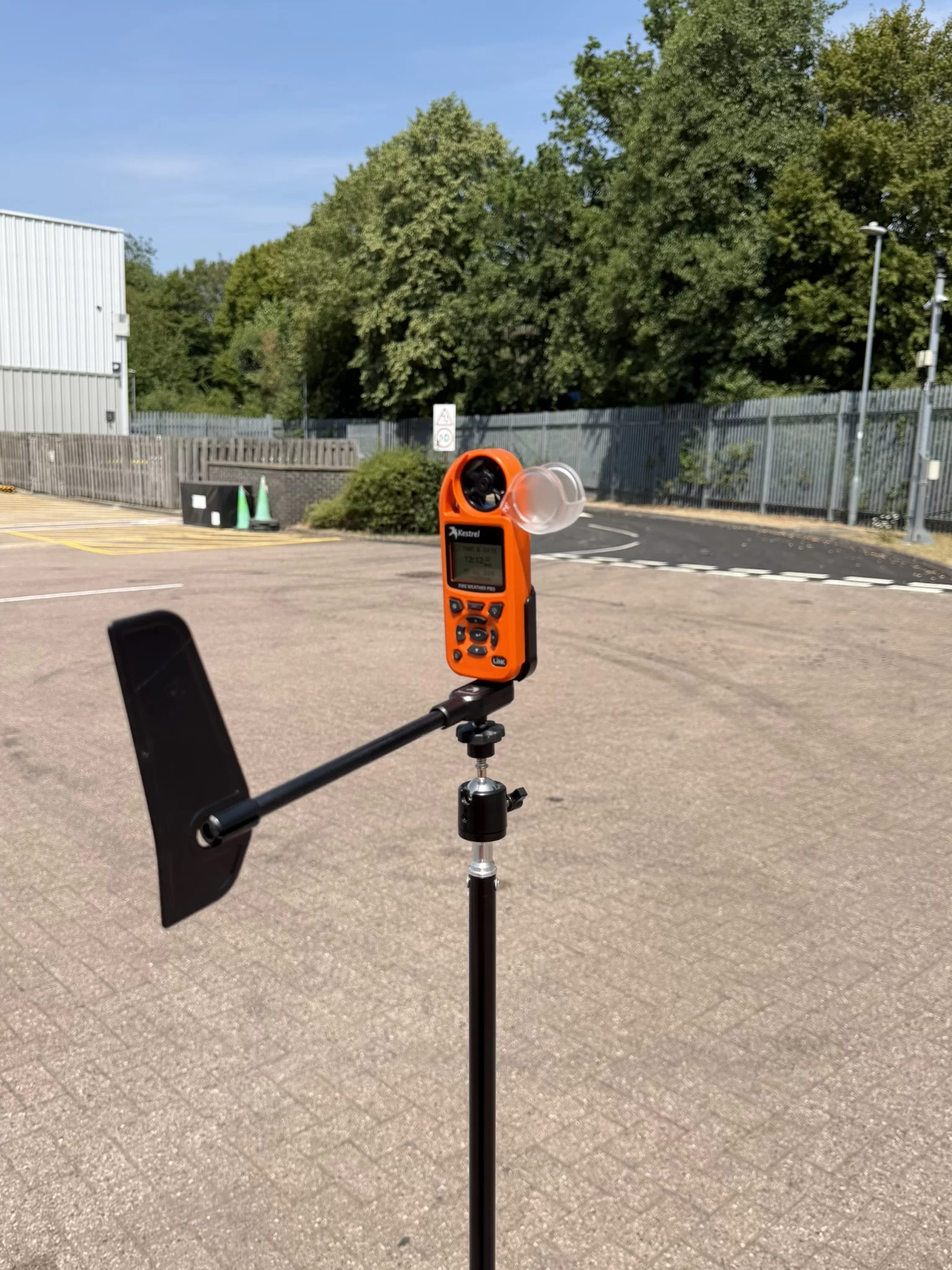
IEC 62446-3:2017 is specific about when a solar thermographic survey may be flown, because the results are meaningless if the array is not working hard enough to reveal a fault. Irradiance must be at or above 600 W/m², wind must be light, and the sun must be high. This survey was flown in a single session within roughly an hour of solar noon, under a completely cloudless sky, with irradiance above 900 W/m² throughout and wind averaging half a metre per second. Those are close to ideal conditions, and the still air matters as much as the sunshine, since a breeze cools a developing hotspot and can hide it.
The whole array was captured by drone using an industry-grade radiometric thermal sensor, with environmental conditions logged on site throughout by calibrated instruments rather than taken from a forecast. Every thermogram selected for detailed analysis was then assessed against a healthy reference module within that same image, a method the standard calls the EL1 baseline. This is the part that makes the result defensible. It means a module is only ever compared against its immediate neighbours under identical light, which separates a genuine fault from the simple fact that the whole roof was hot that day, and this array was running hot.
Each classified anomaly then carries two judgements: a severity, from the IEC 62446-3 five-tier scale, and a consequence under the Drone Media Imaging Consequence Classification framework, which translates the thermal magnitude into what it actually means for the asset.
- Included: complete aerial thermal capture of the array, on-site environmental logging, Level 3 analysis and classification of every anomaly, and a certified report with annotated thermograms.
- Not included: electrical testing, intrusive investigation, or any remedial work. Findings identify areas warranting further investigation by a suitably qualified electrical contractor.
What did the thermographic inspection find?
Twelve anomalies were classified across nine thermograms. Set against 816 modules that is a low incidence, and the array presented overall as functioning as intended, with no systemic condition, no potential induced degradation at the module frames, and nothing suggesting a fault upstream of the modules. The significance sat in the nature of the findings rather than the number of them.
Five findings carried a Safety consequence. Each was a cell-level fault where the module surface had reached an absolute temperature high enough to place the construction of the module itself at risk, through degradation of the encapsulant that bonds the cell stack between the glass and the backsheet. That process tends to reinforce itself, because a degraded encapsulant absorbs more light and sheds heat less easily, so the cell runs hotter still. The most severe presented as a cluster of adjacent cells at temperatures consistent with sustained reverse-bias stress, where a faulted cell is driven to absorb the output of the string around it and dissipate it as heat.
Two findings carried a Yield consequence, both consistent with a bypass diode that had failed in a short-circuit condition. A bypass diode is a protective device: it carries current around a group of cells when they underperform. When it fails short it stops protecting and starts permanently bypassing, and that group of cells contributes nothing whenever the system generates. The remaining five carried a Degradation Trajectory consequence, modest today but arising from mechanisms understood to progress.
What was the outcome for the asset owner?
The deliverable was a certified report signed off by our Level 3 Master Thermographer, with every anomaly annotated, positioned on the array, classified on both severity and consequence, and explained in terms of what the mechanism is and why it matters. The value of the consequence classification shows most clearly here. Severity alone tells an owner how hot something is; consequence tells them whether it threatens the building, costs them generation, or simply needs watching. Those are three different conversations and they carry three different priorities.
- The Safety findings warrant investigation first, independently of everything else.
- The bypass diode conditions can be addressed within a planned maintenance visit, since the generation loss is continuous but not hazardous.
- The remaining observations need monitoring only, and are recorded so any change is measurable next time.
- All findings are for investigation by a suitably qualified electrical contractor.
The survey also did something the insurer did not ask for. It established the thermal baseline this array had never had. Every future inspection can now be measured against it, which turns an annual compliance obligation into a genuine record of how the asset is ageing, and makes the second survey considerably more informative than the first.
Why did the weather make this survey more revealing?
The conditions on the day were unusually favourable, and that cut both ways. Strong irradiance and near-still air meant the healthy modules were themselves running hot, so absolute temperatures across the whole roof were elevated. Working against a reference module inside each image, rather than against a fixed number, is what allowed the genuinely faulty cells to be separated from an array that was simply warm.
Does your insurer now require an annual thermographic survey?
Drone Media Imaging delivers IEC 62446-3:2017 solar PV thermographic inspection, with every anomaly classified for both severity and commercial consequence by our Level 3 Master Thermographer. We work across Sussex, Hampshire, Kent and Surrey, and travel throughout the UK, Ireland and Europe. Whether you are meeting an insurance condition for the first time or building a year-on-year record of how your array is ageing, we would be glad to talk it through.