Solar PV Thermographic Inspection Uncovers Widespread Safety Findings in South West England
Solar PV Thermographic Inspection of a Commercial Rooftop Array
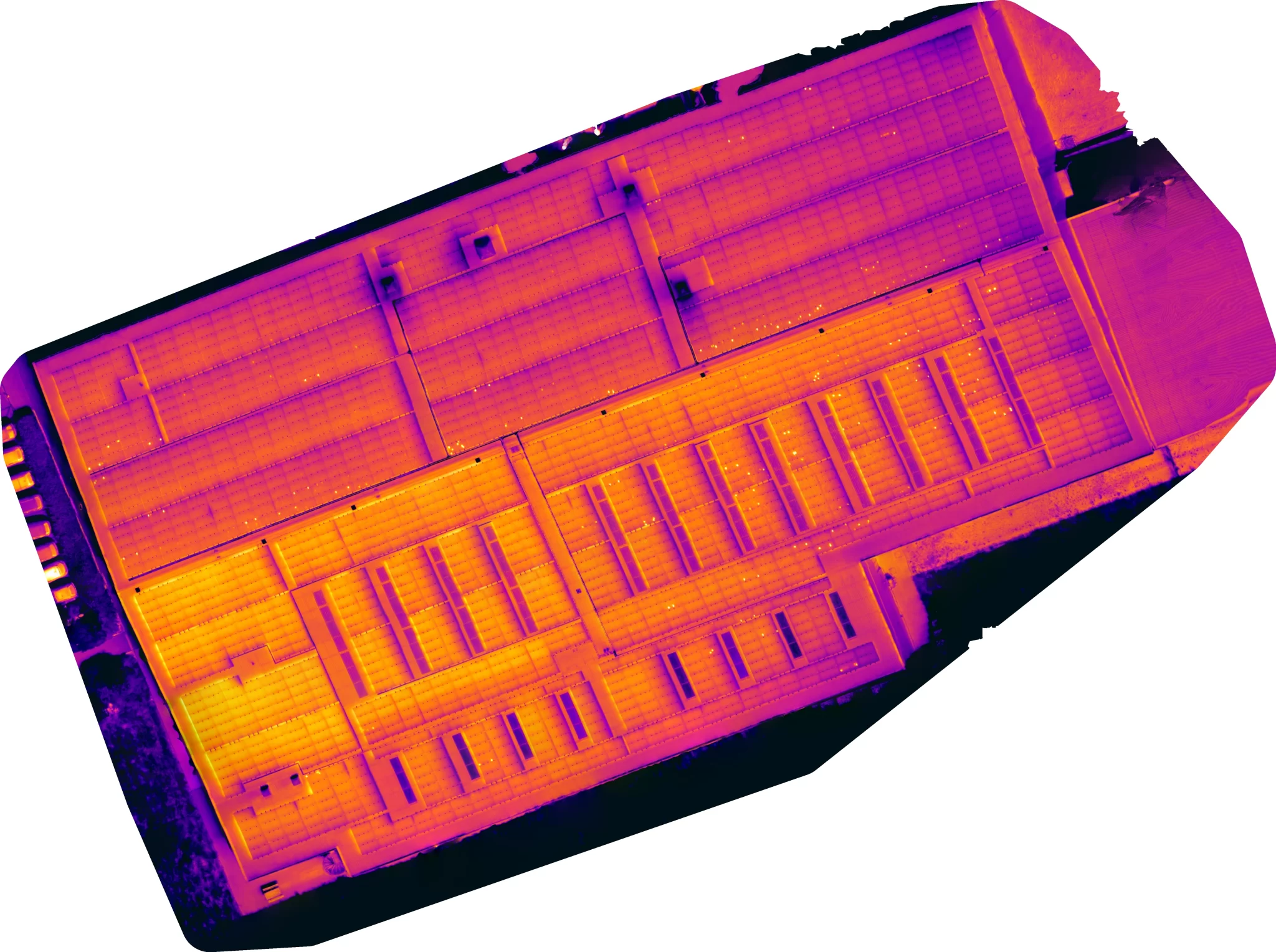
A solar PV thermographic inspection of a large commercial rooftop array in South West England has identified a widespread population of cell-level thermal anomalies across both roof zones of the installation. Conducted under IEC 62446-3:2017 by aerial drone, the survey captured and analysed forty detailed thermograms under clear-sky, high-irradiance conditions. The dominant finding was a consistent, symmetrical pattern of discrete cell-level hotspots, several exceeding 100°C, a signature that points to a cell-level electrical origin rather than an external cause. The majority of findings were classified as a Safety consequence under the Drone Media Imaging Consequence Classification framework, reflecting a credible risk to the building fabric where absolute temperatures approach the threshold for encapsulant degradation. Two lower-magnitude string-level conditions were also identified, classified as a Yield consequence. The survey demonstrates the value of routine thermographic inspection in surfacing conditions that are not visible to the naked eye, giving the asset owner a clear, Level 3 certified basis for prioritising further investigation.
Project Overview
Subject
solar PV thermographic inspection, commercial rooftop solar, South West England, solar asset owners, IEC 62446-3
Skills Used
Hotspot Detection, Delta-T Assessment, IEC 62446-3 Solar Thermographic Inspection
Portfolio Tags
Solar PV Inspection, Commercial Rooftop Solar, South West England, IEC 62446-3, Asset Management, Drone Media Imaging, Aerial Thermography, What Does A Solar Thermal Inspection Find
What Does A Solar PV Thermal Inspection Find, Commercial Rooftop Solar Inspection South West England, IEC 62446-3 Solar Thermography ServicesWhat Does A Solar PV Thermal Inspection Find, Commercial Rooftop Solar Inspection South West England, IEC 62446-3 Solar Thermography Services
Solar PV Thermographic Inspection Uncovers Widespread Safety Findings in South West England
~ Forty thermograms, two roof zones, one clear picture of array health ~
Level 3 thermal inspection of a commercial solar asset
Solar PV Thermographic Inspection of a Commercial Rooftop Array
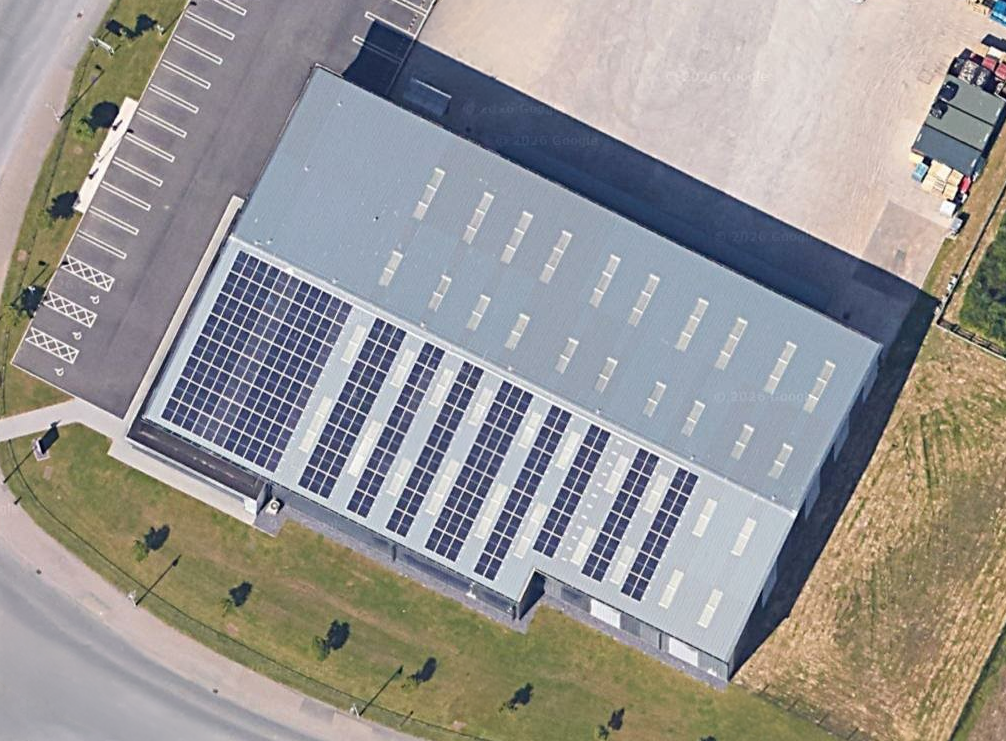
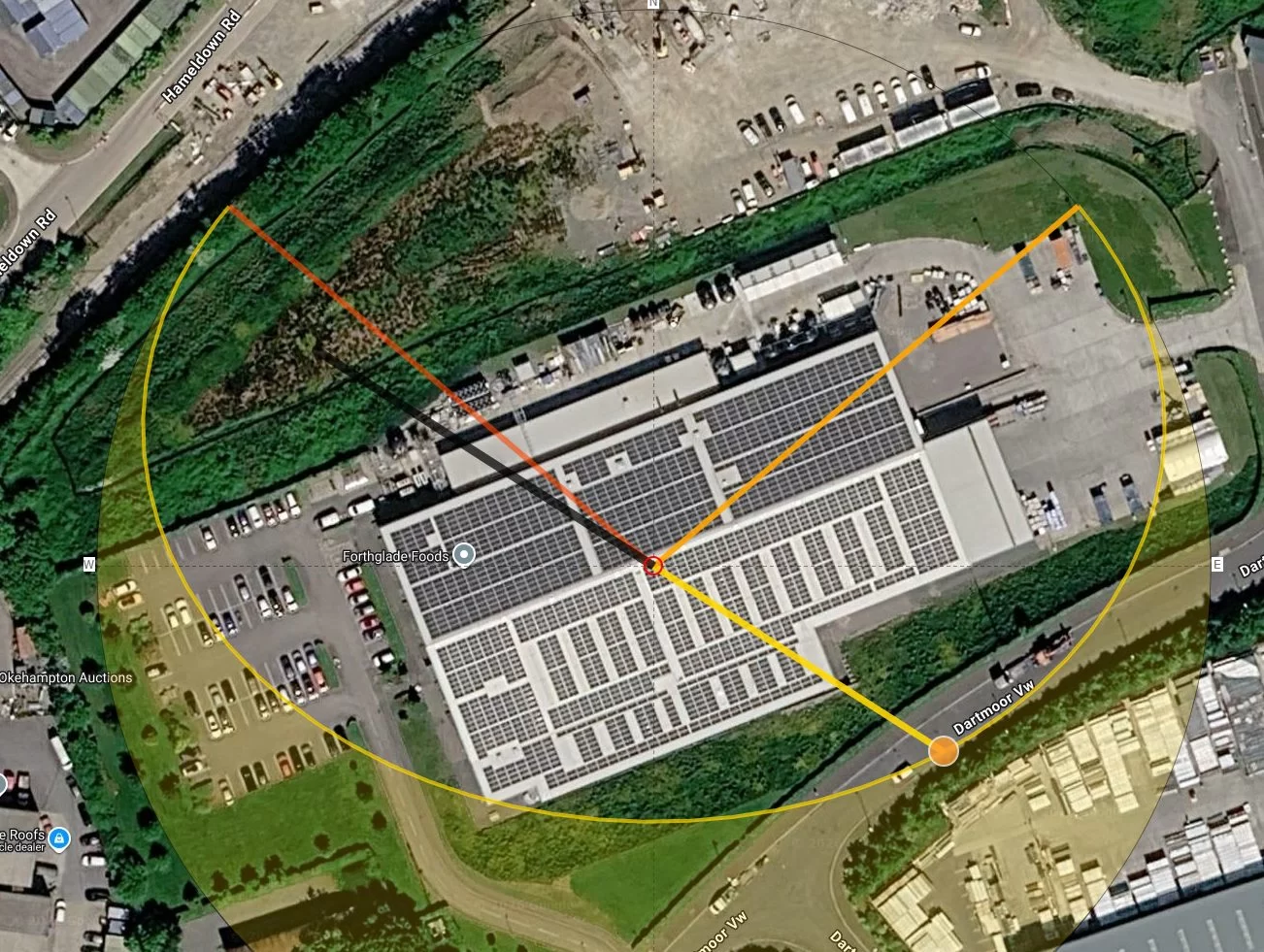
This inspection was carried out for the owner of a large commercial rooftop solar installation in South West England, as part of a routine thermographic survey of the array’s operational condition. The site comprises close to 1,900 modules across two roof zones, a scale at which even a small population of underperforming or degrading modules can represent a measurable loss in generation, alongside a potential safety concern if left unaddressed. Routine thermal inspection of this kind is increasingly recognised as a standard part of responsible solar asset management.
Solar cells generate heat as a normal by-product of operation, but a healthy module distributes that heat evenly across its surface. Where a cell develops a fault, whether a manufacturing shunt, a microcrack, or a developing connection issue, it can no longer dissipate heat in the same way as its neighbours, and a localised hotspot appears. Aerial thermal imaging makes this pattern visible from above, at a scale and speed that would be impractical to achieve from the ground, and well before any change would be visible to the naked eye.
The survey and analysis were delivered by Drone Media Imaging, a Level 3 solar PV thermography specialist, in accordance with IEC 62446-3:2017. Every classified finding was assessed against a per-thermogram reference baseline and reviewed at Level 3 before being carried into the final report, ensuring the classifications reflect genuine thermal evidence rather than a preliminary read.
Governing Standards
- IEC 62446-3:2017, the governing standard for this survey, sets out the methodology for outdoor thermographic inspection of PV modules and plants.
- ISO 18436-7, the thermographic condition monitoring and diagnostics competence framework underpinning our Level 3 Master Thermographer certification.
How was the inspection carried out?
How Does Aerial Thermal Imaging Identify Solar Panel Faults?
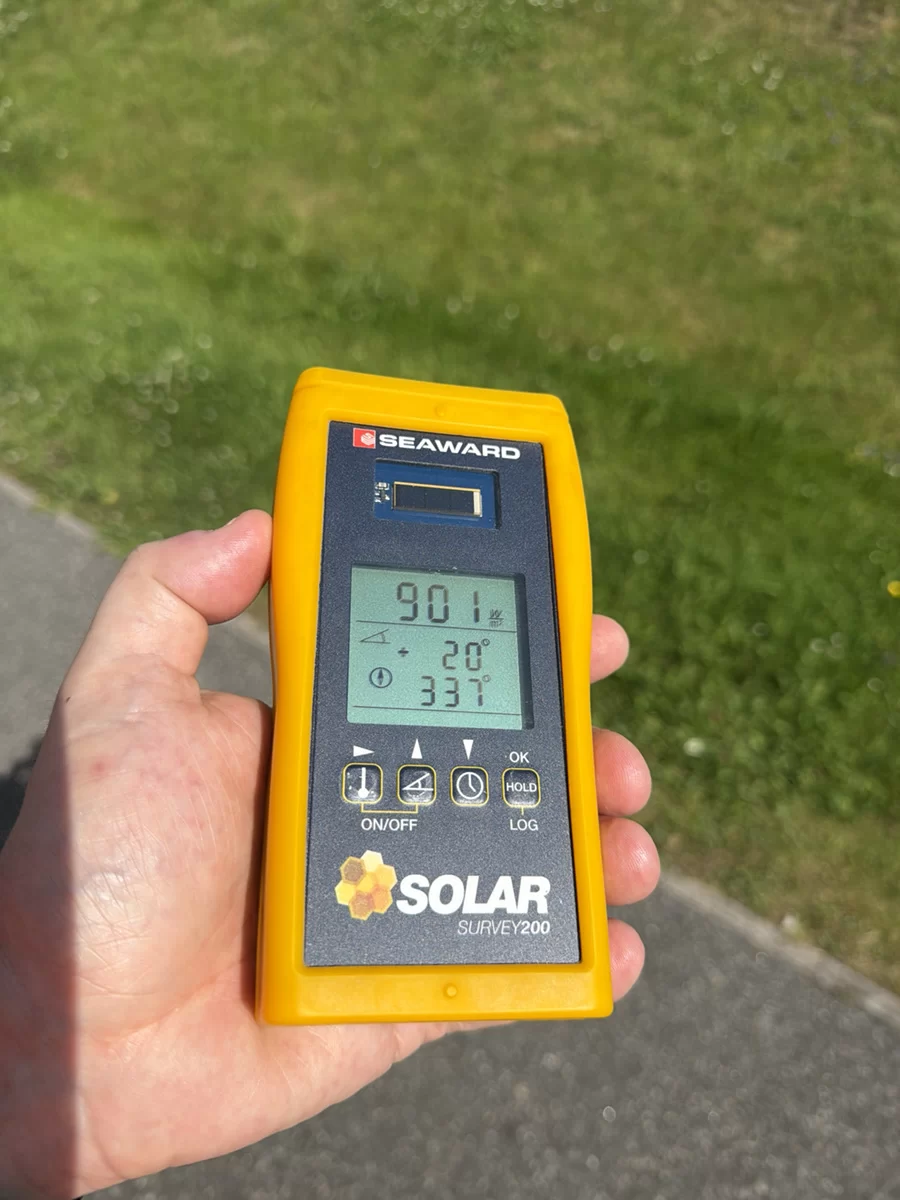
The survey was conducted under clear-sky conditions with solar irradiance held consistently above 900 W/m², comfortably exceeding the minimum threshold required by IEC 62446-3:2017 for a reliable thermographic assessment. Wind speed remained close to still throughout, and the inspection was timed close to solar noon to ensure representative thermal loading across the array.
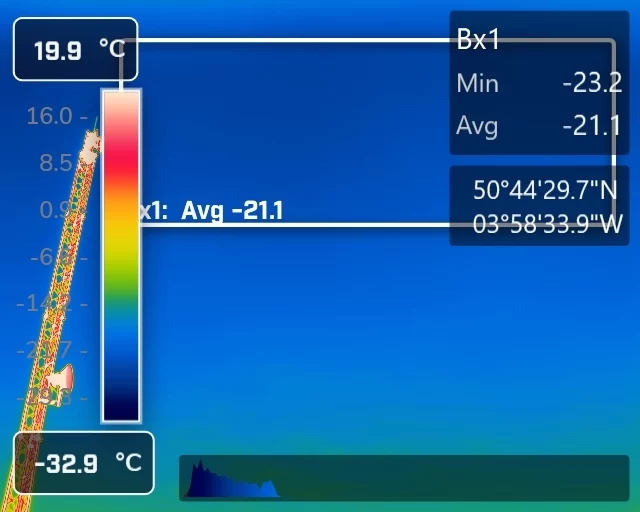
Aerial thermal imaging was captured using industry-grade radiometric thermal equipment, flown at a consistent altitude across both roof zones to ensure comparable image quality and coverage. Each captured thermogram was reviewed against a reference module within the same image, a clean, uniformly irradiated area of the array with no visible anomaly, which sets the baseline against which every anomaly on that thermogram is measured. This per-thermogram baseline approach accounts for natural variation in conditions across a large roof and across the survey window, so classifications reflect genuine thermal deviation rather than incidental differences in lighting or angle.
Forty detailed thermograms were captured and analysed across the two roof zones, covering the full accessible module population. Each classified finding was assessed on two independent measures: a five-tier severity scale reflecting the thermal magnitude of the anomaly, and a separate consequence classification reflecting its operational meaning, whether a genuine safety concern, a measurable reduction in output, or a condition likely to progress if left unaddressed.
- Included: full aerial thermographic survey of the accessible module population across both roof zones
- Included: Level 3 classification and reporting of all identified thermal anomalies
- Not included: electrical string testing or intrusive investigation
- Not included: remedial works of any kind
What Did the Thermal Survey Find?
The dominant finding across both roof zones was a widespread population of discrete, cell-level thermal anomalies. These presented as individual hotspots confined to single cells, with a consistent, symmetrical morphology repeated across a large number of modules. Several of the most severe findings reached absolute temperatures in excess of 100°C, well above the threshold at which the encapsulant layer protecting the cell begins to degrade, and one of the highest readings also crossed the structural fire risk threshold applied to commercial roof installations.
The symmetrical, repeating character of these anomalies is diagnostically significant. It points to a cell-level electrical origin, such as manufacturing-related shunting or microcracking, rather than an external or environmental influence. Because an isolated cell fault does not in itself reduce a module’s output, thanks to the bypass diode that maintains the wider circuit, these findings were classified as a Safety consequence rather than a Yield consequence under the Drone Media Imaging Consequence Classification framework: the concern they present is thermal and fire-related, not one of lost generation.
Two further conditions, both confined to one roof zone, presented very differently: a uniform elevation running along the full length of an electrical string, with no discrete hotspot within it. This is the signature of a string not delivering its generated energy into the load, and was classified as a Yield consequence, a measurable reduction in output requiring electrical investigation to confirm the underlying cause.
What Happens Next?
Given the number and severity of the Safety-classified findings across both zones, immediate investigation by a suitably qualified electrical contractor was recommended, prioritised by the modules exhibiting the highest absolute temperatures. The full findings, including every classified thermogram, were delivered as a certified Level 3 report, giving the asset owner a defensible, evidence-based basis for planning that investigation and budgeting for the work involved.
- Investigation of Safety-classified modules by a qualified electrical contractor, prioritised by severity
- Electrical investigation of the two string-level Yield findings to confirm underlying cause
- Reassessment of lower-severity findings at the next scheduled inspection interval
Cases like this show why periodic thermal inspection earns its place in a solar asset’s maintenance programme. A fault of this kind produces no visible sign at ground level and no immediate change in output at the module scale, yet it can represent a genuine fire risk if left undetected. Regular inspection catches it early, while the cost and scope of remedial work is still manageable.
A Note on Site Condition
The survey also recorded significant bird soiling across both roof zones, a maintenance matter in its own right and one with real longer-term consequences for output and module condition if left untreated. It is worth being precise about the relationship between the two findings: the survey found no evidence that the soiling caused the cell-level anomalies described above, and the symmetrical pattern of those anomalies points instead to a cell-level electrical origin. Cleaning is recommended on its own merits as good asset maintenance, not as a fix for the thermal findings, and the two matters are addressed independently in the client’s report.
Know What Your Solar Array Is Really Doing
For commercial solar asset owners who want evidence, not assumptions, about array condition. Drone Media Imaging delivers IEC 62446-3:2017 solar PV thermographic inspection for commercial rooftop and ground-mounted arrays, every survey analysed and signed off by our Level 3 Master Thermographer. We work across Sussex, Hampshire, Kent and Surrey, and travel throughout the UK, Ireland and Europe. If you want a clear, certified picture of your array’s condition, get in touch to discuss your site.