How Does An IEC 62446-3:2017 Solar PV Thermographic Inspection Work?
A commercial food distribution operator in Wiltshire commissioned Drone Media Imaging to carry out an IEC 62446-3:2017 compliant thermographic inspection of their rooftop solar PV installation. The array had not previously been formally inspected using drone thermography, and the commission reflected the operator’s commitment to proactive asset management and site safety governance. Under near-ideal survey conditions, with irradiance exceeding 1,060 W/m² and a clear sky throughout the session, the inspection returned a dataset containing some of the most significant thermal anomalies encountered in field survey conditions, including multiple CRITICAL severity findings with Safety consequence classifications and peak temperatures approaching 122°C. This post sets out what was found, why it matters, and what the data means for the operator.
Project Overview
Subject
olar PV thermographic inspection, IEC 62446-3 solar survey, commercial solar inspection Wiltshire, drone solar thermal imaging, solar hotspot detection
Skills Used
IEC 62446-3 solar thermographic inspection, aerial thermographic survey, qualitative thermal analysis
Portfolio Tags
solar PV inspection, IEC 62446-3, thermographic survey, drone thermal imaging, Wiltshire, commercial solar, critical fault detection, Level 3 thermography
IEC 62446-3 solar PV thermographic inspection Wiltshire, commercial rooftop solar thermal survey critical findings, drone thermographic survey critical safety faults solarIEC 62446-3 solar PV thermographic inspection Wiltshire, commercial rooftop solar thermal survey critical findings, drone thermographic survey critical safety faults solar
Solar PV Thermographic Inspection Uncovers Critical Safety Findings in Wiltshire
The numbers were exceptional, and so was the hazard they revealed
IEC 62446-3 Solar Thermal Survey Identifies Multiple Critical Anomalies on Wiltshire Array
Critical Solar Faults Confirmed by IEC 62446-3 Drone Survey on Wiltshire Commercial Roof
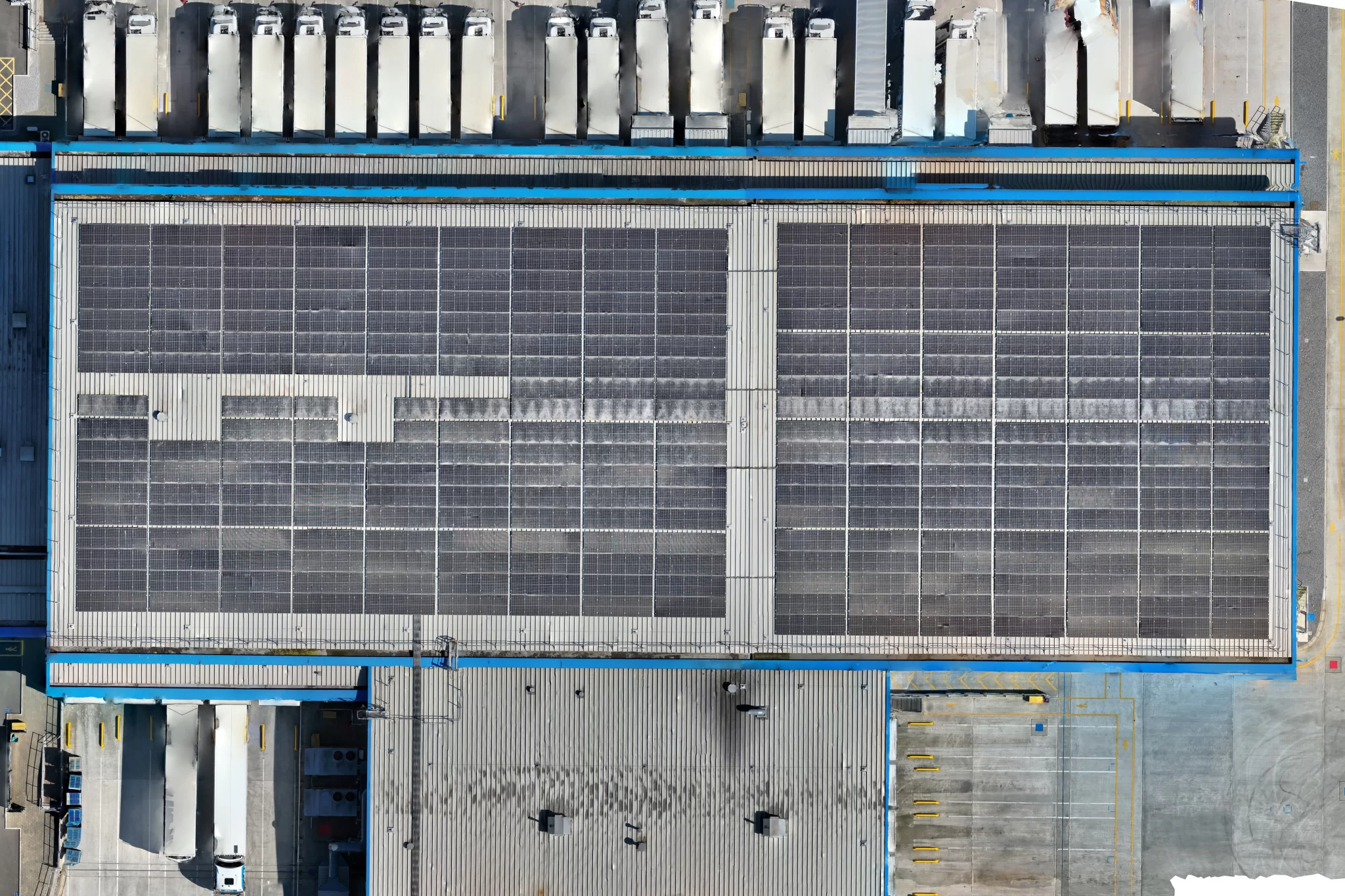
The client operates a substantial commercial logistics facility in Wiltshire, and the rooftop solar PV installation represents both a significant energy asset and an ongoing responsibility in terms of site safety management. IEC 62446-3:2017 sets out the conditions, methods, and documentation requirements for thermographic inspection of photovoltaic installations, and the commission reflected the operator’s intention to conduct a formal compliant inspection as part of their asset management cycle. Drone Media Imaging was engaged to deliver the complete inspection scope, from data capture through to Level 3 analysis, annotation, and the final certified report, with no element of the work subcontracted.
The rooftop presents a thermographic assessment challenge that differs from a standard flat installation. The curved roof profile creates a predictable and continuous thermal gradient across the module population as the angle of each module relative to the sun changes from the ridge outward, and this gradient has to be identified and formally excluded from anomaly classification before the genuine fault population can be assessed accurately. Understanding what is an environmental thermal effect and what is a genuine fault is a Level 3 interpretive function, and on a curved roof that distinction matters from the first thermogram to the last.
The survey was conducted across two defined zones covering the full accessible extent of the installation, with 29 thermograms carrying classified anomalies submitted for Level 3 analysis and annotation. All findings were classified under both the IEC 62446-3:2017 severity framework and the Drone Media Imaging Consequence Classification framework, which translates each technical severity grade into a directly actionable business and safety decision, distinguishing Safety consequence findings that require immediate investigation from Yield consequence findings where a cost-benefit decision on timing remains available to the operator. In this dataset, the balance between the two was heavily weighted towards Safety.
- IEC 62446-3:2017 governs the thermographic inspection of photovoltaic modules and arrays, defining survey conditions, anomaly categories and reporting requirements for solar PV thermal surveys.
- ISO 18436-7 defines the training and certification requirements for thermographic condition monitoring personnel.
IEC62446-3:2017 – Solar PV Thermal Inspections
How Does an IEC 62446-3:2017 Solar PV Thermographic Inspection Work?
Solar PV thermographic inspection is a non-intrusive method of identifying faults and thermal anomalies within a photovoltaic installation by measuring the infrared energy each module surface radiates under load. Every solar cell dissipates a small proportion of its energy as heat during normal operation, and when something goes wrong, whether that is a failing bypass diode, a damaged cell, a degraded connection, or a fault driven by partial shading, the affected area generates excess heat that propagates to the module face and becomes detectable in the thermal image. Captured from above under load and at high irradiance, that thermal signature identifies faults that are entirely invisible to any inspection method not using thermal imaging.
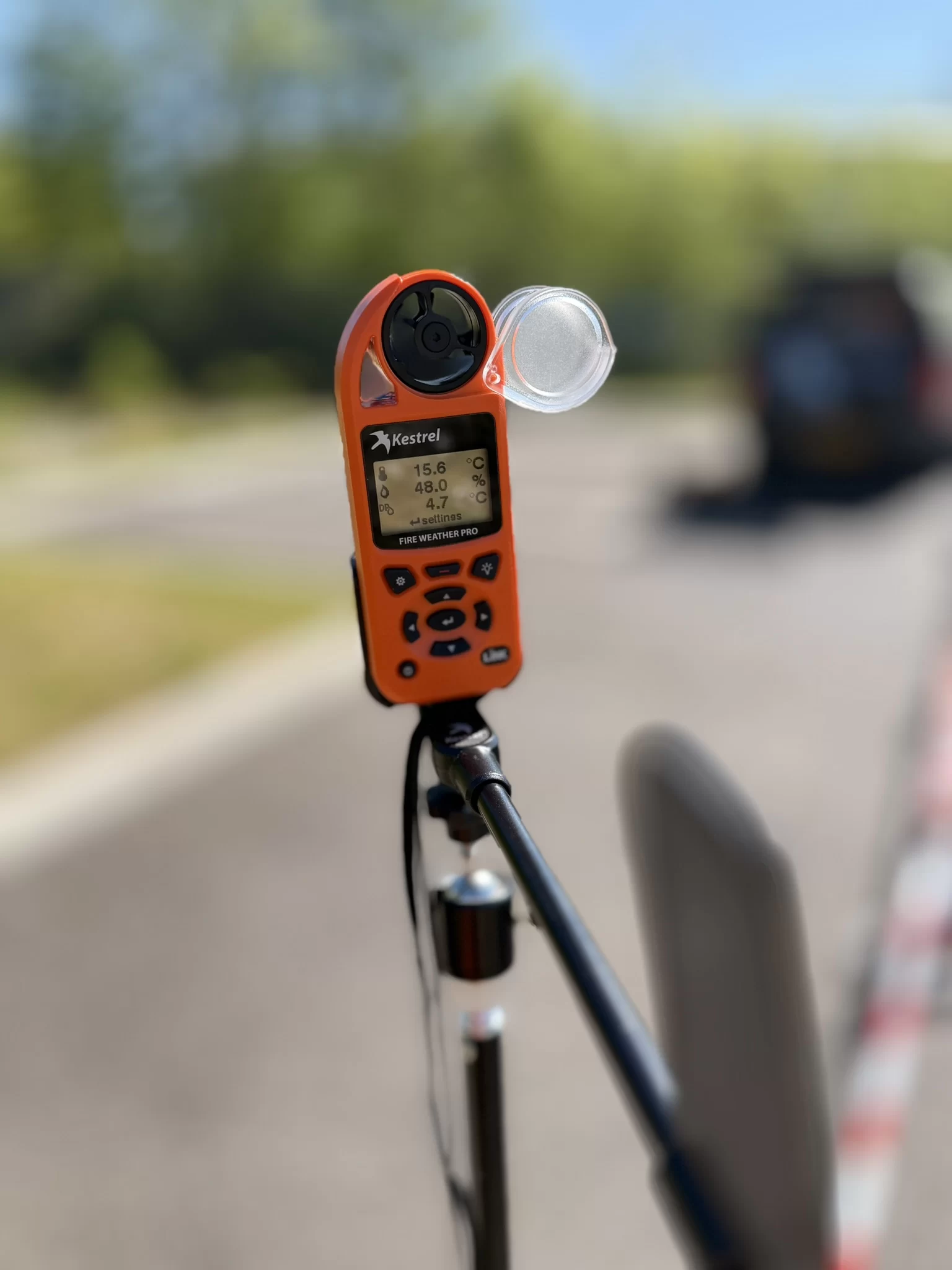
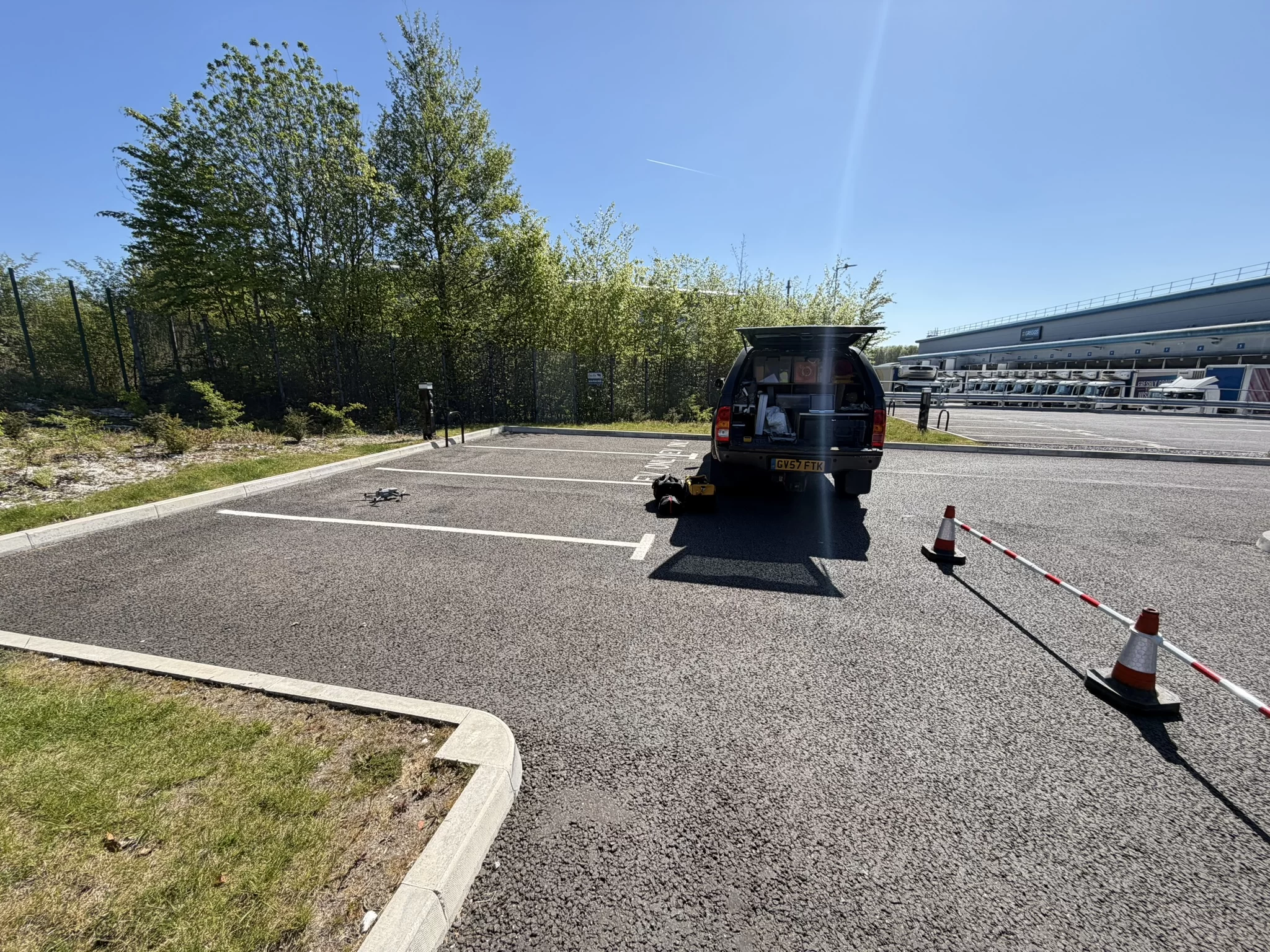
This inspection followed the IEC 62446-3:2017 simplified thermographic inspection protocol, which sets minimum conditions for a compliant solar thermographic survey, including an irradiance threshold of at least 600 W/m², wind speed limits, and the requirement that modules are under active load throughout. All conditions were met or exceeded at this site, with irradiance recorded at 1,067 W/m², wind speed below 1 m/s, and a completely clear sky providing stable irradiance throughout the survey window. Both array zones were covered in a single continuous 30-minute session, with all strings confirmed as under load.
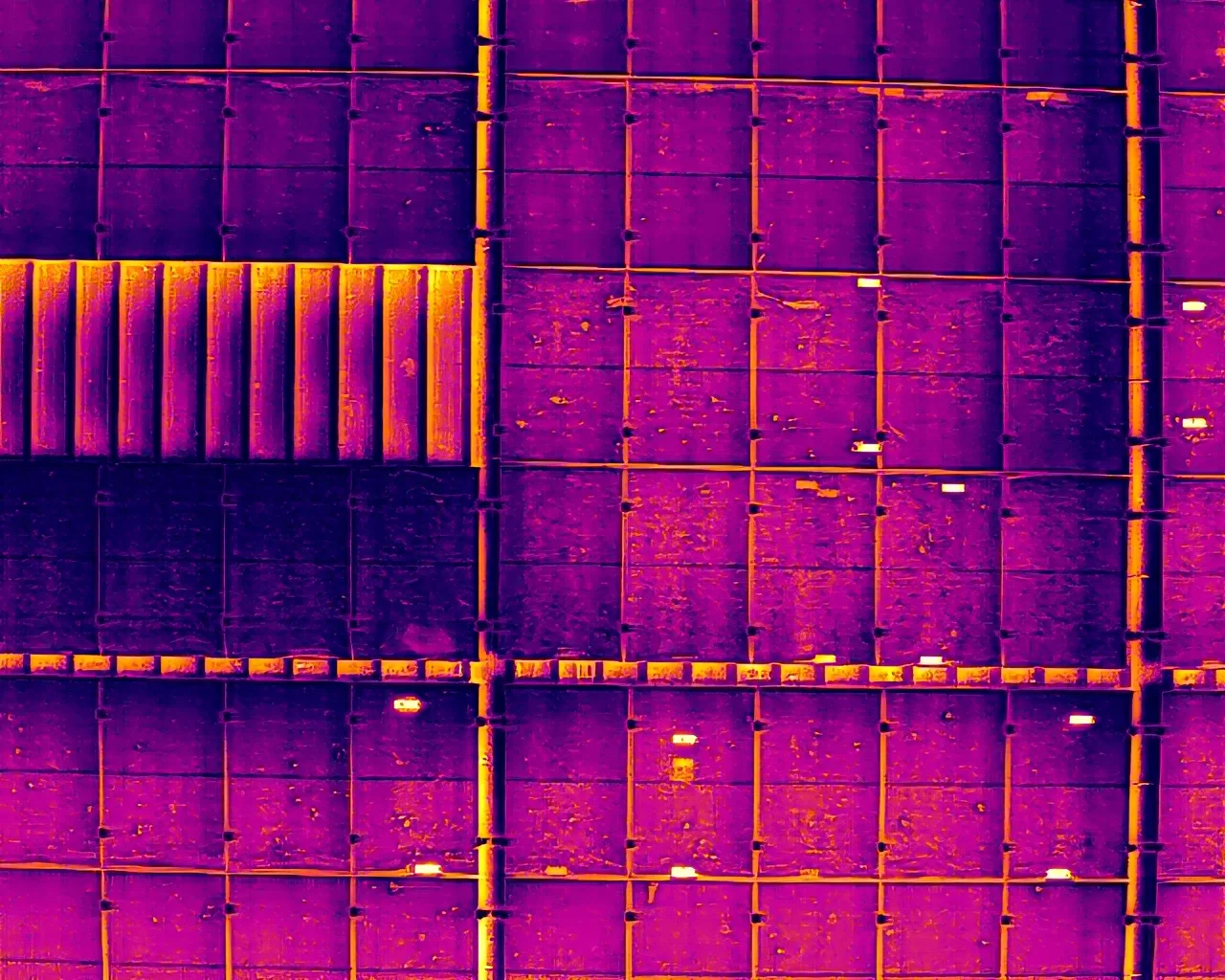
Anomaly classification is built on a thermal reference baseline designated EL1, established from a clean, uniformly irradiated reference module within each thermogram frame. The temperature differential between the anomalous measurement and the EL1 value, expressed as ΔT, determines the IEC 62446-3:2017 severity grade. Below 4°C ΔT is sub-threshold; 4 to 10°C is Low to Medium; 10 to 20°C is Medium to High; 20 to 40°C is High; and above 40°C ΔT constitutes a CRITICAL finding. In this dataset, the most severe measurements sat considerably above that upper threshold.
The scope of this inspection included:
- Two defined survey zones covering the full accessible installation
- 1,408 modules surveyed across both zones
- Drone-mounted thermal imaging at 20 m altitude above the module surface
- Irradiance 1,067 W/m², wind 1.0 m/s, sky clear throughout
- All strings confirmed under active load for the full survey session
- 29 thermograms with classified anomalies reviewed and annotated at Level 3
What Did the Solar Thermographic Survey Find?
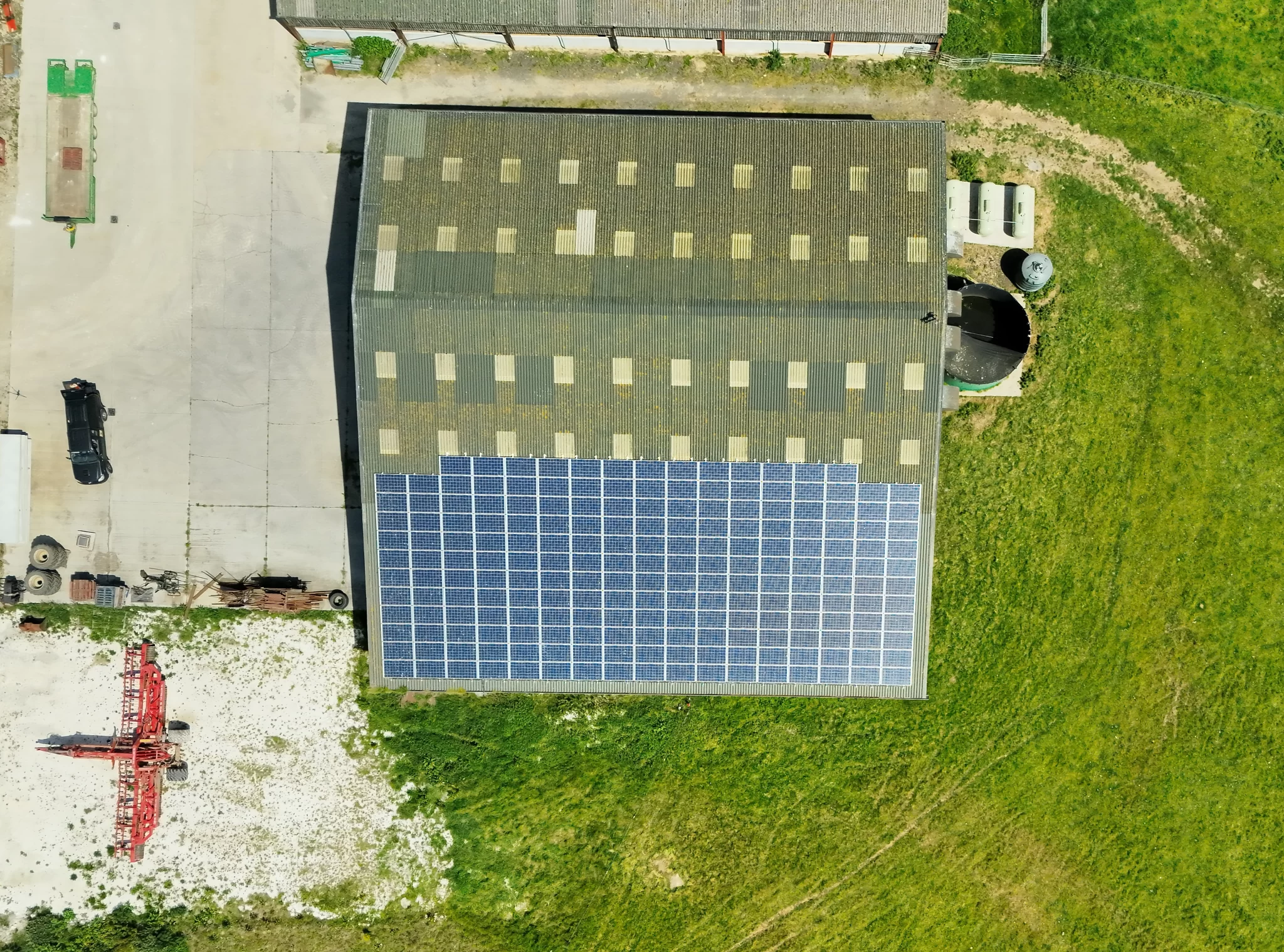
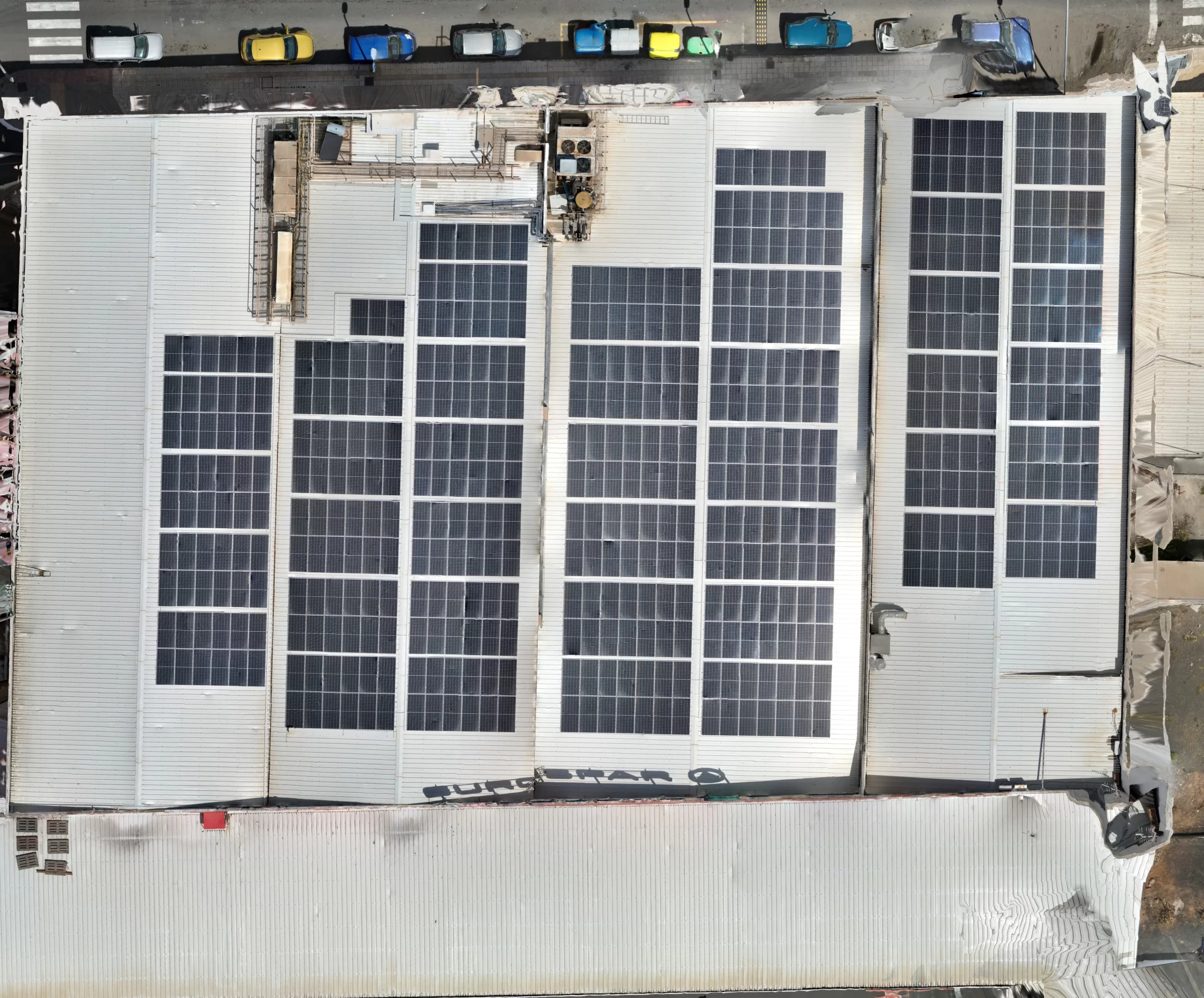
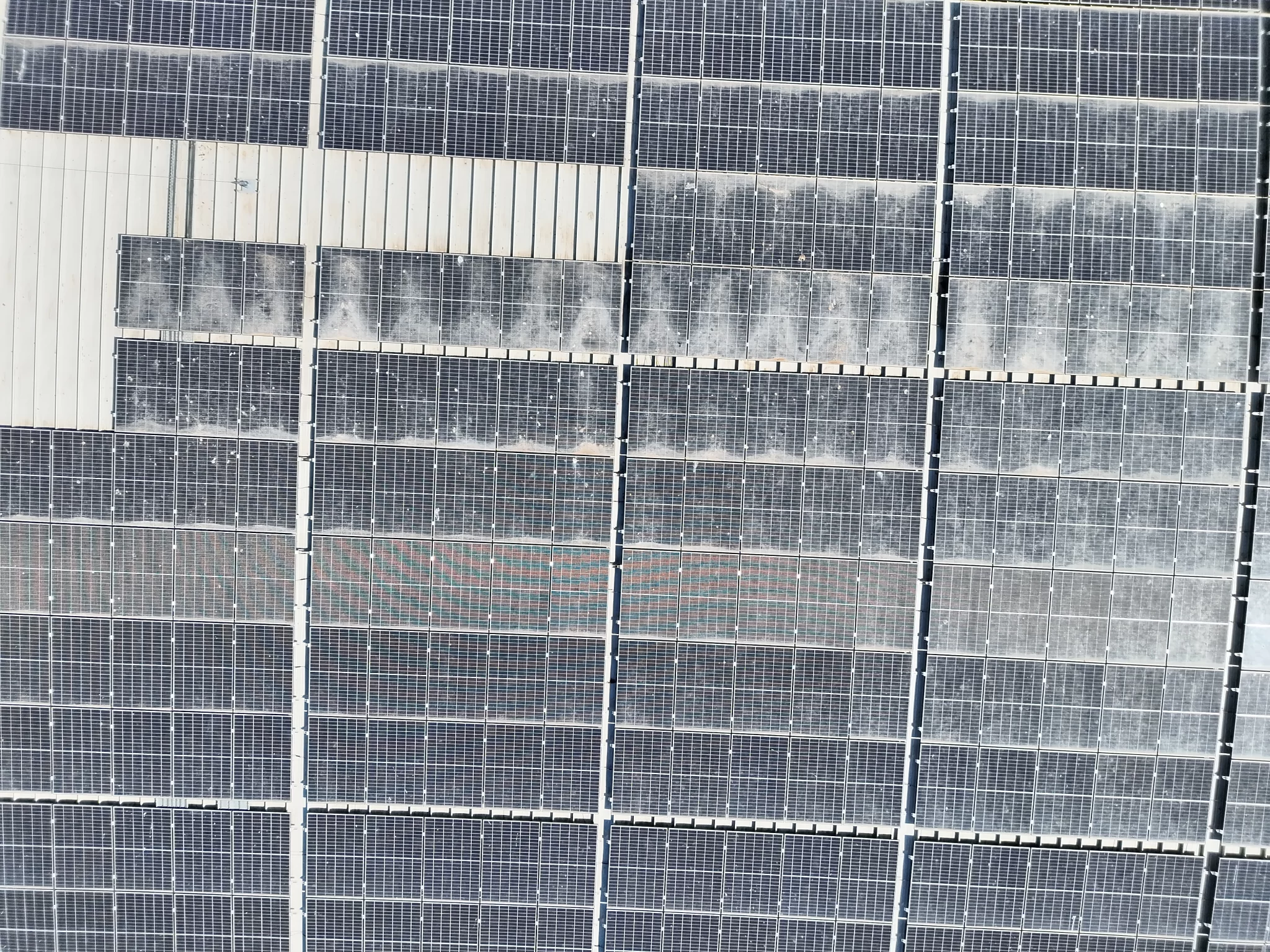
The dataset from this inspection is dominated by Safety consequence findings at High and CRITICAL severity, and the pattern of where those findings are concentrated tells a clear and consistent story. The vast majority of the most severe anomalies sit in the middle and upper third of the installation, which corresponds precisely with the zone of heaviest soiling visible in the co-registered visible-light imagery captured during the survey. Solar modules accumulate dirt, dust, and particulate matter over time, and on a curved roof the gravity-driven soiling pattern results in the upper portions of each module carrying the highest contamination load as material settles rather than washing freely to the ground.
When part of a solar cell is shaded or its output impaired by soiling, the cell effectively becomes a consumer of power rather than a producer, and the active cells in the string drive current through it in reverse. This reverse-bias condition generates localised heat within the affected cell and activates the module’s bypass diode to protect the string. Where that bypass diode has been subjected to repeated stress or has begun to degrade, the junction box heats significantly as the diode conducts. The probable primary mechanism driving the anomaly population at this installation is this soiling-triggered reverse-bias cycle, and the concentration of the most severe findings in the soiling-heavy zone is consistent with that interpretation.
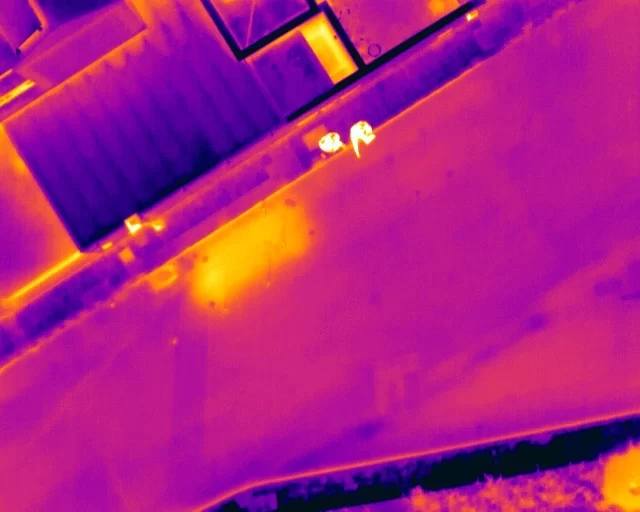
Thirteen thermograms carry CRITICAL severity classifications, with multiple individual measurements exceeding 40°C ΔT above the EL1 baseline. The peak temperature recorded across the full dataset was 121.9°C, at a delta of 74.6°C above the thermogram baseline. Two persistent severe thermal zones were identified: at one array location, CRITICAL temperatures were independently confirmed in separate thermograms covering the same modules on two distinct survey passes during the same session, and the same pattern was observed at a second location in the opposite zone. When the same module positions return CRITICAL readings across independent captures, the data confirms a sustained thermal condition rather than a transient event.
Temperatures at this level carry a consequence beyond performance impact alone. Above 85°C at the module face, and above 40°C ΔT, the Drone Media Imaging Consequence Classification framework applies a mandatory Safety consequence classification, reflecting the credible risk of EVA encapsulant thermal degradation, DC arc fault initiation, and fire propagation to the building fabric beneath the array. That classification is not a conservative interpretation at these temperatures; it is the only defensible one.
The Drone Media Imaging Consequence Classification framework separates every finding into one of three consequence categories, Safety, Yield, or Degradation Trajectory, so that the client receives a clear priority structure rather than a technical findings list requiring specialist interpretation to act on. Safety consequence findings carry a requirement for immediate investigation by a suitably qualified electrical contractor. Yield findings represent a measurable but non-urgent performance impact where the timing of remediation is a cost-benefit decision. Degradation Trajectory findings indicate a developing condition that warrants reassessment at the next inspection interval. In this dataset, fourteen thermograms carry Safety consequence, with the CRITICAL findings representing the highest tier of priority.
For the CRITICAL and High severity Safety findings, the course of action is straightforward: areas warranting investigation by a suitably qualified electrical contractor should be progressed without delay. The two persistent severe thermal zones represent the most critical priority within the programme, as the confirmation of CRITICAL temperatures on independent captures eliminates any uncertainty about the sustained nature of the hazard. The priority ranking provided in the findings table allows the electrical investigation programme to be planned efficiently, beginning with the most severe confirmed hazards.
Alongside the electrical investigation, the inspection data makes a strong case for a targeted cleaning programme across the full installation. Soiling is the probable primary driver of the anomaly population, and removing that trigger will allow a follow-up thermographic inspection to distinguish anomalies that resolve with cleaning from those that represent underlying hardware degradation requiring intervention regardless of surface condition. That comparison is the most accurate picture of the installation’s true thermal health available without intrusive testing.
IEC 62446-3:2017 positions periodic thermographic inspection as a core element of solar PV asset management, and this inspection illustrates precisely why. Thermal conditions that develop invisibly under normal monitoring, and which carry no visible indicator at routine check frequency, can reach Safety-consequence severity in the absence of formal thermographic review. The data from this survey gives the operator the information to act; the Consequence Classification framework tells them in what order.
More Findings
Two things make this dataset genuinely exceptional. The first is the absolute temperatures recorded at the most severe hotspot locations. A peak measurement of 121.9°C at a delta of 74.6°C above EL1 is not a borderline CRITICAL reading; it is a temperature that places the finding firmly and unambiguously in the Safety consequence category, with no classification judgement required. Readings at this level are indicative of a fault condition that has been developing over an extended period and has established itself as a sustained thermal hazard at that module location.
The second is the confirmation of persistent thermal zones across independent survey passes. When the same module positions return CRITICAL temperatures in two separate thermograms captured during the same survey session from different flight lines and different angles, the data removes any residual uncertainty about whether the readings are transient artefacts. The conditions are sustained, the hazard is real, and the priority assigned to those locations in the investigation programme is fully supported by the evidence. Combined, these two characteristics produced a dataset that leaves no ambiguity about the urgency of the action required.
Looking for a Certified Solar PV Thermographic Inspection?
Drone Media Imaging delivers IEC 62446-3:2017 compliant solar PV thermographic inspections for commercial and industrial solar PV installations across Sussex, Hampshire, Kent, Surrey, and throughout the UK. All data capture, analysis, and reporting is delivered directly by Drone Media Imaging, with every inspection reviewed and certified by our Level 3 Master Thermographer. To discuss your inspection requirement, get in touch with Drone Media Imaging directly.