Commercial Solar Panel Thermal Survey, Critical And High Severity Findings
A commercial organisation in Herefordshire had installed a rooftop solar PV system in 2023 and commissioned its first thermographic inspection for insurance compliance purposes. With no prior survey history, no reported faults, and all strings believed to be under load, the system appeared to be operating normally. Drone Media Imaging conducted a full IEC 62446-3:2017 airborne thermal survey, completing Level 3 analysis of the resulting thermogram dataset. The findings told a very different story, with Critical Safety anomalies, two non-performing string circuits, and a further above-baseline fault condition identified across the installation.
Project Overview
Subject
solar PV thermal inspection, IEC 62446-3 solar survey, drone thermal imaging Herefordshire, solar panel fault detection, commercial solar thermography
Skills Used
IEC 62446-3 solar thermographic inspection, hotspot detection, delta-T assessment
Portfolio Tags
solar PV inspection, thermal drone survey, IEC 62446-3, Herefordshire, commercial solar, critical fault detection, Level 3 thermography, insurance compliance survey
IEC 62446-3 solar thermal inspection Herefordshire, critical solar panel fault found by thermal drone survey, commercial solar PV thermography for insurance complianceIEC 62446-3 solar thermal inspection Herefordshire, critical solar panel fault found by thermal drone survey, commercial solar PV thermography for insurance compliance
Solar PV Thermal Inspection Uncovers Critical Safety Faults in Herefordshire
What the eye cannot see, the thermal camera confirms
Drone Media Imaging Solar Thermal Inspection, Critical Safety Findings in Herefordshire
Commercial Solar Panel Thermal Survey, Critical and High Severity Findings Confirmed
The client, a commercial organisation operating from a purpose-built facility in Herefordshire, commissioned the survey as part of an insurance compliance programme for their 2023-installed rooftop solar PV system. The system had no reported fault history, no prior thermographic inspection record, and was believed to be operating correctly at the time of survey. The brief to Drone Media Imaging was straightforward: carry out the inspection, certify the outcome, and provide the report required for insurance purposes.
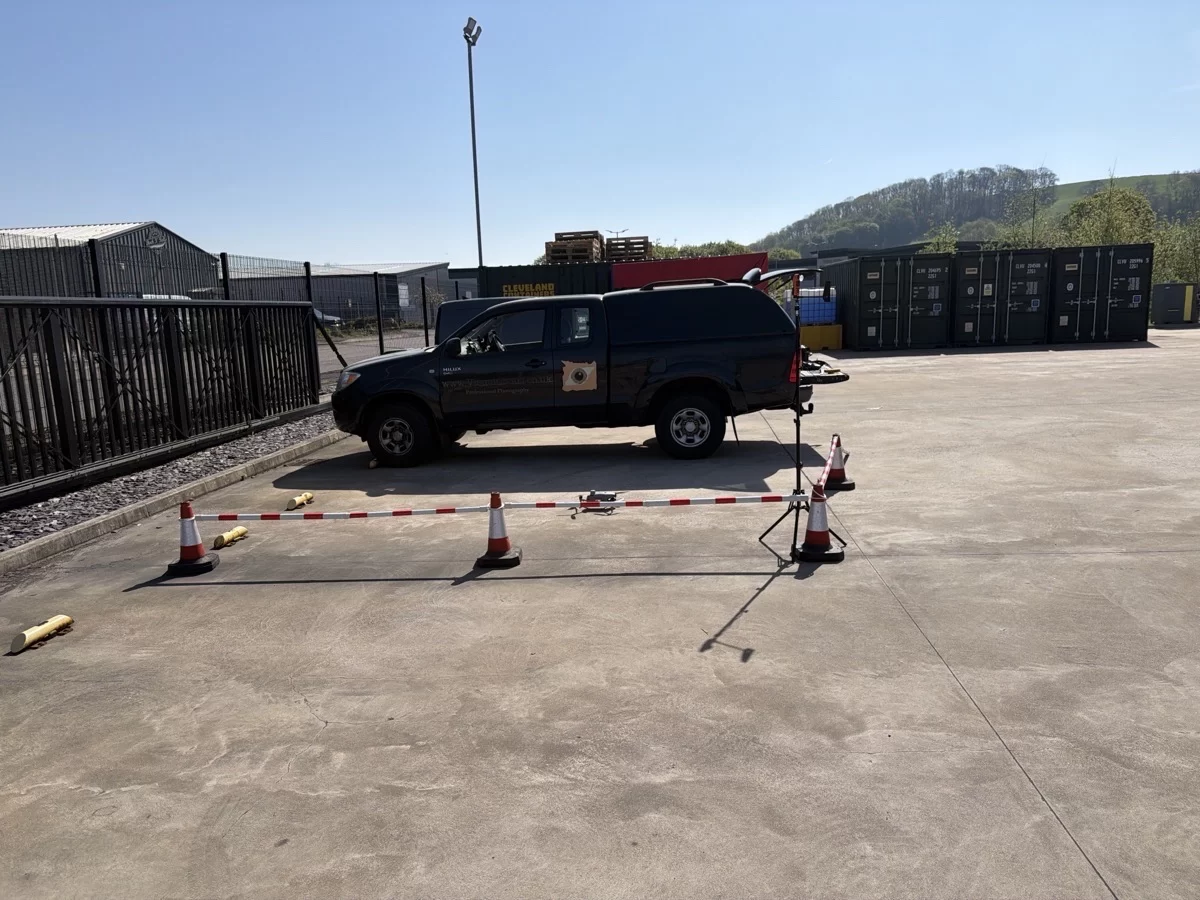
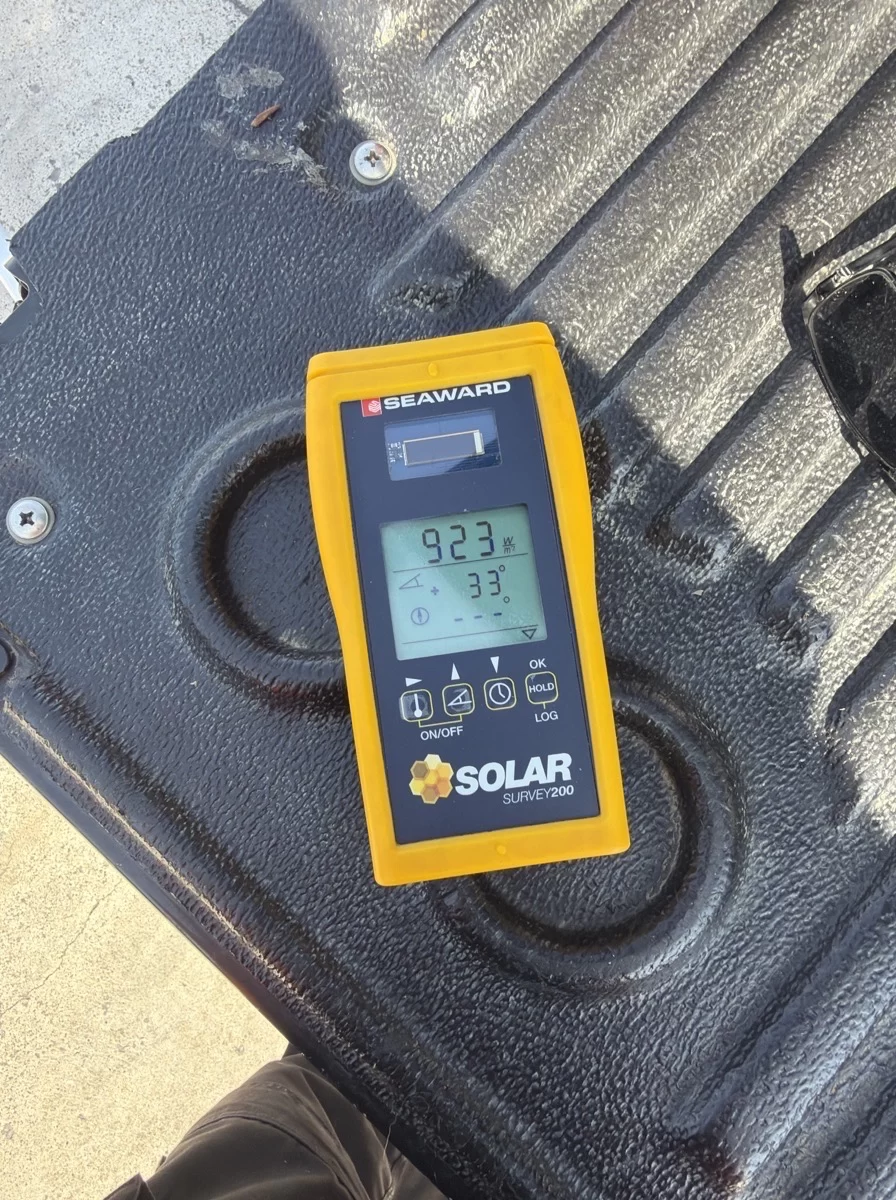
Drone Media Imaging conducted the survey under direct service protocol using an airborne thermal imaging platform operating at two survey altitudes, a high-altitude overview pass to establish the array-wide thermal picture, and a lower-altitude detail pass to achieve the cell-level thermal resolution required for fault identification and classification. All data capture and Level 3 analysis was delivered by Drone Media Imaging. Environmental conditions at survey were excellent throughout, with solar irradiance recorded at 923 W/m², zero cloud cover, and near-calm wind, all well within the IEC 62446-3:2017 minimum thresholds for a valid thermographic inspection.
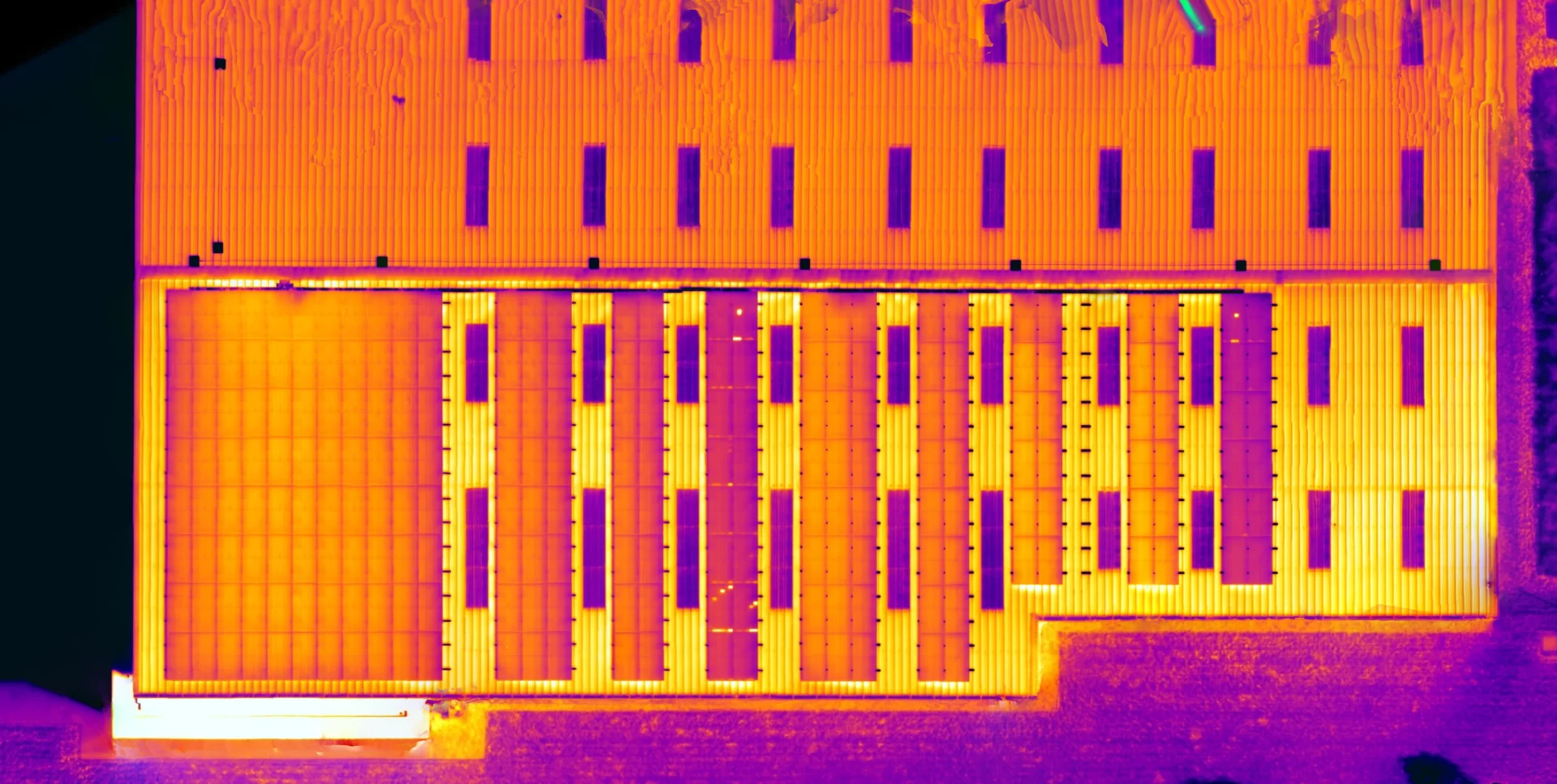
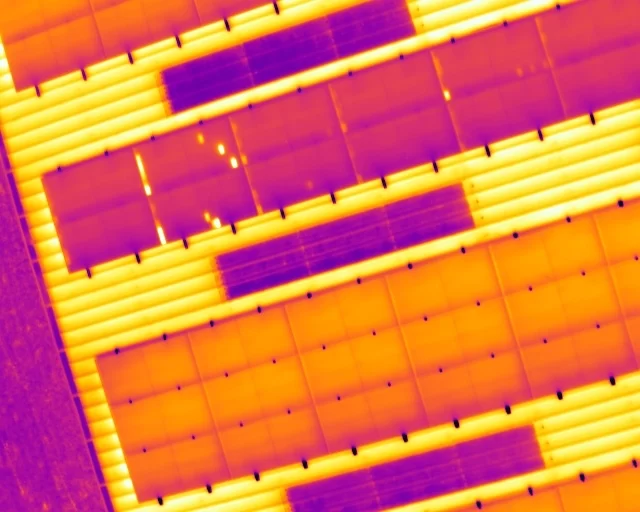
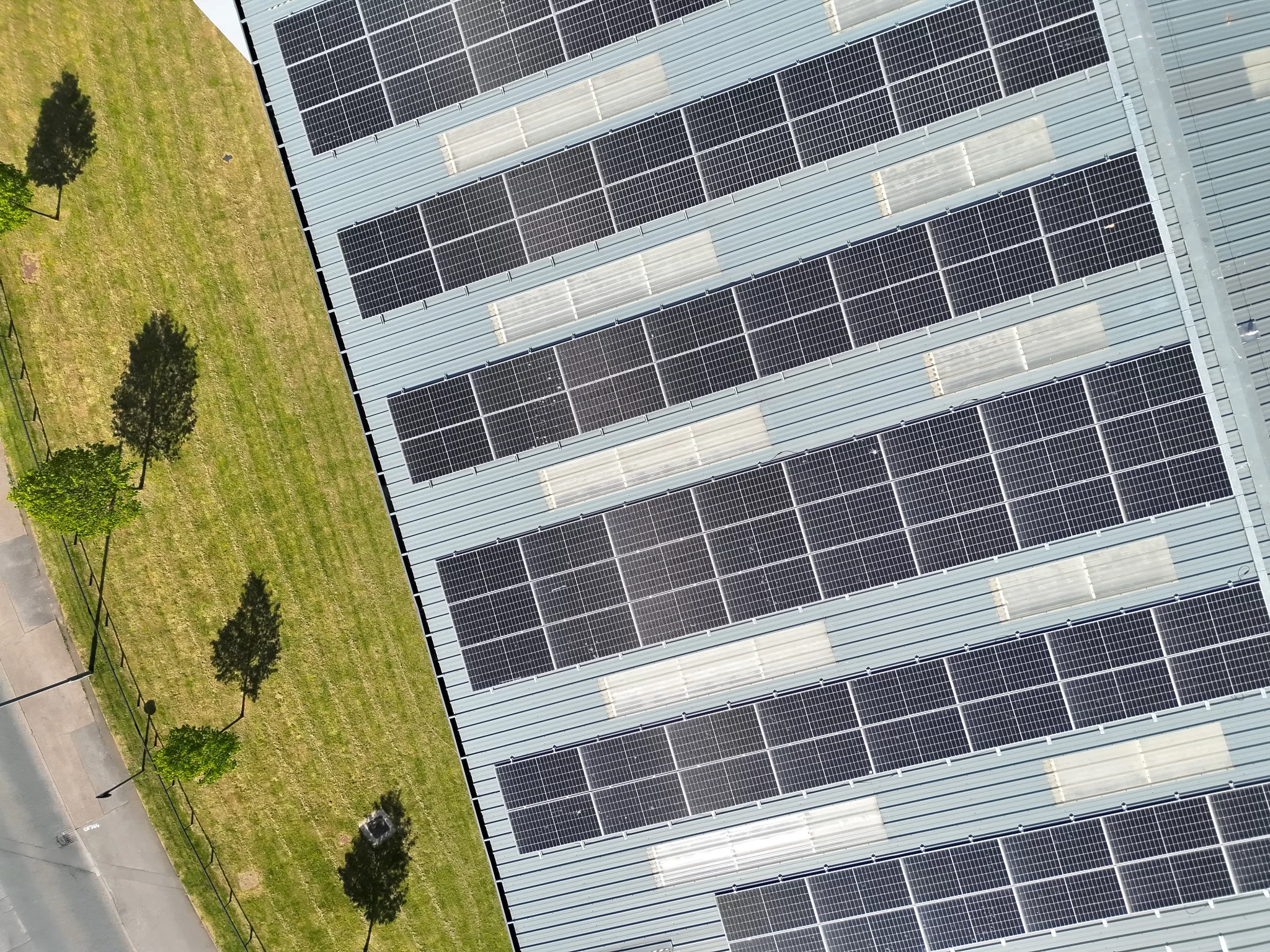
The inspection presented an analytically interesting challenge from the outset. Two discrete sections of the array presented with surface temperatures significantly below the rest of the installation, a pattern that required careful interpretation before any classification work could begin. Rather than a straightforward array of warm anomalies on a cool background, the dataset contained two distinct thermal populations, requiring the Level 3 analyst to establish which population represented normal operating behaviour and which was the subject of the investigation. The conclusion, supported by three independent baseline measurements taken from spatially separated zones of the warm majority population, was that approximately 80% of the visible array was operating normally, and the two cooler sections were the anomaly.
IEC62446-3 Solar PV Thermal Surveys
How Was the Solar Thermal Survey Carried Out?
Drone Media Imaging delivered the inspection under its direct service protocol, with all data capture, thermogram analysis, classification, and reporting completed in-house. The survey was conducted using an airborne thermal imaging platform at two operational altitudes. The first pass, at higher altitude, captured the full array in overlapping thermogram frames, establishing the array-wide thermal picture and confirming the spatial extent and character of all identified thermal features. The second pass, at lower altitude above the module surface, produced thermograms at the cell-level resolution required for fault morphology assessment, ΔT measurement, and formal IEC 62446-3:2017 classification.
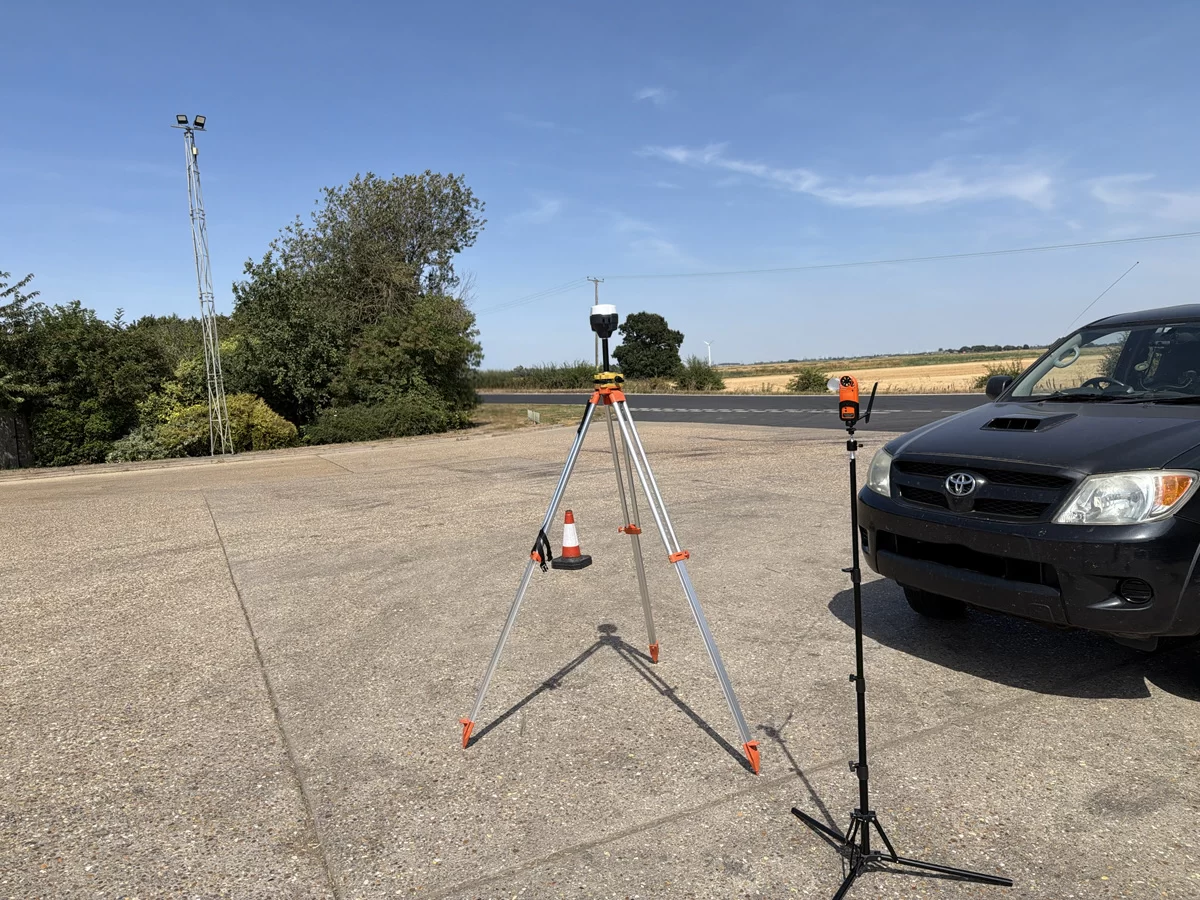
All radiometric parameters were applied prior to data capture, and environmental conditions were logged throughout the session using a calibrated weather meter. Solar irradiance was recorded at 923 W/m² against the IEC minimum threshold of 600 W/m², wind speeds remained well within the standard’s 7 m/s upper limit, and the sky was clear throughout the session with zero recorded cloud cover. These conditions are close to optimal for IEC 62446-3:2017 thermographic inspection, ensuring strong thermal contrast between operating modules and any fault conditions present.
The scope of this inspection included all accessible module-facing surfaces on the rooftop installation. Electrical testing, intrusive investigation, and access to inverter or string combiner components were outside the scope of the survey. The thermographic inspection is a non-intrusive, surface-based assessment and its findings are indicative of the observed thermal conditions under the specific loading and environmental conditions prevailing at the time of survey.
Scope at a glance:
- Full rooftop array, all strings under operational load
- High-altitude overview series and lower-altitude detail series
- IEC 62446-3:2017 compliant conditions throughout
- All Level 3 analysis, classification and reporting by Drone Media Imaging
What Did the Thermal Survey Find?
The inspection identified six classified anomalies across the rooftop array. Two of these carry Critical severity and Safety consequence classifications under both the IEC 62446-3:2017 framework and the Drone Media Imaging Consequence Classification system, and both require immediate investigation by a suitably qualified electrical contractor.
The most urgent finding was a cell-level hotspot recording a spot temperature of 88°C, confirmed by the Level 3 analyst in the detail thermogram series. This temperature exceeds the EVA encapsulant thermal degradation threshold of 85°C, the point at which the laminate bonding material within the module structure begins to break down irreversibly. A module operating at this temperature presents a credible risk of structural failure, arc fault, and, in a worst case, fire. The thermal signature was consistent with a cell-level shunt fault, where a resistive pathway within the cell drives localised internal heating from photocurrent even when the surrounding string circuit is not carrying normal load current. A concurrent connector-level anomaly at the same location recorded 71.5°C, exceeding the threshold above which DC arc fault and connector failure risk becomes a material concern. Both findings are classified independently and both require investigation concurrently.
Two string sections, each running the full visible extent of their column groupings, presented with surface temperatures between 6.7°C and 8.6°C below the established baseline, a pattern consistent with a significantly reduced or absent load current condition within those circuits. This type of thermal signature is indicative of an open-circuit, high-impedance, or string isolation fault, which may result from a blown string fuse, a tripped DC isolator, a faulty MC4 connector, or a faulted inverter MPPT input channel. Within both suppressed sections, superimposed cell-level hotspots were confirmed, driven by photocurrent circulating internally within defective cells under high solar irradiance. These hotspots occur independently of whether the external string circuit is carrying load current, and they are classified as separate findings from the string suppression condition itself.
A third string section, separate from the two suppressed circuits, presented with an above-baseline elevation consistent with increased series resistance, classified as Low to Medium severity with a Yield consequence. This condition is indicative of a measurable reduction in electrical output from the affected string and warrants investigation within the site’s planned maintenance programme.
- IEC 62446-3:2017 governs the thermographic inspection of photovoltaic modules and arrays, defining survey conditions, anomaly categories and reporting requirements for solar PV thermal surveys.
- ISO 18436-7 defines the training and certification requirements for thermographic condition monitoring personnel, under which the Level 3 Master Thermographer qualification is held.
What Did the Survey Mean for the Client?
The inspection delivered exactly what the client commissioned it for, an IEC 62446-3:2017 certified thermographic record of the installation, with formal Level 3 sign-off, suitable for submission to their insurer. But the findings went significantly beyond the compliance baseline. A system with no reported fault history, operating within its third year of service, was found to contain conditions presenting a credible and immediate safety risk, conditions that would not have been identified by any routine visual inspection or generation data review alone.
The certified report provided the client with a fully prioritised findings structure using the Drone Media Imaging Consequence Classification framework, which translates IEC severity grades into direct business and safety decision-making language. Safety consequence findings are escalated clearly as requiring immediate investigation regardless of cost. Yield consequence findings are presented as decisions the client can prioritise within their maintenance programme. This framework gives clients without a technical background a clear and defensible basis for deciding what to do next and in what order.
The client’s next steps from the report:
- Instruct a suitably qualified electrical contractor to investigate the two Critical Safety findings immediately
- Provide the contractor with the classified thermogram pages and GPS coordinates for each anomaly
- Request a string continuity and fuse integrity check on the two suppressed circuits
- Review inverter monitoring data for the survey date to corroborate the string isolation findings
- Include the Low to Medium finding in the planned maintenance scope
The findings from this survey are a reminder that a solar installation does not need to show visible performance loss for serious fault conditions to be present. Thermographic inspection is the only practical tool capable of detecting cell-level shunt faults, connector resistance anomalies, and string isolation conditions non-intrusively and at scale, and under IEC 62446-3:2017 conditions it provides a legally and technically defensible inspection record that stands up to both insurer and regulator scrutiny.
What Made This Survey Particularly Interesting?
The most analytically notable aspect of this inspection was the challenge of establishing the correct thermal baseline before any fault classification could begin. Approximately 20% of the visible module population presented with surface temperatures significantly below the remaining 80%, creating a dataset in which the conventional approach of selecting the coolest visible module as the reference baseline would have produced a fundamentally incorrect classification picture. Had the cooler sections been used as the EL1 reference, the warm majority of the array would have appeared to be in fault across its entire extent, a conclusion inconsistent with any credible failure mechanism for a three-year-old installation.
The Level 3 analytical decision to establish the baseline from the warm majority population, supported by three independent cross-frame measurements confirming consistent EL1 values across spatially separated zones, is precisely the kind of judgement that distinguishes a Level 3 thermographic assessment from automated threshold-based analysis. The principle is straightforward once stated: in an 80/20 population split with no environmental explanation for the differential, the majority is normal and the minority is the investigation subject. The science supports it. The thermal physics of an open-circuit module under high irradiance also supports it. Getting that decision right was the analytical foundation on which every subsequent classification in this report rested.
Need a Certified Solar PV Thermal Inspection?
Drone Media Imaging provides IEC 62446-3:2017 compliant solar PV thermographic inspections for commercial and industrial installations across Sussex, Hampshire, Kent, Surrey and throughout the UK. All inspections are conducted under direct service protocol with Level 3 certified analysis and reporting. If you have a solar installation that has not been thermographically inspected, or if you need a certified survey for insurance, O&M, or system performance purposes, we would be pleased to discuss your requirements.