Building Thermal Insulation Performance Inspection
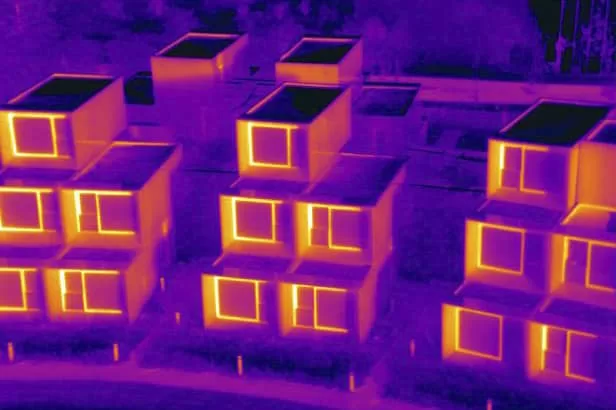
Can you use a drone with a thermal camera to inspect building insulation?


New buildings are now very efficient when it comes to heat management, retention and thermal living comfort, which can be attributed to architects using modern design tools, understanding and planning techniques. However, things can get missed and mistakes can be made during the building phase resulting in insulation failures and even thermal bridging whether in the design or from irregular building practices.
Building insulation performance should always be inspected and measured following a new build to ensure that there are no defects such as missing insulation material and thermal bridging in the cavity walls, a problem caused when discarded cement/mortar is inadvertently discarded into the cavity wall – affectionately referred to as ‘snots’!
Older properties may suffer from thermal failures due to older building methodology and building materials, a simple insulation inspection to determine where heat leaks may be occurring is a sensible investment.
Insulation surveys are best conducted during the winter months as the primary environmental condition for the survey is to ensure that a minimum 10°C delta between the internal temperature of the living space envelope and the external outside ambient temperature.
Clearly, heating a property up in the summer months to 10°C above the outside temperature when it is already in excess of 21°C presents a very uncomfortable living temperature for those indoors. The winter months ensure a much more efficient survey process. In most cases the only requirement is for the property to remain heated for a period of 24 hours (minimum) to ensure any heating leak has time to penetrate clearly through to the outside.
Using a drone, equipped with a thermal camera is only part of the equation. It is vitally important that any thermal imaging inspections are conducted by a qualified thermographer.
An appropriately trained and certified thermographer will ensure that the data collected meets the strict commercial standards governing the environmental conditions in which the survey is conducted and the correct equipment calibration with the right emissivity and background radiation values to ensure that the results can be relied upon.
Once the data is collected from site correctly, a category 2 qualified thermographer will be able to analysis the data collected and provide a report that can be used to schedule the correct response from maintenance companies and trades people.
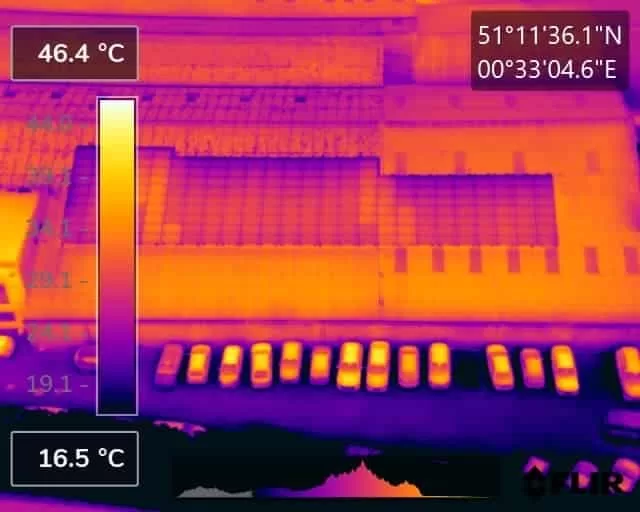
In all cases thermal imaging solutions when deployed from a UAV drone, offers a non-destructive, simple, and cost effectively solution to getting infrared analysis from hard to reach and difficult to see places.
Drone Media Imaging use the latest thermal infrared equipment and fully trained and insured thermographers, get in touch to discuss your thermal survey and inspection and we will provide you with a clear no obligation quotation.


Thermal Survey and Inspections
Drone media imaging are qualified, approved and insured aerial thermographers
specialising in providing thermal imaging and anlysis reporting through the use of Drone technology
Drone Services Enquiry
Thermography | Inspections | Solar | Photogrammetry
Discover how drone technology can enhance your operations with a free quotation from our experts. Get a Free Quote or Make an Enquiry Today!